Showing posts with label horror. Show all posts

Monday, July 20, 2026

The Small Town Hell of WIDOW'S BAY (2026)

Widow's Bay, the 2026 horror-comedy series on Apple TV, gives viewers plenty of reasons to shudder with its darkly funny evocation of 70s and 80s horror tropes, and fans of classic horror movies from those decades can revel in the tributes to Stephen King, John Carpenter, and Jaws (1975), among many others. Over the course of the first season's ten episodes, the monsters range from immortal serial killers, hungry demonic entities, and sea hags to the locals themselves, who might be willing to do anything to break the curse that grips their island. The unfolding of the larger plot pulls the series further into absolute horror as we learn more about the nature and history of that curse, but one of the scariest things about Widow's Bay - both the show and the setting - is the lifelong isolation of anyone unlucky enough to be born on the island. Like the Hotel California, Widow's Bay is a place where you can check out, but if you're a native, you can never, ever leave. While many horror movies focus on the insular, corrupted nature of small town life, Widow's Bay imagines a small town whose inescapable borders make it an especially chilling image of hell on earth.

All of the show's characters are forced to grapple with the implications of this particular element of the island's cursed nature. The series stars Matthew Rhys as Tom Loftis, who was not born in Widow's Bay but spent his summers there as a child and now lives on the island as the town's mayor. His dead wife, however, was a native, as is their restless teenage son, Evan (Kingston Rumi Southwick). Tom wants to bring tourists to the island even though he should know better, and his efforts are forcefully criticized by local Wyck Crawford (Stephen Root), who was also born in the town. The sheriff, Bechir Clemmons (Kevin Carroll), is a recent arrival, and he soon gets fed up with the creepy events taking place, but if his wife, Chelle (Sipiwe Moyo), gives birth to their first child in Widow's Bay, the sheriff's family will also become permanent residents whether they like it or not.

The trope of "there's something horribly wrong with this small town" is extremely common in horror, with Widow's Bay drawing particular inspiration from John Carpenter's 1980 classic, The Fog, in which the sins of the founders literally come back to haunt the community's present day inhabitants, but also Halloween (1978) and The Shining (1980), among others. There's a strong evocation of Jaws, too, thanks to the mayor's willingness to put both residents and tourists at risk, with the connection to Spielberg's iconic blockbuster made especially obvious in the seventh episode, "Seasickness." There are, in fact, lots of things horribly wrong with Widow's Bay, and we only get full episodes about some of them in the first season. There's a haunted hotel, a predatory sea hag, a serial killer called The Boogeyman, the town's cursed founder, an ominous church bell that shouldn't be able to ring, and a mysterious underground chamber, just to name a few of the more prominently featured terrors. Casually tossed lines from locals hint at centuries of similar weirdness, from the catastrophe-filled genealogy recited by Rosemary (Dale Dickey) to comments from the elderly Ruth (K Callan), who talks about the bizarre fates met by her family members and friends over the decades. (I really hope we're going to get a second season episode about the guy who was bitten by an animal and then became that animal.) Whatever can be scary and wrong with a small town, Widow's Bay has it, so much so that part of the dark comedy stems from the sheer variety of horrors one little island can contain.

Most people, of course, wouldn't choose to stay in such an awful and dangerous place, but the real knife-twist of Widow's Bay is that native-born islanders cannot physically leave without dying as a result. For every person who has ever escaped their own personal small town hell, this component of the horror story is by far the most disturbing. Like a lot of ambitious youngsters from the rural South, I left the small town where I grew up as soon as possible and would never move back, so the idea that I couldn't leave a place like that is absolute nightmare fuel. I wasn't even born in the town I longed to escape, but still the show's depiction of permanent imprisonment in an isolated community fills me with dread. In most horror stories, the survivors escape the cursed location, but Widow's Bay never lets its children break away, as we see depicted in several tragic incidents over the course of the season. Tom's foolhardy desire to bring tourism to the island is partly the result of his knowledge that his son is a prisoner there, and Tom thinks he can improve Evan's life by getting a little more of the outside world to come to him. That, however, ends up being more of a "misery loves company" situation, as the tourists inevitably encounter some of the island's terrors in the episodes "Beach Reads" and "Emergency Shelter." They, at least, can depart the island and never return, but it remains to be seen if locals like Evan and Wyck will ever be able to say goodbye to Widow's Bay. The show will undoubtedly maintain this worst and most central aspect of the town's cursed nature until the very end so that viewers and characters alike continue to experience the claustrophobic terror of being trapped in a place that wants to destroy them. My fellow small town escapees might find those future seasons easier to experience far from their own personal hells, preferably in the safe harbors of their own choosing.

If you've enjoyed the first season of Widow's Bay, be sure to check out some of the horror movies that inspired it, starting with The Fog. Kate Dippold, the creator and showrunner of Widow's Bay, co-wrote the 2016 Ghostbusters movie and wrote the 2023 horror-comedy treatment of Haunted Mansion, which I did think was a big improvement over the 2003 version starring Eddie Murphy. For a truly terrifying story about a small town nobody can escape, read the original version or see the 1961 Twilight Zone adaptation of Jerome Bixby's short story, "It's a Good Life." Peaksville, Ohio, almost makes Widow's Bay look cozy in comparison, but we'll have to wait to see what's actually inhabiting that strange container in the underground chamber.

Sunday, November 9, 2025

CMBA Fall Blogathon 2025: Horrors of the Colonized Body and Soul in THE MUMMY (1932)

This post is part of the CMBA Fall Blogathon for 2025, showcasing Early Shadows & Pre-Code Horror. Find more blogathon posts by visiting the CMBA website!

When we think about body horror as a subgenre, we usually imagine the gruesomely detailed visual images of more modern movies like Eraserhead (1977), The Thing (1982), or The Fly (1986), which have their ardent fans but are sometimes too stomach-turning for those who prefer the subtler thrills of classic horror. Silent and Pre-Code horror does, however, include many examples of body horror, from the contortions of Lon Chaney in The Unknown (1927) and the tortured face of Conrad Veidt in The Man Who Laughs (1928) to the inhabitants of Island of Lost Souls (1932) and the circus performers of Freaks (1932). These early films could get away with more provocative forms of horror than those arriving after the Hays Code cracked down in 1934, and they often use that freedom to great effect. It's striking, therefore, that Universal's The Mummy (1932) only suggests its most extreme bodily suffering in flashes, leaving viewers to imagine the extent of horrors implied but unexplored. What we actually see of Imhotep, the titular mummy, is filtered mainly through the perspectives of European characters whose sense of him as an unnatural Eastern/Other denies his humanity, but when we shift our point of view to Imhotep himself we begin to grasp the full horror of his situation and experience.

Boris Karloff stars as the undead Imhotep/Ardath Bey.

Our colonialist perspective of Egypt is formed by the way the story opens and unfolds, with British archeologists uncovering the tomb of the priest Imhotep (Boris Karloff) in 1921 and then unintentionally waking him. While they speculate about the crimes that might have warranted Imhotep's unusual burial, they don't express much sympathy for him as a human being who clearly suffered an awful fate. When Imhotep wakes, his appearance alone is enough to drive Ralph Norton (Bramwell Fletcher) mad, even though the mummy doesn't lay a hand on him. A decade later, we catch up with the Europeans back in Egypt, this time uncovering the tomb of Princess Ankh-es-en-Amon (Zita Johann) with the help of the mysterious Ardath Bey, whom they fail to recognize as Imhotep himself. Despite warnings about the supernatural from Dr. Muller (Edward Van Sloan), Sir Joseph Whemple (Arthur Byron) and his son, Frank (David Manners), only understand Egypt as a subject, both academic and colonial, and they recognize its power as manifested through Imhotep too late. Ultimately, of course, Imhotep is destroyed, and the half-Egyptian Helen (also Zita Johann) is saved from his clutches, but the story ends without any denouement that might articulate the meaning of the tale we've just seen.

Much of the plot of The Mummy is recycled from Dracula (1931), a narrative with its own preoccupations with British imperialism and the Eastern Other, but transferring the story to Egypt makes those tensions much more overt. The film lets them bubble to the surface in ways that undermine the "official" perspective being shaped by the modern Europeans. Dr. Muller warns his English friends to respect the ancient culture they are pillaging, but Sir Joseph doesn't listen. Ardath Bey bitterly comments on his inability to excavate the princess himself because only foreigners are allowed to do so, while Frank complains about being forced to keep his find in Egypt instead of whisking it away to London. Helen, caught between the two worlds and wrestling with the awakened soul of Ankh-es-en-Amon inside her, laments the modernity of Cairo in the twentieth century and yearns for the "real" Egypt of the past. There's no denouement when Imhotep is destroyed because it's only through the power of his own world, and Helen's invocation of the ancient goddess Isis, that he is defeated at all. Dr. Muller and Frank have nothing to do with it, and they serve merely as spectators, not heroes, in the final scene. We get no sense that Frank has ever understood any of the events that have transpired, but Helen might really be changed by her experience, so their success as a romantic pair is left uncertain. The ending, however, implies that Helen will be absorbed into English whiteness through marriage to Frank, erasing her past identity as Ankh-es-en-Amon and the Egyptian heritage passed to her from her (dead) mother. 

Imhotep prepares to make Helen undead like himself.
 

Through these pressure points and gaps Imhotep himself is constantly breaking, demanding that Helen and the viewer see him differently, as a very human man whose love for her has caused him to suffer unspeakable horror. We first see him as a dead thing, the gleam in his dark eyes signalling his rise to embodied consciousness after thousands of years. We don't know what happens to him during the decade before the Whemples return to Egypt, but somehow he reforms himself into a semblance of a living man, learns English and, presumably, Arabic, as well, and manages to survive in a twentieth-century Egypt that is utterly alien to him. As Ardath Bey, he's a remarkable figure, thin, stiff, and seemingly fragile, with skin still desiccated and features sunken. Sometimes mummies in horror films are presented as little more than wrapped zombies, mindless and shuffling, but Imhotep is a fully aware human being trapped inside a mummified body, a living soul yoked to a dried up corpse. He reveals to Helen the transgressions that led to this fate, hoping to awaken her own memories of their forbidden love. Unable to accept the death of the princess, Imhotep defied the gods by attempting to resurrect her, but he was caught and punished by being buried alive. We are shown the torture Imhotep endured as, fully conscious and struggling, he was wrapped as a mummy and thrown into his sarcophagus. We don't see his actual death by asphyxiation as his coffin ran out of air, but his last moments must have been utterly terrifying, unable to move, see, or even scream. Imagine then his horror on returning to consciousness in his own corpse, an outcast from both the living and the dead. Obsessed with his beloved when he was alive, condemned to eternal suffering for her sake, and tortured by his own decayed flesh, Imhotep is almost certainly insane, but he is determined to be seen by Helen/Ankh-es-en-Amon as a man who has endured horrors for her love, and not as a thing without a human soul. 

When we consider Imhotep as a man and not a thing, we become aware of the scope of the bodily horror he experiences. The Mummy doesn't dwell at length on the horror of Imhotep being a living soul inside a dead body, but it's present in Boris Karloff's physical performance and the anguish his character reveals only to Helen. Dracula might be undead, but his body is not a dry husk, while zombies are usually shown as animated corpses that lack self-awareness. Imhotep has the worse of both curses; he has the consciousness of a living man but exists in a mummified corpse. A more fully developed exploration of this theme can be found in Roger Corman's adaptation of the Poe short story, "The Facts in the Case of M. Valdemar," in Tales of Terror (1962), in which Vincent Price plays a dead man forced to continue to inhabit his decaying corpse by a sadistic hypnotist (Basil Rathbone), while the horror of a man who finds himself made monstrous dominates stories like The Wolf Man (1941) and The Fly (1958). In The Mummy, the horrific nature of Imhotep's existence is suggested most strongly in the third act, when Imhotep seeks to seduce or force Helen into sharing his fate. "No man ever suffered as I did for you," he tells her, hoping to convince her to "face moments of horror for an eternity of love." Even as her awareness shifts to that of the princess, Helen still recognizes the nightmarish nature of the immortality Imhotep wants her to embrace. She recoils when she see the flaky print of Imhotep's hand on a table, realizing that instead of "moments of horror"Imhotep wants her soul to exist forever trapped inside a dead and mummified body like his own. "I loved you once," she tells him, "but now you belong with the dead." The worst part of the gods' curse isn't just that Imhotep must animate his own dried corpse, but that he finally suffers rejection from the woman for whom he endured such a monstrous fate. 

The complexity underlying The Mummy has made it particularly ripe for sequels and revisions, although most later mummy movies fail to invest the supernatural character with Imhotep's gravitas and emotional depth, thus continuing to obscure the idea of the mummy as a figure of body horror. Vampires and werewolves have gotten better treatment in films like An American Werewolf in London (1981), The Lost Boys (1987), and Blade (1998), but the mummy's unique identity as ancient and Egyptian still makes it harder for us to imagine the mummy as an actual person instead of a thing. For some of the more interesting later takes on the monster, see the 1959 Hammer remake or the 1999 reboot directed by Stephen Sommers (both also titled The Mummy), the latter of which really does highlight the body horror aspects of Imhotep's live burial, if not his subsequent supernatural existence.

 See also: 12 Mummy Movies Worth Watching 

Classic Films in Focus: THE MUMMY'S HAND (1940)


Wednesday, October 29, 2025

Cult Classics: THE FOG (1980)

Horror movies got much gorier after the advent of the slasher, and the most iconic chillers of the 1980s tend to lean into that genre and its enthusiasm for arterial spray, but John Carpenter's The Fog (1980) is an atmospheric throwback to the subtler style of horror master Val Lewton, the hands-on producer (and often uncredited writer) behind moody RKO masterpieces like Cat People (1942) and I Walked with a Zombie (1943). The Fog is a very different picture from other Carpenter projects like Halloween (1978), The Thing (1982), and They Live (1988), which is the reason it's one of my favorite movies from the director's oeuvre. Fans of eerie but bloodless classic horror will find a lot to appreciate in the way this movie unfolds its tale of long-simmering supernatural revenge, and those looking for more female-led stories will enjoy the emphasis on Adrienne Barbeau as the DJ heroine with Jamie Lee Curtis and her mother, Janet Leigh, also playing major roles.

Barbeau leads as Stevie Wayne, a late-night DJ in the town of Antonio Bay. Stevie's overnight shifts in a lighthouse allow her to witness and report the arrival of a mysterious fog that coincides with the disappearance of three local fishermen, including the husband of town mayor Kathy Williams (Janet Leigh). As the coastal California town prepares to celebrate its centennial, the local priest, Father Patrick Malone (Hal Holbrook), discovers his grandfather's diary and learns that a cabal of six founders started the community with a shocking act of betrayal, which is now literally coming back to haunt the townspeople on the hundredth anniversary of the crime. Meanwhile, hitchhiker Elizabeth (Jamie Lee Curtis) gets a ride into Antonio Bay with town resident Nick (Tom Atkins), and their efforts to find out what happened to the fishermen lead them to numerous close encounters with the supernatural threat.

Despite reshoots that bowed to the increasing expectation for gory ghosts and peril, The Fog remains a classic haunt at its core, with the eerie titular fog getting a lot more screen time than the spectral mariners. The opening campfire tale, also a late addition, sets the mood with John Houseman telling a group of children about the wreck of the Elizabeth Dane, a ship carrying a colony of leprosy victims to the bay. Between the introductory ghost story and the diary found by Father Malone, we know pretty much everything we need to know about why these murderous spirits are emerging from the fog to avenge themselves a century later. The fog and its ghosts are not so much mysterious as they are unstoppable, a conjoined force of fate that moves at its own pace, slowly but surely descending on Antonio Bay until the town's debt is fully paid. The goriest scenes happen early, with the murders of the fishermen and the subsequent discovery of just one corpse by Elizabeth and Nick, but these are pretty tame compared to Jaws (1975) or other horror films of the era, and mostly the mariners are shadowy figures who drag their victims away into the fog. John Carpenter has talked about his desire to make a movie inspired by Val Lewton's subtle but chilling horror classics (see this 2022 Collider article for more on that), and it's easy to see their influence even after the additions meant to appeal to the horror-going audiences of 1980.

While I love the Lewton-inspired atmosphere of The Fog, I also appreciate its commitment to agency and variety for its female characters. Co-writers Carpenter and Debra Hill offer us more women than men as our central characters, with Carpenter's wife at the time, Adrienne Barbeau, in heroic mode as a single mother who strives to protect the community and also find a way to save her young son as the fog closes in on him and his elderly babysitter. In a different horror movie, Jamie Lee Curtis's hitchhiking Elizabeth might be condemned to a gory death in her underwear, but instead she's smart, empathetic, and able to recover quickly from each close call. Janet Leigh doesn't have any scenes with her daughter until the third act, but her character is also presented as a fully realized individual, and despite her small town political status she's far more likeable than the mayor in Jaws. She's prickly with her assistant but grateful for her all the same, and she strives to forge ahead in her mayoral duties even as she worries about her missing husband. The two male leads, Hal Holbrook and Tom Atkins, seem perfectly comfortable with their female costars, and their characters both eschew the casual sexism exhibited by the fishermen and weatherman Dan O'Bannon (Charles Cyphers). Not every character who gets killed by the ghosts deserves that fate, but the picture doesn't see women as obvious victims just because they're women, and several of the male victims give us little reason to mourn their loss.

For more great ghost stories, try The Uninvited (1944), The Haunting (1963), The Changeling (1980),  and Lady in White (1988). Adrienne Barbeau also appears in Carpenter's Escape from New York (1981), Wes Craven's Swamp Thing (1982), and George A. Romero's Creepshow (1982). Jamie Lee Curtis became an iconic scream queen in the 1980s thanks to films like The Fog, the Halloween series, and Prom Night (1980), but over the decades she has proven herself a versatile actress and great comedic star, eventually winning an Academy Award for her role in Everything Everywhere All at Once (2022). Her mother, Janet Leigh, is of course best remembered for Psycho (1960). For my other favorite John Carpenter movies, see Escape from New York, Christine (1983), and Big Trouble in Little China (1986). 

As of October 2025, you can watch a wide range of John Carpenter films on the Criterion Channel, which is celebrating the director with a curated collection of his work. 

See also: "Hogarthian Gothic: Imagining the Madhouse in Val Lewton's BEDLAM

Wednesday, August 20, 2025

Classic Movie Monsters Inspire Sparkytopia Art

As a parent and a classic movie fan, it's deeply gratifying when your love for something gets passed on to a new generation. That's why I'm so excited to be interviewing my own kid for this post! Sparky has grown up watching me talk and write about old movies, literature, and popular culture, so I'm always delighted to see those influences in their work as a professional freelance illustrator. Recently, I was able to sit down with them for an interview about their deep love for classic movie monsters and how that inspiration appears in their art. 

While I hope you'll enjoy learning about Sparky's art, I also hope this post will encourage you to share your favorite classic movies with the young people in your life. You never know which ones will click with them and become inspiration for them in the future! You can also learn more about Sparkytopia at their website.


Q: Tell us a little bit about your background as an artist.

I graduated from Ringling College of Art and Design in 2023 with a BFA in Illustration, but I've been drawing for as long as I can remember! In the past two years, I've mostly focused on growing my artistic brand online by offering commissions to individual clients and creating merchandise for my store. I tend to lean towards cute, approachable themes, usually featuring animal characters and bright colors to capture a little childhood nostalgia in every piece.

Q: What inspired you to create art featuring animal versions of classic movie monsters?

I have always been a big fan of classic movie monsters; there's something so traditionally Halloween-y about them! Halloween is also my favorite holiday, so I always jump at the chance to do something spooky for the season. I've been doodling them in my spare time for years, so it was only a matter of time before I worked up something finished to add to my shop designs. It would've been a bit strange to do human characters next to all of my original stickers, so combining classic monster themes with cute animals was a good way to render them in my style. 

Q: Do you have some favorite classic monster movies or a favorite monster? What do you love about them?

I am personally fond of the tragedy of The Creature from the Black Lagoon (1954). I love him dearly, and The Shape of Water (2017) only made me have more feelings about gill men. I find myself yearning to love them as they truly deserve! He's such a fantastic piece of special effects, but it makes it difficult to draw him in a way that pays homage to his original design and reflects my personal style. I do really enjoy Frankenstein (1931), but I have to say I prefer the book's representation of the monster more than the film's, even if Boris Karloff is absolutely iconic. 


Q: Do you have a favorite monster-inspired piece from the work you've done so far? Are there any particular elements that you're especially proud of in that piece?

To my surprise, my favorite is King Tutankhanyan, my mummy character! I didn't expect to love him as much as I do, but I put a lot of time and effort into both the character and shirt designs. The fact that he's specifically a sphynx cat helps elevate him into a more unique character, so he feels a lot more like my little guy and not just a generic mummy. It was a challenge to hand-letter the accurate hieroglyphics on his shirt design, but I think it was all worth it!

Q: Are there other monsters or movie-inspired characters you still want to celebrate with future art projects?

I intend to create a Bride for my existing Puppystein's Monster design. I can't let the lady ghouls go unrepresented! I have some sketches made for an Invisible Man, even if I worry he's a little niche compared to the other monsters. I would still love to do a gill man, but I just haven't found the right vision for him yet! In the distant future, it would be nice to have more drawings of each of my preexisting monsters hanging out together, but I'd like to expand the roster a little before I let them exist in a proper shared universe. I hope you're looking forward to what's to come!

Sparkytopia art is available in their shops on Ko-fi and Threadless
You can follow Sparkytopia on Instagram, Bluesky, Tumblr, and numerous other social media platforms. 

Tuesday, March 18, 2025

Classic Films in Focus: SUPERNATURAL (1933)

As you might expect from its title, Supernatural (1933) is a spooky Pre-Code horror story, full of restless spirits, murderers, and over the top atmosphere that plunges the viewer into a fever dream semblance of a plot. It boasts notable stars, with Carole Lombard and Randolph Scott as the young couple endangered by a pair of sinister characters straddling both sides of the grave, but, honestly, it's the sheer giddy weirdness of the movie that makes it so entertaining. I can't tell you that Supernatural is a great movie, or even a good one, but I can say that I had a lot of fun watching it, and sometimes that's more than enough. If you're looking for more female monsters to add to your annual round of Halloween classics alongside Dracula's Daughter (1936) and Cat People (1942), Supernatural offers up a doozy with its ghostly femme fatale.

Carole Lombard stars as pretty heiress Roma Courtney, whose twin brother (Lyman Williams) has recently died. In her grief, Roma makes an easy target for sham medium Paul Bavian (Alan Dinehart), who claims that her brother's restless spirit wants to speak to her. At the same time, Roma's family friend, Dr. Houston (H.B. Warner), has a theory about the malevolent souls of evil people remaining active after death, and to test it he conducts experiments with the body of executed strangler Ruth Rogen (Vivienne Osborne). Unfortunately for Roma, Ruth's spirit manages to possess her in order to get revenge on the former lover who ratted Ruth out to the police, who is none other than Paul Bavian.

Pre-Code status lets Supernatural engage in more death, sex, and violence than a later production could have dared to include, which makes it fascinating to watch even when it falls apart as a narrative. It revels in its lady strangler's crimes, trial, and execution, all of which open the picture as a montage accompanied by a chorus of marvelously eerie wails. Later scenes involve onscreen murders with actors really making the most of their death scenes; my favorite is the conniving landlady (Beryl Mercer), whose early demise tells us a lot about her tenant's true nature. We also get some startling scenes of Ruth's corpse in Dr. Houston's laboratory, which aren't gruesome or gory but still not the kind of thing you'd be likely to see after 1934. There's little romance to speak of, as Randolph Scott mostly stands around in a tux like a handsome statue, but the intimate encounter between the possessed Roma and the unsuspecting Bavian is both racy and unsettling. 

Lombard draws attention as the most famous star with the biggest role, especially because horror is not her usual territory, but I'm more struck by Vivienne Osborne's performance as the murderess. She doesn't get as much screen time as Lombard, being dead and an invisible ghost through most of the movie, but when we do see her she really owns the role. She laughs, weeps, and rages with the abandon of the damned, as monstrous in her own way as Claude Rains' Invisible Man or Fredric March's Hyde. We don't often get female villains as unhinged as Ruth Rogen in classic movies, and we certainly don't see a lot of women who compulsively strangle their lovers with their bare hands. Although she started her career in silent films and successfully made the transition to talkies, I've only seen Osborne in one other picture, her swan song appearance in Dragonwyck (1946), and I thought she made the most of a small role there, as well. 

Director Victor Halperin also made the 1932 Bela Lugosi chiller, White Zombie, and Revolt of the Zombies (1936). Lombard, of course, would go on to make comedy classics like Twentieth Century (1934), My Man Godfrey (1936), and To Be or Not to Be (1942). Although Randolph Scott is best remembered for Western roles, you can also catch him in the very weird thriller, Murders in the Zoo (1933) and the 1935 adaptation of H. Rider Haggard's She. Scott and Alan Dinehart both appear in the Shirley Temple picture, Rebecca of Sunnybrook Farm (1938), while Beryl Mercer makes her own appearance with Temple as Queen Victoria in The Little Princess (1939), a role she repeats in The Story of Alexander Graham Bell (1939). 

Thursday, October 24, 2024

10 Classic Frankenstein Movies Worth Watching

This fall I taught a lifetime learning class about the history and cinematic legacy of Frankenstein, so of course I've had the iconic tale of gods and monsters on my mind throughout the Halloween season. One of the reasons for the story's enduring success is its adaptability; like Shakespearean plays, Frankenstein can change with the times to reflect an era's particular fears about life, death, science, and what it means to be human. Even from the early days, movie versions of Mary Shelley's 1818 novel have varied wildly from their source material, altering both story and meaning to suit their own aims. Here are 10 of my favorite Frankenstein movies, presented in chronological order, to make a frightful film festival for monster movie fans.

1) Frankenstein (1931)

The original Universal movie has to start this list because Boris Karloff and Colin Clive create indelible images with their performances as the Creature and his creator (inexplicably renamed Henry Frankenstein). I think it drags a bit when it leaves the laboratory to focus on Henry's domestic life and worried loved ones, but its influence over later adaptations continues to be felt, especially when we see Shelley's articulate, philosophical Creature reduced to a shuffling, undead thing.


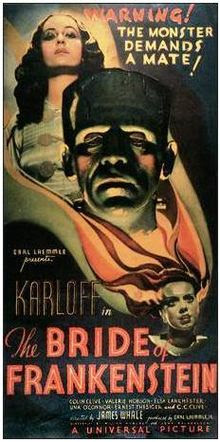
2) The Bride of Frankenstein (1935)

I prefer the sequel to the first Universal picture because it lets James Whale and his cast loose from the limitations of the first movie's roots in a stage play adaptation of the novel. It's wilder, weirder, and a lot more fun all the way through, especially with Ernest Thesiger, Una O'Connor, and Elsa Lanchester joining Karloff and Clive for this outing. If you only see one of the classic Universal entries, this is the one to watch.

3) Son of Frankenstein (1939)

The next generation succumbs to the family's penchant for reanimation in this follow-up, with Karloff returning as the Creature and Basil Rathbone stepping in as Wolf Frankenstein, the son of the original scientist. This one is also notable for its gorgeous German expressionist sets and for Bela Lugosi's appearance as Ygor, the first time that name refers to Dr. Frankenstein's assistant. This is probably the best of the later Universal films, although I do enjoy Frankenstein Meets the Wolf Man (1943) for its revival of the long-suffering werewolf, Larry Talbot (Lon Chaney, Jr.).

4) Abbott and Costello Meet Frankenstein (1948)

More treat than terror, this horror comedy is a Halloween favorite that pits Abbott and Costello against a ghoulish gang of classic monsters, including Glenn Strange as the Creature, Bela Lugosi as Dracula, and Lon Chaney, Jr. as Larry Talbot, aka the Wolf Man. If you want to introduce kids to classic Universal monsters without scaring them too much, this movie is a great choice. You even get Vincent Price making a cameo "appearance" as the Invisible Man at the very end!

5) The Curse of Frankenstein (1957)

Hammer started its own series of Frankenstein films with this adaptation, which stars a very creepy looking Christopher Lee as the Creature and Peter Cushing as Dr. Frankenstein. Scream queen Hazel Court also appears as Elizabeth, and the whole thing is rendered gorier because it's in color. Although Cushing's character is condemned to execution in the first movie, he survives to wreak more havoc with his experiments in The Revenge of Frankenstein (1958), The Evil of Frankenstein (1964), Frankenstein Created Woman (1967), Frankenstein Must Be Destroyed (1969), and Frankenstein and the Monster from Hell (1974).

6) Young Frankenstein (1974)

No list of Frankenstein movies would be complete without this comedy gem from Mel Brooks, with Gene Wilder starring as Frederick Frankenstein, the unwilling heir to his family's legacy who nonetheless ends up building a Creature of his own. The movie uses sets from the original Universal films and is stuffed with gags that work best if you've seen both the 1931 movie and the 1935 sequel. Often hailed as one of the best comedies of all time, it's still uproariously funny 50 years later.

7) Frankenweenie (1984)

Tim Burton has a long-standing love affair with the Frankenstein story, as evidenced by Edward Scissorhands (1990) and the 2012 stop motion remake of this 1984 live action short, but I like the short for its brevity and concentrated weirdness. Disney originally considered this version too scary for kids and fired Burton because of it, but Burton's later success caused Disney to reconsider the short's appeal. Kids today are unlikely to be phased by anything in Frankenweenie, especially those who have already seen any of Burton's other, later films.

8) The Bride (1985)

Fair warning that I haven't rewatched The Bride in a long time, but it makes the list for nostalgia's sake because I first saw it in the 80s and loved it then, partly for its focus on a female Creature (played by Jennifer Beals) and partly for its casting of rock god Sting as Dr. Frankenstein. The movie also stars Clancy Brown as the male Creature and Cary Elwes as another man with a romantic interest in the heroine. I won't pretend this is a brilliant movie, but it is very much a product of its era, and my inner teenager still regards it with affection.

9) The Monster Squad (1987)

Speaking of the 80s and nostalgia, The Monster Squad brings plenty of love for classic monsters and a Goonies sensibility to its horror comedy hijinks, with a group of kids who band together to fight the evil schemes of Count Dracula (Duncan Regehr) and his minions. Frankenstein's Creature, played by Tom Noonan, is supposed to be helping the vampire but turns out to be an ally to the kids, and his friendship with a little girl (Ashley Bank) makes a sweet counterpoint to the tragic scene with a different girl in the 1931 film. This one might actually be too scary (and too free-wheeling with its profanity and sexual references) for very young kids, but it's a perfect pick for tweens, teens, and adult monster kids.

10) Gods and Monsters (1998)

Although it isn't technically a horror movie or an adaptation of Shelley's novel, this fictionalized account of the last days of James Whale is an insightful look at the director's life and work, and it seems fitting to end this list here. Ian McKellen gives a brilliant and moving performance as the aging Whale, and the picture includes flashbacks to the making of Whale's most memorable films. Brendan Fraser costars as Whale's young gardener. Gods and Monsters earned three Oscar nominations, with nods for McKellen as Best Actor and Lynn Redgrave as Best Supporting Actress, and it won the award for Best Screenplay. 

See also: 10 Classic Movies Starring Boris Karloff and 10 Classic Movies Directed by James Whale

Sunday, October 15, 2023

Classic Films in Focus: MURDERS IN THE RUE MORGUE (1932)

On paper, Universal's 1932 Murders in the Rue Morgue sounds terrific; it adapts a chilling story from Edgar Allan Poe, stars Bela Lugosi, and offers Expressionist cinematography by Karl Freund, complete with all the lurid sensibility that Pre-Code horror can provide. Unfortunately, the movie doesn't work as well in practice, especially for viewers who know and appreciate Poe's original tale. While Lugosi is truly terrifying as the menacing Dr. Mirakle, the picture suffers from a weak leading man, creaky monster effects, and too much deviation from its source material that also leads it into some extremely thorny issues regarding racist tropes. Fans of Pre-Code horror and/or Edgar Allan Poe might be willing to forgive some of its failings for Lugosi's sake, but overall this is a far less successful picture than stand-out classics like The Black Cat (1934) and Roger Corman's Poe cycle.

Lugosi plays a character who doesn't exist in the original tale, a mad scientist obsessed with proving evolution by injecting the blood of his captive gorilla into beautiful young women. His experiments have inevitably proved fatal to the women, but Dr. Mirakle blames the failure on the women's "impure" blood instead of his own mad theory. When the gorilla takes a particular shine to lovely Camille L'Espanaye (Sidney Fox), Dr. Mirakle plans to kidnap her as his next test subject, but Camille's suitor, Pierre Dupin (Leon Ames), rightly suspects the doctor of having sinister motives.  

Deviations from the source create more problems than opportunities here. Poe's tale focuses on the murders of two women and the clever detective, C. Auguste Dupin, an important forerunner of and inspiration for Sir Arthur Conan Doyle's Sherlock Holmes. Weirdly, the Universal picture isn't a detective mystery at all, even though Poe's story is widely considered the original example of the genre. Instead, Leon Ames plays a medical student named Pierre Dupin, who already knows who did it when his sweetheart, Camille, disappears and her mother's corpse is found stuffed up a chimney. Ames is not particularly effective in this role, and the problems are all the more noticeable because Pierre is such a ho-hum hero compared to Poe's brilliant detective. The locked room mystery of the short story gives way to a bizarre mad scientist plot that draws on deeply racist imagery about gorillas as substitutes for Black men and their supposed desire for White women. Mirakle's experiment is a thinly veiled take on miscegenation that results in the deaths of the women whose blood has been "contaminated" by that of the gorilla. None of this comes from Poe's story, in which a pet orangutan gets loose from its owner and cannot really be held responsible for its actions. On a more practical level, the gorilla who replaces Poe's orangutan is very obviously a guy in a bad gorilla suit, except during closeups, when he transforms into an actual chimpanzee. It's a jarring and absurd switch every time it happens, but the movie does it repeatedly, even recycling the same shot of the chimp pressing against the bars of its cage.

All of these problems detract from a fine performance by Lugosi, who certainly knows how to leer menacingly at an audience and deliver a chilling monologue. His face is by far the scariest thing in the movie; its signature feature is an impressive monobrow that sprouts over his trademark burning gaze. The Expressionist influence reaches it high point during the experiment scene with Lugosi's only onscreen victim, a kidnapped streetwalker played by Arlene Francis. Tied to a huge wooden X like a martyr or a witch at the stake, Mirakle's victim exposes a lot of pretty flesh and casts a striking shadow on the laboratory wall. When she dies as a result of his injections, he seems surprised, even though he has her positioned over a convenient trapdoor that drops her body directly into the river. These effective scenes connect Murders in the Rue Morgue to German Expressionist classics like The Cabinet of Dr. Caligari (1920) and Nosferatu (1922) as well as better Universal horrors like Dracula (1931), Frankenstein (1931), and The Mummy (1932), reflecting the influence of cinematographer and occasional director Karl Freund after his relocation from Germany to Hollywood.

Robert Florey, who directed Murders in the Rue Morgue, eventually moved to television work, but before that he directed the 1946 horror, The Beast with Five Fingers, starring Peter Lorre. Karl Freund also directed Lorre in another Expressionist horror feature, Mad Love (1935), and I would recommend either Lorre picture over Murders in the Rue Morgue. Leon Ames is much more in his element in Meet Me in St. Louis (1944), A Date with Judy (1948), and Little Women (1949); Murders in the Rue Morgue was one of his first screen appearances, and it's not really his fault that he's miscast. Poe adaptations and loose retellings abound, with the most recent being the 2023 Netflix miniseries, The Fall of the House of Usher. Roger Corman, however, still reigns as the king of Poe on film, with Vincent Price as his star of choice. Start with Corman's House of Usher (1960) and proceed to Tales of Terror (1962) and The Tomb of Ligeia (1964) for a sample of their best efforts.

Monday, February 20, 2023

Classic Films in Focus: THE QUEEN OF SPADES (1949)

Once considered lost, The Queen of Spades (1949) is an example of buried cinematic treasure that was luckily rediscovered so that we can enjoy it again today, an ironic twist since it's a tale about the fickle turns of Fortune's wheel. The plot comes from a short story of the same name by Alexander Pushkin, which explains its Russian setting and Romantic bent, but the movie is a British production directed by Thorold Dickinson, with Anton Walbrook, Edith Evans, and Yvonne Mitchell in its most significant roles. A meticulous 4K restoration by Studiocanal means that modern viewers can enjoy The Queen of Spades in all her baroque glory, and it really is a stunning picture, with a moody atmosphere reminiscent of Val Lewton and a delirious mix of romance, menace, and supernatural chills.

Anton Walbrook stars as Herman Suvorin, an officer in the Russian army who envies the wealth and good fortune of his nobler and more successful peers. When he hears the story of a beautiful countess who sold her soul for the secret of winning at cards, he sets out to learn it from her by first seducing her lonely young companion, Lizaveta (Yvonne Mitchell). Soon Suvorin comes face to face with the now ancient Countess (Edith Evans), but his meeting with her does not go as planned, and his manipulation of Lizaveta rouses the resentment of her honest admirer, Andrei (Ronald Howard).

The horror element of The Queen of Spades relies more on Gothic ambience than overt terrors, but it's always there, pulsing in the undercurrent of the narrative and rising with Suvorin's paranoia in the third act, when he might or might not be experiencing supernatural encounters. We're introduced early to the idea that malevolent forces are at work in this world, as we hear the story of Countess Ranevskaya and her desperate bargain to regain a fortune stolen from her by a secret lover. Faustian deals with the devil, wax figures containing lost souls, and unseen horrors prime our imaginations for the unfolding tale of Suvorin's obsession. The resulting narrative exists somewhere between the Lewton oeuvre and classic thrillers like Gaslight (the British 1940 version was also directed by Dickinson and stars Anton Walbrook). The reality of the supernatural is up for debate, especially where the final climactic scene is concerned, but there's a fantastic turn of the screw quality to Suvorin's increasing hysteria, and if anyone deserves to be haunted he's top of the list. Fans of the 1961 anthology film, Black Sabbath, might appreciate the parallels between the haunting scenes and those found in the segment titled "The Drop of Water," although Mario Bava's movie provides more lurid terrors for the guilty protagonist.

Elegant performances help to elevate The Queen of Spades and complement its gorgeous period settings, with Walbrook especially compelling as the ambitious Suvorin. He opens the picture tightly controlled and standoffish, and it's enthralling to watch him succumb to his envy, avarice, and guilt as he worms his way into the presence of the elderly Countess. Dame Edith Evans, looking about a hundred years old and outfitted in full 18th-century finery with a stupendous wig, still manages to be shrewish, funny, pathetic, and terrible by turns. Neither she nor Suvorin is a good person, but both retain degrees of humanity and frailty that excite some sympathy from the viewer, especially because Lizaveta feels pity for both of them. Yvonne Mitchell invests Lizaveta with moving Gothic sensibility; as a paid companion she's very similar to a governess, inhabiting an uneasy liminal space between servant and family member, but she burns with longing and a desire to be loved. The film's brilliant visual metaphors make it clear that Suvorin means to trap Lizaveta in his web of lies, but she attracts a nobler suitor in handsome Andrei, played to great effect by Leslie Howard's son, Ronald. 

Arresting cinematography by Otto Heller also makes this picture a gem. It's a stunning feast for the eyes, making the most of the gorgeous costumes and elaborately decorated sets created by Oliver Messel. Memorable moments abound: we see the young Countess hurrying down a secret passage, Suvorin waiting in the snow at night, and a beautiful dancer entertaining the amorous officers. Most of the central characters are shown in mirrors at various times, confronting themselves, reflecting themselves, or revealing their natures to the viewer, and the scenes in which we see one character directly and another in reflection are particularly striking and well shot. The long awaited confrontation between Suvorin and the Countess is absolutely riveting, thanks to the performances of the actors and the ways in which the camera frames them.


For more of director Thorold Dickinson and Anton Walbrook, start with the 1940 Gaslight, which some consider superior to the 1944 Hollywood version. Walbrook's other British films include 49th Parallel (1941), The Life and Death of Colonel Blimp (1943), and The Red Shoes (1948). Edith Evans earned Oscar nominations for her performances in Tom Jones (1963), The Chalk Garden (1964), and The Whisperers (1967), but don't miss her as Lady Bracknell in The Importance of Being Earnest (1952). Yvonne Mitchell, who made her screen debut in The Queen of Spades, can also be found in The Divided Heart (1954), Woman in a Dressing Gown (1957), and Sapphire (1959). For an eerie period double feature, try pairing The Queen of Spades with Bedlam (1946), or follow up with Gothic thrillers like The Uninvited (1944), The Spiral Staircase (1946), and Dragonwyck (1946).

The Queen of Spades is available on Blu-ray and DVD; the new Studiocanal restoration is region specific, but a 2019 version with some extras is available on Amazon from Kino Lorber.  You can also find it streaming on the horror subscription channel Shudder as of February 2023.

Thursday, February 2, 2023

Classic Films in Focus: DEAD OF NIGHT (1945)

Long before The Twilight Zone came the 1945 British anthology film, Dead of Night, which weaves together a collection of eerie tales within a framework that gathers a small group of people in an English country house. While it's not exactly a horror movie, it does offer plenty of weird and even disturbing moments, and it would profoundly influence future horror anthologies, which have since become a unique and much-loved subgenre. Each segment of this multi-part narrative has its own director and stars, and each has its own charms, but standouts of the group include Mervyn Johns, Googie Withers, and Michael Redgrave as some of the unfortunate visitors to the stranger side of experience.

The frame tale follows mild-mannered architect Walter Craig (Mervyn Johns) on a professional visit to a remote country house, where he meets the owner, Mr. Foley (Roland Culver), and a group of his friends. Craig feels an overwhelming sense of uneasiness as he realizes that he has seen these people somewhere before, but he only remembers that the gathering ends in tragedy. Psychologist Dr. Van Straaten (Frederick Valk) doubts that Craig is really experiencing a supernatural vision, but the other guests try to support Craig by telling stories about their own brushes with the inexplicable, which range from the horrific to the humorous.

The anthology contains five stories in addition to the frame tale with Craig, and each one strikes a different tone. The hearse driver tale has an urban legend quality; it mostly functions as a short opening act for the more complex stories that follow. The Christmas party is a lovely, old fashioned ghost story that briskly moves through its beats, with Sally Ann Howes very charming as the heroine and narrator, also named Sally. In the story of the haunted mirror, Googie Withers and Ralph Michael play an engaged couple who become ensnared by the eerie menace of a newly acquired antique. Fans of iconic TV series like The Twilight Zone and Night Gallery will find the mirror adventure very much to their taste, and the two leads give great performances that really sell the story. In the fourth segment, Basil Radford and Naunton Wayne play golfing pals whose rivalry for the same woman leads to ghostly misadventures; it's a bit of comedic fun that fans of the duo - who first became famous for their appearance in The Lady Vanishes (1938) - will especially appreciate, but you don't need to recognize them as Charters and Caldicott to laugh at their scenes. The final segment stars Michael Redgrave as an increasingly deranged ventriloquist plagued by his sadistic dummy, and it's easily the creepiest and most iconic of the lot, with Redgrave absolutely riveting as the tortured partner of the nightmarish Hugo.

Michael Redgrave hushes the devilish Hugo.

The changes in cast and tone keep each new experience fresh as the picture unfolds, with the haunted mirror and the ventriloquist stories cranking up the horror and the other episodes offering varying levels of relief. In between we return to the frame tale, which works its way toward a hallucinatory climax that merges bits from every segment. The format would inspire many later horror anthologies, leading to genre classics like Tales of Terror (1962), Twice-Told Tales (1963), Black Sabbath (1963), Dr. Terror's House of Horrors (1965), and The House That Dripped Blood (1971), just to name a few. These later pictures increasingly leaned into the sexuality and gore that Dead of Night eschews, but television series like Alfred Hitchcock Presents, Thriller, The Outer Limits, and Amazing Stories continued to provide eerie chills without buckets of blood. It's worth noting that the anthology format is itself a very old literary genre, famously used in Boccaccio's Decameron and Chaucer's Canterbury Tales, which makes Dead of Night a fascinating link in a long genre chain that connects 14th century texts to modern hits like Black Mirror.

Ealing Studios is remembered today for its comedies, and Dead of Night was very much a departure from its usual fare, but it includes many of the studio's regular directors and stars. Charles Crichton, who directed the golfing story, went on to make The Lavender Hill Mob (1951) and The Titfield Thunderbolt (1953), and Robert Hamer, the director of the haunted mirror tale, later directed the classic Ealing comedy, Kind Hearts and Coronets (1949). You'll find Michael Redgrave and Googie Withers along with Radford and Wayne in The Lady Vanishes, while Withers and Roland Culver both appear in On Approval (1944). Director Robert Hamer also works with Withers, Mervyn Johns, and Sally Ann Howes on Pink String and Sealing Wax (1945). If Hugo Fitch, the ventriloquist's dummy, fascinates you, check out Magic (1978) or the two Twilight Zone episodes with similar themes, "The Dummy" and "Caesar and Me." The first one is the more iconic of the two.

Monday, October 31, 2022

LEGO Tribute to NOSFERATU (1922)

Happy Halloween! This year I decided to celebrate spooky season with a LEGO tribute to one of the greatest horror movies ever made, Nosferatu (1922). Max Schreck created an iconic character as the creepy, plague carrying Count Orlok, the film's replacement for Count Dracula (because they couldn't get permission to make an actual adaptation of Stoker's novel). While the setting here is not strictly faithful to the familiar shots of Orlok in the doorway, I felt that the rats and spiders helped to convey the mood of the picture (you can't have Nosferatu without rats!).

Just like a vampire, this great silent movie rose again from the dead after Stoker's estate demanded that the prints be destroyed, and we're lucky to be able to watch Nosferatu today. The original film was remade in 1979 (with Klaus Kinski), celebrated in song by Blue Oyster Cult in 1977, and parodied to great effect in the 2000 film, Shadow of the Vampire, with Willem Dafoe earning an Oscar nomination for his delightfully weird performance as Max/Orlok.


Thursday, October 6, 2022

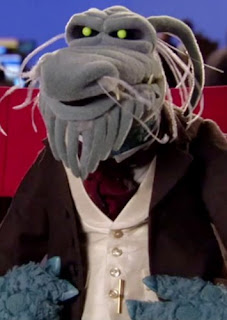
From Phantom to Phenom: The Evolution of Uncle Deadly

Uncle Deadly made his first appearance in the Vincent Price episode of The Muppet Show in 1977, but the four decades since have seen him evolve considerably from a periodic secondary character to a core member of the ensemble with major roles in several of the more recent Muppet productions, including the feature film The Muppets (2011), the 2015 ABC series, The Muppets, and Disney’s 2020 shortform streaming series, Muppets Now. As his significance has grown, so has the development of his personality. He first appeared as a monster character who occasionally contributed to situations that called for the creepier members of the extended cast, but the Uncle Deadly of today is quite a different fellow from the menacing thespian fiend of the distant past. Indeed, Uncle Deadly might be one of the Muppets’ most dynamic characters, partly because his ascension to central player status arrived so long after his original introduction. More recent productions have taken advantage of his potential and room for development to create a very modern Uncle Deadly, one who still has his roots in his theatrical, macabre past but also embodies twenty-first century sensibilities regarding fashion, social media, and sexuality.

Uncle Deadly began his existence as a tribute to classic horror, and his early appearances on The Muppet Show highlighted his connection to that genre. Michael K. Frith designed the character, Dave Goelz built him, and Jerry Nelson created his voice and manner as an homage to classic horror icon John Carradine. The notoriously hammy Carradine inspired the character’s Shakespearean bent and theatricality and also underscored his identity as the embodiment of a certain kind of horror, not the bloody slashers so prominent in the mid-1970s, when The Muppet Show first aired, but B monster movies like House of Frankenstein (1944), House of Dracula (1945), and The Black Sleep (1956). Carradine, in other words, was a king of horror camp, especially after appearances in low-budget 1960s pictures like Billy the Kid Versus Dracula (1966), Blood of Dracula’s Castle (1969), and Madame Death (1969). It’s entirely appropriate, then, that Uncle Deadly made his initial appearance on the series during the Vincent Price episode, where he played the horror star’s “beautiful assistant” during a New Year’s Eve sketch called “House of Horrors.” Price, another icon of the genre, was a natural choice to pair with Uncle Deadly; Price would even go on to star with John Carradine in The Monster Club in 1981 and House of the Long Shadows in 1983, and Price would be reunited with Uncle Deadly when the Muppets took over The Tonight Show in 1979 to promote The Muppet Movie, even though Uncle Deadly had no real part in that film. 
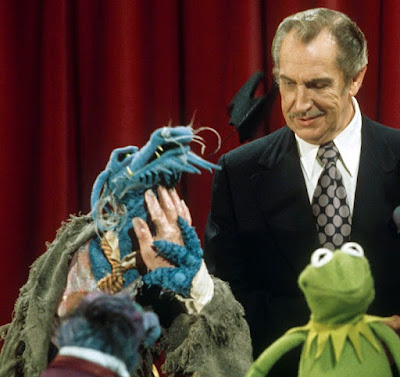
Uncle Deadly and Vincent Price

Uncle Deadly’s second appearance on the show, and his formal introduction by name, came in the first season Twiggy episode, where he haunted the cast as The Phantom of the Muppet Show, a Shakespearean actor who had died onstage thanks to bad reviews of his Othello. Many of the great horror stars had similar theatrical backgrounds, including Carradine, Price, Basil Rathbone, and Boris Karloff. Price had even starred as a Shakespearean actor driven mad by critics in the 1973 film, Theatre of Blood. As a theater phantom, Deadly tapped into the rich legacy of The Phantom of the Opera, from the original novel by Gaston Leroux and the 1925 Lon Chaney film to the much more contemporary Phantom of the Paradise, the 1974 cult musical directed by Brian De Palma and starring Paul Williams, an important Henson collaborator who had also been a first season guest on The Muppet Show. In 2017, the Muppets hung a lampshade on this connection by casting Uncle Deadly as the actual Phantom in the Penguin paperback, Muppets Meet the Classics: The Phantom of the Opera. Thus, even as a minor character, Uncle Deadly came heavily invested in a particularly rich mix of literary, theatrical, and cinematic influences, which possibly explains how he could capture viewers’ imaginations so thoroughly with so little screen time on the original television series and films. 

Despite his promising beginning, The Muppet Show never quite figured out what to do with the character, and he made only a few additional appearances on the original television series, including two installments of a melodrama parody that had him terrorizing an imperiled Miss Piggy. He never became a key figure for the show and ceased to be featured after the third season, making his appearance on the 1979 episode of The Tonight Show all the more noteworthy, and almost certainly solely due to Price’s presence as the episode’s first guest. While he turned up occasionally in other Muppet media, mainly print publications, he ceased to be a performed character, with Nelson’s last credit for him taking place in 1979. Just like a phantom, Uncle Deadly more or less disappeared, and his comeback would take decades to materialize.

Of course, the 2011 Disney movie, The Muppets, marked a comeback for all of the characters, who had not starred in a theatrical release since Muppets from Space in 1999, but none more so than Uncle Deadly, who burst into greater prominence than he had ever enjoyed before. According to Ryan Roe of the Muppets fansite, Tough Pigs, the picture’s director, James Bobin, was a fan of the sinister blue monster who wanted Uncle Deadly in the story, which cast him as a henchman to villainous oil tycoon Tex Richman (Chris Cooper). Performed by Matt Vogel, this new iteration retained the core elements of his original personality but traded his phantom rags for a neat if somber suit that fitted his role as the lackey of a wealthy businessman. Deadly’s self-described “terrifying name and evil English accent” made him a more traditional villain sidekick than his co-henchman, Bobo the Bear, even though Bobo had already filled the same function in Muppets from Space a decade earlier. It was nothing like a major role compared to those of the core characters, but it proved to be a particularly dynamic one. At first depicted as an accessory to Richman’s evil schemes, Uncle Deadly dramatically rejected the villain and embraced his identity as a Muppet. Longtime Uncle Deadly fans, Ryan Roe and myself included, cheered this development and looked forward to Uncle Deadly’s continuing presence as a more important character, but the 2014 sequel, Muppets Most Wanted, didn’t seem to know how to use him if he wasn’t going to be a villain anymore, and he was once again reduced to a minor cameo role.
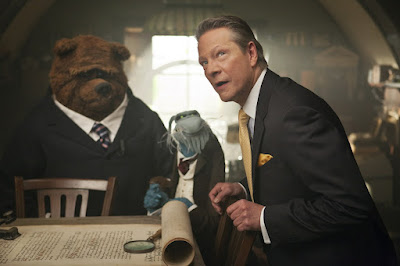
Uncle Deadly schemes with Bobo and Tex Richman.

Luckily, a return to television was just around the corner for the now Disney-owned characters, and Uncle Deadly’s evolution persisted in surprising but utterly appropriate ways. No longer a phantom or a fiend, Deadly took up the job of wardrobe manager for Up Late with Miss Piggy, the fictional talk show setting for the short-lived 2015 ABC series, The Muppets. The show had a troubled start, with The New York Times calling it “mundane” and “overwrought,” and The Guardian describing it as “cynical” and “heartbreaking.” Most of the complaints focused on the core characters, especially a depressed and joyless Kermit, but the retooling the show underwent after the first ten episodes brought major changes that extended to Uncle Deadly, as well. Initially a background character - yet again - with relatively few scenes and lines, Deadly blossomed into a fully realized member of the cast after the tenth episode. He was not only the wardrobe manager for the show but a talented fashion designer and, most importantly, the chief confidant and friend of Miss Piggy, who had long suffered from the boys’ club nature of the core Muppets cast and her own treatment of other female characters as professional and romantic rivals. Piggy had always needed a scene partner who could appreciate her perspective and also push back against her temper while still maintaining their relationship, and Uncle Deadly turned out to be a perfect choice. With new, dapper costume changes that suited his sartorial sensibility and large chunks of screen time with Piggy, Uncle Deadly was suddenly even more developed and integral than he had been in the 2011 film. He was witty, wry, and still an old theater ham at heart, but he also brought much needed emotional grounding to Piggy, allowing her to move beyond the one-note diva depiction that had plagued her since the original show. In late season episodes like “A Tale of Two Piggies” and “Got Silk?”the friendship took center stage, with Deadly actually returning to the stage in full Alicia Silverstone costume for a production of Clueless that he was directing. Unfortunately, the series makeover came too late to convince Disney and ABC to greenlight a second season, but the evolution of Uncle Deadly stuck as one of the best outcomes of the canceled show. 

Since the 2015 series, we’ve continued to see this new version of Uncle Deadly in a variety of media. He joined Twitter in January 2016, where his account bio reads “Get thee to Twitter where I, Uncle Deadly, deliciously dish about great acting, high fashion, and absolutely everything in between.” The account is still active in 2022, where the most recent post on September 3rd says, “All fans of fashion know that one of the best places for outfit shopping is the thrift store. You just might find absolutely anything there! Well... not ANYTHING. For instance: you'd never find Miss Piggy there.” He provided fashion advice and witticisms on the YouTube “Muppet Thought of the Week” series from 2017 to 2018. He appeared at the Disney media event, D23, in 2019, and made appearances along with other Muppets for a variety of special performances. He then returned as Piggy’s constant companion for the 2020 Disney+ series, Muppets Now, which also saw him getting back to his theatrical roots by teaching Walter about stage combat. His significant presence on Muppets Now was particularly noteworthy because the six episode show, a stripped down production that dropped to streaming in July 2020, in the midst of the first year of the Covid pandemic, featured a very small cast of core Muppet characters. Uncle Deadly had clearly arrived as a beloved major character, one whom fans expected to see in any Muppet project. 

It was surprising, then, to see Disney relegate Uncle Deadly to a cameo role once more for the 2021 Disney+ Halloween special, Muppets Haunted Mansion, which ought to have been the one place the character absolutely deserved a major presence. Disney certainly knew that Uncle Deadly belonged in such a setting; he had served as the host for the 2021 Disney Parks video, “A Self-Guided Tour of the Most Mystifying Attractions Around the World,” which covered the various incarnations of The Haunted Mansion in Disney theme parks. Uncle Deadly’s horror connections overlapped with those of the famous Disney dark rides, especially Phantom Manor at Disneyland Paris, which Vincent Price had provided the original English language dialogue for and which to this day features Price’s iconic laughter. It seems painfully obvious to any fan of the Muppets and The Haunted Mansion that Uncle Deadly ought to have played the Ghost Host for the special. The elegant cast member costume, the Host’s sepulchral and darkly comedic voice, his identity as one of the resident specters, and the ride’s intentional evocation of classic horror atmosphere all pointed to Uncle Deadly as the perfect choice, but Disney chose instead to cast Will Arnett in the important role and have Uncle Deadly appear only as the Justice of the Peace during the wedding scene. In an otherwise delightful Halloween special, this slight stood out as an attempt to return Uncle Deadly to the background, and I hope it proves to be an aberration and not a sign of things to come with future Muppet productions. 

Having looked at the long, dynamic history of the character, we can see that Uncle Deadly has evolved much more markedly than many of his fellow Muppets. He has been particularly well-positioned to do so by his tremendous potential and his early role as a background character without as much baggage to dictate his development over the decades. The original core cast, like Kermit, Piggy, and Fozzie, have been more fixed over time because their personalities and roles were so clearly established in the 1970s. The negative reaction to a depressed Kermit on the ABC series shows how viewers expect those characters to remain true to their earlier selves even as studio owners, puppeteers, and decades change. Other minor characters with less compelling personalities have stayed in the background or mostly disappeared; think of Hilda, the original wardrobe manager on The Muppet Show, or Wayne and Wanda, or Bobby Benson’s Baby Band. The Muppets cast is full of weird characters who have never broken into the inner circle, even though we do see the occasional newcomer, like Rizzo, Pepe, and Bobo, rise to prominence, and sometimes fall out again, as Rizzo seems to have done with the contentious departure of creator and performer Steve Whitmire. Uncle Deadly has already survived the transition from original performer to second generation, even though his somewhat uneven prominence over the last decade suggests that his position as a top tier character is not yet secure, at least in the eyes of the Disney studio bosses. His rise, however, suggests how much the Muppets need a character like Uncle Deadly, who can change with the times by building on his original traits rather than erasing them. He fills gaps in the original core without negating what we already know about him. Like Gonzo, he’s a bizarre character associated with performance, counterculture, and the arts, but his horror roots give him a more grandiose, elegant personality and an ego that makes him an ideal equal and foil to Miss Piggy. Deadly’s evolution as a fashion icon fits with those traits, too, especially given the Gothic extravagance of many of his costumes, which would have looked just as appropriate on Vincent Price in his best horror roles. Vanity, after all, is a trait long associated with both preening stage actors, maniacal villains, and fashion designers. 
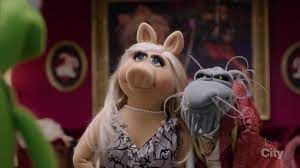
Uncle Deadly and Miss Piggy, BFFs.
 

There’s another aspect to this evolving Uncle Deadly that also fills a gap in the core cast and merges a variety of subtexts from his history, and that’s the way in which the character has increasingly leaned into an identity that we recognize as queer. Disney has carefully avoided making this aspect of Uncle Deadly explicit, but it surges through the undercurrent of his personality and function. His original persona, inspired by scenery chewing horror heavies, already contained the seeds of queerness because queer-coded villains in classic horror, film noir, and science fiction were often depicted in the same way, with their suspect sexuality expressed by their sinister yet refined demeanor, their fastidious fashion sense, and their penchant for theatricality. The representation, while certainly problematic in many respects, simultaneously made space for gay and bisexual actors who built their careers on such roles, including Clifton Webb, Laird Cregar, Charles Laughton, and Ernest Thesiger, while actors like Peter Lorre, George Sanders, Claude Rains, and, of course, Vincent Price, capitalized on their ability to channel the same energy into villainous characters. 

The more modern depiction of Uncle Deadly moves beyond the villain stereotype even as it steps into the territory of the queer-coded character as “gay best friend” to a female protagonist, a trope familiar from films like Clueless (1995), My Best Friend’s Wedding (1997), and The Devil Wears Prada (2006). There’s a reason, after all, that Deadly is directing a stage production of Clueless in the “Got Silk?” episode of the ABC series. He gets more screen time in the recent series largely because Piggy needs a scene partner and he can talk to her about the things that interest her, namely herself, her appearance, and her outfits. As Deadly dishes about fashion and acting on Twitter, TV series, and YouTube, he performs an identity familiar to modern viewers from Queer Eye, Legendary, RuPaul’s Drag Race, and other productions where fashion and queer sexuality connect as the central themes. On the plus side, Deadly’s frequent appearances in online media allow him to embody those traits without being an accessory to Miss Piggy, and he gets to command our attention as the true star of the scene. As a character who originally had his own independent function as a character, Deadly is proving that he can still stand alone and appeal to audiences without being tethered to Piggy, even though his relationship with the diva has driven much of his recent development. 

At this time, it’s difficult to say what comes next for Uncle Deadly. His Twitter account still posts new content frequently, and Matt Vogel is still very much involved with the Muppets as a performer, so we can hope that he won’t disappear again as he did in 1979. In spite of his reduced presence, we did see him feature in a key scene in Muppets Haunted Mansion in 2021, and the Disney Parks Haunted Mansion video shows that Disney sees him as a good fit for spooky or Halloween content. However, the Muppets present an embarrassment of riches similar to those of the Marvel Cinematic Universe and Star Wars when it comes to Disney project opportunities. We know that the next Muppet production coming to Disney+ will be Muppets Mayhem, a series focusing on The Electric Mayhem and a supporting group of human characters. Deadly may or may not appear in the series, depending on the extent to which it incorporates characters beyond the actual band members. The Muppets YouTube channel, while still up and full of older content, last saw a new post six months ago, and two years have passed since Uncle Deadly’s last appearance there. Because the Muppets are now just one property within the ever-expanding multimedia Disney juggernaut, projects featuring them have to compete with other brands for development, streaming opportunities on Disney+, and theatrical releases. We’ve already seen Disney cancel Muppet series after a single season or abort them mid-development, as happened with the planned 2019 series, Muppets Live Another Day. It’s possible that Disney might relegate Deadly to the background again as it focuses on different Muppet projects, which are themselves of less importance to the studio than the wildly lucrative Marvel and Star Wars properties.


That would be a shame, too, because I, for one, can imagine many projects where Uncle Deadly’s particular talents could be employed to great effect. His personality and history would make him ideal for productions highlighting theater, fashion, the arts in general, and light horror. Even though the Uncle Deadly’s House of Badness TV concept for a kid-friendly horror show never got off the ground back in 2000, the idea still has merit, especially since the enduring appeal of Hocus Pocus ought to prove to Disney that family appropriate horror can have tremendous appeal. Uncle Deadly would be a perfect horror host for tales of the weird and eerie, but he would also fit in perfectly in Muppet adaptations of Shakespeare, or as the host and star of a Muppet makeover show where various characters or human guest stars get their looks updated. A return to theatrical releases of literary adaptations would also provide rich possible roles for Uncle Deadly, from the obvious Phantom of the Opera to Dracula, Sherlock Holmes, and even Robin Hood, with Deadly in any of the roles previously filled by kindred spirits like Carradine, Karloff, Price, Basil Rathbone, or Christopher Lee. With a character as rich and versatile as Uncle Deadly, only a failure of imagination on the studio’s part can limit his future with the Muppets cast. 

* This essay was originally written for and presented online at The Evolution of Jim Henson's Puppetry: From Analog Craft to Digital Franchise symposium.