Showing posts with label Halloween. Show all posts

Thursday, October 24, 2024

10 Classic Frankenstein Movies Worth Watching

This fall I taught a lifetime learning class about the history and cinematic legacy of Frankenstein, so of course I've had the iconic tale of gods and monsters on my mind throughout the Halloween season. One of the reasons for the story's enduring success is its adaptability; like Shakespearean plays, Frankenstein can change with the times to reflect an era's particular fears about life, death, science, and what it means to be human. Even from the early days, movie versions of Mary Shelley's 1818 novel have varied wildly from their source material, altering both story and meaning to suit their own aims. Here are 10 of my favorite Frankenstein movies, presented in chronological order, to make a frightful film festival for monster movie fans.

1) Frankenstein (1931)

The original Universal movie has to start this list because Boris Karloff and Colin Clive create indelible images with their performances as the Creature and his creator (inexplicably renamed Henry Frankenstein). I think it drags a bit when it leaves the laboratory to focus on Henry's domestic life and worried loved ones, but its influence over later adaptations continues to be felt, especially when we see Shelley's articulate, philosophical Creature reduced to a shuffling, undead thing.


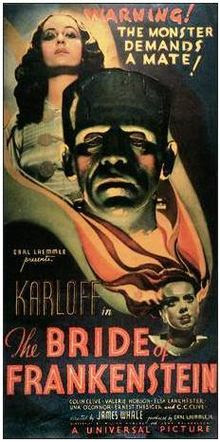
2) The Bride of Frankenstein (1935)

I prefer the sequel to the first Universal picture because it lets James Whale and his cast loose from the limitations of the first movie's roots in a stage play adaptation of the novel. It's wilder, weirder, and a lot more fun all the way through, especially with Ernest Thesiger, Una O'Connor, and Elsa Lanchester joining Karloff and Clive for this outing. If you only see one of the classic Universal entries, this is the one to watch.

3) Son of Frankenstein (1939)

The next generation succumbs to the family's penchant for reanimation in this follow-up, with Karloff returning as the Creature and Basil Rathbone stepping in as Wolf Frankenstein, the son of the original scientist. This one is also notable for its gorgeous German expressionist sets and for Bela Lugosi's appearance as Ygor, the first time that name refers to Dr. Frankenstein's assistant. This is probably the best of the later Universal films, although I do enjoy Frankenstein Meets the Wolf Man (1943) for its revival of the long-suffering werewolf, Larry Talbot (Lon Chaney, Jr.).

4) Abbott and Costello Meet Frankenstein (1948)

More treat than terror, this horror comedy is a Halloween favorite that pits Abbott and Costello against a ghoulish gang of classic monsters, including Glenn Strange as the Creature, Bela Lugosi as Dracula, and Lon Chaney, Jr. as Larry Talbot, aka the Wolf Man. If you want to introduce kids to classic Universal monsters without scaring them too much, this movie is a great choice. You even get Vincent Price making a cameo "appearance" as the Invisible Man at the very end!

5) The Curse of Frankenstein (1957)

Hammer started its own series of Frankenstein films with this adaptation, which stars a very creepy looking Christopher Lee as the Creature and Peter Cushing as Dr. Frankenstein. Scream queen Hazel Court also appears as Elizabeth, and the whole thing is rendered gorier because it's in color. Although Cushing's character is condemned to execution in the first movie, he survives to wreak more havoc with his experiments in The Revenge of Frankenstein (1958), The Evil of Frankenstein (1964), Frankenstein Created Woman (1967), Frankenstein Must Be Destroyed (1969), and Frankenstein and the Monster from Hell (1974).

6) Young Frankenstein (1974)

No list of Frankenstein movies would be complete without this comedy gem from Mel Brooks, with Gene Wilder starring as Frederick Frankenstein, the unwilling heir to his family's legacy who nonetheless ends up building a Creature of his own. The movie uses sets from the original Universal films and is stuffed with gags that work best if you've seen both the 1931 movie and the 1935 sequel. Often hailed as one of the best comedies of all time, it's still uproariously funny 50 years later.

7) Frankenweenie (1984)

Tim Burton has a long-standing love affair with the Frankenstein story, as evidenced by Edward Scissorhands (1990) and the 2012 stop motion remake of this 1984 live action short, but I like the short for its brevity and concentrated weirdness. Disney originally considered this version too scary for kids and fired Burton because of it, but Burton's later success caused Disney to reconsider the short's appeal. Kids today are unlikely to be phased by anything in Frankenweenie, especially those who have already seen any of Burton's other, later films.

8) The Bride (1985)

Fair warning that I haven't rewatched The Bride in a long time, but it makes the list for nostalgia's sake because I first saw it in the 80s and loved it then, partly for its focus on a female Creature (played by Jennifer Beals) and partly for its casting of rock god Sting as Dr. Frankenstein. The movie also stars Clancy Brown as the male Creature and Cary Elwes as another man with a romantic interest in the heroine. I won't pretend this is a brilliant movie, but it is very much a product of its era, and my inner teenager still regards it with affection.

9) The Monster Squad (1987)

Speaking of the 80s and nostalgia, The Monster Squad brings plenty of love for classic monsters and a Goonies sensibility to its horror comedy hijinks, with a group of kids who band together to fight the evil schemes of Count Dracula (Duncan Regehr) and his minions. Frankenstein's Creature, played by Tom Noonan, is supposed to be helping the vampire but turns out to be an ally to the kids, and his friendship with a little girl (Ashley Bank) makes a sweet counterpoint to the tragic scene with a different girl in the 1931 film. This one might actually be too scary (and too free-wheeling with its profanity and sexual references) for very young kids, but it's a perfect pick for tweens, teens, and adult monster kids.

10) Gods and Monsters (1998)

Although it isn't technically a horror movie or an adaptation of Shelley's novel, this fictionalized account of the last days of James Whale is an insightful look at the director's life and work, and it seems fitting to end this list here. Ian McKellen gives a brilliant and moving performance as the aging Whale, and the picture includes flashbacks to the making of Whale's most memorable films. Brendan Fraser costars as Whale's young gardener. Gods and Monsters earned three Oscar nominations, with nods for McKellen as Best Actor and Lynn Redgrave as Best Supporting Actress, and it won the award for Best Screenplay. 

See also: 10 Classic Movies Starring Boris Karloff and 10 Classic Movies Directed by James Whale

Friday, October 8, 2021

Five Favorite Films: Halloween Treats

Halloween is my favorite holiday, even though I'm too old for trick-or-treating and don't have a little one now to take around the neighborhood. It's an especially good time of year to revisit the movie monsters and film phantoms of Golden Age Hollywood, but there's a lot more to enjoy than the obvious Universal pictures. I love classic horror in general, but I especially love the funnier, less scary Halloween treats of the spooky season, with goofy ghosts and wacky witches and some of the great stars of classic Hollywood dressing up for the occasion. Here are five of my favorite Halloween appropriate comedies to go with your candy corn and caramel apples as you savor the season.

The Ghost Goes West (1935)

This British production is probably the least well-known entry in this list, but it's absolutely worth tracking down. It has a number of plot points in common with the later picture, The Canterville Ghost (1944), but in this story the haunted castle gets moved to the United States by a wealthy American businessman (Eugene Pallette), and the ghost (Robert Donat) is forced to come along. Donat plays a double role here as both the ghost and his modern day descendant, which is handy for leading lady Jean Parker. More romantic comedy than ghost story, this is such fun that it deserves to be seen by more people, which is why I include it here. It also features the marvelous Elsa Lanchester in a supporting role.

I Married a Witch (1942)

Veronica Lake stars as Jennifer, the witch in question in this hilarious screwball comedy with a supernatural twist, and Fredric March is the cursed descendant of the man who burned her and her father (Cecil Kellaway) at the stake many centuries ago. When their spirits awaken from a long slumber, Jennifer and her dad intend to resume their persecution of the stuffy, wealthy Wooley family, but love upsets the plans for revenge. Fun special effects, a wicked sense of humor, and a fantastic cast make this a perfect pick for the season.

 Arsenic and Old Lace (1943)

Cary Grant might not have liked his work in this adaptation of the darkly hilarious stage play, but audiences loved him and it so much that it has been a perennial favorite for decades. Frank Capra directs a pitch perfect cast, many of them reprising their roles from the stage production, and Jean Adair and Josephine Hull run away with every scene as the dotty old aunts whose "charity work" involves poisoning elderly men. Although there's nothing supernatural about the characters, the story takes place on Halloween and costars horror regular Peter Lorre; Raymond Massey plays the murderous brother whose role in the original play had been filled by Boris Karloff, but Karloff wasn't able to to reprise the role in this film. 

The Canterville Ghost (1944)

Loosely adapted from the story by Oscar Wilde, this is a ghostly comedy with lots of laughs and a surprisingly sweet heart, thanks to charming performances by Charles Laughton, Robert Young, and Margaret O'Brien. Laughton stars as the ghost, Sir Simon, who hopes to break the curse of his long, lonely existence by demonstrating the courage that eluded him in life. When a group of American soldiers are stationed at the Canterville family castle during World War II, Sir Simon meets Cully (Young), who might be able to help him. O'Brien's role as a central character and the themes of courage and friendship make this movie a great choice for younger viewers.


Abbott and Costello Meet Frankenstein
(1948)

Universal was happy to transform its iconic monsters into comedy stars for this wonderful installment in the Abbott and Costello series of pictures, in which the duo play Chick (Bud Abbott) and Wilbur (Lou Costello), two hapless freight handlers who unwittingly get tangled up with Dracula (Bela Lugosi), the Wolf Man (Lon Chaney Jr.), and Frankenstein's monster (Glenn Strange). Hilarious antics ensue as the monsters scheme to remove Wilbur's brain and use it to restore Frankenstein's creature. Even if kids haven't seen the original Universal movies starring these characters, they'll recognize the monsters and get a kick out of this delightful film, but it's a must-see for classic horror fans of all ages.

For even more fun Halloween classics, try Topper (1937) and its sequels, The Ghost and Mrs. Muir (1947), Bell Book and Candle (1958), and The Comedy of Terrors (1963).

Thursday, October 13, 2016

Classic Movie Haunted Houses for Halloween

Last week we spent a few days in Gatlinburg, Tennessee, where, at the insistence of my teenage daughter, we visited a commercial haunted house. It's called Mysterious Mansion, but there's nothing very mysterious about it. Visitors pay $16 a pop for 15 minutes of being jumped at and chased around by people in weird makeup and masks. There was the obligatory scary clown, some girls covered in fake blood, and a guy in a Grim Reaper outfit wearing jeans under his robes. My daughter had a good time, but for the adults the most entertaining part was watching a teen girl in the group ahead of us totally lose it and bail a third of the way through the house. The rest was just darkness, narrow spaces, and some irritating strobe lights. The underwhelming experience left me thinking about my favorite haunted houses in classic movies and why they're so much better than these attractions that pop up all over the place come Halloween.

For me, a good haunted house movie has several elements. One is atmosphere that I'm given time to appreciate. Another is a compelling narrative that explains the supernatural phenomena and creates a reason to care about the characters (including, ideally, the dead ones). I like weird effects more than gore; in fact, I'm not much on seeing anyone's intestines or brains, which is why I don't watch slasher films. I want my haunted house to have ghosts, not psychopaths (but I'll forgive the occasional psychopathic ghost). With those criteria, it's probably no surprise that my top shelf haunted house movie is...


THE HAUNTING (1963)

Robert Wise's neurotically eerie horror classic wins hands down in the Haunted House Hall of Fame. It has everything, including deliriously Gothic atmosphere and a heroine who is going completely off the rails. Who can forget that moving door, an effect so simple and yet so unbelievable when you see it? I think everyone who runs a haunted house ought to be made to watch The Haunting a dozen times first (and don't let them anywhere near the dopey 1999 remake).


THE UNINVITED (1944)

The slow burn of this ghost story might bore some viewers, but for me it's one of the best of the genre, combining elements of classic mystery with its spectral terrors. Ray Milland, Ruth Hussey, and Gail Russell star as three people whose fates become entwined with that of a house inhabited by the spirits of the dead.  The Criterion Collection release of this film makes a grand Halloween treat for your plastic pumpkin.


HOUSE ON HAUNTED HILL (1959)

OK, so this William Castle classic is not a very serious haunted house movie, but it's just so much fun, and it does offer a couple of great jump scares. That blind housekeeper gets me every time! Besides, Vincent Price and William Castle have to be on this list somewhere. It's just not Halloween without them. This is the go-to pick for a Halloween party where you want to laugh and shriek in equal measure.


DRAGONWYCK (1946)

Speaking of Vincent Price, I love the haunted house atmosphere and his Gothic villain in this supernatural tale, even if the adaptation of Anya Seton's novel has some structural issues. Gene Tierney plays Price's new bride, who only slowly comes to understand the ghostly terrors of her husband's home. This is a good one for Jane Eyre fans in particular; it was part of a wave of creepy Gothic romances that followed the 1940 success of Rebecca.


So, if you're looking for haunted houses this Halloween, I suggest you start with one of these instead of standing in line to hand over your cash for fifteen minutes with scary clowns. These are the movies whose worlds I wish a haunted house would take me through, where ghostly music plays and the things you don't see are a lot more terrifying than the things you do.

Looking for related classic horror posts? Try "The Gothic Influences of Disney's Haunted Mansion" and "The Housekeeper in the Gothic Film Tradition."


Friday, October 24, 2014

ELVIRA'S HAUNTED HILLS (2001) Have Eyes for Vincent Price

Serendipity led me to watch the 2001 horror-comedy Elvira's Haunted Hills this week, immediately after several nights running of Roger Corman classics. The Elvira picture popped up on Hulu Plus; I wasn't planning to watch it but figured "Why not?"since I like Elvira's oddball style well enough that I own the Elvira: Scared Stiff pinball machine (come on over sometime and you can play, too). I hadn't seen Haunted Hills before, but imagine my delight when it turned out to be a loving parody of two movies I had just seen: House of Usher (1960) and The Pit and the Pendulum (1961)!

Seriously, Richard Matheson really deserves a writing credit for Elvira's Haunted Hills because whole chunks of dialogue are lifted directly from the older movies. The plot splices together the Roger Corman versions of two classic stories by Edgar Allan Poe, with much more emphasis on Corman than Poe. There's some Dracula (1931) thrown in for good measure, along with a string of other gags that mock familiar films and tropes. The result is sort of a mess, but it's a funny mess, especially if you recognize the source material and the way the Elvira film turns it to comedic purposes.

Elvira plays herself, naturally, roaming around 19th century Carpathia en route to Paris and her showbiz career. Along with her French maid, Zou Zou (Mary Jo Smith), Elvira accepts a carriage ride from randy Dr. Bradley (Scott Atkinson) and ends up at Castle Hellsubus, where she meets Vladimere Hellsubus (Richard O'Brien), his wife (Mary Scheer), and his consumptive niece (Heather Hopper). Vladimere suffers from acute sensitivity and an obsession with his dead wife, Elura, whom Elvira happens to resemble. Weird mayhem ensues, along with a fair bit of randy humor, which is just what one expects from Elvira.

This is goofy, low-budget stuff, but it's clear that Cassandra Peterson and her director, Sam Irvin, share a deep love for the Corman Poe movies. The picture is even dedicated to Vincent Price, who played the lead characters in Corman's films. Richard O'Brien, best known for The Rocky Horror Picture Show (1975), offers his own take on the Price characters but certainly seems to be having a lot of fun. He looks more like Nosferatu but doubles down on psychological infirmities with Roderick Usher's hypersensitivity and Nicholas Medina's morbid obsession with his deceased bride. The wan Lady Roxana, aka "Catalepsy Poster Child," wickedly skewers the Poe motif of the dying maiden, while Lady Ema takes her cues from Cloris Leachman's Frau Blucher in Young Frankenstein (1974) but still evokes the Gothic wives of the Corman pictures.

For the best experience with Elvira's Haunted Hills, do watch House of Usher and The Pit and the Pendulum first, perhaps over the Halloween weekend. Then you can really revel in the allusions and jokes the way God and Cassandra Peterson intended.

You wanted to see the pinball machine, didn't you?

Thursday, October 31, 2013

Ten Classic Horror Films for Halloween

Happy Halloween! It's time for spooks, ghouls, and other things that go bump in the night, which means now is the perfect time to curl up with some classic horror movies. It's the season of Vincent Price, Christopher Lee, Peter Lorre, Lon Chaney, Boris Karloff, and other iconic horror stars, all of them still delightfully creepy even in films made more than fifty years ago. Here are ten of my favorite Halloween treats; as you can tell, I like my classic horror both classy and campy, although I'm not generally a big fan of gore.

1) THE DEVIL-DOLL (1936) - Tod Browning directs Lionel Barrymore in drag! The dolls, as creepy as they are, still aren't as scary as Rafaela Ottiano, who plays the wife of the scientist who creates them.

2) THE WOLF MAN (1941) - My favorite Universal monster makes his screen debut, with Lon Chaney, Jr., Claude Rains, Bela Lugosi, and scene-stealer Maria Ouspenskaya. "Even a man who is pure of heart, and says his prayers by night, may become a wolf when the wolfbane blooms, and the autumn moon shines bright..."

3) CAT PEOPLE (1942) - Val Lewton's signature horror gets extra class from director Jacques Tourneur, while Simone Simon's feline anti-heroine suffers the fatal pangs of romantic disappointment. The stalking sequences are still enough to make you nervous about being alone in dark places.

4) ARSENIC AND OLD LACE (1944) - No, it's not really a horror film, but it has such a good time playing with the conventions of the genre, from Peter Lorre's Dr. Einstein to Raymond Massey's Boris Karloff lookalike. There's something inherently absurd about homicidal old ladies, but we love the Brewster sisters all the more for their deadly idea of charity work! Besides, the story takes place on Halloween, which makes it the perfect movie to watch on October 31.

5) BEDLAM (1946) - I adore Val Lewton, so he gets a second film in my list. This one stars Boris Karloff and Anna Lee and takes place largely in the notorious 18th-century London madhouse. Gothic, literate, and full of great shocks, BEDLAM is not as well-known as CAT PEOPLE but definitely deserves more attention from classic horror fans.

6) EYES WITHOUT A FACE (1960) - Georges Franju's haunting tale of murder, mutilation, and madness is one of the scariest classic horror films I have ever seen, mostly because its images and themes stay with the viewer long after the movie ends. If you're looking for serious chills for Halloween, this is the picture for you.

7) THE HAUNTING (1963) - For serious scares I love this iconic haunted house chiller, which skillfully adapts the novel by Shirley Jackson and really puts the screws to the audience as well as the characters. Julie Harris and Claire Bloom fall apart magnificently when the house cranks up the horror, and that breathing door scene is something you'll never forget.

8) THE COMEDY OF TERRORS (1963) - This black comedy brings so many of my favorite horror players into one place. We have Jacques Tourneur directing and Richard Matheson writing, with Vincent Price, Peter Lorre, Boris Karloff, and Basil Rathbone playing the leads. You'll die laughing!

9) DRACULA A.D. 1972 (1972) - Disco Dracula! This is one of the trippier Hammer horrors to star both Christopher Lee and Peter Cushing in their vampire and Van Helsing roles, but it's just so much fun, including the house party performance of "Alligator Man."

10) HOUSE OF THE LONG SHADOWS (1983) - It's silly and more like a thrill ride than a straight horror story, but I can't resist this movie's dizzying array of classic horror stars. Who can resist Vincent Price, Christopher Lee, John Carradine, and Peter Cushing all together?

What are your favorite classic horror movies for Halloween?

Sunday, October 27, 2013

Halloween Playlist: 10 Songs Inspired by Classic Horror Movies

Halloween is my favorite holiday, partly because it's a great excuse to watch classic horror movies, and partly because I get to trot out my Halloween playlists of songs about vampires, werewolves, and other things that go bump in the night. (OK, so I listen to them all year round, but this time of year they just sound cooler.) Actually, a lot of great pop and rock songs have been directly inspired by classic horror films, and not just the most popular movies that everyone already knows. If you're looking for something to listen to this week while you fill your streaming queues with Hammer horror, Universal monsters, and other ghoulish goodies, here are ten of my go-to favorites for a classic horror Halloween playlist.

1) "Nosferatu" by Blue Oyster Cult - The 1922 silent vampire classic from F.W. Murnau is the direct inspiration for this song from the band best remembered for "Don't Fear the Reaper." The song actually covers the plot of the whole movie, and it's creepy enough to deserve a top spot on any Halloween playlist.

2) "Ballad of Dwight Fry" by Alice Cooper - Horror icon Dwight Frye played Renfield in the 1931 Dracula and also appears in supporting roles in other Universal horror classics, so it's no shock that Goth god Alice Cooper might want to sing Frye's praises. In the song, Cooper impersonates the kind of character Frye often played, not the actor himself.

3) "The Creature from the Black Lagoon" by Dave Edmunds - The Universal monster gets his own theme song with a rock n roll groove; the song appeared on the 1979 album, Repeat When Necessary. The Creature doesn't get as much love as some of the earlier monsters, so I appreciate this song for giving our watery friend some overdue musical attention.

4) "I Walked with a Zombie" by Roky Erickson - Released in 1981, Roky Erickson's album, The Evil One, is full of Halloween treats for monster fans, including this tribute to the 1943 film from producer Val Lewton and director Jacques Tourneur. Check out the rest of the album for "Night of the Vampire" and "Creature with the Atom Brain." A new version of The Evil One was released in September 2013.

5) "Blood and Roses" by The Smithereens - J. Sheridan Le Fanu's sapphic vampire Carmilla got a sexy update with the 1960 film of the same name, which then inspired this moody lament from The Smithereens. The song captures the vampire's sense of longing and exclusion from the world of the living beautifully, although most people who hear it probably don't recognize its cinematic roots.

6) "Werewolves of London" by Warren Zevon - This rocking werewolf anthem specifically calls out Lon Chaney Sr. and Jr. as its horror icons, but the title also recalls the 1936 film, Werewolf of London, which stars Henry Hull, Warner Oland, and Valerie Hobson.

7) "Bela Lugosi's Dead" by Bauhaus - You really can't have a classic horror playlist without this song inspired
by the great Lugosi, who became immortal as Count Dracula but played many other memorable horror roles.

8) "Batman, Wolfman, Frankenstein or Dracula" by The Diamonds - Any classic horror fan can appreciate this song's theme and wicked sense of humor. The speaker in the song takes his date to horror movies because that's the only thing that turns her on: "She gets romantic, it's really quaint/ When all the other women start to faint."

9) "Monster Mash" by Bobby "Boris" Pickett - Here's another one you just can't have a Halloween playlist without. All of the classic movie monsters do the mash in this much-played rock novelty tune.

10) "Howl" by Florence + The Machine - This memorably Gothic track from the band's 2009 album, Lungs, uses the ominous motto from The Wolf Man (1941) as its refrain. "Even a man who is pure of heart, and says his prayers by night, may become a wolf when the moon is full..."

What are some of your favorite Halloween songs with classic horror connections? Let me know in the comments!

Tuesday, October 30, 2012

Classic Horror for Halloween

Halloween is the perfect time to enjoy classic horror from cinema's early days. These movies make great ambience enhancers during your annual costume party, but they're also good choices for an October evening's main entertainment. Here are ten horror classics to get you in the spirit for Halloween. Look for them on streaming services like Netflix, Amazon Instant Video, or Hulu.

Nosferatu (1922) - F.W. Murnau's silent and unofficial adaptation of Stoker's famous novel packs plenty of visual thrills. Max Schreck's hideous Count Orlok is still considered the scariest movie vampire by many film fans.

Dracula (1931) - Bela Lugosi stars as the iconic count in Tod Browning's very loose adaptation, but Dwight Frye steals the movie as the doomed madman Renfield. Edward Van Sloan also creates a definitive interpretation of the Van Helsing character.

Frankenstein (1931) - Boris Karloff creates the popular face of the man-made monster in James Whale's stylish treatment of Shelley's classic novel. Be sure to follow up with The Bride of Frankenstein (1935), featuring Elsa Lanchester as the iconic monster's mate.

The Mummy (1932) - Karl Freund directs as Karloff once again establishes an icon in this tragic story of eternal love. Fans of the 1999 treatment by Stephen Sommers absolutely need to see this original version to appreciate the later director's love for his source material.

The Wolf Man (1941) - George Waggner helms this production with Lon Chaney, Jr., as the title character; Bela Lugosi also appears as the gypsy werewolf who passes his curse to the unlucky Larry Talbot. Don't miss excellent performances from Claude Rains and Maria Ouspenskaya in the supporting roles.

Cat People (1942) - Under the auspices of Val Lewton, Jacques Tourneur directs this elegant variation on the werewolf theme, with Simone Simon as the tortured heroine. The swimming pool scene is justly regarded as one of the finest moments in classic horror history.

Edith Scob stars in Eyes without a Face (1960).
Arsenic and Old Lace (1944) - This screwball comedy from Frank Capra is a Halloween staple for those who prefer lighter fare; Cary Grant stars as a newlywed whose dotty old aunts turn out to be homicidal maniacs. Look for Peter Lorre in a hilarious turn as the plastic surgeon who makes Mortimer Brewster's murderous brother (Raymond Massey) look like Boris Karloff!

Night of the Demon (1957) - Another Jacques Tourneur outing, this British horror classic stars Dana Andrews as a scientist who doubts the existence of the supernatural, even when he himself becomes its target. Peggy Cummins also stars, but Niall MacGinnis steals the picture as the sinister Dr. Karswell.

Eyes Without a Face (1960) - This French masterpiece from Georges Franju delivers dreamlike horror as a guilt-ridden surgeon tries to replace his daughter's hideously disfigured face by stealing replacements from other young women. Edith Scob stars as the disfigured heroine, with Pierre Brasseur as her obsessed father and Alida Valli as his faithful accomplice.

The Haunting (1963) - Robert Wise's terrifying adaptation of Shirley Jackson's novel offers plenty of thrills without the gore for those who like their horror on the psychological side. Julie Harris, Claire Bloom, Richard Johnson, and Russ Tamblyn star as the unfortunate visitors who rouse the house's malevolent spirit.

Looking for even more classic horror? Check out all of the posts under the "horror" label, including full-length reviews of most of these films. You'll also find plenty of classic horror films in my book, Beyond Casablanca: 100 Classic Movies Worth Watching, now available on Amazon and Barnes & Noble.com.

An earlier version of this article originally appeared on Examiner.com. The author retains all rights to this content.

Thursday, October 18, 2012

Interview with Vincent Price expert Jonathan Lampley

The Halloween season is the perfect time to talk about classic horror icon Vincent Price, who ranks among the all-time greats alongside Bela Lugosi, Boris Karloff, and Christopher Lee. In order to learn more about the star of classic thrillers like House of Wax (1953), The Fly (1958), and House on Haunted Hill (1959), I turned to horror movie scholar and lifelong fan Jonathan M. Lampley, a professor in the Humanities Department at Dalton State College and the author of the 2010 McFarland book, Women in the Horror Films of Vincent Price. He's also the co-author of The Amazing, Colossal Book of Horror Trivia (Cumberland House, 1999). Here's what Jonathan has to say about one of everyone's favorite classic horror stars.

VV: When did you first become a Vincent Price fan? What are some of your earliest memories of seeing him and his films?
 
You know, I can't remember a time when I was NOT a Price fan!  Usually I can remember when and where I was when I got into something; for example, I trace my interest in horror films to 1975, when I was about 8 years old and my parents bought me a copy of Thomas G. Aylesworth's kiddie book, Movie Monsters. Aylesworth went into the literary and historical origins of the various monster myths, so it was from him that I learned Dracula and Frankenstein were novels before they were movies.  Aylesworth also discussed the great horror stars, so he introduced me to Karloff, Lugosi, Cushing, Lee, etc.  Even after the passage of almost 40 years, I still recall knowing the name "Vincent Price" even if I did not know the other names in the book.

I have often wondered why I knew Price's name by the time I was 8, but I have no recollection of seeing any of his movies at that time.  Perhaps my older brother had something to do with it, as I remember him playing Alice Cooper's album Welcome to My Nightmare, which of course features Price's monologue on "The Black Widow," which also came out in '75.  It is also possible that I knew Price almost by osmosis, as he was on so many TV shows in the early 70s, and I have vague recollections of his appearance on The Brady Bunch around that time. I know in the late 70s I saw him on TV in The Abominable Dr. Phibes, Theater of Blood, Tomb of Ligeia, Masque of the Red Death, and many others.  Certainly I was a hardcore fan by 1979, when I saw Price live on stage in Diversions and Delights, which he did in Nashville at Vanderbilt University.  In fact, many years later I learned that Price came out and did a Q and A with the audience after the performance--but my mother and I didn't know he was going to do it, so we left at the end of the show.  I missed my chance to meet Price!  Again, though, I always knew who he was and always was interested in the actor.

VV: What made you particularly interested in looking at the women in Price’s horror movies?

Well, the book is an expansion of my doctoral dissertation, which looked at the women in Price's Poe adaptations.  I wanted to do something with classic horror for my dissertation, and even before I began writing it, I knew I wanted to publish it eventually. I started out thinking about doing something with Hammer Horror movies, and when I was considering possible approaches, I thought of focusing on the role of women in Hammer films. I don't remember exactly why I switched to the Price/Poe films, but it probably had something to do with the fact that there were already books about the women of Hammer, but nothing had been done about women in the Poe films. The more I watched and thought about the Price/Poe films and the ways women are portrayed in those pictures, the more I realized this was a topic that needed to be explored in depth.  As I point out in the book, women are portrayed as victims, vixens, and objects of veneration, often at the same time, in the Poe adaptations. When I approached McFarland about publishing the dissertation, I was told it was a little too short and needed to be expanded.  That's when I decided to look at women in all of Price's horror films, not just the Poe pictures.

VV: If you could recommend just one Vincent Price movie to readers, which one would it be? What makes that one an essential example?

That's a tough question! It's so hard to pick just one, but if I had to, I would pick The Abominable Dr. Phibes (1971).  It's my favorite of his horror films - in fact, after Horror of Dracula, it is my favorite horror movie, period!  I love the blend of horror and humor, and it is one of the relatively few scary movies set during the 1920s - even after 40 years, the costumes and sets are really cool. I have always been fascinated with the film's portrayal of the relationship between Dr. Phibes and his late wife, Victoria. In fact, my chapter on the Phibes films is my favorite in the book, but it was the hardest to write because I had so much to say about that relationship, and also Phibes' relationship with his lovely but mute female assistant, Vulnavia. There really do seem to be some interesting things going on in the subtext of those relationships!

Having chosen Phibes, though, I must admit that to really appreciate the film, you have to be familiar with Price's previous film work - and his public persona in general. The movie clearly borrows some of its ideas from previous Price movies, especially the Poe films. The idea of the Price character mourning his dead wife, still being fascinated with her - that had already been established as a trope in Price's career. The fact that Dr. Phibes is out for revenge is almost a homage to the revenge themes in House of Wax (1953) and many others.  And of course there are nods in the film to Price's reputation as an art critic and a gourmet chef. I know Phibes was one of the first Price movies I ever saw, and it has always been one of my favorites, but I think I only fully appreciated it after I had studied his life and works.

A part of me wants to pick another "desert island" Price movie, just as something to introduce future fans to his work, but something always makes me reject those other suggestions. Theater of Blood, for example, is a very, very close second favorite of mine - but its mixture of horror and humor is derived from Phibes, so at the end of the day I must choose Phibes first. The Poe films are obviously way up on my list, but which one is the quintessential Price movie?  My favorite of those would be The Conqueror Worm, but that wasn't even made as a Poe adaptation, really, and the others are just so evenly matched in terms of their strong and weak points that no clear winner emerges. House of Wax and The Fly are probably the most familiar VP movies - they certainly made the most money and were the ones most often cited in his obituaries - but as much as I like them, they just don't resonate in the same way Phibes does.

VV: Vincent Price has become such an icon of classic horror. Why do you think people react to Price so strongly, especially in horror roles?

I think Price became such a favorite because his horror star status came along at just the right time. His status had been slowly developing; remember that his earliest film roles included parts in such early shockers as Tower of London and The Invisible Man Returns. House of Wax was certainly a major turning point in his career in 1953, but an examination of his filmography reveals few other "scary movies" until 1958, when he did both The Fly and House on Haunted Hill.  By the time Price did House of Usher in 1960, he was firmly associated with the horror genre - a genre in which he found himself, incidentally, with few peers. Lugosi was dead by 1960, and Karloff hadn't made a major horror film in years. Karloff enjoyed a renaissance of sorts in the 60s, but I think interest in him was rekindled largely because of interest in Price. As much as I love Peter Cushing and Christopher Lee, and as influential as their films were in the late 50s and early 60s, their impact was always greater in Britain than in America.

Vincent Price was a "name brand" in this country, somebody my parents knew, even though they never watched horror movies. Price was such a fixture on TV and radio, and to a certain extent in print, that he really was a media superstar even without his horror films. He had a certain degree of fame among older fans because of his pre-horror career, and the 60s horror movies and TV roles introduced him to younger fans, so it was just a case of being in the right place at the right time and finding a way to exploit the opportunities that came his way.

Some critics have claimed that Price represents a sort of rebel figure that 60s-era young people related to; even though he was well into his middle years, there was something about Price that symbolized the youth movement of the time. Frankly, I think the Price characters more often than not represent the older generation; many of his performances are as characters who represent an obsolete way of life, such as the aristocratic types trying to hold onto their non-democratic way of life in 19th century America in House of Usher and especially Dragonwyck. I think young viewers in the 60s may have related more to the young protagonists in Price's Poe films. But at the end of the day, the #1 factor in Price's rise to fame seems to be his charisma and sense of humor, which shines through in so many otherwise serious performances. I don't agree with many critics who claim the actor didn't take his roles seriously; his best roles, even when there are comic overtones, demonstrate his sense of timing (comic and otherwise) and make wonderful use of his voice. Still, there is a twinkle in his eye in pretty much everything he did, and I think people of all ages were attracted to it - and some of us still are!

VV: Tell us about some of your other favorite classic horror movies and stars.

I must confess that Vincent Price is not my favorite horror star - he's #2 on my list, following very closely on the heels of Peter Cushing. My affection for Peter Cushing is largely a matter of timing; he was in Star Wars, which I saw on its original release, and that film really cemented my love not just for fantasy, sci fi, and horror, but for film in general. Star Wars changed my life, and I think the fact that Cushing was in it made me such a hardcore fan. Of course, it also is true that I became a rabid Hammer Horror fan in the middle and late 70s, and Cushing is such an icon of those pictures. Of all the horror movie stars, I think Cushing is the one who most often gave 100% - no matter how crappy the movie might be or how small the role. Cushing's face, particularly his eyes, were so good at conveying evil and villainy, but they were also perfect for conveying goodness and heroism. I am always impressed when my film students react to him - these young folks, some of whom were born after Cushing's death, somehow seem to relate to him more than the other Horror Heroes, at least based on the few films I have time to show during a semester. And as I mentioned before, Horror of Dracula has been my favorite horror film - my favorite film, period, quite honestly - for decades.

Obviously, this means I love Christopher Lee as well! I am so glad he's still around, still making movies in his 90s! I am also glad that directors like Peter Jackson and Tim Burton are using Lee and introducing him to a new generation of fans. Lee is also getting the honors for his career that the other Horror Heroes never dreamed of - his knighthood, for instance, represents to me a sort of indirect acknowledgement of the contributions to the entertainment industry made by Cushing, Karloff, Rathbone, and many other fine British performers. The same goes for his Lifetime Achievement Award from the British Film Institute. I just hope the Academy Award will honor his work before it's too late! I met Lee briefly back in 1999, so that's a highlight of my film fan career!

I also love the work of Bela Lugosi, whom I think is a seriously underrated actor. I definitely prefer him to Karloff, even though Karloff's movies tend to be better. Frankly, as much as I love Karloff, he phoned in a lot more performances than Lugosi. I am quite proud of my familiarity with old horror movies, and even I can't tell Karloff's "mad doctor" films from the 30s and 40s apart!  Of course, when Karloff was on his game, as in the Frankenstein films or The Mummy or Targets, he's nothing short of amazing.

I am less familiar with the Chaneys, especially Lon Sr., many of whose films are now lost, but I like them as well. I suppose I should list some other favorite classic horror films to your readers, so here goes: The Flesh and the Fiends (Cushing and Donald Pleasance), The Wicker Man (the original with Lee), Island of Terror (Cushing), The Human Monster (Lugosi), Son of Frankenstein (Karloff, Lugosi, Rathbone, and Lionel Atwill), Tower of London (Karloff, Rathbone, Price), Tomb of Ligeia and The Masque of the Red Death (both with Price), The Haunted Palace (Price and Chaney Jr), and one of my very favorites, the criminally underrated cult film Scream and Scream Again (with Price, Lee, and Cushing).

VV: What other books about classic horror movies can you recommend to readers?

The trivia book I wrote with Ken Beck and Jim Clark is the closest thing to those big old picture books of my childhood, as it contains a lot more information than just trivia, but it has been out for a few years. I strongly recommend David J. Skal's books, especially Hollywood Gothic and The Monster Show, as Skal is sort of the dean of classic horror movie experts these days, and a mighty fine writer as well. There are a few other books about Vincent Price; the ones I recommend most highly are the biography his daughter Victoria wrote and Dennis Meikle's excellent study from 2003. My single favorite horror movie book of all time is David Pirie's A Heritage of Horror, which came out in 1973 and was really the first serious study of British horror movies. A great book and highly influential, even though Pirie for some reason called Phibes the worst British horror film made since 1945! Pirie revised and expanded the book in 2008, and I noticed he took the anti-Phibes comment out of the new edition! Jonathan Rigby has two great books, English Gothic and American Gothic, that I highly recommend. I also suggest scouring used bookstores and eBay for copies of those great old picture books from the 70s: anything by Dennis Gifford, Alan Frank, Everson, and Clarens is worth reading. And if you have younger fans in the house, consider finding copies of Tom Aylesworth's books. Look what they've done for me!

VV: How does an expert on classic horror movies celebrate Halloween? Any special plans this year?

Actually, I will be doing a book signing at Dalton State College, where I teach English and film, and I will also be running a horror/Halloween trivia game. It should be lots of fun!

Jonathan's books are available at online at booksellers like Amazon and Barnes & Noble.com, and you can also get Women in the Horror Films of Vincent Price on Kindle. Both books make great Halloween treats (or Christmas gifts) for serious horror fans!

Monday, October 15, 2012

Classic Films in Focus: I MARRIED A WITCH (1945)


Classic horror makes an obvious choice for Halloween, but comedies can also fit the bill, especially when they offer a seasonably supernatural twist. Few Halloween treats could be more delightful than I Married a Witch (1942), an adorable screwball comedy from director René Clair that stars the very bewitching Veronica Lake as an immortal enchantress who falls for a human male. With an excellent cast that also includes Fredric March, Cecil Kellaway, Susan Hayward, and Robert Benchley, I Married a Witch is certain to cast its spell over almost any classic movie fan.

Lake plays Jennifer, a beautiful witch condemned to death by the local Puritans in colonial New England. She and her warlock father (Cecil Kellaway) are burned at the stake, and their spirits are then trapped inside a tree planted over their ashes. When they finally escape this prison several centuries later, the pair set out to avenge themselves on the descendant of the man responsible for their fate. Their unsuspecting target is Wallace Wooley (Fredric March), an aspiring politician already suffering from Jennifer’s dying curse that all Wooley men should be unlucky in love. Wallace’s luck, however, might be changing when Jennifer herself falls in love with him, thanks to a misdirected magic potion meant for him.

Although we remember her primarily as a noir star, Veronica Lake really shines in this comic role, perhaps her best aside from Sullivan’s Travels (1941), which had come out the previous year. Lake brings great vivacity to her strange but charming heroine, who represents a humorous mix of feminine types, from the immortal seductress to ingénue to madcap minx. It’s no wonder that Fredric March’s baffled hero doesn’t know what to make of her. Various sources report ill will between Lake and March on the set, but it doesn’t show up on the screen.

March takes the straight man role and plays it admirably; his character spends most of the picture uncomfortably caught between his intended bride (Susan Hayward) and the determined interloper. Cecil Kellaway, however, has all the fun as Jennifer’s mischievous, drunken father. A talented comedian and character actor, Kellaway plays the warlock as more devilish scamp than true villain, even though he’ll stop at nothing to end Jennifer’s romance with her mortal beloved. Luckily, his fondness for liquor proves a convenient Achilles’ heel that prevents him from doing too much damage.

Be sure to enjoy the special effects that open the movie and pop up periodically throughout the picture. Of course, I Married a Witch, along with Bell Book and Candle (1958), helped to inspire the later production of the classic television series, Bewitched. I Married a Witch earned an Oscar nomination for its score, but there were 18 nominees for the award that year, which finally went to Now, Voyager (1942). René Clair also directed The Flame of New Orleans (1941), And Then There Were None (1945), and The Gates of Paris (1957). See more of Veronica Lake in This Gun for Hire (1942), The Glass Key (1942), and The Blue Dahlia (1946). Fredric March won Oscars for his performances in Dr. Jekyll and Mr. Hyde (1931) and The Best Years of Our Lives (1946). Don’t miss the marvelous Cecil Kellaway in Harvey (1950), The Beast from 20,000 Fathoms (1953), and Hush… Hush, Sweet Charlotte (1964). Ironically, Kellaway also turns up as Santa Claus on an episode of Bewitched.

While you’ll have trouble getting a copy of I Married a Witch on DVD, and it’s not available at all on Netflix, it does air sometimes on Turner Classic Movies. The Criterion Collection version of the film is also available for streaming on Hulu Plus.

Thursday, October 4, 2012

Halloween Music for Classic Horror Fans


Plenty of songs have been inspired by classic horror films. In fact, you can easily make a whole playlist of them to get you in the mood for the upcoming chills and thrills of the spectral season. Here are a few of my favorite songs that trace their origins back to classic horror movies.

"The Monster Mash" by Bobby "Boris" Pickett - Of course, it's the obvious choice for Halloween, with references to all of the old Universal monsters and creatures. Like Michael Jackson’s “Thriller,” you just can’t have a Halloween playlist without it.

"Bela Lugosi's Dead" by Bauhaus - Almost 10 minutes long, this Goth classic pays homage to horror star Bela Lugosi, best known as the iconic vampire in Dracula (1931).

"Pinhead" by The Ramones - Inspired by Tod Browning's Freaks (1932), this punk rock classic quotes some of the film's most famous lines, "We accept you...One of us." Also check out their song, "Pet Sematary," which is one of my personal favorites for this time of year. It’s spooky and mournful with just enough rocker edge.

"Batman, Wolfman, Frankenstein or Dracula" by The Diamonds - Like "The Monster Mash," this song from the 1950s refers to lots of well known monsters and creatures, but its humorous twist is more disturbing because the speaker in the song finds out that his girlfriend only feels romantic when they're watching horror movies!

"Boris Karloff" by The Barbarellatones - If Bauhaus can pay tribute to Bela, then Boris also needs some love. The band gets added points for having a name inspired by the cult classic, Barbarella (1968), starring Jane Fonda. Karloff made many great classic horror movies, among them Frankenstein (1931) and The Mummy (1932).

"I Was a Teenage Werewolf" by The Cramps - These punk rockers really loved old horror movies, including the 1957 film of the same name starring a very young Michael Landon. Plenty of later songs take their cue from either this film or The Cramps song about it, including several about Remus Lupin from the Harry Potter novels.

"Werewolves of London" by Warren Zevon - This popular song was inspired by The Werewolf of London (1935), which set the tone for many werewolf movies to come.

"I Walked with a Zombie" by Roky Erickson and The Aliens - Horror maestro Val Lewton is best remembered today for the original Cat People (1942), but Roky Erickson and The Aliens give up some love for Lewton's take on Jane Eyre - with zombies! - in this song that shares the name of the 1943 film.

"Eyes Without a Face" by Billy Idol - 80s punk star Idol makes direct reference to the 1960 horror masterpiece by director Georges Franju; the backup singers during the chorus are actually saying the name of the film in its original French, Les Yeux Sans Visage.

"Nosferatu" by Blue Oyster Cult - Nobody can be surprised that the band best known for "Don't Fear the Reaper" liked classic horror films. Here, they take their inspiration from the 1922 silent film from F.W. Murnau. The song actually retells the story of the movie.

"Return of the Fly" by The Misfits - The Misfits loved classic horror a lot, and they recorded quite a few songs inspired by their favorite movies, including this one, which refers to the 1959 Vincent Price film. Try "Die, Die My Darling," inspired by Tallulah Bankhead's last film, or "Abominable Dr. Phibes," also a Vincent Price picture, for more of their horror tributes.

"The Creature from the Black Lagoon" by Dave Edmunds - Old school rocker Edmunds sings this tribute to the aquatic member of the classic monster gang; the title comes from the 1954 film.

"Peter Lorre" by Satan's Pilgrims - Don't let the band's name fool you. This is a surf rock tribute to the classic horror star and great character actor. The very idea of a surf rock song being named after Peter Lorre is wonderful. Catch Lorre himself in M (1931), Mad Love (1935), and Arsenic and Old Lace (1944), as well as in The Maltese Falcon (1941) and Casablanca (1942).

"Ballad of Dwight Fry" by Alice Cooper - Even though Cooper leaves the last letter off of Dwight Frye's name, this song still merits attention for its celebration of the great horror actor, most remembered for his portrayal of Renfield in the 1931 version of Dracula. Frye also appeared in Frankenstein (1931) and The Vampire Bat (1933). Cooper's song adopts the perspective of a Renfield sort of character, and it’s a must-have for fans of either the actor or the Goth rock star.

Need more? Try Florence + The Machine’s “Howl,” which quotes The Wolf Man (1941), Ookla the Mok’s “Bride of Wolfman,” and vampire-inspired hits like Sting’s “Moon Over Bourbon Street” and Concrete Blonde’s “Bloodletting.” Also, let me know in the comments section about your favorite songs inspired by classic horror films!