Showing posts with label Boris Karloff. Show all posts

Sunday, November 9, 2025

CMBA Fall Blogathon 2025: Horrors of the Colonized Body and Soul in THE MUMMY (1932)

This post is part of the CMBA Fall Blogathon for 2025, showcasing Early Shadows & Pre-Code Horror. Find more blogathon posts by visiting the CMBA website!

When we think about body horror as a subgenre, we usually imagine the gruesomely detailed visual images of more modern movies like Eraserhead (1977), The Thing (1982), or The Fly (1986), which have their ardent fans but are sometimes too stomach-turning for those who prefer the subtler thrills of classic horror. Silent and Pre-Code horror does, however, include many examples of body horror, from the contortions of Lon Chaney in The Unknown (1927) and the tortured face of Conrad Veidt in The Man Who Laughs (1928) to the inhabitants of Island of Lost Souls (1932) and the circus performers of Freaks (1932). These early films could get away with more provocative forms of horror than those arriving after the Hays Code cracked down in 1934, and they often use that freedom to great effect. It's striking, therefore, that Universal's The Mummy (1932) only suggests its most extreme bodily suffering in flashes, leaving viewers to imagine the extent of horrors implied but unexplored. What we actually see of Imhotep, the titular mummy, is filtered mainly through the perspectives of European characters whose sense of him as an unnatural Eastern/Other denies his humanity, but when we shift our point of view to Imhotep himself we begin to grasp the full horror of his situation and experience.

Boris Karloff stars as the undead Imhotep/Ardath Bey.

Our colonialist perspective of Egypt is formed by the way the story opens and unfolds, with British archeologists uncovering the tomb of the priest Imhotep (Boris Karloff) in 1921 and then unintentionally waking him. While they speculate about the crimes that might have warranted Imhotep's unusual burial, they don't express much sympathy for him as a human being who clearly suffered an awful fate. When Imhotep wakes, his appearance alone is enough to drive Ralph Norton (Bramwell Fletcher) mad, even though the mummy doesn't lay a hand on him. A decade later, we catch up with the Europeans back in Egypt, this time uncovering the tomb of Princess Ankh-es-en-Amon (Zita Johann) with the help of the mysterious Ardath Bey, whom they fail to recognize as Imhotep himself. Despite warnings about the supernatural from Dr. Muller (Edward Van Sloan), Sir Joseph Whemple (Arthur Byron) and his son, Frank (David Manners), only understand Egypt as a subject, both academic and colonial, and they recognize its power as manifested through Imhotep too late. Ultimately, of course, Imhotep is destroyed, and the half-Egyptian Helen (also Zita Johann) is saved from his clutches, but the story ends without any denouement that might articulate the meaning of the tale we've just seen.

Much of the plot of The Mummy is recycled from Dracula (1931), a narrative with its own preoccupations with British imperialism and the Eastern Other, but transferring the story to Egypt makes those tensions much more overt. The film lets them bubble to the surface in ways that undermine the "official" perspective being shaped by the modern Europeans. Dr. Muller warns his English friends to respect the ancient culture they are pillaging, but Sir Joseph doesn't listen. Ardath Bey bitterly comments on his inability to excavate the princess himself because only foreigners are allowed to do so, while Frank complains about being forced to keep his find in Egypt instead of whisking it away to London. Helen, caught between the two worlds and wrestling with the awakened soul of Ankh-es-en-Amon inside her, laments the modernity of Cairo in the twentieth century and yearns for the "real" Egypt of the past. There's no denouement when Imhotep is destroyed because it's only through the power of his own world, and Helen's invocation of the ancient goddess Isis, that he is defeated at all. Dr. Muller and Frank have nothing to do with it, and they serve merely as spectators, not heroes, in the final scene. We get no sense that Frank has ever understood any of the events that have transpired, but Helen might really be changed by her experience, so their success as a romantic pair is left uncertain. The ending, however, implies that Helen will be absorbed into English whiteness through marriage to Frank, erasing her past identity as Ankh-es-en-Amon and the Egyptian heritage passed to her from her (dead) mother. 

Imhotep prepares to make Helen undead like himself.
 

Through these pressure points and gaps Imhotep himself is constantly breaking, demanding that Helen and the viewer see him differently, as a very human man whose love for her has caused him to suffer unspeakable horror. We first see him as a dead thing, the gleam in his dark eyes signalling his rise to embodied consciousness after thousands of years. We don't know what happens to him during the decade before the Whemples return to Egypt, but somehow he reforms himself into a semblance of a living man, learns English and, presumably, Arabic, as well, and manages to survive in a twentieth-century Egypt that is utterly alien to him. As Ardath Bey, he's a remarkable figure, thin, stiff, and seemingly fragile, with skin still desiccated and features sunken. Sometimes mummies in horror films are presented as little more than wrapped zombies, mindless and shuffling, but Imhotep is a fully aware human being trapped inside a mummified body, a living soul yoked to a dried up corpse. He reveals to Helen the transgressions that led to this fate, hoping to awaken her own memories of their forbidden love. Unable to accept the death of the princess, Imhotep defied the gods by attempting to resurrect her, but he was caught and punished by being buried alive. We are shown the torture Imhotep endured as, fully conscious and struggling, he was wrapped as a mummy and thrown into his sarcophagus. We don't see his actual death by asphyxiation as his coffin ran out of air, but his last moments must have been utterly terrifying, unable to move, see, or even scream. Imagine then his horror on returning to consciousness in his own corpse, an outcast from both the living and the dead. Obsessed with his beloved when he was alive, condemned to eternal suffering for her sake, and tortured by his own decayed flesh, Imhotep is almost certainly insane, but he is determined to be seen by Helen/Ankh-es-en-Amon as a man who has endured horrors for her love, and not as a thing without a human soul. 

When we consider Imhotep as a man and not a thing, we become aware of the scope of the bodily horror he experiences. The Mummy doesn't dwell at length on the horror of Imhotep being a living soul inside a dead body, but it's present in Boris Karloff's physical performance and the anguish his character reveals only to Helen. Dracula might be undead, but his body is not a dry husk, while zombies are usually shown as animated corpses that lack self-awareness. Imhotep has the worse of both curses; he has the consciousness of a living man but exists in a mummified corpse. A more fully developed exploration of this theme can be found in Roger Corman's adaptation of the Poe short story, "The Facts in the Case of M. Valdemar," in Tales of Terror (1962), in which Vincent Price plays a dead man forced to continue to inhabit his decaying corpse by a sadistic hypnotist (Basil Rathbone), while the horror of a man who finds himself made monstrous dominates stories like The Wolf Man (1941) and The Fly (1958). In The Mummy, the horrific nature of Imhotep's existence is suggested most strongly in the third act, when Imhotep seeks to seduce or force Helen into sharing his fate. "No man ever suffered as I did for you," he tells her, hoping to convince her to "face moments of horror for an eternity of love." Even as her awareness shifts to that of the princess, Helen still recognizes the nightmarish nature of the immortality Imhotep wants her to embrace. She recoils when she see the flaky print of Imhotep's hand on a table, realizing that instead of "moments of horror"Imhotep wants her soul to exist forever trapped inside a dead and mummified body like his own. "I loved you once," she tells him, "but now you belong with the dead." The worst part of the gods' curse isn't just that Imhotep must animate his own dried corpse, but that he finally suffers rejection from the woman for whom he endured such a monstrous fate. 

The complexity underlying The Mummy has made it particularly ripe for sequels and revisions, although most later mummy movies fail to invest the supernatural character with Imhotep's gravitas and emotional depth, thus continuing to obscure the idea of the mummy as a figure of body horror. Vampires and werewolves have gotten better treatment in films like An American Werewolf in London (1981), The Lost Boys (1987), and Blade (1998), but the mummy's unique identity as ancient and Egyptian still makes it harder for us to imagine the mummy as an actual person instead of a thing. For some of the more interesting later takes on the monster, see the 1959 Hammer remake or the 1999 reboot directed by Stephen Sommers (both also titled The Mummy), the latter of which really does highlight the body horror aspects of Imhotep's live burial, if not his subsequent supernatural existence.

 See also: 12 Mummy Movies Worth Watching 

Classic Films in Focus: THE MUMMY'S HAND (1940)


Thursday, October 24, 2024

10 Classic Frankenstein Movies Worth Watching

This fall I taught a lifetime learning class about the history and cinematic legacy of Frankenstein, so of course I've had the iconic tale of gods and monsters on my mind throughout the Halloween season. One of the reasons for the story's enduring success is its adaptability; like Shakespearean plays, Frankenstein can change with the times to reflect an era's particular fears about life, death, science, and what it means to be human. Even from the early days, movie versions of Mary Shelley's 1818 novel have varied wildly from their source material, altering both story and meaning to suit their own aims. Here are 10 of my favorite Frankenstein movies, presented in chronological order, to make a frightful film festival for monster movie fans.

1) Frankenstein (1931)

The original Universal movie has to start this list because Boris Karloff and Colin Clive create indelible images with their performances as the Creature and his creator (inexplicably renamed Henry Frankenstein). I think it drags a bit when it leaves the laboratory to focus on Henry's domestic life and worried loved ones, but its influence over later adaptations continues to be felt, especially when we see Shelley's articulate, philosophical Creature reduced to a shuffling, undead thing.


2) The Bride of Frankenstein (1935)

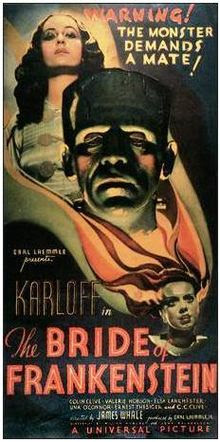
I prefer the sequel to the first Universal picture because it lets James Whale and his cast loose from the limitations of the first movie's roots in a stage play adaptation of the novel. It's wilder, weirder, and a lot more fun all the way through, especially with Ernest Thesiger, Una O'Connor, and Elsa Lanchester joining Karloff and Clive for this outing. If you only see one of the classic Universal entries, this is the one to watch.

3) Son of Frankenstein (1939)

The next generation succumbs to the family's penchant for reanimation in this follow-up, with Karloff returning as the Creature and Basil Rathbone stepping in as Wolf Frankenstein, the son of the original scientist. This one is also notable for its gorgeous German expressionist sets and for Bela Lugosi's appearance as Ygor, the first time that name refers to Dr. Frankenstein's assistant. This is probably the best of the later Universal films, although I do enjoy Frankenstein Meets the Wolf Man (1943) for its revival of the long-suffering werewolf, Larry Talbot (Lon Chaney, Jr.).

4) Abbott and Costello Meet Frankenstein (1948)

More treat than terror, this horror comedy is a Halloween favorite that pits Abbott and Costello against a ghoulish gang of classic monsters, including Glenn Strange as the Creature, Bela Lugosi as Dracula, and Lon Chaney, Jr. as Larry Talbot, aka the Wolf Man. If you want to introduce kids to classic Universal monsters without scaring them too much, this movie is a great choice. You even get Vincent Price making a cameo "appearance" as the Invisible Man at the very end!

5) The Curse of Frankenstein (1957)

Hammer started its own series of Frankenstein films with this adaptation, which stars a very creepy looking Christopher Lee as the Creature and Peter Cushing as Dr. Frankenstein. Scream queen Hazel Court also appears as Elizabeth, and the whole thing is rendered gorier because it's in color. Although Cushing's character is condemned to execution in the first movie, he survives to wreak more havoc with his experiments in The Revenge of Frankenstein (1958), The Evil of Frankenstein (1964), Frankenstein Created Woman (1967), Frankenstein Must Be Destroyed (1969), and Frankenstein and the Monster from Hell (1974).

6) Young Frankenstein (1974)

No list of Frankenstein movies would be complete without this comedy gem from Mel Brooks, with Gene Wilder starring as Frederick Frankenstein, the unwilling heir to his family's legacy who nonetheless ends up building a Creature of his own. The movie uses sets from the original Universal films and is stuffed with gags that work best if you've seen both the 1931 movie and the 1935 sequel. Often hailed as one of the best comedies of all time, it's still uproariously funny 50 years later.

7) Frankenweenie (1984)

Tim Burton has a long-standing love affair with the Frankenstein story, as evidenced by Edward Scissorhands (1990) and the 2012 stop motion remake of this 1984 live action short, but I like the short for its brevity and concentrated weirdness. Disney originally considered this version too scary for kids and fired Burton because of it, but Burton's later success caused Disney to reconsider the short's appeal. Kids today are unlikely to be phased by anything in Frankenweenie, especially those who have already seen any of Burton's other, later films.

8) The Bride (1985)

Fair warning that I haven't rewatched The Bride in a long time, but it makes the list for nostalgia's sake because I first saw it in the 80s and loved it then, partly for its focus on a female Creature (played by Jennifer Beals) and partly for its casting of rock god Sting as Dr. Frankenstein. The movie also stars Clancy Brown as the male Creature and Cary Elwes as another man with a romantic interest in the heroine. I won't pretend this is a brilliant movie, but it is very much a product of its era, and my inner teenager still regards it with affection.

9) The Monster Squad (1987)

Speaking of the 80s and nostalgia, The Monster Squad brings plenty of love for classic monsters and a Goonies sensibility to its horror comedy hijinks, with a group of kids who band together to fight the evil schemes of Count Dracula (Duncan Regehr) and his minions. Frankenstein's Creature, played by Tom Noonan, is supposed to be helping the vampire but turns out to be an ally to the kids, and his friendship with a little girl (Ashley Bank) makes a sweet counterpoint to the tragic scene with a different girl in the 1931 film. This one might actually be too scary (and too free-wheeling with its profanity and sexual references) for very young kids, but it's a perfect pick for tweens, teens, and adult monster kids.

10) Gods and Monsters (1998)

Although it isn't technically a horror movie or an adaptation of Shelley's novel, this fictionalized account of the last days of James Whale is an insightful look at the director's life and work, and it seems fitting to end this list here. Ian McKellen gives a brilliant and moving performance as the aging Whale, and the picture includes flashbacks to the making of Whale's most memorable films. Brendan Fraser costars as Whale's young gardener. Gods and Monsters earned three Oscar nominations, with nods for McKellen as Best Actor and Lynn Redgrave as Best Supporting Actress, and it won the award for Best Screenplay. 

See also: 10 Classic Movies Starring Boris Karloff and 10 Classic Movies Directed by James Whale

Thursday, September 16, 2021

Five Favorite Films: Val Lewton

I wouldn't normally think about making a five favorite films list for a producer, but Val Lewton is special. Born Vladimir Leventon in what is now Ukraine, Lewton headed the horror unit for RKO in the 1940s and made brilliant, moody horror pictures on shoestring budgets. He eschewed gimmicks and gore in favor of subtext and atmosphere, even when the titles assigned to him to make films out of suggested conventional B horror fare. Lewton worked with his writers and directors throughout the making of his horror films, giving his productions a distinct character that can be seen in all five of the films listed below. Don't be afraid to give Lewton a try if you're not into blood and guts; these are smart, delightfully creepy pictures that let your imagination do most of the work.

Cat People (1942)

The most famous of Lewton's pictures and arguably the best, Cat People features direction by Jacques Tourneur and a terrific performance from Simone Simon, who stars as the Serbian bride of a bland American engineer (Kent Smith). The couple can't consummate the marriage because Irena fears that doing so will transform her into a murderous cat, but the strain on the relationship also threatens to drive her to extremes. Female monsters are rare in classic horror, which makes Irena even more important, as she struggles with many of the same fears and doubts that plague Larry Talbot (Lon Chaney Jr.) in The Wolf Man (1941).

I Walked with a Zombie (1943)

Tourneur also directs this dreamy post-colonial revision of Jane Eyre, which stars Frances Dee as a Canadian nurse who travels to the West Indies to care for the comatose wife of a plantation manager (Paul Holland). Local rumors say that the wife has been turned into a zombie, which sets Nurse Betsy on a quest to find out the truth about her patient and cure her if possible. Important supporting performers include the calypso musician Sir Lancelot and Edith Barrett as the manager's mother. This one is a must for fans of the many Jane Eyre inspired movies that followed the success of Rebecca in 1940.

The Curse of the Cat People (1944)

Tasked with crafting a sequel to the successful original, Lewton instead produced this completely different story about a lonely little girl (Ann Carter) and her "imaginary" friend, using the love triangle from the original as the setup for the adult characters. Oliver Reed (Kent Smith) is still a bland stick but has replaced the dead Irena with more conventional wife Alice (Jane Randolph), and they don't know what to make of their sad, misfit daughter, Amy. Only the ghostly Irena (Simone Simon) brings the child company and comfort, but Irena might not be able to help Amy against the paranoid threat posed by a kindly neighbor's mentally unstable daughter. Robert Wise, who was brought in to finish the picture, earned his first directing credit for this film.

The Body Snatcher (1945)

Wise is also the director for this adaptation of a short story by Robert Louis Stevenson, which features horror icons Boris Karloff and Bela Lugosi as well as Henry Daniell as a doctor who benefits from the infamous corpse stealing trade of 19th-century Edinburgh. The story capitalizes on the notoriety of the Burke and Hare crimes of the period and provides a truly menacing role for Karloff as Cabman John Gray, the body snatcher of the title. Karloff would end up getting some of his best roles in Lewton pictures and was perfectly suited for the more intellectual, artistic brand of horror that the producer specialized in making.

Bedlam (1946) 

This original story about the infamous 18th-century London madhouse is a personal favorite; Lewton got the idea from William Hogarth's Bedlam scene in The Rake's Progress and even stages a shot to recreate the image. Anna Lee stars as feisty comic actress Nell Bowen, who makes enemies of the wrong people and is thus falsely identified as a madwoman and locked up in Bedlam, where the villainous keeper (Boris Karloff) grossly abuses his authority. Mark Robson directs this unabashedly artsy period piece, which might not appeal to everyone but hits all the right buttons for those familiar with Hogarth's prints and the history of the notorious asylum.   

For even more films from Val Lewton, check out The Leopard Man (1943), The Seventh Victim (1943), and Isle of the Dead (1945). Lewton might have made more great films but died tragically young of a heart attack in 1951, at the age of 46.

See also: "Hogarthian Gothic: Imagining the Madhouse in Val Lewton's Bedlam"

Thursday, October 8, 2020

A LEGO Treat for Frankenstein Fans


I'm always excited when my two obsessions - LEGO and classic movies - overlap, and when they do it's usually related to classic horror. This year LEGO has added something especially fun in time for Halloween, a new Brickheadz set for an official Universal Frankenstein! Fans are hoping that more licensed Universal monster characters will follow, but right now we just have the iconic creature first played on the big screen by Boris Karloff in James Whale's 1931 film. 

The Brickheadz line has been very popular the last few years, running about $10 for a set that builds one character with an oversized head. Licensed characters have been especially plentiful, including lots of Star Wars figures, but seasonal ones like Santa Claus and the Easter Bunny have also been frequent additions to the lineup. Frankenstein's monster is a delightful new part of this series, rendered in shades of gray and black to better reflect the image of the Universal version of the character. If you're not into complex builds, don't worry; the Brickheadz take just a few minutes to assemble and make perfect cubicle or desk adornments and will also fit neatly onto a display shelf with your other classic horror collectibles. The box art is also wonderful, with Karloff's version of the creature prominently featured.


Over the years LEGO has released a number of sets and themes with obvious ties to classic horror, and they've always been fun, but this new, official connection with Universal makes me hope that we will see even more Brickheadz and minifigure scale sets in 2021. Right now the Hidden Side theme is my favorite collection of sets because of the spooky atmosphere and ghost figures, but a Dracula's Castle set would be a dream come true (it should have armadillos, of course, just to be extra faithful to the film). If and when LEGO releases information about upcoming Universal Monster sets, I'll be sure to let you know about it here on the blog!

If you want your own Frankenstein Brickheadz, you can find him on the LEGO Shop at Home website for $9.99. I don't have a LEGO store nearby, and with COVID it's difficult to travel to the closest one in the next state over, so I don't know if you can find the set at LEGO Stores, although I assume that you can if you have one near you. If you visit the website, be sure to check out the other fun Halloween items, including the Hidden Side theme and the gorgeous (but so expensive) Haunted House exclusive set.

Related Posts:

10 Classic Movies Directed by James Whale

FRANKENSTEIN MEETS THE WOLF MAN (1943)

LEGO Monster Fighters: Making AFOL Dreams Come True 

Die Toten Reiten Schnell


Wednesday, October 2, 2019

It's Alive! Touring the Kirk Hammett Collection

Metallica guitarist Kirk Hammett is a dedicated classic horror and science fiction fan who is sharing his love for these movies through a touring exhibit of posters and other artifacts from his personal collection. "It's Alive! Classic Horror and Sci-Fi Art from the Kirk Hammett Collection" is currently on exhibit at the Royal Ontario Museum in Toronto, where I caught up with it earlier this month for a delightful tour of gorgeous posters for some of of my all-time favorite films.

Hammett's collection features some amazing posters, including art for Frankenstein (1931), Island of Lost Souls (1932) Dracula's Daughter (1936), I Walked with a Zombie (1943), and dozens of other films. The exhibit organizes the posters by film, era, genre, or star so that groupings have a common theme of some sort, with the major monsters and stars getting special areas that focus on them. The displays also include some three dimensional items like props, costumes, and several of Hammett's custom horror themed guitars. Particularly fun are the excellent wax figures of Bela Lugosi and Boris Karloff wearing costumes from their films. The exhibit stages a number of items so visitors can take selfies with them, which makes the experience even more fun.

My sister and I were the first people to visit the exhibit on our morning at the ROM, which allowed us plenty of space to take photos and talk about the movies. A true classic horror enthusiast can easily spend an hour in the exhibit, but it's small enough to tour in about 30 minutes if you're pressed for time. During our visit the accompanying soundtrack was a Hammett instrumental cover of Blue Oyster Cult's "Nosferatu," which played with a video in the section displaying Hammett's guitars. Because the exhibit was empty when we arrived I could hear the creepy, familiar opening notes of the song perfectly, which cast a tingle of delicious dread over the whole exhibit.

If you're able to visit Toronto in the near future, the Kirk Hammett exhibit is absolutely worth the trip and the extra admission price. The exhibit will remain at the ROM until January 5, 2020. It will then move to the Columbia Museum of Art in South Carolina and be available there from February 15 until May 17, 2020. If you can't get to the exhibit in person there's a gorgeous photo book of the collection available on Amazon for $20.97, which is a great deal compared to the amount you'd pay for it at one of the museum shops.


Wednesday, September 4, 2019

Classic Films in Focus: THE OLD DARK HOUSE (1932)

Of course it's a dark and stormy night when Raymond Massey, Gloria Stuart, and Melvyn Douglas stumble into a strange old house whose occupants are even more menacing than the raging floods outside, and director James Whale milks the atmosphere for all it's worth in this delightfully dire horror comedy. The Old Dark House (1932) delivers on all points, with thrills and giggles in equal measure thanks to the performers who make up the cast, including Boris Karloff, Ernest Thesiger, Charles Laughton, and Eva Moore.

Massey and Stuart play married couple Philip and Margaret Waverton, who, along with their traveling companion, Penderel (Douglas), literally wash up at the old dark house during a massive storm. They're not exactly welcomed in by the occupants, a strange brother and sister whose other family members haunt the upper floors of the gloomy mansion, but they settle in to stay the night and are soon joined by fellow refugees Sir William Porterhouse (Charles Laughton) and Gladys (Lilian Bond). Things take a turn for the worse when the looming, mute butler, Morgan (Boris Karloff), gets drunk and releases the house's most dangerous resident, a pyromaniac murderer called Saul (Brember Wills).

If you're already familiar with Whale's sense of humor from Frankenstein (1931), The Invisible Man (1933), and Bride of Frankenstein (1935), you'll appreciate more of the same in The Old Dark House (1932), especially with the crusty, deaf Rebecca Femm (Eva Moore) and her brother, the fey, nervous Horace (Ernest Thesiger). The brief appearance of their father, Sir Roderick, turns out to be a treat, too; the whole family is mad as hatters, which keeps the reluctant house guests in a constant state of confusion. Karloff's shambling Morgan is a scarier version of Lurch from The Addams Family; he spends a lot of time trying to molest Margaret, who has inexplicably changed out of her wet traveling clothes into the least practical evening dress one could possibly wear in a cold, damp lunatic asylum pretending to be a family home. The sense of impending doom is also lightened by the whirlwind romance of Penderel and Gladys, with Penderel seeming to nurse something of a foot fetish where his new love interest is concerned.

The atmosphere and cinematography also make this film a lot of fun, with fabulous camera shots lingering on Morgan's scarred face in closeup or building terrible suspense with just Saul's hand at the top of the stairs appearing in the frame. There's plenty of striking storm scenery, too, especially as the Wavertons wend their hazardous way through the deluge. Flickering candles and uncertain electrical lights add to the sense of dread; nobody wants the lights to go out in this house. The Gothic ambience and focus on crumbling heaps recall Poe's "The Fall of the House of Usher" but also Horace Walpole's Castle of Otranto, and Whale shares Walpole's characteristic mingling of the ludicrous and the sublime. The joke of the title reveals the film's keen awareness of its place in relationship to earlier Gothic horror; the "old dark house" motif was a cliche of the genre long before 1932, but Whale's direction is always winking at us about the familiarity of it all.

Whale, Karloff, and Thesiger reunited for Bride of Frankenstein, while Gloria Stuart also stars in Whale's adaptation of The Invisible Man. Melvyn Douglas is not generally remembered for his horror films, but you'll also find him in The Vampire Bat (1933), and, much later, The Changeling (1980) and Ghost Story (1981). While Charles Laughton plays a solid fellow in this film, he really gets to work the horror vein in Island of Lost Souls (1932) and The Strange Door (1951). Don't miss Raymond Massey doing his own Karloff inspired turn in Arsenic and Old Lace (1944). William Castle made his own version of The Old Dark House in 1963, so you could make a double feature of it by watching both adaptations of the novel by J.B. Priestley.

Wednesday, May 8, 2019

Richard III and Disinformation in TOWER OF LONDON (1939)

One probably doesn't go looking for timely political commentary in a film like Tower of London (1939), which offers a mashup of history and horror in its retelling of the bloody rise and fall of England's most reviled monarch. Much of the plot is familiar to viewers thanks to broad cultural awareness of Shakespeare's version and, perhaps, renewed 21st century interest that resulted from the discovery of Richard's bones in 2012. Tower of London, which was released in 1939, is very much a Hollywood vision of the Wars of the Roses, with Basil Rathbone starring as the murderously ambitious Richard. It generally favors the lurid and romantic over the strictly historical, a bent indicated by the presence of supporting players like Boris Karloff and Vincent Price. It's striking, then, to recognize the way in which this film depicts the insidious use of disinformation and a weaponized mob to influence political forces. Just like the hidden political operatives who manipulate our elections today, Richard III and his henchman, Mord, utilize a massive, medieval version of social media to undermine their opponents and assist their own ambitions.

We might not, at first, recognize the importance of the disinformation campaign to Richard's ascent. Shocking physical violence often overshadows the subtler efforts that propel the repugnant royal toward the throne. In the film, Richard has his enemies executed, drowns one brother in a vat of malmsey, has his young nephews brutally murdered, and conspires in the deaths of numerous other rivals. While he is a skilled swordsman, he normally avoids holding the murder weapons himself, preferring instead to have Mord commit the crimes or to fabricate grounds to get his enemies sent to the scaffold. Richard's general preference throughout is for the most underhanded, devious means of accomplishing his goals; his double dealing keeps everyone around him off balance and guessing at his true motives.

That inclination toward secretive, secondhand villainy fits perfectly with Richard's deployment of the rabble to spread lies and gossip that support his rise to power. We see in the film how Richard conducts this propaganda campaign, with Mord once again as his intermediary. Richard gives Mord the funding and the message to circulate, which Mord then takes to a collection of beggars who function as his network of infiltrators and spies. Somewhat comically, we see the mob rehearse their assigned lines under Mord's direction and then repeat them as they pretend to be casual spectators interspersed among the crowds. They work exactly like modern Russian agitators and other operatives on social media, taking their orders from the top and then presenting themselves as independent, sincere peers to the unsuspecting community. Their misinformation and propaganda spread through the kingdom until citizens rally in support of Richard and demand that he be crowned king, never suspecting that their actions have been carefully manipulated for that very end. The people affected by Richard's lies don't seem to realize - or care - that he has the blood of so many people on his hands.

Fortunately for history, Richard's propaganda is only temporarily successful, and, as we now know, his thoroughly abused corpse ended up buried beneath a Leicester car park. Tower of London ends on a positive note, with Queen Elyzabeth (Barbara O'Neil) rejoicing that she has saved her daughters from Richard's murderous reign and will one day see an heir to her line once more on the English throne (in reality, her eldest daughter, Elizabeth of York, would become Queen to Henry VII and the mother of Henry VIII). The bloodshed and damage, however, were not undone for the many who lost their lives during Richard's rise and fall, and modern viewers can't assume that a new Henry Tudor will show up to right the ship of state in our current global political crisis. While we might rightly relish the horror-tinged spectacle that Tower of London offers, we should also take to heart its dire message about the insidious efficiency of misinformation and the deliberate manipulation of the masses through whisper campaigns, whether they're conducted in a marketplace or on Facebook. Now is the winter of our discontent, indeed, and Richard's modern counterparts are hard at work to ensure that no glorious summer follows.


Monday, June 12, 2017

12 Mummy Movies Worth Watching

At an abysmal 17 %, the Rotten Tomatoes rating of the new version of The Mummy (2017) might have you hiding in your sarcophagus instead of rushing to the theater, but, luckily for mummy lovers, Hollywood has produced plenty of better pictures in the genre. You can save your dollars for another round of Wonder Woman and still get your Egyptian undead fix with any of these twelve films, which show the long history of the movie mummy and the many different ways the character can be treated.

1) THE MUMMY (1932) - Boris Karloff shines in this original outing for the iconic monster, although he spends most of the film in more human form as Ardath Bey. The role gives him a chance to use his hypnotic voice, something he was denied as the mute creature in Frankenstein (1931), but it also helps to cement his importance as a leading player in classic horror. This dreamy contemplation on the pas de deux of love and death sets the tone for many of the mummy movies to follow, as well it should. After 85 years, it remains the greatest example of the genre and still captivates audiences as Imhotep lures his lost love back to his immortal side.

2) THE MUMMY'S HAND (1940) - It took eight years for Universal to make another mummy movie, this time without the powerful appeal of Karloff. While The Mummy's Hand isn't a great movie, it does have its charms, and it sets up a series of pictures featuring the character of Kharis. The later Kharis films star Lon Chaney, Jr. as the mummy, but in this outing Western actor Tom Tyler shuffles beneath the bandages as the undead menace. The later films, which fall further into strict matinee fare, include The Mummy's Tomb (1942), The Mummy's Ghost (1944), and The Mummy's Curse (1944).

3) THE MUMMY (1959) - In the late 1950s, Hammer rebooted the Universal monster tales with a series of gorgeous, lurid productions starring Peter Cushing and Christopher Lee, and this retelling of the mummy story adds a little of the signature Hammer sex appeal to a story that already has a weird romance as its driving force. Lee shambles tragically as the mummy Kharis, while Peter Cushing plays the archeologist trying to stop an ancient Egyptian curse from depriving him of both his life and his lovely spouse.

4) BLOOD FROM THE MUMMY'S TOMB (1971) - This is a later, sexier Hammer production from the early 70s and a loose adaptation of Bram Stoker's 1903 novel, The Jewel of the Seven Stars. While it's light on actual mummies, the film is memorable for Valerie Leon's allure and a higher body count than many earlier films. Daily Dead has a good review of the film here, if you're interested in learning more, and most Hammer fans will find it worthwhile if imperfect. Some of its problems aren't really the fault of the film, since Peter Cushing bowed out early due to his wife's illness, and director Seth Holt died during filming.

5) AMAZING STORIES: "Mummy Daddy" (1985) - OK, so it's not a movie, but this mummy story has so much love for classic Universal horror that you have to see it, anyway, and it's one of the most beloved and memorable episodes of the influential television series. Tom Harrison stars as an actor in full mummy makeup who takes off from location to greet his new baby's arrival, although along the way he gets into all kinds of trouble thanks to his scary costume and the presence of an actual mummy shambling about the swamp. The plot of the episode mirrors an old story about Boris Karloff rushing to the hospital for his daughter's birth in full costume as Frankenstein's monster, but you'll find tributes to many Universal monster movies over the course of the episode.

6) TALES FROM THE DARKSIDE: THE MOVIE (1990) - Admittedly, only the first segment of this horror anthology film is about mummies, but it's memorable enough that I include it here (honestly, I remember it scaring me half to death when I saw it in the theaters as a teenager). "Lot 249" stars Christian Slater, Steve Buscemi, Julianne Moore, and Robert Sedgwick in a plot about a college student's gruesome revenge against his classmates. The segment is adapted from the 1892 short story by Sir Arthur Conan Doyle, which helped to establish many of the conventions of the mummy horror tale, so this is a good one to track down if you're interested in the history of supernatural mummy stories.

7 and 8) THE MUMMY (1999) and THE MUMMY RETURNS (2001) - Although its history of rebooting the classic monsters has been spotty at best, Universal really knocked it out of the park with Stephen Sommers' delightful 1999 adventure, which mixed scares, laughs, and action in equal measure. Arnold Vosloo is an imposing, muscled Imhotep, accidentally brought back to life by archeologists and bent on resurrecting his long lost love. Brendan Fraser, Rachel Weisz, Oded Fehr, and John Hannah have such great chemistry as our heroic team that it's good to see them back in action for the 2001 sequel, even if the second movie doesn't quite measure up to the first. Like the Amazing Stories episode, part of the charm of this version is its love for the films that have come before, so it pays to watch the 1932 version first and then watch the 1999 one. You can probably skip the later installments of the franchise unless you're really invested in Dwayne Johnson as the Scorpion King.

9) BUBBA HO-TEP (2002) - There's nothing else out there quite like Bubba Ho-Tep, but people who have seen it love it, and I'm happy to be yet another fan urging you to put this one on your watch list. Bruce Campbell and Ossie Davis star as nursing home residents who take up their walkers and canes to fight a murderous mummy, but they're not just any old geezers, they're Elvis and JFK, still alive but rather the worse for wear. Adapted from a short story by Joe R. Lonsdale, Bubba Ho-Tep is either your kind of thing or it isn't, but it's a terrific example of horror comedy's ability to juggle its two genres' demands. It's weird and scary and absolutely hilarious, and it's one of those movies that every monster film fan really ought to see.

10, 11 and 12) NIGHT AT THE MUSEUM trilogy (2006, 2009, 2014) - This is a more kid-friendly way to watch some mummy movie adventures, but the three pictures borrow a lot from the genre's traditions in service to the plot of having museum exhibits that come alive at night. Ben Stiller leads a huge cast of well-known stars in all three pictures, and the focus is squarely on comedic adventure, but those who know their mummy movies will see the films putting familiar conventions to work in interesting ways. The ancient Egyptian pharaoh character, Ahkmenrah, figures in all three pictures and is played by Rami Malek, whom you will recognize immediately from his current TV series, Mr. Robot. The Night at the Museum movies mark one of the few times a person of actual Egyptian heritage has gotten to play an Egyptian mummy.


Monday, July 18, 2016

Classic Films in Focus: TOWER OF LONDON (1939)

Tower of London (1939) lacks the poetic grandeur of Shakespeare's Richard III, but the story remains more or less the same, with an atmosphere of horror injected into the historical drama through the appearance of genre icons like Boris Karloff and Vincent Price. As history goes, this is bloody stuff, indeed; it opens with a beheading and goes on as it begins, and there's certainly enough death and torture to satisfy the bloodthirstiest horror fan. Basil Rathbone brings gravitas and intelligence to the role of Richard, while Karloff plays the executioner henchman who helps him murder his way to the throne. A fine supporting cast includes Ian Hunter, Barbara O'Neil, John Sutton, and the lovely Nan Grey, but most fans will flock to this film for the irresistible trio of Rathbone, Karloff, and Price.

As Richard, Duke of Gloucester, Rathbone schemes and slays in a bid for the English crown. To get there, he must first get rid of everyone ahead of him in line, including his brothers, King Edward IV (Ian Hunter) and the Duke of Clarence (Vincent Price), and his young nephews, the king's sons with long-suffering Queen Elyzabeth (Barbara O'Neil). Assisting Richard is Mord (Boris Karloff), a torturer and executioner whose own deformed foot creates a kinship with the hunchbacked Duke. While Richard murders his way to power, the Queen's followers, John Wyatt (John Sutton) and Lady Alice (Nan Grey), struggle to keep their love alive and to defend the country from Richard's evil reign.

As the subject matter implies, this is really Rathbone's film, and he gives a terrific performance, even if he doesn't get to spout any Shakespearean soliloquies. His Richard is not merely evil and repulsive; he has courage, genius, and the military prowess to match his ambition. His strange relationship with Anne Neville (Rose Hobart) proves that he has a certain charisma, too, like a snake that charms before striking. The discovery of the real Richard III's body in 2012 made him a celebrity again and shed new light on the historical record, but in many ways Rathbone's performance seems ahead of its time, especially in comparison with the way the king is portrayed in Shakespeare's play. Rathbone also gets to exercise his celebrated swordsmanship in several sparring scenes, which again emphasize the active, aggressive nature of this incarnation of his character.

The rest of the performers help to make Tower of London a very solid example of its type. John Sutton is something of a stand-in swashbuckler as John Wyatt, one of Richard's most determined opponents, and Nan Grey has several good scenes as his lady love, though her best is probably her rescue mission to help John escape from Richard's dungeon. Barbara O'Neil radiates maternal devotion and fear as the mother of the doomed little princes, while Ian Hunter makes a hale but too trusting Edward IV. Karloff, of course, owns his scenes as Mord; he and Rathbone pair up perfectly and convey a lot about their relationship through their expressions and body language. Mord yearns to see combat on the battlefield, and he mostly enjoys his murderous occupation, but the scene in which he is sent to murder the young princes adds just a touch of humanity to his villainous soul. Vincent Price, still at the start of his career in 1939, has a fairly small part as the weak-minded Clarence, but he makes the most of it, especially in his fateful drinking contest with Richard. The role presages those he would play later in life, especially in the Corman pictures and the AIP horror of the 70s.

Rowland V. Lee, who directed Tower of London, made a number of historical action pictures late in his career, including The Count of Monte Cristo (1934), The Three Musketeers (1935), and Captain Kidd (1945), but he also directed Karloff and Rathbone in the excellent Son of Frankenstein (1939). For more of Rathbone's great villains, see The Adventures of Robin Hood (1938) and The Mark of Zorro (1940). Karloff is justly famous for his monsters and fiends; to get beyond his Universal classics from the 30s, try Val Lewton horrors like The Body Snatcher (1945) and Bedlam (1946), or catch him in a more sympathetic mood in Corridors of Blood (1958). Fans will recognize Barbara O'Neil as Scarlett's mother in Gone with the Wind (1939), while John Sutton and Nan Gray can both be found with Vincent Price in The Invisible Man Returns (1940). For a double feature starring the trio of Rathbone, Karloff, and Price, follow up Tower of London with the delightfully macabre The Comedy of Terrors (1963), which also stars Peter Lorre.

Thursday, October 15, 2015

Classic Films in Focus: BLACK SABBATH (1963)

Mario Bava's 1963 Italian-French horror anthology, Black Sabbath, is both lurid and literary, much like Roger Corman's Poe films from the same era, but without the cheeky black humor that pervades the Corman canon. Even more so than in Corman's loosest adaptations, the literary pedigrees of Bava's three chilling tales are hopelessly muddled, but their questionable origins don't diminish their effectiveness. Each story in this trio has something different to offer: the first is a subversive thriller, the second a Gothic vampire tale, and the third a ghastly story of otherworldly revenge. On hand as host and star of the second segment is genre icon Boris Karloff, delightful even when dubbed and looking truly terrifying as the family patriarch in "The Wurdulak." While not, perhaps, as perfect an example of Bava's style as Black Sunday (1960), this anthology picture makes a solid introduction to the Italian auteur, and it usually finds a place on lists of Bava's most significant works.

The collection opens with "The Telephone," in which a beautiful young woman (Michele Mercier) fears the threats of a murderous caller and enlists the aid of her former lesbian lover (Lydia Alfonsi) to keep the attacker away. In the second story, "The Wurdulak," a young gentleman (Mark Damon) meets a family horrified by the possibility that their patriarch (Boris Karloff) has returned home as a vampire intent on killing those he most loved in life. The final story, "The Drop of Water," depicts a nurse (Jacqueline Pierreux) who steals a ring from a dead woman, only to face a ghost's relentless vengeance.

Of the three stories, "The Wurdulak" is the grandest and the most like Bava's most celebrated feature length tales. It's awash in Gothic atmosphere but driven by a nihilistic attitude that leaves no potential victim off limits. The story is adapted from a novella by Aleksey Tolstoy, a cousin to Leo, but still a successful writer in his own right. Karloff looks terrifying as Gorca, especially in the later scenes, and Susy Andersen is lovely as his daughter, Sdenka. The third segment, "The Drop of Water," will delight fans of a sinister face, since its chief attraction is the ghoulish countenance of the dead woman from whom the nurse takes a valuable ring. It's definitely the stuff of nightmares, and the darkly ironic ending provides a touch of grim humor, too. The least compelling story leads the set; "The Telephone" is more straightforward thriller material, with lesbian sexuality shaking up the usual misogyny of such tales but not really alleviating our sense of Rosy, the attractive victim, as an object of voyeurism and violent desire. Very little can be made of the film's writing credits for either "The Drop of Water" or "The Telephone," except that Bava clearly wants to invest his anthology with a classy literary sensibility.

The horror anthology picture is a peculiar but enduring subgenre, and Bava's entry makes a useful companion to Corman's Tales of Terror (1962) and Sidney Salkow's Twice-Told Tales (1963), both of which feature Vincent Price as their primary star. Bava limits his signature star's screen time to bookend sequences and the middle story, but Karloff provides the same kind of cachet to the proceedings, just as Peter Cushing does in From Beyond the Grave (1974). Later examples of the anthology include The House That Dripped Blood (1971), Tales from the Crypt (1972), The Vault of Horror (1973), Creepshow (1982), and Cat's Eye (1985), which show the format's ongoing appeal as a way to give horror audiences a variety of shocks in a single theatrical experience. For Bava, the anthology approach allows for a more condensed exploration of themes he engaged over the course of his career; in addition to true horror pictures, he also made thrillers like The Girl Who Knew Too Much (1963) and Rabid Dogs (1974), so his inclusion of "The Telephone" in Black Sabbath makes sense, even if it seems very different from the other two segments.

Be sure to watch the original release version of Black Sabbath, known as I tre volti della paura in Italian; the English dubbed AIP version changes the order of the stories and makes drastic alterations to "The Telephone." For more of Mario Bava, see The Whip and the Body (1963), Kill, Baby, Kill (1966), and Baron Blood (1972). Boris Karloff's other films from 1963 include The Raven, The Terror, and The Comedy of Terrors, proving that the iconic star was still much in demand over forty years after his screen debut. You'll find Mark Damon in Corman's House of Usher (1960) and in later continental shockers like The Devil's Wedding Night (1973) and Hannah, Queen of the Vampires (1973). Michele Mercier is best remembered as the star of Angelique (1964) and its sequels, but she returns to the horror genre for Web of the Spider (1971).

Tuesday, August 11, 2015

Classic Films in Focus: THE BLACK CASTLE (1952)

Boris Karloff and Lon Chaney, Jr., only have supporting roles in The Black Castle (1952), but their presence adds genre credibility to this minor period thriller directed by Nathan Juran, here making his directorial debut. Richard Greene, Stephen McNally, and Paula Corday are the real stars of the picture, playing a deadly game of deception in a Black Forest castle crowded with spies and Gothic atmosphere. Although it's by no means an essential example of its type, The Black Castle succeeds at providing a round of interesting performances and some modest chills, with Greene in fine heroic mode and Karloff amusingly inscrutable as the castle's secretive physician.

Richard Greene plays the Englishman Sir Ronald Burton, who comes to the Black Forest looking for the vengeful count (Stephen McNally) who killed his friends. Under an assumed name, Sir Ronald gains admission to Count Karl von Bruno's castle as a guest, but his investigation is complicated by his attraction to the count's beautiful wife, Elga (Paula Corday, also known as Rita Corday). When the count discovers the truth about Sir Ronald and Elga, their lives are in peril, but the sympathetic Dr. Meissen (Boris Karloff) offers them a dangerous chance to escape.

Greene, best remembered for playing Robin Hood in a 1960 TV series, makes a charming and likable protagonist, with an early sword fight scene establishing his heroic character. He looks good in his eighteenth-century costume, as well, so we understand why Elga might be attracted to the gallant Englishman instead of her sadistic spouse. Stephen McNally keeps his villain's rage more or less under control until the last quarter of the picture, but Karl still gives us plenty of warning that he's a very dangerous man, and when he finally cuts loose we see the real brute beneath the civilized facade. Corday is lovely as the forcibly wed Elga, although early on she doesn't act as though she understands the extent of her husband's cruelty, and shouldn't she know better than anyone? We get the strange idea that theirs is a chaste marriage, which might make The Black Castle more suitable for the matinee kiddies but doesn't at all address the horror of being married to a psychotic egomaniac.

The tame sexuality is a sign that The Black Castle isn't really a horror film at all, in spite of Karloff and Chaney lurking around the castle's dark corridors. The opening is the most horrific scene in the whole movie, with Sir Ronald and Elga about to be buried alive after taking a powerful drug to evade Karl's evil plans. The story then flashes back to show us how they ended up in such jeopardy. Karloff's Dr. Meissen wavers between good intentions and cowardice as he tries to help the pair escape from Karl, but he's mostly there to advance the plot, and Karloff has to make the most of what he gets. Chaney gets even less to do as the mute henchman Gargon; almost anyone could have lumbered around and grunted in the few scenes where he appears, looking like a cross between Igor and Quasimodo. The more interesting henchman roles go to John Hoyt and Michael Pate as Karl's fellow counts, Steiken and Ernst, with Pate basically reprising his role from The Strange Door (1951).

Be sure to note character actor Henry Corden in the role of Fender; he's best remembered today as the voice of Fred Flintstone. Nathan Juran went on to direct 20 Million Miles to Earth (1957), The 7th Voyage of Sinbad (1958), and, as Nathan Hertz, Attack of the 50 Foot Woman (1958). See Karloff give Count Karl a more sinister role model in The Black Cat (1934), and catch Chaney in a more talkative mood in Inner Sanctum Mysteries like Weird Woman (1944) and The Frozen Ghost (1945). You'll find Richard Greene in The Little Princess (1939), The Hound of the Baskervilles (1939), and Forever Amber (1947). Stephen McNally, who started his career as Horace McNally, was a regular in Westerns; look for him in Winchester '73 (1950), The Duel at Silver Creek (1952), and Tribute to a Bad Man (1956).

Wednesday, June 17, 2015

Classic Films in Focus: THE STRANGE DOOR (1951)

Loosely adapted from a short story by Robert Louis Stevenson, director Joseph Pevney's The Strange Door (1951) plays like a primer for one of Roger Corman's Poe pictures, and fans of those films will find much to appreciate here. Gothic elements abound, including a forbidding castle filled with instruments of torture, but the movie's chief spectacle is Charles Laughton as a deranged nobleman bent on sadistic revenge. Boris Karloff also makes a memorable appearance in a supporting role, although Laughton takes the monster's part for this twisted tale. The Strange Door is a minor entry in the horror canon, and by no means a perfect film, but it's worthwhile viewing for Laughton devotees who love his most unsavory characters.

Richard Stapley plays young Denis de Beaulieu, who finds himself an unwilling house guest when Sire Alain de Maletroit (Charles Laughton) thinks he's blackguard enough to be imposed as a bridegroom on the nobleman's niece, Blanche (Sally Forrest). De Maletroit secretly keeps Blanche's father (Paul Cavanagh) locked up in his dungeon, where the prisoner is attended by his faithful servant, Voltan (Boris Karloff). The villainous lord forces Denis and Blanche to marry in the hope that they will hate each other heartily, but when they fall in love instead he resorts to extremes to exact his long-desired revenge.

Laughton revels in his role as the malevolent de Maletroit, making even the most casual lines drip with veiled cruelty. The audience knows immediately that he's a villain, but the extent of his evil is revealed more slowly, building toward his climactic attempt to murder his entire family. Laughton's fleshy, sly face is perfectly suited to this kind of deviant character; he combines the urbane menace of Vincent Price with the corpulent self-indulgence of Sydney Greenstreet. He both fascinates and repulses as we watch him torment his victims, even as he himself is egged on by his henchmen. It's true that de Maletroit's actions don't make a lot of sense, especially his scheme of marrying Blanche off by force to the first cad he can find, but Laughton makes us believe that the character is crazy enough to cook up such a cock-eyed plot. In a Pre-Code picture he might have devised a far more gruesome fate, and Price's heavies in the Corman films certainly put more thought into their nasty plans. Foolishly, De Maletroit doesn't foresee the possibility that his young people might actually start a romance and spoil his little game.

Stapley and Forrest fill their straightforward roles well enough, but the other supporting characters have more interesting parts to perform. Karloff, who had played plenty of monstrous heavies over the years, here gets a more sympathetic role in Voltan, who hopes to free his original master from the usurper's power. He's not exactly heroic, given that he hasn't managed to get poor Edmond out of the cell in twenty years, but he has a pathetic, loyal quality, something like a faithful dog, that really comes to the foreground in the final scenes. Paul Cavanagh does a lot with the minor role of Edmond, who pretends to be insane while waiting for a chance to escape his brother's clutches. His madman act is so convincing that it's a shock to see him come out of it. William Cottrell and Michael Pate play de Maletroit's lackeys with grim enthusiasm, and Alan Napier turns up for a brief but effective performance as a friend who tries help Denis escape from his wedding banquet.

For another adaptation of a Stevenson short story, try The Body Snatcher (1945), in which Karloff takes a more prominent role. Joseph Pevney also directed the Lon Chaney biopic, Man of a Thousand Faces (1957). Catch Laughton being even more horrible in Island of Lost Souls (1932), or see his kinder, gentler side with Ruggles of Red Gap (1935). Richard Stapley acted under the name Richard Wyler later in his career and starred in the TV series, Man from Interpol.

Tuesday, June 9, 2015

Classic Films in Focus: THE BLACK CAT (1934)

For a horror film that actually shows very little, The Black Cat (1934) manages to suggest a great deal, and the result is a story that works on the imagination long after the brief picture has ended. Director Edgar G. Ulmer crams this small, dark package with surreal images and grotesque crimes only hinted at and glimpsed in snatches, which makes them all the more disturbing to the astute viewer. Like most films "suggested" by Edgar Allan Poe's short stories, The Black Cat has little to do with the original text, but it spins a narrative gruesome enough to fascinate classic horror fans, and the performances of Boris Karloff and Bela Lugosi help to make the movie an enduring cult favorite among Universal horror's devotees.

Lugosi plays Dr. Vitus Werdegast, who meets a young American couple on an ill-fate rail journey through Hungary. Newlyweds Peter and Joan Alison (David Manners and Julie Bishop, credited as Jacqueline Wells) find their new companion strange, but their misgivings only grow when a bus accident forces them to join Werdegast as the house guests of Hjalmar Poelzig (Boris Karloff). Werdegast and Poelzig have a history that makes them bitter enemies; their conflict rapidly becomes deadly, with the honeymooners caught in the middle of their bizarre struggle over the mysterious fates of Werdegast's wife and daughter.

The Black Cat marks the first screen pairing of Karloff and Lugosi, who would go on to make eight films together in all. Both were top horror stars already, and Universal clearly realized that putting them together would double the picture's appeal. Their roles offer them a little deviation from the parts that they had most recently played, but each is still very much in the vein of his overall screen persona. Karloff, talkative, urbane, and utterly perverse, is the ultimate villain of the piece, but Lugosi's doctor is sinister and vengeful enough that Peter and Joan are right to shy away from him, even if he hopes to save them from Poelzig's satanic schemes. Evenly matched, neither can conquer the other without sacrificing himself; the inevitable finale of rampant destruction is a scene Poe himself might well have approved, with undertones of "The Fall of the House of Usher" in the explosive collapse of Poelzig's modernist temple of death. Knowledge of the ending in no way spoils the picture, for doom has been written on these characters' brows from the moment they first appeared, and our only uncertainty is whether the Alisons will make it out to tell their tale of bloodcurdling revenge.

Coming at the very end of the Pre-Code period, The Black Cat gets away with material that would never have gotten into theaters a year or two later, and it still contains enough shock value to get the attention of a jaded modern viewer. Poelzig is a sadist, a murderer, and the leader of a satanic cult; he embalms the corpses of his dead wives and keeps them on display in glass cases hidden beneath his cosmopolitan home. The women are suspended in midair, a grisly collection of blonde butterflies in white gowns. Poelzig has also committed a strange form of incest by first marrying Werdegast's wife and then marrying his daughter (Lucille Lund). Murders and violent deaths abound, but we also see Poelzig plot to sacrifice Joan on his satanic altar, and the climax reveals more horrors that we're glad we never witness in too much detail. Beneath these terrors lies the grim history of Hungary itself; Poelzig's house is built on the site of a bloody massacre from World War I, and Werdegast blames his nemesis for the deaths of thousands as well as his own family's destruction. Viewers in 1934, especially in Europe, would have remembered that conflict better than we do today, but its violence echoes through the eerie menace of the picture. Ulmer and Lugosi had both been born in Austria-Hungary, which collapsed when the war ended in 1918, so it's not surprising that the tragic back story of the picture depends so heavily on the atrocities of that conflict.

Most horror fans will recognize David Manners from his roles in other Universal horror films, including Dracula (1931) and The Mummy (1932). For more of Karloff and Lugosi together, see The Raven (1935), Son of Frankenstein (1939), and The Body Snatcher (1945). Jacqueline Wells started appearing as Julie Bishop in the 1940s and went on to star in Northern Pursuit (1943), Westward the Women (1951), and a number of other films, mostly Westerns and war dramas. Edgar G. Ulmer is best remembered today for The Black Cat and the 1945 noir favorite, Detour, but he also made The Strange Woman (1946) and The Man from Planet X (1951).


Wednesday, October 29, 2014

Classic Films in Focus: THE HAUNTED STRANGLER (1958)

Directed by Robert Day, The Haunted Strangler (1958) comes from the later part of Boris Karloff's career, long after his iconic roles in Frankenstein (1931) and The Mummy (1932). Karloff churned out modest chillers for decades, and he's usually the best thing in them, but The Haunted Strangler gives him a particularly good role as a Victorian novelist trying to uncover the truth about an old murder case in which the wrong man might have been hanged. The eloquent, intelligent Karloff is on full display here, but fans of the horror star's more monstrous side will also find plenty to appreciate.

Karloff plays reform-minded writer James Rankin, who hopes to show the flaws of the legal system by proving that innocent men are executed for other people's crimes. He begins investigating the conviction of Edward Styles as a serial killer called The Haymarket Strangler, although his young assistant, Ken (Tim Turner), doubts the point of his efforts. As he digs deeper into the past, Rankin unwittingly resurrects the real killer, long hidden from view, and new murders precede the revelation of a shocking connection between the intellectual author and the bestial criminal.

The story opens like a police procedural revolving around a cold case, with Rankin and Ken mulling over files, clues, and autopsy reports. They interview witnesses and anyone else connected with the crime, including the residents of The Judas Hole, the seedy dance hall where the final murder took place. There they find Cora (Jean Kent), who was the dead woman's friend, and her pretty apprentice, Pearl (Vera Day). Cora piques Rankin's interest in the mysterious young Dr. Tenant, who frequented The Judas Hole and was involved in the original investigation but disappeared after Styles was hanged. Once The Judas Hole characters are introduced, the plot shifts into the territory of more traditional horror. The murderer returns to spill fresh blood, the search for the killer becomes urgent, and Rankin finally begins to suspect the awful truth. Even worse, his wife Barbara (Elizabeth Allan) and stepdaughter Lily (Diane Aubrey) become targets of the deranged fiend, and even the police cannot protect them.

Film still from Criterion Collection site

Along with Karloff's keen performance, thoughtful cinematography and an emphasis on psychology also elevate The Haunted Strangler above the lurid premise of its title. The opening scenes depict a Hogarthian tableau of the gathered rabble's indifference to justice and suffering, prompting us to sympathize all the more with Rankin's humanitarian quest. The can-can sequences also offer a visual contrast between the animal pleasures of the masses and the intellectual refinement of the idealistic gentleman. These images both confound and prefigure the later motif of the suppressed id breaking through to wreak havoc on a carefully ordered and civilized life. Robert Louis Stevenson provides obvious inspiration for the narrative's thrust, but The Haunted Strangler offers its own take on the well-worn tale, merging its Freudian concerns with Jack the Ripper mania and the unconscious transgressions of the involuntary monster.

While it's Karloff's movie from start to finish, be sure to note career villain Anthony Dawson playing against type as the Scotland Yard policeman. Robert Day directed The Green Man (1956), several Tarzan films, and the 1965 version of She starring Ursula Andress. Day's Corridors of Blood (1958) also stars Karloff and makes for a fine double feature with The Haunted Strangler. For more Karloff horror in a similar vein, try The Body Snatcher (1945) and Bedlam (1946) from the Val Lewton canon.

The Criterion release of The Haunted Strangler, which looks fantastic, is available for streaming on Hulu Plus.

Tuesday, July 22, 2014

10 Classic Movies Directed by James Whale

Born on July 22, 1889, the English director James Whale stands with Tod Browning as one of the most important developers of the 1930s horror genre. Both directors worked to give the iconic Universal horrors their sense of style, but Whale set the bar particularly high with his combination of terror and sly, subversive comedy in The Bride of Frankenstein (1935). Whale directed 23 films over the course of his career, but the Universal horrors are the pictures for which he is best remembered today. In honor of Whale's birthday, here are ten classic movies where you can see the director's hand at work.

1) Journey's End (1930) - Whale's first directorial effort was an adaptation of a 1928 stage play about World War I. Its cast included two actors who would later be major players in the Universal horror unit: Colin Clive and David Manners.

2) Waterloo Bridge (1931) - This romantic drama about a prostitute and a soldier stars Mae Clarke and Douglass Montgomery, but it was also the third screen appearance of 23 year old Bette Davis. A 1940 adaptation of the Robert Sherwood play would prove more enduring with stars Vivien Leigh and Robert Taylor.

3) Frankenstein (1931) - Whale's first horror picture would shape the genre for decades to come, influencing countless later adaptations of Mary Shelley's Gothic novel. With Boris Karloff as the resurrected monster and Colin Clive as his mentally unbalanced creator, Whale crafted a stylish, wry, and genuinely terrifying masterpiece. Mae Clarke, Edward Van Sloan, and the deliriously mad Dwight Frye also contributed to Whale's success with their performances.

4) The Old Dark House (1932) - As the name implies, this film belongs to the "old dark house" genre of horror, with Whale emphasizing the absurdly comedic possibilities of the conventional plot. The collected cast makes this picture a delight for classic movie fans, with Boris Karloff, Charles Laughton, Gloria Stuart, Melvyn Douglas, Ernest Thesiger, and Raymond Massey all in the mix, but the strangest pleasure is Elspeth Dudgeon cross-dressed to play the elderly Sir Roderick Femm.

5) The Invisible Man (1933) - Whale's next horror production took the darkly humorous aspect of the genre to a whole different level, with the increasingly mad Claude Rains gamboling invisibly and wreaking havoc all over the English countryside. The film was the first screen role for Rains, who remains unseen until the very last shot, but his voice proved the real draw. Gloria Stuart and Henry Travers star as the friends trying to save Rains from himself, but Una O'Connor also demonstrates her ample talent for scene-stealing and an ear-piercing pitch.

6) The Bride of Frankenstein (1935) - Whale's earlier efforts paved the way for this outstanding picture, which also mingles absurd comedy with its gripping horror. The film reunited Whale with Boris Karloff, Colin Clive, Ernest Thesiger, Dwight Frye, and Una O'Connor, but its most iconic, if only briefly seen, performer is the young Elsa Lanchester as both Mary Shelley and the shock-haired Bride.

7) Show Boat (1936) - Whale is remembered primarily for his horror, but this 1936 musical drama proved that he could also tap into tender emotions. Generally considered the best film adaptation of the original stage play, Whale's Show Boat gave the world both spectacle and sentiment, with touches of the Whale humor still in evidence. The cast includes many top stars, from Irene Dunne and Allan Jones to Charles Winninger and Helen Morgan, but the film is known today primarily for Paul Robeson's performance as Joe and his powerful rendition of "Old Man River."

8) The Great Garrick (1937) - After The Bride of Frankenstein, Whale moved away from horror, making several dramas and war films. This picture took Whale into the territory of the romantic comedy, with a period setting and Brian Aherne as David Garrick, the great theater personality of the 18th century. Other notable members of the cast include Olivia de Havilland, Edward Everett Horton, Lionel Atwill, and Lana Turner.

9) The Man in the Iron Mask (1939) - Whale continued the period theme with this adaptation of the Alexandre Dumas adventure, with Louis Hayward starring in the double role of the twin royals. Swashbuckling regulars in the cast include Alan Hale and Montagu Love, but Joan Bennett, Warren William, Joseph Schildkraut, and Albert Dekker also make appearances.

10) They Dare Not Love (1941) - Sadly, by the beginning of the 1940s Whale's career was more or less over.  Show Boat had been his last truly memorable work. They Dare Not Love, a World War II drama starring George Brent, Martha Scott, and Paul Lukas, would be his last feature film.

In 1998, Whale's story became familiar to a new generation of moviegoers with the release of Gods and Monsters, adapted from Christopher Bram's novel, Father of Frankenstein. In the film, Ian McKellen plays the director at the very end of his life, while Brendan Fraser stars as the gardener who befriends him. You can also learn more about Whale by reading James Curtis' 2003 biography, James Whale: A New World of Gods and Monsters.