Showing posts with label Vincent Price. Show all posts

Monday, May 15, 2023

Big Stars on the Small Screen: THE MUPPET SHOW

This post is part of the CMBA Spring Blogathon - Big Stars on the Small Screen: In Support of National Classic Movie Day. Check out all of the participating blogs and posts by visiting the Classic Movie Blog Association's post about the blogathon!


Big Stars on the Small Screen: Classic Movie Guest Stars on The Muppet Show

Guest stars on the original Muppet Show television series spanned the full range of celebrity types in the public eye during the late 1970s, from singers and actors to puppeteers, dancers, and musicians. For many children watching the episodes, The Muppet Show provided a kid-friendly introduction to entertainers they had never encountered before, including many classic movie stars entering the later decades of their careers. If you were four years old in 1976, as I was that year when the first season of The Muppet Show aired, you might not know who most of the Season 1 guest stars were, but a Muppet curated introduction to Vincent Price might prove a watershed moment in your young life. For five seasons, The Muppet Show entertained adults and children alike with its quirky mix of old and new, high and low, classy and wacky, all mingled together to form the joyful chaos so quintessential to the Muppet aesthetic. Here's a look at some of the classic movie stars featured in each season of the series, with highlights on some of my personal favorites.


Season One

The 24 episodes of Season One offer a wide range of guest stars, including Joel Grey, Ruth Buzzi, Florence Henderson, Paul Williams, Sandy Duncan, and Phyllis Diller, and of course many stars who were fairly new in 1976 are considered "classics" today. Among the guest stars who hail from the Golden Age of Hollywood are Rita Moreno, Lena Horne, Peter Ustinov, Vincent Price, and Ethel Merman. Of the group, both the Rita Moreno and Vincent Price episodes are standouts, with both stars fully committed to interacting with their puppet hosts.

For me, the Vincent Price episode is a special favorite. The campy horror maestro is totally at home with his weird monster companions, including the delightful Uncle Deadly, who appears as Price's "beautiful assistant" in one horror movie parody sketch. Price also gets to tout his reputation as a gourmet and art lover, although of course the sketches veer into vampirism, cannibalism, and other gruesome but silly twists. It's a thoroughly essential episode for any fan of the Muppets, Price, or classic horror in general.


Season Two 

Classic movie stars in the second season include many performers who were also famous for their radio and television work, like Don Knotts, Milton Berle, George Burns, and Bob Hope, but you'll also find stars like Julie Andrews and Peter Sellers in the mix ("modern" guest stars for this season include Rich Little, Madeline Kahn, Elton John, and John Cleese). Both the Julie Andrews and Peter Sellers episodes are noteworthy in their own, separate ways, although the Sellers episode suffers some for Sellers' outdated and stereotyped performance of "A Gypsy's Violin."

I can't really choose between the Peter Sellers and Julie Andrews episodes because they're both great. While the first sketch with Sellers is culturally problematic, the Queen Victoria sketch is a brilliant bit of meta comedy that is one of my all-time favorite Muppet Show moments, and the segment with Sellers as a sadistic German masseur who mangles Link Hogthrob is another demented gem. The Sellers episode is also notable for featuring Kermit's performance of "Bein' Green," which would become a signature song for the character. The Julie Andrews episode is sweeter in tone, with Andrews performing "The Lonely Goatherd" from The Sound of Music (1965) for her first number. Andrews is very natural and funny with her puppet costars throughout the episode, and for added humor you can watch Carol Burnett be jealous of Andrews' popularity on the show in Burnett's Season 5 appearance.


Season Three

The most memorable episode of Season 3, for me, at least, is the one featuring Alice Cooper, who might as well be a Muppet given how well he fits in with the monsters of the group. The Faust angle of the episode's plot also makes it a hit. Among the newer stars featured, the episodes guest starring Gilda Radner and Roger Miller also stand out. Classic movie stars appearing in the third season include Jean Stapleton, Raquel Welch, Harry Belafonte, Danny Kaye, and Roy Rogers and Dale Evans (who appear together, naturally). 

While the Danny Kaye episode is cute, the must-see classic star of the season is definitely Harry Belafonte, who collaborated closely with the show's creative team to make a truly special episode. "Day-O" is a Belafonte hit that adult viewers would have recognized, but the real highlight is Belafonte's performance of "Turn the World Around," a song that would prove so meaningful to Muppets creator Jim Henson that Belafonte performed it at Henson's New York memorial service in 1990. While this episode of The Muppet Show focuses on Harry Belafonte's skill as a singer, his acting ability serves him well in his interactions with the puppets. I couldn't help but think of this episode and the song, "Turn the World Around," when Belafonte died on April 25, 2023.


Season Four

The fourth season includes fewer guests who really qualify as "classic movie stars" in the strictest sense, and overall there are a lot of popular singers represented, such as John Denver, Arlo Guthrie, Crystal Gayle, Andy Williams, and Diana Ross. The best episode of the season is the one featuring the stars of Star Wars, with Mark Hamill absolutely game for the comedy shenanigans and accompanied by C-3PO (Anthony Daniels), R2-D2, and Chewbacca (Peter Mayhew). The most "classic" of the stars included in this season are Liza Minnelli and Carol Channing, and both of their episodes are worth watching.

If you're interested in episodes where The Muppet Show varied its usual format (as it did several times during its five season run), the Liza Minnelli episode is the one to watch. The usual songs and comedy skits are organized as part of a murder mystery with Kermit as the detective and Minnelli as his client. The episode earned an Emmy for Outstanding Directing, and the Mystery Writers of America honored it with a Raven Award, as well. If you want to see how a human Muppet interacts with actual Muppets, see the episode with Carol Channing, who really fits in perfectly and performs some delightfully nutty numbers.


Season Five

The final season of The Muppet Show ran from the fall of 1980 to the spring of 1981, and it followed the fourth season in leaning toward newer celebrity guests. Some of the best include Brooke Shields (in an Alice in Wonderland themed episode), Carol Burnett, Johnny Cash, Marty Feldman, Linda Ronstadt, and Paul Simon. The classic movie stars featured in this season are, however, truly classic, with Gene Kelly, James Coburn, and Tony Randall all making appearances. As great a star as Kelly was, he looks uncomfortable with the puppets, and it's not a great performance (his episode aired around the same time as his appearance in the 1980 film, Xanadu). Tony Randall is having more fun, but the wackiest of the lot turns out to be James Coburn.

I'll admit that, having seen the entire series multiple times and co-edited two books about Jim Henson, I can't really remember a lot about the Tony Randall episode, which is why I'm giving the nod to James Coburn as the best classic star guest for this season. The finale, which involves a chaotic tribute to Japan that turns into a square dance with invading cowboys, has some of the same cultural sensitivity issues as the Peter Sellers episode, but James Coburn going for broke with a bunch of Muppets is just too wacky to resist. The sketches poke great fun at Coburn's tough guy reputation, especially in the salute to the Roaring 20s segment. Coburn also has a fun cameo as the owner of the El Sleezo Cafe in The Muppet Movie (1979), if you want another bit of Coburn-Muppet collaboration.


If you're interested in reading more of my posts about the Muppets, check out these links:

Classic Movie Stars on THE MUPPET SHOW

The Lovers, the Dreamers, and Me: Reflections on The Muppets

From Phantom to Phenom: The Evolution of Uncle Deadly

Christmas Movie Blogathon: THE MUPPET CHRISTMAS CAROL (1992) 

Making News with The Muppets


Thursday, October 6, 2022

From Phantom to Phenom: The Evolution of Uncle Deadly

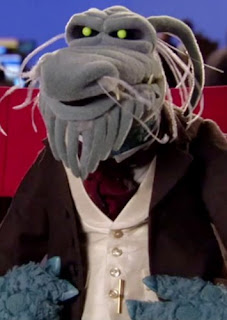
Uncle Deadly made his first appearance in the Vincent Price episode of The Muppet Show in 1977, but the four decades since have seen him evolve considerably from a periodic secondary character to a core member of the ensemble with major roles in several of the more recent Muppet productions, including the feature film The Muppets (2011), the 2015 ABC series, The Muppets, and Disney’s 2020 shortform streaming series, Muppets Now. As his significance has grown, so has the development of his personality. He first appeared as a monster character who occasionally contributed to situations that called for the creepier members of the extended cast, but the Uncle Deadly of today is quite a different fellow from the menacing thespian fiend of the distant past. Indeed, Uncle Deadly might be one of the Muppets’ most dynamic characters, partly because his ascension to central player status arrived so long after his original introduction. More recent productions have taken advantage of his potential and room for development to create a very modern Uncle Deadly, one who still has his roots in his theatrical, macabre past but also embodies twenty-first century sensibilities regarding fashion, social media, and sexuality.

Uncle Deadly began his existence as a tribute to classic horror, and his early appearances on The Muppet Show highlighted his connection to that genre. Michael K. Frith designed the character, Dave Goelz built him, and Jerry Nelson created his voice and manner as an homage to classic horror icon John Carradine. The notoriously hammy Carradine inspired the character’s Shakespearean bent and theatricality and also underscored his identity as the embodiment of a certain kind of horror, not the bloody slashers so prominent in the mid-1970s, when The Muppet Show first aired, but B monster movies like House of Frankenstein (1944), House of Dracula (1945), and The Black Sleep (1956). Carradine, in other words, was a king of horror camp, especially after appearances in low-budget 1960s pictures like Billy the Kid Versus Dracula (1966), Blood of Dracula’s Castle (1969), and Madame Death (1969). It’s entirely appropriate, then, that Uncle Deadly made his initial appearance on the series during the Vincent Price episode, where he played the horror star’s “beautiful assistant” during a New Year’s Eve sketch called “House of Horrors.” Price, another icon of the genre, was a natural choice to pair with Uncle Deadly; Price would even go on to star with John Carradine in The Monster Club in 1981 and House of the Long Shadows in 1983, and Price would be reunited with Uncle Deadly when the Muppets took over The Tonight Show in 1979 to promote The Muppet Movie, even though Uncle Deadly had no real part in that film. 
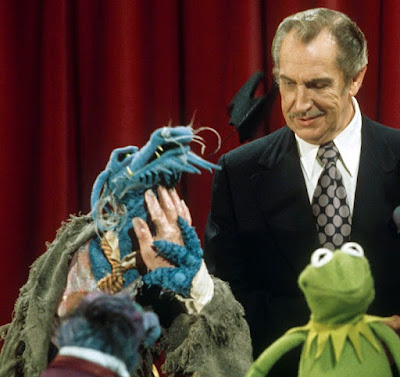
Uncle Deadly and Vincent Price

Uncle Deadly’s second appearance on the show, and his formal introduction by name, came in the first season Twiggy episode, where he haunted the cast as The Phantom of the Muppet Show, a Shakespearean actor who had died onstage thanks to bad reviews of his Othello. Many of the great horror stars had similar theatrical backgrounds, including Carradine, Price, Basil Rathbone, and Boris Karloff. Price had even starred as a Shakespearean actor driven mad by critics in the 1973 film, Theatre of Blood. As a theater phantom, Deadly tapped into the rich legacy of The Phantom of the Opera, from the original novel by Gaston Leroux and the 1925 Lon Chaney film to the much more contemporary Phantom of the Paradise, the 1974 cult musical directed by Brian De Palma and starring Paul Williams, an important Henson collaborator who had also been a first season guest on The Muppet Show. In 2017, the Muppets hung a lampshade on this connection by casting Uncle Deadly as the actual Phantom in the Penguin paperback, Muppets Meet the Classics: The Phantom of the Opera. Thus, even as a minor character, Uncle Deadly came heavily invested in a particularly rich mix of literary, theatrical, and cinematic influences, which possibly explains how he could capture viewers’ imaginations so thoroughly with so little screen time on the original television series and films. 

Despite his promising beginning, The Muppet Show never quite figured out what to do with the character, and he made only a few additional appearances on the original television series, including two installments of a melodrama parody that had him terrorizing an imperiled Miss Piggy. He never became a key figure for the show and ceased to be featured after the third season, making his appearance on the 1979 episode of The Tonight Show all the more noteworthy, and almost certainly solely due to Price’s presence as the episode’s first guest. While he turned up occasionally in other Muppet media, mainly print publications, he ceased to be a performed character, with Nelson’s last credit for him taking place in 1979. Just like a phantom, Uncle Deadly more or less disappeared, and his comeback would take decades to materialize.

Of course, the 2011 Disney movie, The Muppets, marked a comeback for all of the characters, who had not starred in a theatrical release since Muppets from Space in 1999, but none more so than Uncle Deadly, who burst into greater prominence than he had ever enjoyed before. According to Ryan Roe of the Muppets fansite, Tough Pigs, the picture’s director, James Bobin, was a fan of the sinister blue monster who wanted Uncle Deadly in the story, which cast him as a henchman to villainous oil tycoon Tex Richman (Chris Cooper). Performed by Matt Vogel, this new iteration retained the core elements of his original personality but traded his phantom rags for a neat if somber suit that fitted his role as the lackey of a wealthy businessman. Deadly’s self-described “terrifying name and evil English accent” made him a more traditional villain sidekick than his co-henchman, Bobo the Bear, even though Bobo had already filled the same function in Muppets from Space a decade earlier. It was nothing like a major role compared to those of the core characters, but it proved to be a particularly dynamic one. At first depicted as an accessory to Richman’s evil schemes, Uncle Deadly dramatically rejected the villain and embraced his identity as a Muppet. Longtime Uncle Deadly fans, Ryan Roe and myself included, cheered this development and looked forward to Uncle Deadly’s continuing presence as a more important character, but the 2014 sequel, Muppets Most Wanted, didn’t seem to know how to use him if he wasn’t going to be a villain anymore, and he was once again reduced to a minor cameo role.
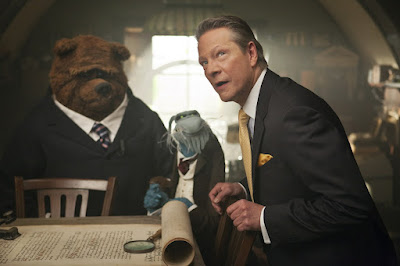
Uncle Deadly schemes with Bobo and Tex Richman.

Luckily, a return to television was just around the corner for the now Disney-owned characters, and Uncle Deadly’s evolution persisted in surprising but utterly appropriate ways. No longer a phantom or a fiend, Deadly took up the job of wardrobe manager for Up Late with Miss Piggy, the fictional talk show setting for the short-lived 2015 ABC series, The Muppets. The show had a troubled start, with The New York Times calling it “mundane” and “overwrought,” and The Guardian describing it as “cynical” and “heartbreaking.” Most of the complaints focused on the core characters, especially a depressed and joyless Kermit, but the retooling the show underwent after the first ten episodes brought major changes that extended to Uncle Deadly, as well. Initially a background character - yet again - with relatively few scenes and lines, Deadly blossomed into a fully realized member of the cast after the tenth episode. He was not only the wardrobe manager for the show but a talented fashion designer and, most importantly, the chief confidant and friend of Miss Piggy, who had long suffered from the boys’ club nature of the core Muppets cast and her own treatment of other female characters as professional and romantic rivals. Piggy had always needed a scene partner who could appreciate her perspective and also push back against her temper while still maintaining their relationship, and Uncle Deadly turned out to be a perfect choice. With new, dapper costume changes that suited his sartorial sensibility and large chunks of screen time with Piggy, Uncle Deadly was suddenly even more developed and integral than he had been in the 2011 film. He was witty, wry, and still an old theater ham at heart, but he also brought much needed emotional grounding to Piggy, allowing her to move beyond the one-note diva depiction that had plagued her since the original show. In late season episodes like “A Tale of Two Piggies” and “Got Silk?”the friendship took center stage, with Deadly actually returning to the stage in full Alicia Silverstone costume for a production of Clueless that he was directing. Unfortunately, the series makeover came too late to convince Disney and ABC to greenlight a second season, but the evolution of Uncle Deadly stuck as one of the best outcomes of the canceled show. 

Since the 2015 series, we’ve continued to see this new version of Uncle Deadly in a variety of media. He joined Twitter in January 2016, where his account bio reads “Get thee to Twitter where I, Uncle Deadly, deliciously dish about great acting, high fashion, and absolutely everything in between.” The account is still active in 2022, where the most recent post on September 3rd says, “All fans of fashion know that one of the best places for outfit shopping is the thrift store. You just might find absolutely anything there! Well... not ANYTHING. For instance: you'd never find Miss Piggy there.” He provided fashion advice and witticisms on the YouTube “Muppet Thought of the Week” series from 2017 to 2018. He appeared at the Disney media event, D23, in 2019, and made appearances along with other Muppets for a variety of special performances. He then returned as Piggy’s constant companion for the 2020 Disney+ series, Muppets Now, which also saw him getting back to his theatrical roots by teaching Walter about stage combat. His significant presence on Muppets Now was particularly noteworthy because the six episode show, a stripped down production that dropped to streaming in July 2020, in the midst of the first year of the Covid pandemic, featured a very small cast of core Muppet characters. Uncle Deadly had clearly arrived as a beloved major character, one whom fans expected to see in any Muppet project. 

It was surprising, then, to see Disney relegate Uncle Deadly to a cameo role once more for the 2021 Disney+ Halloween special, Muppets Haunted Mansion, which ought to have been the one place the character absolutely deserved a major presence. Disney certainly knew that Uncle Deadly belonged in such a setting; he had served as the host for the 2021 Disney Parks video, “A Self-Guided Tour of the Most Mystifying Attractions Around the World,” which covered the various incarnations of The Haunted Mansion in Disney theme parks. Uncle Deadly’s horror connections overlapped with those of the famous Disney dark rides, especially Phantom Manor at Disneyland Paris, which Vincent Price had provided the original English language dialogue for and which to this day features Price’s iconic laughter. It seems painfully obvious to any fan of the Muppets and The Haunted Mansion that Uncle Deadly ought to have played the Ghost Host for the special. The elegant cast member costume, the Host’s sepulchral and darkly comedic voice, his identity as one of the resident specters, and the ride’s intentional evocation of classic horror atmosphere all pointed to Uncle Deadly as the perfect choice, but Disney chose instead to cast Will Arnett in the important role and have Uncle Deadly appear only as the Justice of the Peace during the wedding scene. In an otherwise delightful Halloween special, this slight stood out as an attempt to return Uncle Deadly to the background, and I hope it proves to be an aberration and not a sign of things to come with future Muppet productions. 

Having looked at the long, dynamic history of the character, we can see that Uncle Deadly has evolved much more markedly than many of his fellow Muppets. He has been particularly well-positioned to do so by his tremendous potential and his early role as a background character without as much baggage to dictate his development over the decades. The original core cast, like Kermit, Piggy, and Fozzie, have been more fixed over time because their personalities and roles were so clearly established in the 1970s. The negative reaction to a depressed Kermit on the ABC series shows how viewers expect those characters to remain true to their earlier selves even as studio owners, puppeteers, and decades change. Other minor characters with less compelling personalities have stayed in the background or mostly disappeared; think of Hilda, the original wardrobe manager on The Muppet Show, or Wayne and Wanda, or Bobby Benson’s Baby Band. The Muppets cast is full of weird characters who have never broken into the inner circle, even though we do see the occasional newcomer, like Rizzo, Pepe, and Bobo, rise to prominence, and sometimes fall out again, as Rizzo seems to have done with the contentious departure of creator and performer Steve Whitmire. Uncle Deadly has already survived the transition from original performer to second generation, even though his somewhat uneven prominence over the last decade suggests that his position as a top tier character is not yet secure, at least in the eyes of the Disney studio bosses. His rise, however, suggests how much the Muppets need a character like Uncle Deadly, who can change with the times by building on his original traits rather than erasing them. He fills gaps in the original core without negating what we already know about him. Like Gonzo, he’s a bizarre character associated with performance, counterculture, and the arts, but his horror roots give him a more grandiose, elegant personality and an ego that makes him an ideal equal and foil to Miss Piggy. Deadly’s evolution as a fashion icon fits with those traits, too, especially given the Gothic extravagance of many of his costumes, which would have looked just as appropriate on Vincent Price in his best horror roles. Vanity, after all, is a trait long associated with both preening stage actors, maniacal villains, and fashion designers. 
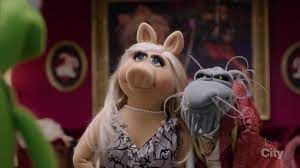
Uncle Deadly and Miss Piggy, BFFs.
 

There’s another aspect to this evolving Uncle Deadly that also fills a gap in the core cast and merges a variety of subtexts from his history, and that’s the way in which the character has increasingly leaned into an identity that we recognize as queer. Disney has carefully avoided making this aspect of Uncle Deadly explicit, but it surges through the undercurrent of his personality and function. His original persona, inspired by scenery chewing horror heavies, already contained the seeds of queerness because queer-coded villains in classic horror, film noir, and science fiction were often depicted in the same way, with their suspect sexuality expressed by their sinister yet refined demeanor, their fastidious fashion sense, and their penchant for theatricality. The representation, while certainly problematic in many respects, simultaneously made space for gay and bisexual actors who built their careers on such roles, including Clifton Webb, Laird Cregar, Charles Laughton, and Ernest Thesiger, while actors like Peter Lorre, George Sanders, Claude Rains, and, of course, Vincent Price, capitalized on their ability to channel the same energy into villainous characters. 

The more modern depiction of Uncle Deadly moves beyond the villain stereotype even as it steps into the territory of the queer-coded character as “gay best friend” to a female protagonist, a trope familiar from films like Clueless (1995), My Best Friend’s Wedding (1997), and The Devil Wears Prada (2006). There’s a reason, after all, that Deadly is directing a stage production of Clueless in the “Got Silk?” episode of the ABC series. He gets more screen time in the recent series largely because Piggy needs a scene partner and he can talk to her about the things that interest her, namely herself, her appearance, and her outfits. As Deadly dishes about fashion and acting on Twitter, TV series, and YouTube, he performs an identity familiar to modern viewers from Queer Eye, Legendary, RuPaul’s Drag Race, and other productions where fashion and queer sexuality connect as the central themes. On the plus side, Deadly’s frequent appearances in online media allow him to embody those traits without being an accessory to Miss Piggy, and he gets to command our attention as the true star of the scene. As a character who originally had his own independent function as a character, Deadly is proving that he can still stand alone and appeal to audiences without being tethered to Piggy, even though his relationship with the diva has driven much of his recent development. 

At this time, it’s difficult to say what comes next for Uncle Deadly. His Twitter account still posts new content frequently, and Matt Vogel is still very much involved with the Muppets as a performer, so we can hope that he won’t disappear again as he did in 1979. In spite of his reduced presence, we did see him feature in a key scene in Muppets Haunted Mansion in 2021, and the Disney Parks Haunted Mansion video shows that Disney sees him as a good fit for spooky or Halloween content. However, the Muppets present an embarrassment of riches similar to those of the Marvel Cinematic Universe and Star Wars when it comes to Disney project opportunities. We know that the next Muppet production coming to Disney+ will be Muppets Mayhem, a series focusing on The Electric Mayhem and a supporting group of human characters. Deadly may or may not appear in the series, depending on the extent to which it incorporates characters beyond the actual band members. The Muppets YouTube channel, while still up and full of older content, last saw a new post six months ago, and two years have passed since Uncle Deadly’s last appearance there. Because the Muppets are now just one property within the ever-expanding multimedia Disney juggernaut, projects featuring them have to compete with other brands for development, streaming opportunities on Disney+, and theatrical releases. We’ve already seen Disney cancel Muppet series after a single season or abort them mid-development, as happened with the planned 2019 series, Muppets Live Another Day. It’s possible that Disney might relegate Deadly to the background again as it focuses on different Muppet projects, which are themselves of less importance to the studio than the wildly lucrative Marvel and Star Wars properties.


That would be a shame, too, because I, for one, can imagine many projects where Uncle Deadly’s particular talents could be employed to great effect. His personality and history would make him ideal for productions highlighting theater, fashion, the arts in general, and light horror. Even though the Uncle Deadly’s House of Badness TV concept for a kid-friendly horror show never got off the ground back in 2000, the idea still has merit, especially since the enduring appeal of Hocus Pocus ought to prove to Disney that family appropriate horror can have tremendous appeal. Uncle Deadly would be a perfect horror host for tales of the weird and eerie, but he would also fit in perfectly in Muppet adaptations of Shakespeare, or as the host and star of a Muppet makeover show where various characters or human guest stars get their looks updated. A return to theatrical releases of literary adaptations would also provide rich possible roles for Uncle Deadly, from the obvious Phantom of the Opera to Dracula, Sherlock Holmes, and even Robin Hood, with Deadly in any of the roles previously filled by kindred spirits like Carradine, Karloff, Price, Basil Rathbone, or Christopher Lee. With a character as rich and versatile as Uncle Deadly, only a failure of imagination on the studio’s part can limit his future with the Muppets cast. 

* This essay was originally written for and presented online at The Evolution of Jim Henson's Puppetry: From Analog Craft to Digital Franchise symposium.

Monday, March 7, 2022

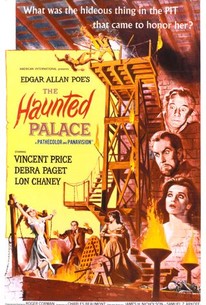
Classic Films in Focus: THE HAUNTED PALACE (1963)

Although the story really comes from H.P. Lovecraft's The Case of Charles Dexter Ward, Roger Corman's The Haunted Palace (1963) bills itself as one of the director's Edgar Allan Poe films and features all of the familiar trappings of those Gothic horror tales. Vincent Price is, as usual, in the lead, here playing a dual role as an evil warlock and his identical descendant, with Debra Paget making her final screen appearance as the descendant's long-suffering wife. The constant fog, gloomy period setting, and well-established genre tropes ensure that fans of Corman's other films will find plenty to appreciate here, but the chief attractions beyond Price and Paget are a gaggle of creepy mutant villagers and supporting performances from Lon Chaney, Jr. and Elisha Cook, Jr. The Haunted Palace is one of five films Corman directed in 1963, and it's not the first Corman picture anyone should see, but it's a fun outing for its iconic stars and worth the time if you enjoy the other Corman and Price collaborations.

Price appears first as the powerful necromancer Joseph Curwen, who conspires with his mistress, Hester (Cathie Merchant), to bewitch young women and bring them to his castle for unspeakable occult practices. The local villagers form a vigilante mob and burn Curwen at the stake, but not before he curses them and their descendants. Over a century later, Curwen's identical great-great-grandson, Charles Dexter Ward, inherits the castle and arrives in the town of Arkham with his lovely wife, Ann (Debra Paget). The village men (played by the same actors who appeared as their ancestors) make the Wards unwelcome, but Curwen's spirit soon possesses Charles and resumes his diabolical schemes of necromancy and revenge.

The dual roles of Joseph Curwen and Charles Dexter Ward give Vincent Price plenty to do, especially when he gets to play the two personalities warring for dominance over Ward's mind. Greenish makeup on the warlocks' faces helps us know when Curwen has control, but Price embodies the shift convincingly without the visual cue. Ward is a perfectly normal gentleman who loves his wife and doesn't believe in supernatural curses, while Curwen is a cunning sadist who is more than willing to murder anyone who crosses him. Of course, Curwen is destined to get the upper hand and wreak havoc, which ensures that Price can cut loose with his villain and make the most of a thoroughly terrible character. His sudden cruelty to his devoted wife leads her to suspect that evil is at work in the castle, but over time Curwen gets better at impersonating Ward so that he can continue his schemes in the secret chambers underground.

Debra Paget gives a solid performance as the worried wife, although she's the only developed female character in the whole story and spends most of her time looking frightened. Curwen is supposed to be obsessed with his dead mistress, Hester, but we don't see enough of her to understand his determination to resurrect her even though it's a distraction from the mission he and the other necromancers are supposed to be accomplishing. Lon Chaney Jr. has several scenes with Price but is subdued throughout; by 1963 he's long past his heyday as a horror star and not really credible as a fiendish immortal necromancer. The villagers, both past and present, are played by Leo Gordon, Elisha Cook, Jr., Frank Maxwell, and John Dierkes, and of the lot Maxwell has the most scenes because his doctor character tries to befriend and assist the Wards, although Cook is probably the most fun to watch because he plays fear-induced panic so brilliantly. Almost all of the named characters are rather dramatically upstaged by the deformed mutant villagers, descendants of the women Corwen bewitched and the ancient godlike thing he keeps locked in his underground lair. Cook's character, Peter, hints at the way the unholy mating has tainted the bloodlines of Arkham by revealing his own webbed hand, while Gordon's Edgar Weeden keeps his violent mutant son imprisoned in his home. Sadly, we don't know what, if anything, becomes of the mutants at the end of the story, since the Curwen/Ward conflict dominates the third act.

Different Corman fans will have their own favorites, but I recommend House of Usher (1960), The Masque of the Red Death (1964), and The Tomb of Ligeia (1964) if you want to see some of the best of the Poe adaptations with Vincent Price. You'll find both Price and Debra Paget in The Ten Commandments (1956), while Elisha Cook Jr. and Price both appear to great effect in William Castle's classic shocker, House on Haunted Hill (1959). See Lon Chaney Jr. in better times in his most memorable role as the ill-fated Larry Talbot in The Wolf Man (1941) and Frankenstein Meets the Wolf Man (1943), or check out his dramatic roles in Of Mice and Men (1939) or High Noon (1952).

Monday, October 18, 2021

Five Favorite Directors: Classic Horror


Even people who don't care for classic horror movies have probably heard of Bela Lugosi, Boris Karloff, and Vincent Price, but behind every horror classic there's also a director asking for heavier fog, more menacing closeups, and louder screams. Alfred Hitchcock, although not primarily a horror director, might be the most familiar to modern viewers thanks to Psycho (1960) and The Birds (1963), and more recent masters of the genre include George Romero, John Carpenter, and Wes Craven, but my personal favorites tend to be the earlier icons whose work influenced everyone after them. Most of the films from these directors are light on gore and heavy on atmosphere, which is how I like my creepy midnight thrills, and many worthy contenders aren't listed here only because I limit myself to five. These are the directors I most often turn to when I want something spooky to send a shiver down my cinematic spine.

Tod Browning

Browning is best remembered today for two horror classics, Dracula (1931) and Freaks (1932), but his directorial career started with silent shorts in 1915, and he helmed a number of notable silent horror pictures before his date with Dracula. Browning's movies with Lon Chaney, "the man of a thousand faces" and a master of silent horror, are especially good; try The Unholy Three (1925), The Unknown (1927), and West of Zanzibar (1928) for a sense of Browning's work before Dracula.

James Whale

Like Browning, James Whale is best remembered today for his iconic Universal monster movies, including Frankenstein (1931), The Invisible Man (1933), and Bride of Frankenstein (1935). Whale's work combines the usual elements of horror with a very dark sense of humor that sometimes tips right over into black comedy, especially with Claude Rains in the lead role for The Invisible Man. In between these more famous films Whale also directed The Old Dark House (1932), a wonderful spooky house picture with his usual flair for mixing giggles with screams.

Jacques Tourneur

As the son of French director Maurice Tourneur, Jacques Tourneur grew up in the movie making business in both France and the US; his career really took off when he teamed up with RKO horror boss Val Lewton for films like Cat People (1942), I Walked with a Zombie (1943), and The Leopard Man (1943). Later Tourneur would make memorable pictures in a number of genres, but he returned to horror for Night of the Demon (1957) and The Comedy of Terrors (1963). Cat People is justly celebrated today for its moody ambience and loaded subtext, but I'm also very fond of I Walked with a Zombie for its imaginative revision of Jane Eyre.


Robert Wise

Like Tourneur, Robert Wise enjoyed a fruitful collaboration with Val Lewton early in his career, even though he later became more famous as the Oscar-winning director of musicals like West Side Story (1961) and The Sound of Music (1965). His work in horror remains an important part of his oeuvre and the genre as a whole, with early Lewton projects like The Curse of the Cat People (1944) and The Body Snatcher (1945) laying the foundation for the horror masterpiece, The Haunting (1963), which is so good that it alone justifies Wise's place in this list. Watch it with the lights out and the sound turned up, and you won't sleep a wink.

Roger Corman

Roger Corman directed more than 50 movies, many of them low-budget shockers and now cult classics, and Corman has lived long enough to see himself become a true Hollywood legend. As much as I enjoy a really ridiculous B-movie romp like Attack of the Crab Monsters (1957), my favorite Corman horror films are the Poe adaptations he made with Vincent Price, some of them more faithful than others but all of them very entertaining. House of Usher (1960) kicked off the series, but two later entries, The Masque of the Red Death (1964) and The Tomb of Ligeia (1964) are probably my top picks for being less campy and more evocative of Edgar Allan Poe's works than a picture like The Raven (1963), even though that one is also a lot of fun.

Looking for even more classic horror directors? Try F.W. Murnau, Mario Bava, Mark Robson, and Terence Fisher for additional thrills and chills. 

See also: "The Kiss That is the Kill: Sex and Death in Three Classic Vampire Movies"


Wednesday, March 17, 2021

Classic Movie Stars on THE MUPPET SHOW

Thanks to Disney Plus, viewers can finally enjoy all five seasons of The Muppet Show, and at my house we've been delighted to have access to the long-awaited fourth and fifth seasons, which were never available on DVD. The release has created some controversy about Disney's decision to include content warnings on a handful of episodes (which are, in some cases, painfully necessary), but for Muppet fans the more pressing questions often involve trying to figure out who the guest star is, since some of these folks might have been famous in the 1970s but are truly obscure now. Luckily for classic movie fans, the guest list also includes some fantastic stars from the Golden Age of Hollywood, and their appearances on the show offer a delightful snapshot of these stars as they appeared in the late 1970s. 

For many viewers who were kids in the 70s, these guest spots might well have been their first introduction to entertainers from their parents' or grandparents' eras, which means that Gen Xers in particular might have been meeting Milton Berle, Edgar Bergen, Danny Kaye, and Gene Kelly for the first time. Other stars were much more familiar to the average 10 year old of 1978, including Mark Hamill, Don Knotts, and Rich Little, while many of the British guests would have baffled American children and adults alike (the show was filmed in London, so British guests were much easier to acquire). Of course, today even the "current" stars of 1978 look like classic ones, but every season of the show mixed classic stars, current American celebrities, and British talents to provide a weirdly educational cultural smorgasbord for unsuspecting child viewers. Singers and dancers had obvious appeal, as did comedians, but that didn't stop the show from featuring action stars like James Coburn and Roger Moore or magician Doug Henning. The classic movie stars were just part of the mix.

Each season has at least one classic star, although some were better known in the 70s than others thanks to musical careers, television roles, or later film roles. In Season One, you can see Rita Moreno, Lena Horne, Peter Ustinov, Vincent Price, and Ethel Merman. Season Two offers Don Knotts, Milton Berle, Edgar Bergen, George Burns, Julie Andrews, Peter Sellers, and Bob Hope. Showing up in Season Three are Danny Kaye, Harry Belafonte, and Roy Rogers and Dale Evans. Season Four is comparatively light on classic movie stars but includes Liza Minnelli, while Season Five ends the series with James Coburn, Tony Randall, and Gene Kelly. Each of these is worth watching, but the episodes with Moreno, Price, Andrews, and Belafonte are particularly good, so start there if you're a classic film fan but not someone with a lot of previous experience with The Muppet Show

A handful of the classic film stars who appear on the series also have cameos in the original 1979 film, The Muppet Movie, where you can spot Bob Hope, Milton Berle, and James Coburn along with Orson Welles, Telly Savalas, and many younger stars who also appeared as guests on the show. Many of the Muppet films are also streaming on Disney Plus, so if the classic stars on The Muppet Show whet your appetite for more of Kermit and the gang, there's plenty of content available. 


Want to know everything there is to know about The Muppets? Head on over to my friends at Tough Pigs to find news, articles, podcasts, and commentary! You can also check out the essay anthology, Kermit Culture, that Anissa Graham and I edited; it's available in paperback and Kindle editions at Amazon. Our second anthology, The Wider Worlds of Jim Henson, looks at films and other productions like The Dark Crystal, Fraggle Rock, and Labyrinth.

Sunday, October 4, 2020

Classic Films in Focus: THEATER OF BLOOD (1973)

As gruesome as its murders are, Theater of Blood (1973) belongs much more to the genre of pitch black comedy than horror, given the gloriously ludicrous nature of the whole picture, but it's a dark comedy whose best jokes can only be appreciated by those with a knowledge of Shakespeare that goes well beyond the balcony scene in Romeo and Juliet or Hamlet musing to Yorick's skull. For English literature majors whose tastes also run to absurd horror comedy and Vincent Price, Theater of Blood is basically a perfect film, and since I'm squarely in that demographic I have nothing but praise to offer for this weird, wonderful gem from director Douglas Hickox and screenwriter Anthony Greville-Bell. It's a good thing, too, since I wouldn't want the vengeful spirit of Edward Lionheart to come after me for trashing his performance.

Vincent Price plays Lionheart, a demented Shakespearean actor who returns after his apparent suicide to exact revenge on the theater critics who panned his acting and denied him their highest prize. Aided by a group of meth addled homeless people and a mysterious sidekick, Lionheart lures his detractors to suitably Shakespearean fates that recreate scenes from the plays in his final performance season. As each new murder occurs, the surviving critics become more and more anxious about their own safety, but the London police seem utterly unable to protect them from Lionheart's grisly schemes. Meanwhile, Lionheart's daughter, Edwina (Diana Rigg), claims that her father is really dead and protests her ignorance of the crimes to the police and the head critic, Peregrine Devlin (Ian Hendry), the only one of the bunch who seems to acknowledge some karmic justice at work in Lionheart's actions.

Price is the main attraction throughout, but several of the supporting performances are also memorable, especially Diana Rigg as Lionheart's loyal daughter. She never exhibits the hammy lunacy that Lionheart revels in, but Edwina's sang froid proves to be just as unnerving in its own way, especially as the third act reveals its barely hidden secrets. Ian Hendry is the most significant of the critics, partly because Devlin lives longer than the others and thus gets more screen time, but Robert Morley is absolutely scene stealing as the gluttonous dog lover Meredith Merridew, who dies in a truly bizarre recreation of the most bizarre of Shakespeare's plays, Titus Andronicus. Also noteworthy is Jack Hawkins in one of his final screen appearances as Solomon Psaltery, whom Lionheart tricks into strangling his wife (Diana Dors) in a jealous rage, just like the murder of Desdemona in Othello. Most of the other victims die too quickly to have that much to do, but fans of classic British films will appreciate the presence of Dennis Price, Harry Andrews, Coral Browne (who would become Price's third wife), Robert Coote, Michael Hordern, and Arthur Lowe, as well as Milo O'Shea as the baffled police inspector.

Theater of Blood goes all in on its Shakespearean theme, loading little jokes and references into the names of both people and places, but since the murders hinge on specific scenes from the plays it's more important to know those than to know why the derelict theater is named the Burbage (for Richard Burbage, the Elizabethan actor) or that Edwina's disguise is a nod to the popularity of the "breeches roles" in the Bard's canon. The movie doesn't content itself with the most familiar and frequently performed plays, choosing instead to depict scenes from Troilus and Cressida, Cymbeline, Henry VI, Part One, and Titus Andronicus as well as more popular works like Julius Caesar, Romeo and Juliet, King Lear, Richard III, and The Merchant of Venice. Aside from the Titus Andronicus murder, the most entertaining of the lot might well be the drowning of Oliver Larding (Robert Coote) in the vat of wine, mainly because it was Vincent Price himself who met the same end when he played the Duke of Clarence in the 1939 film, Tower of London, as well as then playing Richard III in Roger Corman's 1962 remake, also called Tower of London. That's a lot of meta-humor packed into a single segment of the movie, but it's the kind of thing that becomes possible thanks to Price's long career and penchant for both period dramas and campy horror roles. (Do take a moment to enjoy the prominent placement of the name "Clarence" over the door of the shop where the wine tasting occurs.) The ending reworks the father and daughter pathos of King Lear with Edwina as a rather ironic Cordelia but Lionheart very much in the right mode as the mad monarch, although Lear hadn't committed a series of inventively ghoulish murders as part of his particular brand of insanity. I won't say that Lionheart is more sinned against than sinning, but he, like Lear, probably would.

If skewed Shakespeare suits your taste in films, try pairing Theater of Blood with Rosencrantz & Guildenstern are Dead (1990), Scotland, Pa. (2001), or the memorably terrifying Throne of Blood (1957), which is Akira Kurasawa's Japanese interpretation of Macbeth. For more murderous obsessions let loose, check out Fade to Black (1980), in which classic movies serve as the subject of the killer's fixation. Vincent Price's career spanned more than fifty years, but for other horror films from the early 70s try The Abominable Dr. Phibes (1971), Dr. Phibes Rises Again (1972), or Madhouse (1974). Dame Diana Rigg, who died in September of 2020, is particularly remembered for her iconic roles in On Her Majesty's Secret Service (1969) and the TV series, The Avengers (1965-1968), but I'm personally very fond of her in The Great Muppet Caper (1981) and the delightfully droll series, The Mrs. Bradley Mysteries (1998-2000).

Saturday, October 3, 2020

Classic Films in Focus: THE MASQUE OF THE RED DEATH (1964)


 The Masque of the Red Death (1964) is another of Roger Corman's loose adaptations of the stories of Edgar Allan Poe with Vincent Price in the starring role, this time as the debauched and heartless Prince Prospero, a ruler who holds lavish parties while his people die of a horrific plague. Like most of the Poe films it takes many liberties with the source material and also incorporates the characters and plot from another Poe story, "Hop-Frog," but its deviations don't detract from its delights as a film. Lurid, lavish, and full of the usual Corman elements, it's a grim but entertaining morality tale that depicts the just desserts meted out to cruel and uncaring oligarchs who foolishly believe themselves to be immune to the afflictions that stalk their subjects.

Price is in high villain style as the sadistic Prospero, who shuts himself and his cronies off from the plague stricken countryside for a massive party inside the safety of the castle walls. He abducts a beautiful young village girl, Francesca (Jane Asher), with the intention of corrupting her innocence and seducing her into the service of Satan, and he uses her captured father (Nigel Green) and lover (David Weston) as leverage to keep her by his side. Prospero's jealous lady, Juliana (Hazel Court), dares the ultimate sacrifices to Satan to ensure her own position with the prince, even as the gathered nobles drink and debase themselves throughout the castle. Little does Prospero guess that a mysterious red robed figure is slowly but surely bringing doom to the revelers.

The romantic plot involving Francesca and her intended, Gino, delays the fate that awaits the corrupted court, but there's never any doubt about the ending of this tale. We only wonder whether Francesca and Gino, along with Hop Toad (Skip Martin) and the diminutive dancer Esmeralda (Verina Greenlaw), will escape the punishment so richly deserved by the rest. The personified Red Death opens the film with the promise of liberation for the people, but it's soon clear that liberation from Prospero might also mean liberation from life. Plagues, as we know, aren't very precise when it comes to such matters. The build up, then, is more about how much the story can make us anticipate and enjoy Prospero's downfall; we see him burn the village, murder the people, humiliate his courtiers, and even murder his followers when the mood strikes him. He is utterly faithless and without redeeming qualities of any kind. He delights in the suffering and debasement of others but believes himself untouchable. Thus, when the third act finally arrives, we have to cheer as Prospero first glimpses that flash of forbidden red in the midst of the masquerade.

Price, of course, makes for a delightfully satisfying villain, by turns preening and predatory in his sumptuous robes. Prospero is one of his more serious horror heavies, neither hysterical nor ludicrous, but very much in his comfort zone during this period of his career. Hazel Court makes a solid costar as the increasingly desperate Juliana, although she spends a lot of her screen time staring at Prospero or his Satanic altar, but Jane Asher seems a bit dazed as Francesca, which might be intentional but drains her of the ability to express the horror and disgust one might expect her to show. The bad dubbing for Verina Greenlaw undermines the pathos of her big scene with Skip Martin as Esmeralda and Hop Toad plan their escape, but Martin has some very good moments with Patrick Magee as the secondary villain, Alfredo.In fact, Hop Toad's revenge on Alfredo might be the most shocking scene of the picture, especially if you haven't read Poe's story. 

You might make a double feature of The Masque of the Red Death with Vincent Price's other 1964 movie about a plague, The Last Man on Earth, which has been remade several times. For more of Corman's Poe films with Price, see House of Usher (1960), Pit and the Pendulum (1961), and The Tomb of Ligeia (1964). You can get a look at Price's early excursions into the horror genre with Dragonwyck (1946), House of Wax (1953), and The Fly (1958), or catch scream queen Hazel Court in The Curse of Frankenstein (1957), Premature Burial (1962), and The Raven (1963). For more classic movies about plagues, see The Seventh Seal (1957) or Vampire Circus (1972), or branch into different territory with the yellow fever outbreak in Jezebel (1938).

Wednesday, May 8, 2019

Richard III and Disinformation in TOWER OF LONDON (1939)

One probably doesn't go looking for timely political commentary in a film like Tower of London (1939), which offers a mashup of history and horror in its retelling of the bloody rise and fall of England's most reviled monarch. Much of the plot is familiar to viewers thanks to broad cultural awareness of Shakespeare's version and, perhaps, renewed 21st century interest that resulted from the discovery of Richard's bones in 2012. Tower of London, which was released in 1939, is very much a Hollywood vision of the Wars of the Roses, with Basil Rathbone starring as the murderously ambitious Richard. It generally favors the lurid and romantic over the strictly historical, a bent indicated by the presence of supporting players like Boris Karloff and Vincent Price. It's striking, then, to recognize the way in which this film depicts the insidious use of disinformation and a weaponized mob to influence political forces. Just like the hidden political operatives who manipulate our elections today, Richard III and his henchman, Mord, utilize a massive, medieval version of social media to undermine their opponents and assist their own ambitions.

We might not, at first, recognize the importance of the disinformation campaign to Richard's ascent. Shocking physical violence often overshadows the subtler efforts that propel the repugnant royal toward the throne. In the film, Richard has his enemies executed, drowns one brother in a vat of malmsey, has his young nephews brutally murdered, and conspires in the deaths of numerous other rivals. While he is a skilled swordsman, he normally avoids holding the murder weapons himself, preferring instead to have Mord commit the crimes or to fabricate grounds to get his enemies sent to the scaffold. Richard's general preference throughout is for the most underhanded, devious means of accomplishing his goals; his double dealing keeps everyone around him off balance and guessing at his true motives.

That inclination toward secretive, secondhand villainy fits perfectly with Richard's deployment of the rabble to spread lies and gossip that support his rise to power. We see in the film how Richard conducts this propaganda campaign, with Mord once again as his intermediary. Richard gives Mord the funding and the message to circulate, which Mord then takes to a collection of beggars who function as his network of infiltrators and spies. Somewhat comically, we see the mob rehearse their assigned lines under Mord's direction and then repeat them as they pretend to be casual spectators interspersed among the crowds. They work exactly like modern Russian agitators and other operatives on social media, taking their orders from the top and then presenting themselves as independent, sincere peers to the unsuspecting community. Their misinformation and propaganda spread through the kingdom until citizens rally in support of Richard and demand that he be crowned king, never suspecting that their actions have been carefully manipulated for that very end. The people affected by Richard's lies don't seem to realize - or care - that he has the blood of so many people on his hands.

Fortunately for history, Richard's propaganda is only temporarily successful, and, as we now know, his thoroughly abused corpse ended up buried beneath a Leicester car park. Tower of London ends on a positive note, with Queen Elyzabeth (Barbara O'Neil) rejoicing that she has saved her daughters from Richard's murderous reign and will one day see an heir to her line once more on the English throne (in reality, her eldest daughter, Elizabeth of York, would become Queen to Henry VII and the mother of Henry VIII). The bloodshed and damage, however, were not undone for the many who lost their lives during Richard's rise and fall, and modern viewers can't assume that a new Henry Tudor will show up to right the ship of state in our current global political crisis. While we might rightly relish the horror-tinged spectacle that Tower of London offers, we should also take to heart its dire message about the insidious efficiency of misinformation and the deliberate manipulation of the masses through whisper campaigns, whether they're conducted in a marketplace or on Facebook. Now is the winter of our discontent, indeed, and Richard's modern counterparts are hard at work to ensure that no glorious summer follows.


Monday, November 14, 2016

Classic Films in Focus: THE TINGLER (1959)

The Tingler (1959) is one of William Castle's most famous horror gimmick pictures, partly because of its star, Vincent Price, and partly because of its wacky use of wired seats and paid plants to elicit screams from the theater audience. Sadly, the modern home viewer can't enjoy the weird thrills of Percepto, but The Tingler is still a lot of fun. In addition to Price, always a pleasure even in his campiest roles, the picture offers Castle himself doing an intro bit, some wonderfully meta moments of the Tingler in a movie theater, and a striking climax that mixes color and black-and-white cinematography to lurid effect. For fans of the fun house sci-fi horror that flourished in the late 1950s, The Tingler is a must-see film, and it's certainly at the top of Castle's strange canon.

Vincent Price plays Dr. Warren Chapin, a pathologist who performs autopsies on executed criminals in search of the force that causes people to scream when they experience fear. During one such autopsy, he meets Ollie (Philip Coolidge), whose brother-in-law is Warren's latest subject. Warren is fascinated to learn that Ollie's wife, Martha (Judith Evelyn), is a deaf-mute who cannot scream even when terrified. He wonders what would happen to her if she were subjected to intense fear, and then she is, in fact, frightened to death. Warren discovers the parasitic Tingler gripping Martha's spine, but it turns out to be a lot harder to control than he expected, and he soon repents of his taboo research into the unknown.

There's actually a lot more going in The Tingler than its central plot suggests, and at times it's hard to tell the good guys from the monsters. Warren has a cheating, evil wife (Patricia Cutts), who would murder him if she could, and perhaps he has the same plans for her. He's obsessed enough to consider experimenting on the defenseless Martha and to take large doses of LSD. At the same time, he seems fond of his assistant and his sister-in-law, the movie's obligatory young lovers. The ambiguity is part of the fun; is Warren going over the edge? Who scares Martha to death? It's not a mystery story, really, but there's enough uncertainty about the central characters to keep us guessing until the end.

The tricky plot sustains the picture when it isn't relying on its gimmicks, but the tricks are Castle's calling cards, and the buzzing seats must have generated plenty of screams in pitch-black theaters back in 1959. The home viewer will have to imagine the scene as the screen goes black and Price's voice calls out to the audience to "Scream! Scream for your lives!" It's corny, yes, but Castle's films are like spook house rides, and that's what makes them so much fun. Home viewers won't have to stretch their imaginations during the scene where Martha is literally scared to death by a series of freakish events. The segment has a terrific silent film quality, something Castle cultivates by having Ollie and Martha run a silent movie theater, but its pièce de résistance is the final moment, when Martha sees bright red blood in a black-and-white bathroom, complete with a bloody hand emerging from a tub of crimson ooze. Poor Martha doesn't stand a chance. The effects of the Tingler itself, hopping across the floor on visible strings, are more typical of the hokey stuff we expect from low-budget shockers of this era, but for many classic sci-fi horror fans it's an endearing flaw, as essential to the genre as the scientist's hubris or the crazy pseudo-scientific dialogue. The Tingler offers plenty of those elements, too.

For another William Castle collaboration with Vincent Price, try House on Haunted Hill (1959). Castle's other pictures include Macabre (1958), 13 Ghosts (1960), and Mr. Sardonicus (1961). Look for more of Price's great camp roles in The Raven (1963), The Comedy of Terrors (1963), and Theatre of Blood (1973). You'll find Judith Evelyn in Rear Window (1954), Hilda Crane (1956), and Giant (1956). Philip Coolidge turns up in North by Northwest (1959) and Inherit the Wind (1960). Be sure to note former child actor Darryl Hickman, who plays Warren's assistant; you might recognize him from Men of Boys Town (1941), Leave Her to Heaven (1945), and The Strange Love of Martha Ivers (1946). Hickman enjoyed a long career that jumped to television, and he ended up doing voice work for a number of cartoons, including Pac-Man, The Biskitts, and Pole Position.

THE TINGLER is currently streaming on Shudder!


Thursday, October 13, 2016

Classic Movie Haunted Houses for Halloween

Last week we spent a few days in Gatlinburg, Tennessee, where, at the insistence of my teenage daughter, we visited a commercial haunted house. It's called Mysterious Mansion, but there's nothing very mysterious about it. Visitors pay $16 a pop for 15 minutes of being jumped at and chased around by people in weird makeup and masks. There was the obligatory scary clown, some girls covered in fake blood, and a guy in a Grim Reaper outfit wearing jeans under his robes. My daughter had a good time, but for the adults the most entertaining part was watching a teen girl in the group ahead of us totally lose it and bail a third of the way through the house. The rest was just darkness, narrow spaces, and some irritating strobe lights. The underwhelming experience left me thinking about my favorite haunted houses in classic movies and why they're so much better than these attractions that pop up all over the place come Halloween.

For me, a good haunted house movie has several elements. One is atmosphere that I'm given time to appreciate. Another is a compelling narrative that explains the supernatural phenomena and creates a reason to care about the characters (including, ideally, the dead ones). I like weird effects more than gore; in fact, I'm not much on seeing anyone's intestines or brains, which is why I don't watch slasher films. I want my haunted house to have ghosts, not psychopaths (but I'll forgive the occasional psychopathic ghost). With those criteria, it's probably no surprise that my top shelf haunted house movie is...


THE HAUNTING (1963)

Robert Wise's neurotically eerie horror classic wins hands down in the Haunted House Hall of Fame. It has everything, including deliriously Gothic atmosphere and a heroine who is going completely off the rails. Who can forget that moving door, an effect so simple and yet so unbelievable when you see it? I think everyone who runs a haunted house ought to be made to watch The Haunting a dozen times first (and don't let them anywhere near the dopey 1999 remake).


THE UNINVITED (1944)

The slow burn of this ghost story might bore some viewers, but for me it's one of the best of the genre, combining elements of classic mystery with its spectral terrors. Ray Milland, Ruth Hussey, and Gail Russell star as three people whose fates become entwined with that of a house inhabited by the spirits of the dead.  The Criterion Collection release of this film makes a grand Halloween treat for your plastic pumpkin.


HOUSE ON HAUNTED HILL (1959)

OK, so this William Castle classic is not a very serious haunted house movie, but it's just so much fun, and it does offer a couple of great jump scares. That blind housekeeper gets me every time! Besides, Vincent Price and William Castle have to be on this list somewhere. It's just not Halloween without them. This is the go-to pick for a Halloween party where you want to laugh and shriek in equal measure.


DRAGONWYCK (1946)

Speaking of Vincent Price, I love the haunted house atmosphere and his Gothic villain in this supernatural tale, even if the adaptation of Anya Seton's novel has some structural issues. Gene Tierney plays Price's new bride, who only slowly comes to understand the ghostly terrors of her husband's home. This is a good one for Jane Eyre fans in particular; it was part of a wave of creepy Gothic romances that followed the 1940 success of Rebecca.


So, if you're looking for haunted houses this Halloween, I suggest you start with one of these instead of standing in line to hand over your cash for fifteen minutes with scary clowns. These are the movies whose worlds I wish a haunted house would take me through, where ghostly music plays and the things you don't see are a lot more terrifying than the things you do.

Looking for related classic horror posts? Try "The Gothic Influences of Disney's Haunted Mansion" and "The Housekeeper in the Gothic Film Tradition."


Monday, July 18, 2016

Classic Films in Focus: TOWER OF LONDON (1939)

Tower of London (1939) lacks the poetic grandeur of Shakespeare's Richard III, but the story remains more or less the same, with an atmosphere of horror injected into the historical drama through the appearance of genre icons like Boris Karloff and Vincent Price. As history goes, this is bloody stuff, indeed; it opens with a beheading and goes on as it begins, and there's certainly enough death and torture to satisfy the bloodthirstiest horror fan. Basil Rathbone brings gravitas and intelligence to the role of Richard, while Karloff plays the executioner henchman who helps him murder his way to the throne. A fine supporting cast includes Ian Hunter, Barbara O'Neil, John Sutton, and the lovely Nan Grey, but most fans will flock to this film for the irresistible trio of Rathbone, Karloff, and Price.

As Richard, Duke of Gloucester, Rathbone schemes and slays in a bid for the English crown. To get there, he must first get rid of everyone ahead of him in line, including his brothers, King Edward IV (Ian Hunter) and the Duke of Clarence (Vincent Price), and his young nephews, the king's sons with long-suffering Queen Elyzabeth (Barbara O'Neil). Assisting Richard is Mord (Boris Karloff), a torturer and executioner whose own deformed foot creates a kinship with the hunchbacked Duke. While Richard murders his way to power, the Queen's followers, John Wyatt (John Sutton) and Lady Alice (Nan Grey), struggle to keep their love alive and to defend the country from Richard's evil reign.

As the subject matter implies, this is really Rathbone's film, and he gives a terrific performance, even if he doesn't get to spout any Shakespearean soliloquies. His Richard is not merely evil and repulsive; he has courage, genius, and the military prowess to match his ambition. His strange relationship with Anne Neville (Rose Hobart) proves that he has a certain charisma, too, like a snake that charms before striking. The discovery of the real Richard III's body in 2012 made him a celebrity again and shed new light on the historical record, but in many ways Rathbone's performance seems ahead of its time, especially in comparison with the way the king is portrayed in Shakespeare's play. Rathbone also gets to exercise his celebrated swordsmanship in several sparring scenes, which again emphasize the active, aggressive nature of this incarnation of his character.

The rest of the performers help to make Tower of London a very solid example of its type. John Sutton is something of a stand-in swashbuckler as John Wyatt, one of Richard's most determined opponents, and Nan Grey has several good scenes as his lady love, though her best is probably her rescue mission to help John escape from Richard's dungeon. Barbara O'Neil radiates maternal devotion and fear as the mother of the doomed little princes, while Ian Hunter makes a hale but too trusting Edward IV. Karloff, of course, owns his scenes as Mord; he and Rathbone pair up perfectly and convey a lot about their relationship through their expressions and body language. Mord yearns to see combat on the battlefield, and he mostly enjoys his murderous occupation, but the scene in which he is sent to murder the young princes adds just a touch of humanity to his villainous soul. Vincent Price, still at the start of his career in 1939, has a fairly small part as the weak-minded Clarence, but he makes the most of it, especially in his fateful drinking contest with Richard. The role presages those he would play later in life, especially in the Corman pictures and the AIP horror of the 70s.

Rowland V. Lee, who directed Tower of London, made a number of historical action pictures late in his career, including The Count of Monte Cristo (1934), The Three Musketeers (1935), and Captain Kidd (1945), but he also directed Karloff and Rathbone in the excellent Son of Frankenstein (1939). For more of Rathbone's great villains, see The Adventures of Robin Hood (1938) and The Mark of Zorro (1940). Karloff is justly famous for his monsters and fiends; to get beyond his Universal classics from the 30s, try Val Lewton horrors like The Body Snatcher (1945) and Bedlam (1946), or catch him in a more sympathetic mood in Corridors of Blood (1958). Fans will recognize Barbara O'Neil as Scarlett's mother in Gone with the Wind (1939), while John Sutton and Nan Gray can both be found with Vincent Price in The Invisible Man Returns (1940). For a double feature starring the trio of Rathbone, Karloff, and Price, follow up Tower of London with the delightfully macabre The Comedy of Terrors (1963), which also stars Peter Lorre.