Showing posts with label John Carradine. Show all posts

Thursday, October 6, 2022

From Phantom to Phenom: The Evolution of Uncle Deadly

Uncle Deadly made his first appearance in the Vincent Price episode of The Muppet Show in 1977, but the four decades since have seen him evolve considerably from a periodic secondary character to a core member of the ensemble with major roles in several of the more recent Muppet productions, including the feature film The Muppets (2011), the 2015 ABC series, The Muppets, and Disney’s 2020 shortform streaming series, Muppets Now. As his significance has grown, so has the development of his personality. He first appeared as a monster character who occasionally contributed to situations that called for the creepier members of the extended cast, but the Uncle Deadly of today is quite a different fellow from the menacing thespian fiend of the distant past. Indeed, Uncle Deadly might be one of the Muppets’ most dynamic characters, partly because his ascension to central player status arrived so long after his original introduction. More recent productions have taken advantage of his potential and room for development to create a very modern Uncle Deadly, one who still has his roots in his theatrical, macabre past but also embodies twenty-first century sensibilities regarding fashion, social media, and sexuality.

Uncle Deadly began his existence as a tribute to classic horror, and his early appearances on The Muppet Show highlighted his connection to that genre. Michael K. Frith designed the character, Dave Goelz built him, and Jerry Nelson created his voice and manner as an homage to classic horror icon John Carradine. The notoriously hammy Carradine inspired the character’s Shakespearean bent and theatricality and also underscored his identity as the embodiment of a certain kind of horror, not the bloody slashers so prominent in the mid-1970s, when The Muppet Show first aired, but B monster movies like House of Frankenstein (1944), House of Dracula (1945), and The Black Sleep (1956). Carradine, in other words, was a king of horror camp, especially after appearances in low-budget 1960s pictures like Billy the Kid Versus Dracula (1966), Blood of Dracula’s Castle (1969), and Madame Death (1969). It’s entirely appropriate, then, that Uncle Deadly made his initial appearance on the series during the Vincent Price episode, where he played the horror star’s “beautiful assistant” during a New Year’s Eve sketch called “House of Horrors.” Price, another icon of the genre, was a natural choice to pair with Uncle Deadly; Price would even go on to star with John Carradine in The Monster Club in 1981 and House of the Long Shadows in 1983, and Price would be reunited with Uncle Deadly when the Muppets took over The Tonight Show in 1979 to promote The Muppet Movie, even though Uncle Deadly had no real part in that film. 

Uncle Deadly and Vincent Price

Uncle Deadly’s second appearance on the show, and his formal introduction by name, came in the first season Twiggy episode, where he haunted the cast as The Phantom of the Muppet Show, a Shakespearean actor who had died onstage thanks to bad reviews of his Othello. Many of the great horror stars had similar theatrical backgrounds, including Carradine, Price, Basil Rathbone, and Boris Karloff. Price had even starred as a Shakespearean actor driven mad by critics in the 1973 film, Theatre of Blood. As a theater phantom, Deadly tapped into the rich legacy of The Phantom of the Opera, from the original novel by Gaston Leroux and the 1925 Lon Chaney film to the much more contemporary Phantom of the Paradise, the 1974 cult musical directed by Brian De Palma and starring Paul Williams, an important Henson collaborator who had also been a first season guest on The Muppet Show. In 2017, the Muppets hung a lampshade on this connection by casting Uncle Deadly as the actual Phantom in the Penguin paperback, Muppets Meet the Classics: The Phantom of the Opera. Thus, even as a minor character, Uncle Deadly came heavily invested in a particularly rich mix of literary, theatrical, and cinematic influences, which possibly explains how he could capture viewers’ imaginations so thoroughly with so little screen time on the original television series and films. 

Despite his promising beginning, The Muppet Show never quite figured out what to do with the character, and he made only a few additional appearances on the original television series, including two installments of a melodrama parody that had him terrorizing an imperiled Miss Piggy. He never became a key figure for the show and ceased to be featured after the third season, making his appearance on the 1979 episode of The Tonight Show all the more noteworthy, and almost certainly solely due to Price’s presence as the episode’s first guest. While he turned up occasionally in other Muppet media, mainly print publications, he ceased to be a performed character, with Nelson’s last credit for him taking place in 1979. Just like a phantom, Uncle Deadly more or less disappeared, and his comeback would take decades to materialize.

Of course, the 2011 Disney movie, The Muppets, marked a comeback for all of the characters, who had not starred in a theatrical release since Muppets from Space in 1999, but none more so than Uncle Deadly, who burst into greater prominence than he had ever enjoyed before. According to Ryan Roe of the Muppets fansite, Tough Pigs, the picture’s director, James Bobin, was a fan of the sinister blue monster who wanted Uncle Deadly in the story, which cast him as a henchman to villainous oil tycoon Tex Richman (Chris Cooper). Performed by Matt Vogel, this new iteration retained the core elements of his original personality but traded his phantom rags for a neat if somber suit that fitted his role as the lackey of a wealthy businessman. Deadly’s self-described “terrifying name and evil English accent” made him a more traditional villain sidekick than his co-henchman, Bobo the Bear, even though Bobo had already filled the same function in Muppets from Space a decade earlier. It was nothing like a major role compared to those of the core characters, but it proved to be a particularly dynamic one. At first depicted as an accessory to Richman’s evil schemes, Uncle Deadly dramatically rejected the villain and embraced his identity as a Muppet. Longtime Uncle Deadly fans, Ryan Roe and myself included, cheered this development and looked forward to Uncle Deadly’s continuing presence as a more important character, but the 2014 sequel, Muppets Most Wanted, didn’t seem to know how to use him if he wasn’t going to be a villain anymore, and he was once again reduced to a minor cameo role.

Uncle Deadly schemes with Bobo and Tex Richman.

Luckily, a return to television was just around the corner for the now Disney-owned characters, and Uncle Deadly’s evolution persisted in surprising but utterly appropriate ways. No longer a phantom or a fiend, Deadly took up the job of wardrobe manager for Up Late with Miss Piggy, the fictional talk show setting for the short-lived 2015 ABC series, The Muppets. The show had a troubled start, with The New York Times calling it “mundane” and “overwrought,” and The Guardian describing it as “cynical” and “heartbreaking.” Most of the complaints focused on the core characters, especially a depressed and joyless Kermit, but the retooling the show underwent after the first ten episodes brought major changes that extended to Uncle Deadly, as well. Initially a background character - yet again - with relatively few scenes and lines, Deadly blossomed into a fully realized member of the cast after the tenth episode. He was not only the wardrobe manager for the show but a talented fashion designer and, most importantly, the chief confidant and friend of Miss Piggy, who had long suffered from the boys’ club nature of the core Muppets cast and her own treatment of other female characters as professional and romantic rivals. Piggy had always needed a scene partner who could appreciate her perspective and also push back against her temper while still maintaining their relationship, and Uncle Deadly turned out to be a perfect choice. With new, dapper costume changes that suited his sartorial sensibility and large chunks of screen time with Piggy, Uncle Deadly was suddenly even more developed and integral than he had been in the 2011 film. He was witty, wry, and still an old theater ham at heart, but he also brought much needed emotional grounding to Piggy, allowing her to move beyond the one-note diva depiction that had plagued her since the original show. In late season episodes like “A Tale of Two Piggies” and “Got Silk?”the friendship took center stage, with Deadly actually returning to the stage in full Alicia Silverstone costume for a production of Clueless that he was directing. Unfortunately, the series makeover came too late to convince Disney and ABC to greenlight a second season, but the evolution of Uncle Deadly stuck as one of the best outcomes of the canceled show. 

Since the 2015 series, we’ve continued to see this new version of Uncle Deadly in a variety of media. He joined Twitter in January 2016, where his account bio reads “Get thee to Twitter where I, Uncle Deadly, deliciously dish about great acting, high fashion, and absolutely everything in between.” The account is still active in 2022, where the most recent post on September 3rd says, “All fans of fashion know that one of the best places for outfit shopping is the thrift store. You just might find absolutely anything there! Well... not ANYTHING. For instance: you'd never find Miss Piggy there.” He provided fashion advice and witticisms on the YouTube “Muppet Thought of the Week” series from 2017 to 2018. He appeared at the Disney media event, D23, in 2019, and made appearances along with other Muppets for a variety of special performances. He then returned as Piggy’s constant companion for the 2020 Disney+ series, Muppets Now, which also saw him getting back to his theatrical roots by teaching Walter about stage combat. His significant presence on Muppets Now was particularly noteworthy because the six episode show, a stripped down production that dropped to streaming in July 2020, in the midst of the first year of the Covid pandemic, featured a very small cast of core Muppet characters. Uncle Deadly had clearly arrived as a beloved major character, one whom fans expected to see in any Muppet project. 

It was surprising, then, to see Disney relegate Uncle Deadly to a cameo role once more for the 2021 Disney+ Halloween special, Muppets Haunted Mansion, which ought to have been the one place the character absolutely deserved a major presence. Disney certainly knew that Uncle Deadly belonged in such a setting; he had served as the host for the 2021 Disney Parks video, “A Self-Guided Tour of the Most Mystifying Attractions Around the World,” which covered the various incarnations of The Haunted Mansion in Disney theme parks. Uncle Deadly’s horror connections overlapped with those of the famous Disney dark rides, especially Phantom Manor at Disneyland Paris, which Vincent Price had provided the original English language dialogue for and which to this day features Price’s iconic laughter. It seems painfully obvious to any fan of the Muppets and The Haunted Mansion that Uncle Deadly ought to have played the Ghost Host for the special. The elegant cast member costume, the Host’s sepulchral and darkly comedic voice, his identity as one of the resident specters, and the ride’s intentional evocation of classic horror atmosphere all pointed to Uncle Deadly as the perfect choice, but Disney chose instead to cast Will Arnett in the important role and have Uncle Deadly appear only as the Justice of the Peace during the wedding scene. In an otherwise delightful Halloween special, this slight stood out as an attempt to return Uncle Deadly to the background, and I hope it proves to be an aberration and not a sign of things to come with future Muppet productions. 

Having looked at the long, dynamic history of the character, we can see that Uncle Deadly has evolved much more markedly than many of his fellow Muppets. He has been particularly well-positioned to do so by his tremendous potential and his early role as a background character without as much baggage to dictate his development over the decades. The original core cast, like Kermit, Piggy, and Fozzie, have been more fixed over time because their personalities and roles were so clearly established in the 1970s. The negative reaction to a depressed Kermit on the ABC series shows how viewers expect those characters to remain true to their earlier selves even as studio owners, puppeteers, and decades change. Other minor characters with less compelling personalities have stayed in the background or mostly disappeared; think of Hilda, the original wardrobe manager on The Muppet Show, or Wayne and Wanda, or Bobby Benson’s Baby Band. The Muppets cast is full of weird characters who have never broken into the inner circle, even though we do see the occasional newcomer, like Rizzo, Pepe, and Bobo, rise to prominence, and sometimes fall out again, as Rizzo seems to have done with the contentious departure of creator and performer Steve Whitmire. Uncle Deadly has already survived the transition from original performer to second generation, even though his somewhat uneven prominence over the last decade suggests that his position as a top tier character is not yet secure, at least in the eyes of the Disney studio bosses. His rise, however, suggests how much the Muppets need a character like Uncle Deadly, who can change with the times by building on his original traits rather than erasing them. He fills gaps in the original core without negating what we already know about him. Like Gonzo, he’s a bizarre character associated with performance, counterculture, and the arts, but his horror roots give him a more grandiose, elegant personality and an ego that makes him an ideal equal and foil to Miss Piggy. Deadly’s evolution as a fashion icon fits with those traits, too, especially given the Gothic extravagance of many of his costumes, which would have looked just as appropriate on Vincent Price in his best horror roles. Vanity, after all, is a trait long associated with both preening stage actors, maniacal villains, and fashion designers. 

Uncle Deadly and Miss Piggy, BFFs.
 

There’s another aspect to this evolving Uncle Deadly that also fills a gap in the core cast and merges a variety of subtexts from his history, and that’s the way in which the character has increasingly leaned into an identity that we recognize as queer. Disney has carefully avoided making this aspect of Uncle Deadly explicit, but it surges through the undercurrent of his personality and function. His original persona, inspired by scenery chewing horror heavies, already contained the seeds of queerness because queer-coded villains in classic horror, film noir, and science fiction were often depicted in the same way, with their suspect sexuality expressed by their sinister yet refined demeanor, their fastidious fashion sense, and their penchant for theatricality. The representation, while certainly problematic in many respects, simultaneously made space for gay and bisexual actors who built their careers on such roles, including Clifton Webb, Laird Cregar, Charles Laughton, and Ernest Thesiger, while actors like Peter Lorre, George Sanders, Claude Rains, and, of course, Vincent Price, capitalized on their ability to channel the same energy into villainous characters. 

The more modern depiction of Uncle Deadly moves beyond the villain stereotype even as it steps into the territory of the queer-coded character as “gay best friend” to a female protagonist, a trope familiar from films like Clueless (1995), My Best Friend’s Wedding (1997), and The Devil Wears Prada (2006). There’s a reason, after all, that Deadly is directing a stage production of Clueless in the “Got Silk?” episode of the ABC series. He gets more screen time in the recent series largely because Piggy needs a scene partner and he can talk to her about the things that interest her, namely herself, her appearance, and her outfits. As Deadly dishes about fashion and acting on Twitter, TV series, and YouTube, he performs an identity familiar to modern viewers from Queer Eye, Legendary, RuPaul’s Drag Race, and other productions where fashion and queer sexuality connect as the central themes. On the plus side, Deadly’s frequent appearances in online media allow him to embody those traits without being an accessory to Miss Piggy, and he gets to command our attention as the true star of the scene. As a character who originally had his own independent function as a character, Deadly is proving that he can still stand alone and appeal to audiences without being tethered to Piggy, even though his relationship with the diva has driven much of his recent development. 

At this time, it’s difficult to say what comes next for Uncle Deadly. His Twitter account still posts new content frequently, and Matt Vogel is still very much involved with the Muppets as a performer, so we can hope that he won’t disappear again as he did in 1979. In spite of his reduced presence, we did see him feature in a key scene in Muppets Haunted Mansion in 2021, and the Disney Parks Haunted Mansion video shows that Disney sees him as a good fit for spooky or Halloween content. However, the Muppets present an embarrassment of riches similar to those of the Marvel Cinematic Universe and Star Wars when it comes to Disney project opportunities. We know that the next Muppet production coming to Disney+ will be Muppets Mayhem, a series focusing on The Electric Mayhem and a supporting group of human characters. Deadly may or may not appear in the series, depending on the extent to which it incorporates characters beyond the actual band members. The Muppets YouTube channel, while still up and full of older content, last saw a new post six months ago, and two years have passed since Uncle Deadly’s last appearance there. Because the Muppets are now just one property within the ever-expanding multimedia Disney juggernaut, projects featuring them have to compete with other brands for development, streaming opportunities on Disney+, and theatrical releases. We’ve already seen Disney cancel Muppet series after a single season or abort them mid-development, as happened with the planned 2019 series, Muppets Live Another Day. It’s possible that Disney might relegate Deadly to the background again as it focuses on different Muppet projects, which are themselves of less importance to the studio than the wildly lucrative Marvel and Star Wars properties.


That would be a shame, too, because I, for one, can imagine many projects where Uncle Deadly’s particular talents could be employed to great effect. His personality and history would make him ideal for productions highlighting theater, fashion, the arts in general, and light horror. Even though the Uncle Deadly’s House of Badness TV concept for a kid-friendly horror show never got off the ground back in 2000, the idea still has merit, especially since the enduring appeal of Hocus Pocus ought to prove to Disney that family appropriate horror can have tremendous appeal. Uncle Deadly would be a perfect horror host for tales of the weird and eerie, but he would also fit in perfectly in Muppet adaptations of Shakespeare, or as the host and star of a Muppet makeover show where various characters or human guest stars get their looks updated. A return to theatrical releases of literary adaptations would also provide rich possible roles for Uncle Deadly, from the obvious Phantom of the Opera to Dracula, Sherlock Holmes, and even Robin Hood, with Deadly in any of the roles previously filled by kindred spirits like Carradine, Karloff, Price, Basil Rathbone, or Christopher Lee. With a character as rich and versatile as Uncle Deadly, only a failure of imagination on the studio’s part can limit his future with the Muppets cast. 

* This essay was originally written for and presented online at The Evolution of Jim Henson's Puppetry: From Analog Craft to Digital Franchise symposium.

Monday, February 19, 2018

Classic Films in Focus: FALLEN ANGEL (1945)

Otto Preminger directs this top-notch noir tale of misplaced love and murder, which stars Dana Andrews as a small-time grifter who falls for luscious Linda Darnell but woos wealthy Alice Faye. It's a love triangle with a couple of kinks thrown into it, and the title, Fallen Angel, might equally apply to Andrews or Darnell, both of whom exhibit the cynical worldview born of hard knocks and bitter disappointment. In addition to the trio of excellent leads, the picture boasts an impressive supporting cast that includes Anne Revere, Percy Kilbride, Bruce Cabot, Charles Bickford, and the always entertaining John Carradine as a traveling spiritualist who pretends to talk to the dead.

Eric Stanton (Dana Andrews) blows into town on his last dollar and promptly gets an eyeful of Linda Darnell's sultry Stella, sometime waitress at the diner run by Pop (Percy Kilbride). Like every other mook in the joint, Eric goes for the dark-haired beauty but can't convince her that he's not just another two-bit loser. In order to get enough money to marry Stella, Eric courts the maidenly June Mills (Alice Faye), much to the consternation of her elder sister, Clara (Anne Revere). Eric intends to marry and divorce June, but when Stella turns up dead on his wedding night, Eric finds himself on the list of suspects being pursued by Mark Judd (Charles Bickford), another of Stella's admirers who happens to be a cop.

Harry Kleiner's screenplay is adapted from the novel by Marty Holland, who also wrote the story of The File on Thelma Jordan (1950), and it shades Stella in particular with more nuance than we often see in a femme fatale. She never encourages Eric or any of the other men who hang around her like flies, and she makes it clear that she wants a wedding ring and a home before she'll take any guy into her arms. She steals a little cash from Pop's till, but she's no monster; Eric is the one who hatches the plan to seduce and betray June, not Stella. Nonetheless, the film sets Stella up as the fallen angel, the beautiful but bad girl, especially in the way it introduces her. We're encouraged to think of her that way even as the picture slowly reveals how little Stella deserves her fate and how much more fallen Eric is than Stella has ever been.

Andrews is in fine noir form as Eric; it's the kind of role that lets him use both his charm and his edge of jaded ruthlessness. He talks his way into Professor Madley's spiritualist racket and then into June's good graces, but he has a lot more trouble sweet-talking the justly skeptical Stella. Perhaps that's why he likes her so much in the first place. The audience is left to wonder if June's virtuous love is enough to reform Eric, especially when we know he only marries her for the cash. Alice Faye, of course, is perfect as June; if Eric and Stella are both fallen angels, June is still wearing her halo in Heaven. Faye is one of the few actresses who can make such a good girl role appealing, and late in the film she gets a chance to reveal the sturdy spirit that Junes possesses in addition to her virtue. June might have married a man she barely knows, but when she takes a vow she means it, and that comes as quite a revelation to Eric.

Take time to savor the performances by Carradine, Revere, and Kilbride in their supporting roles; Kilbride has a particularly fine moment right at the end, when the depth of Pop's devotion finally transcends the pathetic. For more Otto Preminger noir with Dana Andrews, see Laura (1944) and Where the Sidewalk Ends (1950). Preminger also directs Linda Darnell in Forever Amber (1947) and The 13th Letter (1951). Alice Faye is remembered more for films like In Old Chicago (1938), That Night in Rio (1941), and the colorful wartime musical, The Gang's All Here (1943). You'll find Charles Bickford and Anne Revere in The Song of Bernadette (1943), while Percy Kilbride is best known today for his starring role as Pa Kettle in the Ma and Pa Kettle films, starting with The Egg and I (1947).

Wednesday, June 10, 2015

Classic Films in Focus: CAPTIVE WILD WOMAN (1943)

Director Edward Dmytryk's Universal horror is not without its flaws, but Captive Wild Woman (1943) transcends its low-budget tactics with quality performances and a narrative loaded with variations on the usual genre motifs. In addition to memorable horror stars like John Carradine and Evelyn Ankers, this story of a gorilla gone wrong features the inscrutable and alluring Acquanetta as a mysterious girl who literally comes between a struggling big cat tamer and his dangerous charges. Themes of female agency and desire also make Captive Wild Woman a worthwhile picture for fans of films like Dracula's Daughter (1936) and Cat People (1942), which give the ladies a chance to be the monsters for a change.

John Carradine stars as glandular specialist Dr. Sigmund Walters, who gets acquainted with the members of the Whipple Circus when he begins to treat Dorothy, an ailing performer (Martha Vickers). Not long after Walters tours the circus grounds, a newly acquired ape named Cheela goes missing, and Walters returns with Paula, a mute but attractive girl who proves to have a strange power over the circus animals. Paula becomes an assistant to cat tamer Fred Mason (Milburn Stone), whose fiancee, Beth (Evelyn Ankers), is Dorothy's older sister. None of the circus folk suspect the truth about Paula or the dangerous relationship she has to Dorothy, but Beth soon becomes convinced that something connects Paula, Dr. Walters, and the increasing illness of her sister.

Nobody is going to be fooled by the gorilla suit version of Cheela for an instant, but the transformation sequences are handled well, and patently fake gorillas are more or less standard in films of this era. The lions and tigers, however, are terrifyingly real, although recycled footage of the cage scenes makes it painfully clear that Milburn Stone never sets foot near an actual cat. The man in those shots is famed lion tamer Clyde Beatty, who appeared as himself in several films, including The Big Cage (1933), which Captive Wild Woman borrows from liberally for its big cat sequences. Fortunately, the movie has the irresistible screen presence of John Carradine to make up the weakness of Stone as a leading man. No special effects are necessary to make Carradine the epitome of the obsessed scientist who pursues his forbidden research at any cost, including the life of his nurse (Fay Helm).

As memorable as Carradine is, Captive Wild Woman is really about its women, especially Paula and Beth, who advance the plot in between Fred's bouts with the big cats. Acquanetta has the perfect look for Paula; like Kathleen Burke as the Panther Woman in Island of Lost Souls (1932), Acquanetta has a wild, exotic beauty that mingles innocence and menace. Her racial ambiguity was a key part of her Hollywood persona, although claims that she was really African-American add a troublesome subtext to her role as a half-human, half-animal being. Evelyn Ankers is the film's real protagonist; her character, Beth, struggles to protect her sister and solve the mystery of Paula's identity. Fred has his hands full at the circus, so it's up to Beth to confront Dr. Walters and save Dorothy, which Ankers' determined heroine is perfectly capable of doing. Fred, meanwhile, has to be saved on more than one occasion by Paula, although why either she or Beth like him is beyond anyone's ability to guess.

Be warned that the animal act sequences are violent, abusive, and not for the squeamish. The Big Cage was shot before the American Humane Association began monitoring productions in 1940. Captive Wild Woman did well enough to warrant a sequel, Jungle Woman (1944), which reunited Acquanetta, Ankers, and Stone for another confrontation. See more of Ankers in The Wolf Man (1941), The Ghost of Frankenstein (1942), and Son of Dracula (1943), and check out Carradine's turns as Count Dracula himself in House of Frankenstein (1944) and House of Dracula (1945). You might recognize Martha Vickers for her other role as a little sister in The Big Sleep (1946). Edward Dmytryk, though a prolific director, did not generally make horror; his best known films include Murder, My Sweet (1944), Crossfire (1947), and The Caine Mutiny (1954).

Tuesday, January 6, 2015

Classic Films in Focus: THE PRISONER OF SHARK ISLAND (1936)

Like most biographical and historical movies, The Prisoner of Shark Island (1936) takes liberties with its source material, but for the most part it does so in the service of a more compelling narrative. The film's director, John Ford, has always been associated with a certain kind of romanticized historical moment, and Ford's hallmarks turn up in every facet of this period drama, including its themes, its use of music, and its cast. With Ford at the helm and Nunnally Johnson on the screenplay, The Prisoner of Shark Island delivers an exciting story inspired by the experiences of Dr. Samuel Mudd, the physician who set the broken leg of John Wilkes Booth and subsequently found himself imprisoned at Fort Jefferson on the desolate islands of Florida's Dry Tortugas. In the middle of the riveting action, classic film fans will find a number of favorite stars, including Warner Baxter, Gloria Stuart, Harry Carey, and John Carradine, whose performance as a vicious prison officer is especially effective.

Warner Baxter takes the lead as Dr. Samuel Mudd, who unwittingly aids Lincoln assassin Booth one fateful night in 1865. Tried by a biased court to appease an angry public, Mudd avoids execution but is sentenced to life in prison at Fort Jefferson, where horrific conditions make any term likely to end in death. Mudd's devoted wife, Peggy (Gloria Stuart), and father-in-law (Claude Gillingwater) strive to free him without success, even though a former slave, Buck (Ernest Whitman), serves as an inside man to assist Mudd in the prison. When yellow fever breaks out on the island, Mudd has the opportunity to save those who have treated him so cruelly and prove himself a better man.

Although most of the movie was shot on sound stages, Fort Jefferson was and is a real location, a perfect inspiration for this kind of harrowing prison tale. In its finest moments the picture captures the desperation of men trapped in such a place, especially when fever sweeps the island and critical supplies run dangerously low. Warner Baxter plays Mudd with vigor and intensity; he has particularly good scenes during his escape attempt and his bout with yellow fever. Whatever we might make of the real Samuel Mudd, this one clearly descends from the Count of Monte Cristo and the Man in the Iron Mask. Such characters require fierce antagonists, and Mudd gets a very sharp one in John Carradine's Sergeant Rankin, who delights in tormenting the doctor at every opportunity. Several shots offer Carradine's distinctively hawkish features in breathtaking closeup to make the most of every line and nuance in the actor's face, where we read his intelligence, energy, and cruelty as only a performer like Carradine can render them. Gloria Stuart makes a lovely sufferer in her scenes of anguish over Mudd's fate, while Harry Carey has a very solid role as the island's commandant, a good man who ultimately corrects the injustice done to Mudd.

Race ultimately proves a thornier problem for The Prisoner of Shark Island than historical fidelity, and the movie's depiction of black characters may explain why it is less celebrated today than other Ford films. Ford tries to show Mudd as a humane former slave owner and even a faithful friend to Buck, but at the same time he populates the screen with stereotypes who reinforce racist assumptions. In the picture's worst scene, Mudd approaches a mob of terrified black soldiers who have holed up together to avoid the yellow fever outbreak. Even though they are armed, the soldiers obey Mudd because they perceive him as a Southern master due to his voice and bearing. The encounter suggests that Mudd possesses an authority over the black soldiers that his Northern, non-slaver captors lack. It's not a particularly surprising attitude, given that Gone with the Wind (1939) and other movies about the Civil War South engage in the same tactics, but for the modern viewer such material can be very hard to take. In spite of those issues, the movie has enough going for it that it deserves some serious attention, especially from Ford fans, and it might usefully serve in a thoughtful discussion about Ford's engagements with race in his later, better known films.

Be sure to note the brief appearance of Frank McGlynn Sr. as Abraham Lincoln; the actor portrayed the president at least a dozen times, and you can also see him in the role in The Littlest Rebel (1935) and The Plainsman (1936). For contrast, try Ford films like Young Mr. Lincoln (1939) or the much more progressive Sergeant Rutledge (1960). Silent movie veteran Warner Baxter is not as familiar today as many other leading men of his era, but he won the Oscar for Best Actor for In Old Arizona (1928), and you'll find him in 42nd Street (1933) and the series of Crime Doctor pictures. See Gloria Stuart in The Old Dark House (1932), The Invisible Man (1933), and Titanic (1997). If you want to learn more about the real history of Samuel Mudd and Fort Jefferson, visit the National Park Service site for Dry Tortugas, or better yet make a special trip to see the island for yourself.


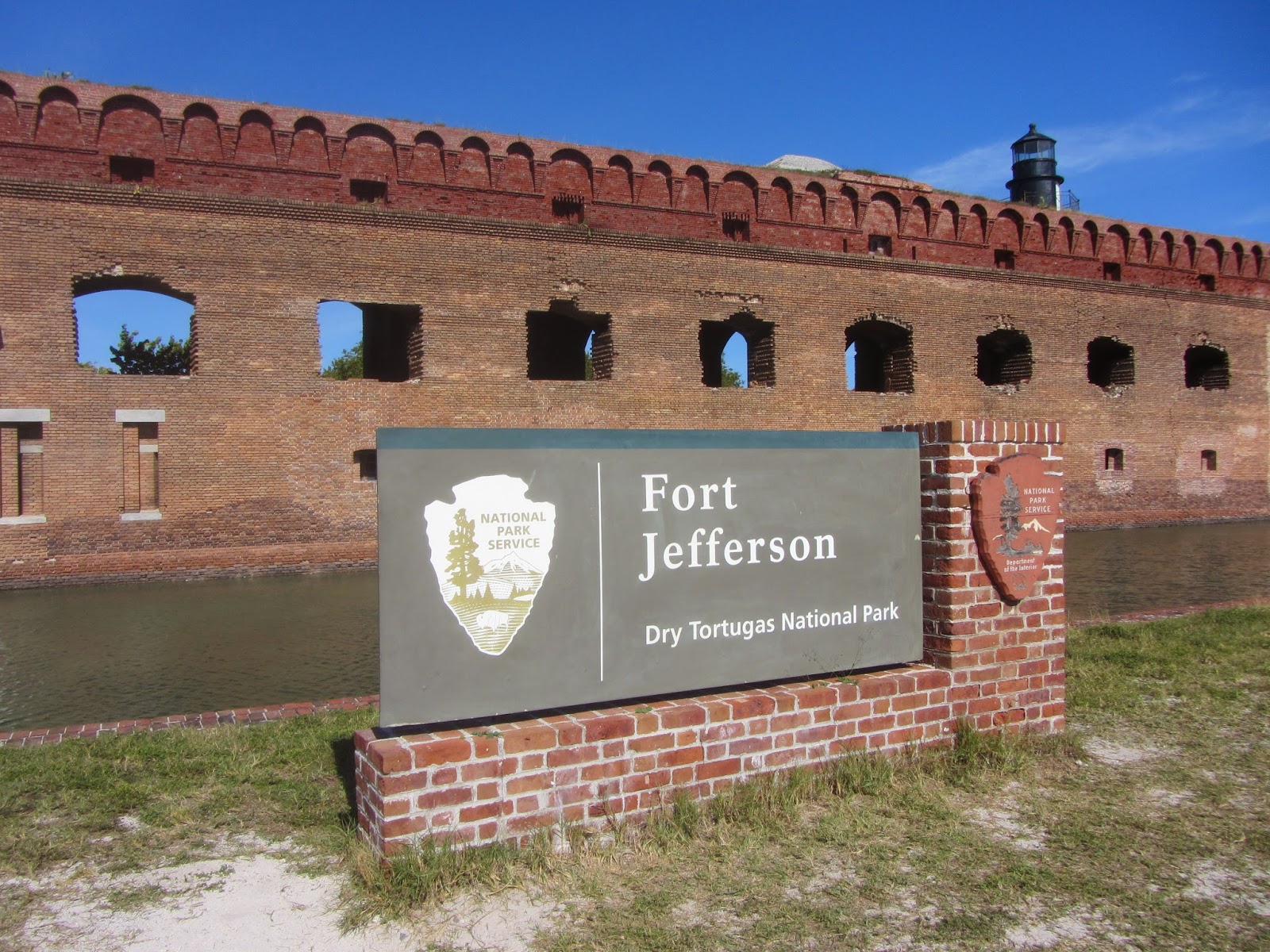
PS - I was inspired to watch The Prisoner of Shark Island by my own trip to Dry Tortugas National Park. Here are some photos of the real site that you can compare with the film's recreation of it. No, there were no sharks in the moat!


Monday, September 8, 2014

Classic Films in Focus: SON OF FURY (1942)

Tyrone Power and Gene Tierney give Son of Fury (1942) plenty of sex appeal to go along with its adventurous story of 18th-century greed and revenge, and the sight of those two in extended scenes of Polynesian undress justifies the movie’s existence all by itself. Luckily, Son of Fury has plenty of other attractions for classic movie fans, including a fantastic cast of supporting players and excellent direction from John Cromwell. While not exactly a swashbuckler, this film adaptation of the novel by Edison Marshall offers one memorable thrill after another, with Power fighting, swimming, dancing, and romancing his way from the streets of Bristol and London to the shores of the South Pacific.

Power plays Benjamin Blake, whose supposed illegitimacy keeps him from inheriting his dead father’s estate. Ben’s uncle, Sir Arthur (George Sanders), treats him like a servant and hopes to prevent him from ever establishing a claim to the family wealth, but Ben has supporters in his aunt (Kay Johnson) and his beautiful cousin, Isabel (Frances Farmer), with whom Ben falls in love. After an altercation with Sir Arthur, Ben goes on the run, eventually finding riches and romance on a tropical island, where Eve (Gene Tierney) becomes his lover. Ben, however, feels compelled to return to England, confront his uncle, and claim Isabel as his bride, even though London holds many dangers for him as a wanted man.

Power gives a great performance as the hot-headed Benjamin Blake, who nurses his simmering resentment against his uncle for years. “Flesh and blood can stand no more,” he declares after Sir Arthur punishes him for courting Isabel with a vicious whipping, although he suffers violence at other hands, as well. The intensity of the character suits the star perfectly, and he looks equally good in the English period costumes and the Polynesian loincloth. The island costume puts quite a bit of Power’s physique on display, especially when he goes diving for pearls, and his matinee idol look is matched by Tierney as the native beauty who playfully joins him in the water. Her ignorance of English and Western customs might be laid on a little thick, but Tierney is so stunning that it hardly matters what language her character speaks. We’re on her side the moment we first see her, hoping that Ben will forget all about England and the sophisticated but spoiled Isabel.

The supporting cast elevates the whole production to an almost delirious height, with Sanders especially notable as the smoothly heartless Sir Arthur. He and Power have a series of riveting fight scenes that bookend Ben’s Polynesian adventures, and Sanders of course has the cultured manner and physical presence to pull off the role. John Carradine gives one of his characteristically brilliant performances as Caleb, the sailor who befriends Ben and takes him along to the remote Pacific island, while Harry Davenport is genuinely moving as Ben’s beloved grandfather. Dudley Digges steals his scenes as Bartholomew Pratt, the London man of the world whom Ben employs against his uncle; Digges has an ideal face for an 18th-century character, and his first scene is a highlight of the film. Even Roddy McDowall makes a brief but critical appearance as young Ben, setting the stage for Power’s adult interpretation of the character. Tierney and Frances Farmer supply the picture’s female beauty, but Kay Johnson, who was married to John Cromwell at the time, is wonderful as Ben’s aunt Helena, and Elsa Lanchester takes over the movie for her one long scene as a sympathetic barmaid who helps Ben evade the law.

The only thing that might have improved Son of Fury is color, which would have brought the Pacific Island scenes a lusher look, but as a whole the movie works beautifully. See more of Power’s tremendous energy in The Mark of Zorro (1940), Blood and Sand (1941), and The Black Swan (1942). Gene Tierney also stars with Power in The Razor’s Edge (1946), but she is best remembered today for Heaven Can Wait (1943), Laura (1944), and Leave Her to Heaven (1945). George Sanders won an Oscar for Best Supporting Actor for All About Eve (1950), while John Carradine gained lasting fame for roles in Captains Courageous (1937), Stagecoach (1939), and The Grapes of Wrath (1940). For other films directed by John Cromwell, try Of Human Bondage (1934), The Prisoner of Zenda (1937), and The Enchanted Cottage (1945).

Monday, August 18, 2014

Classic Films in Focus: THE THREE MUSKETEERS (1939)

Among adaptations of Alexandre Dumas' classic novel, this 1939 version is certainly a lightweight, and not nearly as elaborate an affair as the 1948 MGM production starring Gene Kelly. The Fox incarnation, directed by Allan Dwan, revises the original tale as a musical comedy vehicle for The Ritz Brothers, who had a brief film career in the late 1930s and early 40s. They never really took off, and here they prove more of a distraction than a feature. If you like Don Ameche, however, The Three Musketeers has its charms, since the movie provides the amiable star with the kind of swashbuckling role usually reserved for his Fox peer Tyrone Power. It also features worthwhile performances from Gloria Stuart, Binnie Barnes, and Lionel Atwill, as well as brief appearances by John Carradine and Douglass Dumbrille.

Ameche plays D'Artagnan, who arrives in Paris to become a Musketeer, only to pick quarrels with Athos, Aramis, and Porthos on his very first day. The heroic trio, however, succumb to a drinking contest with The Ritz Brothers, who assume their outfits and identities before D'Artagnan arrives to fight his duels with them. Along with D'Artagnan, the fake Musketeers are then swept along into a dangerous political plot involving Queen Anne (Gloria Stuart) and her lady-in-waiting, Constance (Pauline Moore). Their adventures bring them into direct conflict with the devious Milady De Winter (Binnie Barnes) and the scheming Cardinal Richelieu (Miles Mander) as they try to retrieve the queen's brooch before its absence sparks an international scandal and war.

The Ritz Brothers get some modest laughs, but the movie shows why they never really took off as screen stars. They are neither as violent as the Stooges nor as cerebral as The Marx Brothers. The "Chicken Soup" song that introduces them sums up their comedy style; there's a lot of winking and silliness but not much thought to the act. Kids might find them sufficiently entertaining, but most adults will wonder how they manage to merit top billing with Ameche. The movie also falters by wasting Douglass Dumbrille and John Carradine, both terrific character actors, in very small roles; Dumbrille barely has a single scene, and Carradine disappears after just a few minutes. Instead we get lots of shenanigans with The Ritz Brothers as they stumble through one mishap after another, never really varying their gags or developing their characters as anything more than props.

Ameche is the real attraction; he looks quite dashing in his period hair and costumes, and his infectious charm goes a long way to make up for the movie's failings. His D'Artagnan is a gleeful combatant and an energetic romancer, and he really seems to be having a good time waving his sword and playing the swashbuckling hero. Even if the songs are not that memorable, Ameche sings them with zest, especially the "Voila" number. His leading ladies also help to move the picture along. Pauline Moore makes a lovely Constance, and Gloria Stuart is beautifully regal as the imperiled Anne. Binnie Barnes doesn't vamp as much as some Milady actresses, and she has to endure a really awful search scene with the Ritz Brothers, but she sells the character's smiling menace to great effect. Sadly, Milady's worst crimes - and best scenes - are cut to keep the picture firmly in comedy territory. Lionel Atwill, another great character actor and a reliable heavy, gets a heftier part than Carradine and Dumbrille as De Rochefort, one of the schemers working against the queen.

The 1939 adaptation is by no means the place to start with Musketeer films, but it's worth visiting for fans of Ameche's charismatic persona. Try the 1948 version for a more developed, but still imperfect, classic adaptation. Allan Dwan, a prolific director and silent film veteran, also made The Iron Mask (1929) and Heidi (1937). See more of Don Ameche in Midnight (1939), That Night in Rio (1941), and Heaven Can Wait (1943). Gloria Stuart is probably best remembered today as old Rose in Titanic (1997), but her early career included The Old Dark House (1932), The Invisible Man (1933), and Rebecca of Sunnybrook Farm (1938). If you really get into The Ritz Brothers, you'll find them in One in a Million (1936), The Gorilla (1939), and Argentine Nights (1940).

Tuesday, September 3, 2013

Classic Films in Focus: JOHNNY GUITAR (1954)

Director Nicholas Ray’s Johnny Guitar (1954) has the trappings of a conventional Western, with its cowboy hats, lynch mobs, and hold ups, but the heart of the movie beats to the rhythms of melodrama and noir, and this triple blend makes the film quite a chimera. Taking the vicious rivalry of two women as its major theme, Johnny Guitar revels in a perverse reversal of the usual character tropes of the Western, even as it also explores the dangers of mob mentality seen in more traditional Westerns like The Ox-Bow Incident (1943). Joan Crawford stars with a cast that includes many Western regulars, including Ward Bond, Ernest Borgnine, John Carradine, and Royal Dano, but the fireworks between Crawford and rival actress Mercedes McCambridge will keep viewers glued to the screen.

Sterling Hayden plays the title character, a former gunslinger turned guitar player, but the real protagonist is Joan Crawford’s Vienna, who calls Johnny in as protection against the ranchers who want to close down her bar. Johnny and Vienna have history together, but Vienna has also attracted the admiration of the handsome Dancin’ Kid (Scott Brady). When the Kid and his gang hold up the bank, Vienna’s bitter rival, Emma Small (Mercedes McCambridge), hopes to implicate Vienna in the crime and induce the local posse to lynch her. The Kid, meanwhile, encounters problems of his own as his gang falls apart in the aftermath of the robbery.

Vienna is a perfect character for this incarnation of Joan Crawford, with her wide, red mouth and hard eyes full of anger. She is a fury in men’s clothes, all sharp edges only rarely relieved by any hint of softness. Equally intimidating is her antagonist, Emma, who straps on a gun belt over her mourning dress to lead the posse on its bloodthirsty quest. Neither woman is represented as beautiful or vulnerable, and neither symbolizes civilization in the way the Western’s women normally do. These women hate each other so passionately that they make the men around them nervous; even Emma’s ally, McIvers (Ward Bond), flinches at Emma’s relentless wrath. The lynching attempt serves as a climactic moment, when the men, unwilling to hang a woman, tell Emma that she’ll have to kill Vienna herself.

As Johnny, Sterling Hayden plays it low key in contrast to the pitched emotions of the two women, but his presence helps to enhance the noir atmosphere. The rest of the supporting cast includes actors who are perfectly at home in a Western, particularly Ward Bond, although his part in leading the mob pales against the irresistible force of Mercedes McCambridge’s Emma. John Carradine, lurking around the edges of the picture through much of the action, makes the most of his one big scene, and Ernest Borgnine is up to no good from the first time we see him, the only really bad guy in the Dancin’ Kid’s not so bad band. Young Ben Cooper gives the gang pathos as boyish Turkey, while Royal Dano nurses a consumptive cough as Corey. The Kid's humane treatment of both, and his loyalty to them, contrasts with Borgnine's selfish Bart and the murderously self-righteous townspeople, who have the gall to accuse the Kid and his gang of being the undesirables in the area.

Take time to appreciate the film’s pointed use of symbolism, from Vienna’s carefully chosen white dress to the chandelier that features in several key scenes. The bar itself is one of the most important symbols; Vienna makes it clear that every beam and nail in the place represents some piece of herself prostituted to a parade of lusting men, much to Johnny’s distress. Given that history, the bar’s fate is not only inevitable but necessary if Johnny and Vienna are to have any hope of rebuilding their relationship, assuming they survive the deadly plans of the lynch mob and the treachery brewing in the Kid’s band of thieves.

It would be difficult to recommend another film quite like Johnny Guitar, but director Nicholas Ray also made In a Lonely Place (1950), On Dangerous Ground (1952), and Rebel without a Cause (1955). For more of Joan Crawford in the 1950s, try The Damned Don’t Cry (1950), Sudden Fear (1952), and Torch Song (1953). Sterling Hayden, best known for his noir roles, also stars in The Asphalt Jungle (1950), Crime Wave (1954), and The Killing (1956). Mercedes McCambridge won an Oscar for Best Supporting Actress for her screen debut in All the King’s Men (1949), but you’ll also find her in Giant (1956), A Farewell to Arms (1957), and Suddenly, Last Summer (1959). For more conventional Westerns with Ward Bond, see John Ford classics like My Darling Clementine (1946), Fort Apache (1948), and The Searchers (1956).

Monday, August 26, 2013

Classic Films in Focus: HOUSE OF FRANKENSTEIN (1944)

Plenty of the later Universal horror movies pack in the monsters, but House of Frankenstein (1944) really outdoes the rest by jamming a whole madhouse of familiar players into its many roles, not only as the headlining creatures but also as supporting characters. The story is so convoluted and episodic that it’s certainly not the chief attraction, but classic horror fans who know their stars will find the parade of performers entertaining in its own way, and Boris Karloff gets a particularly fun role as the devious and obsessive mad doctor whose adventures string together the appearances of Dracula, the Wolf Man, and Frankenstein’s monster. Directed by Erle C. Kenton, House of Frankenstein is by no means the best of the Universal horrors, but taken scene by scene and monster by monster it does provide some unique twists on the usual situations.

Karloff plays aspiring Frankenstein successor Dr. Niemann, who escapes from prison along with his hunchbacked assistant, Daniel (J. Carrol Naish). They hitch a ride from a traveling horror show and then murder its owner, Lampini (George Zucco), so that Niemann can assume his identity. Posing as the showman, Niemann resurrects Count Dracula (John Carradine) as an accomplice in his extensive revenge plot against the men who sent him to prison, but the vampire promptly becomes distracted by attractive female prey (Anne Gwynne). Later, in the ruins of Frankenstein’s castle, Niemann finds the Wolf Man (Lon Chaney, Jr.) and Frankenstein’s creature (Glenn Strange) frozen in ice and revives both of them, but he finds werewolf Larry Talbot harder to control than the other monsters. Daniel, meanwhile, becomes enamored of a pretty gypsy girl (Elena Verdugo) and grows jealous of her attention to Talbot.

While Karloff had originally gained fame playing the lumbering monster, he shows in this film that he can just as easily assume the role of the creator, and his Niemann is a fine example of the wild-eyed devotee of transgressive science. There are references to an earlier experiment in which Niemann transplanted a human brain into a dog, so from the start we know that he might actually be crazier than the original Frankenstein or any of his ill-fated heirs. More importantly, Niemann lies to and takes advantage of the dangerous supernatural beings he encounters; this is a man mad enough to play Dracula for a dupe and plot to make a science experiment out of the Wolf Man’s body and brain. He really only cares about Frankenstein’s creature; the rest of the monsters are just convenient means to his nefarious ends. Inevitably, Niemann’s duplicity catches up with him, but it’s ironically the lowly hunchback, tired of being played for a sucker, who raises the hand of vengeance against the scheming doctor.

The rest of the cast keep things interesting in spite of the disjointed plot. John Carradine has a brief but effective run as Count Dracula; his lean physique prefigures that of Christopher Lee even as he retains the aristocratic manners of Lugosi. Lon Chaney, Jr. makes his usual contribution as doomed Larry Talbot, this time with the added interest of a tragic love affair with the spirited gypsy girl. His role as part of a romantic triangle with the girl and the hunchback puts him into the odd position of playing Captain Phoebus in their version of the Victor Hugo tale, although Larry really does seem to return the gypsy’s affection. J. Carrol Naish proves one of the most inspired additions to the collection with his pathetic, jealous Daniel, who commits most of the murders in the film and yet still commands a degree of sympathy from the audience for his unrequited love. The victims and supporting characters are played by a who’s who of favorite actors, including George Zucco, Sig Ruman, Lionel Atwill, Frank Reicher, and Glenn Strange under all the makeup taking Karloff’s place as the creature.

Like most of the Universal monster pictures, House of Frankenstein kills off all of the creatures by the final scene, but House of Dracula (1945) brings them back to life for another round. For a different sort of horror from director Erle C. Kenton, try Island of Lost Souls (1932). Look for the many faces of Boris Karloff in The Mummy (1932), the Mr. Wong series, and Bedlam (1946). Lon Chaney, Jr. plays the Wolf Man in several Universal films, beginning with The Wolf Man (1941). Versatile character actor J. Carrol Naish turns up in more than 200 film and television roles, but he earned Oscar nominations for Best Supporting Actor in Sahara (1943) and A Medal for Benny (1945). He’s hard to recognize under the makeup and feathers, but you’ll also find him playing Chief Sitting Bull in Annie Get Your Gun (1950).

Monday, August 19, 2013

Classic Films in Focus: HOUSE OF DRACULA (1945)

Released in 1945, House of Dracula is one of the many monster movie sequels that Universal churned out in an effort to keep audiences coming back for more of their favorite fiends, and, like Frankenstein Meets the Wolf Man (1943), House of Frankenstein (1944), or the later Abbott and Costello Meet Frankenstein (1948), this picture takes a “more is more” approach to its monsters. This particular mad monster party has some intriguing components, but it squanders its potential with a disastrous third act that doesn’t so much end as simply stop. Up until that frustrating finale, the picture has its appeal, especially in the performance of John Carradine as a thin, hypnotic Count and the creative twists applied to the mad doctor and hunchback staples.


Onslow Stevens stands at the center of the action as the good Doctor Edelmann, who is approached first by Dracula (John Carradine) and then by Larry Talbot (Lon Chaney, Jr.) for cures to their unique conditions. Dracula, as it turns out, really only wants to get close to Edelmann’s attractive nurse, Miliza (Martha O’Driscoll), and Edelmann pays a terrible price for trying to cure the vampire, even as his efforts to help Larry seem more hopeful. Edelmann also discovers the Frankenstein’s creature (Glenn Strange) in the caves beneath his castle, but his hunchbacked assistant, Nina (Jane Adams), repeatedly warns him against resurrecting the monster.

As the ostensible protagonist of the story, Onslow Stevens makes a good showing, especially during his Jekyll and Hyde moments later in the picture. Stevens is not particularly well-known today, but he worked a long and prolific career in film and television, and in Edelmann he has a role that allows him to play with many classic horror types at once. Edelmann is both Van Helsing and Victor Frankenstein as well as Jekyll and Hyde, a good man who resists evil until he is tragically overcome by it. His approach to the monstrous makes House of Dracula as much science fiction as horror; Edelmann treats vampirism as a blood condition and uses transfusions to combat it, although his treatment of lycanthropy proves far more successful, in part because Dracula doesn’t really to be cured, while Larry is ready commit suicide if he can't find a way to escape his werewolf curse.

The monsters, as usual, have the most fun here, with John Carradine leading the charge as an effective incarnation of the famous Count. Carradine has the mesmerizing eyes needed for this role, and the screen makes the most of them with several close-up shots. He doesn’t bother with a fake foreign accent, but his deep voice carries notes of aristocratic culture and seductive menace nonetheless. Dracula’s inevitable death scene begins the series of bad endings that plague the second half, but the Count still manages to make his influence felt beyond the grave. Lon Chaney, Jr. is back in familiar territory with his Larry Talbot role, which he wears as comfortably as a favorite suit, and we get some fun transformation sequences with lots of hair and teeth. Glenn Strange, however, has very little to do as the creature, whose few scenes are sometimes borrowed from earlier films with other actors in the makeup. As the love interest of both vampire and werewolf, Martha O’Driscoll is pretty but a bit flat, especially in her trance scenes with Dracula, and Jane Adam’s hunchbacked Nina proves a far more interesting female character. The abrupt ending that literally brings down the house on these characters is especially unfair to Nina, who ought to have a much better final moment than the throwaway treatment she receives.

Be sure to notice Lionel Atwill in one of his last screen roles as the police inspector. Erle C. Kenton, who directed House of Dracula, also headed up the terrific Island of Lost Souls (1932) as well as The Ghost of Frankenstein (1942) and House of Frankenstein (1944). For more early but memorable performances by John Carradine, see Stagecoach (1939), The Grapes of Wrath (1940), and Blood and Sand (1941); the actor appeared in more than 300 films and television programs, including many cult horror classics as well as serious Oscar contenders. Lon Chaney, Jr. made his first appearance as Larry Talbot in The Wolf Man (1941), but he went on to play the character many times, and he also starred in other monster roles in Son of Dracula (1943) and The Mummy's Curse (1944).

Monday, January 7, 2013

Classic Films in Focus: JESSE JAMES (1939)

Even in their own lifetimes, Frank and Jesse James became the stuff of legend rather than historical fact, so it's no surprise that the 1939 film, Jesse James, is more romantic fiction than biographical account. This is the mythology of the outlaw recast for the big screen, full of handsome faces and daring deeds, and it makes for a mighty fine tale, too, thanks in part to Nunnally Johnson's screenplay and Henry King's rousing direction. The cast includes the rather irresistible duo of Tyrone Power as Jesse and Henry Fonda as his brother, Frank, along with a host of other favorite classic stars like Randolph Scott, John Carradine, and even Slim Summerville bringing grit and gumption to the inhabitants of the outlaws' world.

Power takes top billing as Jesse James, who turns to crime only because unscrupulous railroad men try to swindle and then bully his family out of their home and end up killing the boys' mother (Jane Darwell) in the process. Jesse's lifetime commitment to retribution begins with the man who killed his mother (Brian Donlevy), which puts him on the top of the railroad's most wanted list, but he's just getting warmed up. Along with Frank and a small gang, Jesse robs and raids the railroad at every opportunity, becoming a folk hero to the farmers who hate the big money and corrupt practices of the railroad bosses. His outlaw lifestyle proves a strain on his romance with Zee (Nancy Kelly), but even lawman Will Wright (Randolph Scott) has to admire his daring feats, especially when the real villains are spineless crooks like Mr. McCoy (Donald Meek), the railroad head determined to see Jesse hang.

Power turns in a very charismatic performance as Jesse, which makes his relationship with Zee more tender and credible than it might otherwise be, given that he misses major events like the birth of their child and drives Zee to distraction with his dangerous career. Fonda, sadly, is rather underused; Frank pops in and out of the story without much explanation, although when he does show up Fonda gives him plenty of presence and a taciturn, frontier sense of humor that makes us miss him even more when he vanishes again. Randolph Scott's huge physical presence and good-guy jaw make him a fascinating third in a love triangle with Jesse and Zee, but his lawman is too much the gentleman to do more than wait for Zee to come to her senses or for Jesse to reach the obvious end of the life he leads.

Other veteran character players contribute to the atmosphere; Brian Donlevy is truly reprehensible as the railroad bully, but Donald Meek delivers an even more despicable character as his superior, McCoy. In Westerns in a Changing America: 1955-2000, R. Philip Loy describes Meek as "badly miscast" in the role (198), but I think Meek's interpretation of the character as a duplicitous and essentially cowardly little weasel works very well, especially in contrast to Power's romantic outlaw. Jane Darwell's brief appearance as the James matriarch is worth mentioning, as well; she would have an even better turn as Henry Fonda's mother in The Grapes of Wrath (1940) the following year, and she went on to co-star with him in The Ox-Bow Incident (1943) and My Darling Clementine (1946). John Carradine turns up near the end as the infamous Robert Ford, while Henry Hull provides some comic relief as the blustering but kindly Major Rufus Cobb. Blink and you'll miss Lon Chaney Jr. in a very small role as a nameless member of the James gang.

The action in the picture is both exciting and disturbing, especially the infamous cliff jumping scene that ended in the death of a horse and eventually led to the American Humane Association's oversight of the treatment of animals in future films. Another scene has Frank and Jesse jump their horses through a store window and into the midst of a crowded shop; in 1957, The True Story of Jesse James reused both scenes for its own take on the James Gang story, even featuring them in its trailer.

I can't recommend watching Jesse James as an accurate piece of history, but as a Western it works very well, and fans of the genre's best character actors will find a lot to appreciate. It's interesting to note that the very first screen version of Jesse James was played by none other than Jesse James, Jr. in 1921. Other films about the James Gang include Days of Jesse James (1939) and Jesse James at Bay (1941), both starring Roy Rogers, as well as Jesse James Rides Again (1947), The Great Northfield Minnesota Raid (1972), The Long Riders (1980), and The Assassination of Jesse James by the Coward Robert Ford (2007). For more of Tyrone Power, see The Mark of Zorro (1940), The Black Swan (1942), and Witness for the Prosecution (1957).

Tuesday, October 9, 2012

Classic Films in Focus: HOUSE OF THE LONG SHADOWS (1983)


Directed by Pete Walker, House of the Long Shadows (1983) belongs firmly to the classic horror genre of the old dark house movie, with special emphasis on the dark. The 1983 incarnation represents only one of many film treatments of Earl Derr Biggers’ novel, Seven Keys to Baldpate, which was first adapted for performance as a stage play by none other than George M. Cohan. Despite its interesting pedigree, the movie’s cast is probably the real attraction for genre fans. Four great horror icons – John Carradine, Vincent Price, Peter Cushing, and Christopher Lee – unite for this entertaining horror comedy, making it a must-see for serious devotees.  It’s not a perfect movie, but the performances of these stars more than make up for its faults, even the baffling presence of Desi Arnaz, Jr., as its uninspiring protagonist.

Arnaz plays writer Kenneth Magee, who makes a bet with his publisher, Sam (Richard Todd), that he can write a Wuthering Heights sort of novel in 24 hours if given the proper atmosphere. The Gothic ambience is duly supplied by a supposedly abandoned mansion in Wales, where a violent storm becomes the least of Kenneth’s distractions as a series of unexpected companions arrives. The ancestral residents of the house, the Grisbanes, are returning to perform a final act relating to a tragedy that took place some 40 years ago. Their secrets slowly unfold as the corpses pile up over the course of the night, and even accidental visitors to the home are not safe from the murderous presence that stalks the darkened halls. Kenneth might not survive until morning, much less finish his novel in time to win the bet.

It’s often too dark to see anything as the characters bump about the house, and one has to wonder why nobody seems to have thought to pack a flashlight. Desi Arnaz looks out of place in such a film, and his character falls flat in comparison with the house’s more colorful guests. Kenneth is neither likable nor really unlikable; he’s just a dull American with an inflated ego and a habit of offending other people’s sensibilities. We have to wonder what Mary (Julie Peasgood), the frightened English love interest, sees in this guy, aside from his being the least creepy thing inhabiting the house.

The horror depends mostly on suspense as the characters wander through the shadowy house, although the acid burning scene makes the PG rating questionable. The comedic side remains muted until the final series of twists, but viewers who know their horror icons will laugh at Peter Cushing’s lisping, timid Sebastian Grisbane and the marvelous spectacle of Christopher Lee going after Vincent Price with a battle axe. Cushing, Lee, Price, and Carradine are the real stars of the film, and the action really picks up once they have all arrived. Sheila Keith, a veteran of several other Pete Walker horror pictures, completes the family group as the only daughter, Victoria Grisbane.

You’ll have to watch the movie for yourself to decide if the twist endings work, but there’s a final, quick exchange between Price and Lee that really cracked me up. House of the Long Shadows is devilishly hard to track down on VHS or DVD, but you can, as of October 2012, watch it on Amazon Instant Video, and it’s even free for Prime members. For more horror reunions, try The Comedy of Terrors (1963), Scream and Scream Again (1970), and Madhouse (1974), or check out the stars’ earlier appearances in cult classics from Roger Corman and Hammer Films. Find out more about the 1917, 1925, 1929, 1935, and 1947 film versions of Seven Keys to Baldpate to get a better sense of the story’s long cinematic history.