Showing posts with label classic movies. Show all posts

Wednesday, June 10, 2026

Classic Movie 10: Close Encounters with the Third Reich

The theme for my spring lifetime learning series was "Close Encounters with the Third Reich," featuring four classic movies where the protagonists get up close and personal in their confrontations with Nazis. With World War II dominating the headlines in the 1940s, it's no surprise that many films from that era examine the threats posed by Hitler's followers, but the Nazis have continued to fascinate and horrify us in movies ever since, with the Indiana Jones trilogy being a particularly familiar example. More recently, we've seen films like Jojo Rabbit (2019) revisit the fascist regime and the suffering it inflicted. If you want to stick with Golden Age Hollywood classics, however, here are ten movies featuring close encounters with the Third Reich and the dangers of fascism.


THE GREAT DICTATOR (1940) - One of the greatest anti-fascist films of all time, Charlie Chaplin's masterpiece blends comedy and pathos in its story of a Jewish barber who impersonates a cruel dictator (named Adenoid Hynkel but very obviously parodying Hitler). Chaplin wrote, directed, produced, and starred in the picture, which earned five Academy Award nominations. It's still a powerful cinematic statement today, and well worth watching even if you aren't normally a Chaplin fan.

MAN HUNT (1941) - Adapted from Geoffrey Household's 1939 novel, Rogue Male, this political thriller sees Walter Pidgeon as a big game hunter on the run from the Nazis and his own government after he is caught aiming his rifle at Hitler. The movie also stars Joan Bennett, George Sanders, John Carradine, and Roddy McDowall. Director Fritz Lang, who left his native Germany in the 1930s, made other anti-Nazi films, as well, including Hangmen Also Die! (1943), Ministry of Fear (1944), and Cloak and Dagger (1946). Rogue Male was adapted again in 1976, with Peter O'Toole in the starring role.


CASABLANCA (1942)
- We'll always have Paris, and we'll always have the outstanding ensemble cast of immigrants who give this Humphrey Bogart favorite its enduring power, many of whom had their own real-life close encounters with the Nazis. Bogart's jaded bar owner, Rick, rediscovers his principles after his lost love (Ingrid Bergman) appears in Casablanca on the arm of a freedom fighter (Paul Henreid) being hunted by the Nazis. Casablanca was nominated for eight Academy Awards and won three, including the Oscars for Best Picture, Director (Michael Curtiz), and Screenplay. 

TO BE OR NOT TO BE (1942) - Ernst Lubitsch directs this wartime comedy with a serious message, which stars Jack Benny and Carole Lombard as married actors in Warsaw who end up using their skills to fight the Nazis in their own way. Although the movie was only nominated for one Academy Award (Best Music/Score), it's a brilliant picture that pairs perfectly with The Great Dictator. In 1983, Mel Brooks and Anne Bancroft starred in a remake that also earned a single Oscar nod, this time for Charles Durning as Best Supporting Actor.  

DESPERATE JOURNEY (1942) - Not nearly as desperate as the title suggests, this WWII action picture directed by Raoul Walsh mixes heroics, comedy, and some tragedy in its tale of RAF airmen trying to escape from behind enemy lines. It stars Errol Flynn, Ronald Reagan, Alan Hale Sr., Arthur Kennedy, and Ronald Sinclair as the brave Allies on the run from Nazi forces, including Raymond Massey as their most dogged pursuer. The movie earned its sole Oscar nomination for Best Special Effects, but it's a great choice for fans of Captain America: The First Avenger (2011).

LIFEBOAT (1944) - Alfred Hitchcock directs a tense thriller set entirely in a small lifeboat, where the survivors of a U-boat attack find themselves in very close quarters with a Nazi German from the same boat that sank theirs. Stage icon Tallulah Bankhead gives her best film performance as an American reporter, and Walter Slezak is mesmerizing as the German. John Hodiak, William Bendix, Hume Cronyn, Heather Angel, Mary Anderson, Canada Lee, and Henry Hull also star. Lifeboat earned three Oscar nominations, including a nomination for John Steinbeck for Best Story.

NOTORIOUS (1946) -  Hitchcock offers a more domestic entanglement with Nazis in this celebrated thriller, which stars Ingrid Bergman as a young woman who agrees to infiltrate a group of South American Nazis and eventually marries one of them while continuing to spy for the United States. Cary Grant plays her handler/love interest, and Claude Rains takes the role of the Nazi husband, but the scene stealer of the film is Leopoldine Konstantin as a truly terrifying mother-in-law. Notorious earned a Best Supporting Actor nomination for Rains and a nod for Ben Hecht for Original Screenplay.

THE STRANGER (1946) - This Orson Welles thriller appeared the same year as Notorious and also features a woman who marries a Nazi, but Loretta Young's character is completely unaware of her groom's true identity until a determined Nazi hunter (Edward G. Robinson) reveals the terrible truth. Welles directs and also plays the Nazi who will do anything to keep his secret, even murder his wife. The Stranger is in the public domain, so you can easily find places to watch it on streaming services or online. For yet another "I married a Nazi" story, add the 1940 film, The Man I Married, starring Joan Bennett and Francis Lederer.

STALAG 17 (1953) - William Holden stars in this story of prisoners in a German POW camp, and his performance as a cynical American prisoner earned him the Academy Award for Best Actor. Billy Wilder directs a cast that also includes Otto Preminger, Sig Ruman, Don Taylor, and Peter Graves. Stalag 17 earned additional Oscar nominations for Wilder as Best Director and Robert Strauss as Best Supporting Actor. For a double feature that presages the hit TV series Hogan's Heroes, pair Stalag 17 with Desperate Journey

THE SOUND OF MUSIC (1965) - How do you solve a problem like the Nazis? This beloved musical starring Julie Andrews and Christopher Plummer offers romance, catchy songs, and a fight against fascism, with Plummer's Captain von Trapp memorably (and meme-ably) tearing up a Nazi flag. Young Liesl von Trapp (Charmian Carr) has the most intimate experience with a Nazi when her love interest, Rolf (Daniel Truhitte), embraces fascism. The Sound of Music won five of its ten Academy Award nominations, with Oscars for Best Picture, Director (Robert Wise), Film Editing, Score, and Sound.

If you want to recreate my series for the lifetime learners, we watched Casablanca, Desperate Journey, Lifeboat, and The Stranger

Trivia Time!

German native and character actor Sig Ruman appears in three of the movie on this list and plays a Nazi in each: To Be or Not to Be, Desperate Journey, and Stalag 17.


Monday, February 2, 2026

2025 Movie Log in Review

Happy New Year! As is traditional, I start the new year off with a review of all the movies I watched in the previous year. Often these are movies I have seen before, especially seasonal family favorites that we return to every year, but you'll also find the list sprinkled with new releases, classics I watched for the first time this year, and lots of movies from the last few decades that I decided to revisit. I keep the log in a notebook throughout the year so that I can keep track of what I watched and when, and I now have a complete list going all the way back to 2010. I know there are lots of websites people use to track their film viewing, but I enjoy the old-school method of keeping a physical journal. This year the annual report has been delayed due to travel, weather, and family obligations in January, but here's the log report for 2025!


January (11)

Wallace and Gromit: Vengeance Most  Foul (2024)

The Major and the Minor (1942)

The Princess Comes Across (1936)

 The Flame of New Orleans (1941)

Wicked Little Letters (2023)*

Mean Girls (20204)*

Beetlejuice Beetlejuice (2024)*

Lisa Frankenstein (2024)*

Rope (1948)

Saturday Night (2024)

Witness for the Prosecution (1957)

* all watched on planes to and from London


February (10)

Girl Haunts Boy (2024)

The Day the Earth Stood Still (1951)

Will Success Spoil Rock Hunter? (1957)

Down with Love (2003)

Captains Courageous (1937)

The Fall Guy (2024)

Miss Congeniality (2000)

Deathtrap (1982)

The Nice Guys (2016)

Torch Singer (1933)


March (9)

A Fish Called Wanda (1988)

Ed Wood (1994)

Them! (1954)

Shockproof (1949)

Dr. Jekyll and Mr. Hyde (1941)

Supernatural (1933)

High Spirits (1988)

To Catch a Thief (1955)

Noises Off (1992)


April (5)

Woman of the Year (1942)

Forbidden Planet (1956)

Smokey & the Bandit (1977)

Wallace and Gromit: Vengeance Most Foul (2024) - 2nd watch this year

Alias Nick Beal (1949)


May (5)

Thunderbolts (2025)

The Big Clock (1948)

Night Has a Thousand Eyes (1948)

Adam's Rib (1949)

Ordeal by Innocence (1985)


June (3) 

Dial M for Murder (1954)

Love Hurts (2025)

Addams Family Values (1993)


July (10)

Jurassic Park (1993)

Jurassic World: Dominion (2022)

Jurassic World: Rebirth (2025)

Jaws (1965)

Jaws 2 (1978)

Bedknobs and Broomsticks (1971)

Superman (2025)

Rear Window (1954)

Fantastic Four: First Steps (2025)

Star Trek: Section 31 (2025)


August (16)

Grosse Pointe Blank (1997)

Psycho Beach Party (2000)

Bad Day at Black Rock (1955)

To Catch a Thief (1955) - 2nd watch this year

Desperate Journey (1942)

Mystery Street (1950)

House by the River (1950)

You Never Can Tell (1951)

The Wasp Woman (1959)

Star Trek III: The Search for Spock (1984)

Star Trek IV: The Voyage Home (1986)

America's Sweethearts (2001)

Start Trek VI: The Undiscovered Country (1991)

So I Married an Axe Murderer (1993)

Mallrats (1995) - not nearly as funny as I remembered from seeing it in 1995

Terminator 2: Judgment Day (1991)


September (5)

She Done Him Wrong (1933)

Village of the Damned (1960)

Mad Love (1935)

Bugsy Malone (1976)

The Thursday Murder Club (2025) - great cast but the books are much better


October (15)

Hold Your Man (1933)

Back to the Future (1985)*

Back to the Future II (1989)*

Back to the Future III (1990)*

Night Monster (1942)

Operation Mincemeat (2021) - delightful WWII story based on real events

Hangover Square (1945)

Abbott and Costello Meet Frankenstein (1948)

Timestalker (2024) - very weird but fascinating indie British comedy

Murder, He Says (1945)

The Fog (1980)

Christine (1983)

Hitchhiker's Guide to the Galaxy (2005)

Hammer: Heroes, Legends and Monsters (2024)

KPop Demon Hunters (2025)

*We saw the stage musical of BTTF and rewatched the trilogy as a result


November (8)

The Mummy (1932)

Isn't It Romantic (2019) - a meta rom com about rom com tropes

The Wrong Paris (2025) - surprisingly hilarious rom com about reality dating shows

 Baby Face (1933)

The Ladykillers (1955)

Zero Effect (1988) - still a brilliant revision of the Holmes/Watson/Adler dynamic

The Decoy Bride (2011)

Just Like a Christmas Movie (2023) - more meta rom com but very low budget


December (9)

Oceans Eight (2018)

Jingle Bell Heist (2025)

Queen Christina (1933)

Wake Up Dead Man (2025)

The Thin Man (1934)

White Christmas (1954)*

The Muppet Christmas Carol (1992)*

Die Hard (1988)*

Scrooged  (1987)*

*Every year or it's not Christmas!


This year's total was 106 movies. I saw very few new releases in the theater (true since Covid started in 2020), and all 3 were summer blockbusters. I watched a lot of movies on the Criterion Channel and streamed some on Netflix or Kanopy, while the rest were from my physical media collection. I've been making more time to read in 2025 and hopefully 2026, as well, which reduces my movie viewing time but has helped me reclaim my attention span and ability to focus after Covid and the general state of things wrecked my mental health. If you make any New Year's resolutions, making time for the things that bring you joy is always a good one!

Sunday, November 9, 2025

CMBA Fall Blogathon 2025: Horrors of the Colonized Body and Soul in THE MUMMY (1932)

This post is part of the CMBA Fall Blogathon for 2025, showcasing Early Shadows & Pre-Code Horror. Find more blogathon posts by visiting the CMBA website!

When we think about body horror as a subgenre, we usually imagine the gruesomely detailed visual images of more modern movies like Eraserhead (1977), The Thing (1982), or The Fly (1986), which have their ardent fans but are sometimes too stomach-turning for those who prefer the subtler thrills of classic horror. Silent and Pre-Code horror does, however, include many examples of body horror, from the contortions of Lon Chaney in The Unknown (1927) and the tortured face of Conrad Veidt in The Man Who Laughs (1928) to the inhabitants of Island of Lost Souls (1932) and the circus performers of Freaks (1932). These early films could get away with more provocative forms of horror than those arriving after the Hays Code cracked down in 1934, and they often use that freedom to great effect. It's striking, therefore, that Universal's The Mummy (1932) only suggests its most extreme bodily suffering in flashes, leaving viewers to imagine the extent of horrors implied but unexplored. What we actually see of Imhotep, the titular mummy, is filtered mainly through the perspectives of European characters whose sense of him as an unnatural Eastern/Other denies his humanity, but when we shift our point of view to Imhotep himself we begin to grasp the full horror of his situation and experience.

Boris Karloff stars as the undead Imhotep/Ardath Bey.

Our colonialist perspective of Egypt is formed by the way the story opens and unfolds, with British archeologists uncovering the tomb of the priest Imhotep (Boris Karloff) in 1921 and then unintentionally waking him. While they speculate about the crimes that might have warranted Imhotep's unusual burial, they don't express much sympathy for him as a human being who clearly suffered an awful fate. When Imhotep wakes, his appearance alone is enough to drive Ralph Norton (Bramwell Fletcher) mad, even though the mummy doesn't lay a hand on him. A decade later, we catch up with the Europeans back in Egypt, this time uncovering the tomb of Princess Ankh-es-en-Amon (Zita Johann) with the help of the mysterious Ardath Bey, whom they fail to recognize as Imhotep himself. Despite warnings about the supernatural from Dr. Muller (Edward Van Sloan), Sir Joseph Whemple (Arthur Byron) and his son, Frank (David Manners), only understand Egypt as a subject, both academic and colonial, and they recognize its power as manifested through Imhotep too late. Ultimately, of course, Imhotep is destroyed, and the half-Egyptian Helen (also Zita Johann) is saved from his clutches, but the story ends without any denouement that might articulate the meaning of the tale we've just seen.

Much of the plot of The Mummy is recycled from Dracula (1931), a narrative with its own preoccupations with British imperialism and the Eastern Other, but transferring the story to Egypt makes those tensions much more overt. The film lets them bubble to the surface in ways that undermine the "official" perspective being shaped by the modern Europeans. Dr. Muller warns his English friends to respect the ancient culture they are pillaging, but Sir Joseph doesn't listen. Ardath Bey bitterly comments on his inability to excavate the princess himself because only foreigners are allowed to do so, while Frank complains about being forced to keep his find in Egypt instead of whisking it away to London. Helen, caught between the two worlds and wrestling with the awakened soul of Ankh-es-en-Amon inside her, laments the modernity of Cairo in the twentieth century and yearns for the "real" Egypt of the past. There's no denouement when Imhotep is destroyed because it's only through the power of his own world, and Helen's invocation of the ancient goddess Isis, that he is defeated at all. Dr. Muller and Frank have nothing to do with it, and they serve merely as spectators, not heroes, in the final scene. We get no sense that Frank has ever understood any of the events that have transpired, but Helen might really be changed by her experience, so their success as a romantic pair is left uncertain. The ending, however, implies that Helen will be absorbed into English whiteness through marriage to Frank, erasing her past identity as Ankh-es-en-Amon and the Egyptian heritage passed to her from her (dead) mother. 

Imhotep prepares to make Helen undead like himself.
 

Through these pressure points and gaps Imhotep himself is constantly breaking, demanding that Helen and the viewer see him differently, as a very human man whose love for her has caused him to suffer unspeakable horror. We first see him as a dead thing, the gleam in his dark eyes signalling his rise to embodied consciousness after thousands of years. We don't know what happens to him during the decade before the Whemples return to Egypt, but somehow he reforms himself into a semblance of a living man, learns English and, presumably, Arabic, as well, and manages to survive in a twentieth-century Egypt that is utterly alien to him. As Ardath Bey, he's a remarkable figure, thin, stiff, and seemingly fragile, with skin still desiccated and features sunken. Sometimes mummies in horror films are presented as little more than wrapped zombies, mindless and shuffling, but Imhotep is a fully aware human being trapped inside a mummified body, a living soul yoked to a dried up corpse. He reveals to Helen the transgressions that led to this fate, hoping to awaken her own memories of their forbidden love. Unable to accept the death of the princess, Imhotep defied the gods by attempting to resurrect her, but he was caught and punished by being buried alive. We are shown the torture Imhotep endured as, fully conscious and struggling, he was wrapped as a mummy and thrown into his sarcophagus. We don't see his actual death by asphyxiation as his coffin ran out of air, but his last moments must have been utterly terrifying, unable to move, see, or even scream. Imagine then his horror on returning to consciousness in his own corpse, an outcast from both the living and the dead. Obsessed with his beloved when he was alive, condemned to eternal suffering for her sake, and tortured by his own decayed flesh, Imhotep is almost certainly insane, but he is determined to be seen by Helen/Ankh-es-en-Amon as a man who has endured horrors for her love, and not as a thing without a human soul. 

When we consider Imhotep as a man and not a thing, we become aware of the scope of the bodily horror he experiences. The Mummy doesn't dwell at length on the horror of Imhotep being a living soul inside a dead body, but it's present in Boris Karloff's physical performance and the anguish his character reveals only to Helen. Dracula might be undead, but his body is not a dry husk, while zombies are usually shown as animated corpses that lack self-awareness. Imhotep has the worse of both curses; he has the consciousness of a living man but exists in a mummified corpse. A more fully developed exploration of this theme can be found in Roger Corman's adaptation of the Poe short story, "The Facts in the Case of M. Valdemar," in Tales of Terror (1962), in which Vincent Price plays a dead man forced to continue to inhabit his decaying corpse by a sadistic hypnotist (Basil Rathbone), while the horror of a man who finds himself made monstrous dominates stories like The Wolf Man (1941) and The Fly (1958). In The Mummy, the horrific nature of Imhotep's existence is suggested most strongly in the third act, when Imhotep seeks to seduce or force Helen into sharing his fate. "No man ever suffered as I did for you," he tells her, hoping to convince her to "face moments of horror for an eternity of love." Even as her awareness shifts to that of the princess, Helen still recognizes the nightmarish nature of the immortality Imhotep wants her to embrace. She recoils when she see the flaky print of Imhotep's hand on a table, realizing that instead of "moments of horror"Imhotep wants her soul to exist forever trapped inside a dead and mummified body like his own. "I loved you once," she tells him, "but now you belong with the dead." The worst part of the gods' curse isn't just that Imhotep must animate his own dried corpse, but that he finally suffers rejection from the woman for whom he endured such a monstrous fate. 

The complexity underlying The Mummy has made it particularly ripe for sequels and revisions, although most later mummy movies fail to invest the supernatural character with Imhotep's gravitas and emotional depth, thus continuing to obscure the idea of the mummy as a figure of body horror. Vampires and werewolves have gotten better treatment in films like An American Werewolf in London (1981), The Lost Boys (1987), and Blade (1998), but the mummy's unique identity as ancient and Egyptian still makes it harder for us to imagine the mummy as an actual person instead of a thing. For some of the more interesting later takes on the monster, see the 1959 Hammer remake or the 1999 reboot directed by Stephen Sommers (both also titled The Mummy), the latter of which really does highlight the body horror aspects of Imhotep's live burial, if not his subsequent supernatural existence.

 See also: 12 Mummy Movies Worth Watching 

Classic Films in Focus: THE MUMMY'S HAND (1940)


Wednesday, August 20, 2025

Classic Movie Monsters Inspire Sparkytopia Art

As a parent and a classic movie fan, it's deeply gratifying when your love for something gets passed on to a new generation. That's why I'm so excited to be interviewing my own kid for this post! Sparky has grown up watching me talk and write about old movies, literature, and popular culture, so I'm always delighted to see those influences in their work as a professional freelance illustrator. Recently, I was able to sit down with them for an interview about their deep love for classic movie monsters and how that inspiration appears in their art. 

While I hope you'll enjoy learning about Sparky's art, I also hope this post will encourage you to share your favorite classic movies with the young people in your life. You never know which ones will click with them and become inspiration for them in the future! You can also learn more about Sparkytopia at their website.


Q: Tell us a little bit about your background as an artist.

I graduated from Ringling College of Art and Design in 2023 with a BFA in Illustration, but I've been drawing for as long as I can remember! In the past two years, I've mostly focused on growing my artistic brand online by offering commissions to individual clients and creating merchandise for my store. I tend to lean towards cute, approachable themes, usually featuring animal characters and bright colors to capture a little childhood nostalgia in every piece.

Q: What inspired you to create art featuring animal versions of classic movie monsters?

I have always been a big fan of classic movie monsters; there's something so traditionally Halloween-y about them! Halloween is also my favorite holiday, so I always jump at the chance to do something spooky for the season. I've been doodling them in my spare time for years, so it was only a matter of time before I worked up something finished to add to my shop designs. It would've been a bit strange to do human characters next to all of my original stickers, so combining classic monster themes with cute animals was a good way to render them in my style. 

Q: Do you have some favorite classic monster movies or a favorite monster? What do you love about them?

I am personally fond of the tragedy of The Creature from the Black Lagoon (1954). I love him dearly, and The Shape of Water (2017) only made me have more feelings about gill men. I find myself yearning to love them as they truly deserve! He's such a fantastic piece of special effects, but it makes it difficult to draw him in a way that pays homage to his original design and reflects my personal style. I do really enjoy Frankenstein (1931), but I have to say I prefer the book's representation of the monster more than the film's, even if Boris Karloff is absolutely iconic. 


Q: Do you have a favorite monster-inspired piece from the work you've done so far? Are there any particular elements that you're especially proud of in that piece?

To my surprise, my favorite is King Tutankhanyan, my mummy character! I didn't expect to love him as much as I do, but I put a lot of time and effort into both the character and shirt designs. The fact that he's specifically a sphynx cat helps elevate him into a more unique character, so he feels a lot more like my little guy and not just a generic mummy. It was a challenge to hand-letter the accurate hieroglyphics on his shirt design, but I think it was all worth it!

Q: Are there other monsters or movie-inspired characters you still want to celebrate with future art projects?

I intend to create a Bride for my existing Puppystein's Monster design. I can't let the lady ghouls go unrepresented! I have some sketches made for an Invisible Man, even if I worry he's a little niche compared to the other monsters. I would still love to do a gill man, but I just haven't found the right vision for him yet! In the distant future, it would be nice to have more drawings of each of my preexisting monsters hanging out together, but I'd like to expand the roster a little before I let them exist in a proper shared universe. I hope you're looking forward to what's to come!

Sparkytopia art is available in their shops on Ko-fi and Threadless
You can follow Sparkytopia on Instagram, Bluesky, Tumblr, and numerous other social media platforms. 

Sunday, August 17, 2025

Classic Films in Focus: MYSTERY STREET (1950)

The visual and narrative style of Mystery Street (1950) will be familiar to anyone who watches modern police procedurals on television, especially shows that feature a lot of forensic analysis of corpses and crime scenes. Those looking for the intensity of top-shelf crime pictures will probably be disappointed, even with John Sturges in the director's chair and Ricardo Montalbán taking the lead as the police detective trying to catch a young woman's murderer. Still, the picture has its charms, especially for fans of the great Elsa Lanchester and those who really appreciate the piece-by-piece and bone-by-bone puzzle solving of forensic crime shows like Bones and the many iterations of CSI

Ricardo Montalbán stars as Lieutenant Peter Moralas, a police detective working in Cape Cod and Boston to solve the murder of Vivian Heldon (Jan Sterling), whose skeletal remains are found months after she is last seen with a very drunk Henry Shanway (Marshall Thompson). With only bones to examine at first, Moralas turns to Dr. McAdoo (Bruce Bennett), a Harvard forensics expert, for help in identifying the body and building a case to find her killer. Henry's wife, Grace (Sally Forrest), persists in believing in his innocence even as evidence against Henry mounts, while Vivian's shady landlady, Mrs. Smerrling (Elsa Lanchester), tries to blackmail the real killer, a wealthy family man named James Harkley (Edmon Ryan).

It's not a spoiler to reveal the identity of the murderer because the movie does that in its opening, which shows us the events of the night Vivian dies and makes it clear that Henry is innocent. Thus, the audience always knows what Moralas and his associates are trying to learn, and the suspense lies in our concern that the cops will pin the crime on the wrong man. We have the completed puzzle in front of us, while the detectives have to find and try to fit each piece, and we can see how they get it wrong as they rush to convict the most obvious suspect. While Moralas tears apart the lives of the young couple, who are still grieving the child Grace miscarried on the night of the murder, we watch the crafty Mrs. Smerrling put the truth together like a blackmailing Miss Marple, but she has no interest in sharing her information with the cops. The picture lavishes attention on the amazing potential of forensic science but doesn't seem especially interested in making Moralas and the police in general look good, even at the end when Moralas weakly attempts to apologize to Grace for everything he has forced her and her husband to endure. 

The performances are a mixed bag, as well, but a few standouts are worth noting. Montalbán does a fine job with his character, although Moralas is not as developed and interesting as one would like for a protagonist. He has a few scenes that address his obvious identity as an outsider, and it's nice to see him push back against Harkley's prejudice and preening sense of superiority. Harkley himself is not a very interesting villain, just another rich white guy who thinks the world revolves around him, and Henry Shanway and Dr. McAdoo are both more plot devices than people. The female characters possess all the nuance and complexity the men lack, starting with Jan Sterling as the doomed Vivian, who isn't perfect but still deserves a lot better than her fate. Sally Forrest channels the helpless rage and grief of Grace Shanway beautifully, while Betsy Blair makes the most of her handful of scenes as Vivian's housemate, Jackie. Elsa Lanchester gives the scene-stealing performance of the picture as the greedy landlady, always assessing every situation and conversation for an opportunity to profit off from it, even though she underestimates her own peril in trying to blackmail a man she knows to be a murderer. 

John Sturges made several undisputed classics, including Bad Day at Black Rock (1955), Gunfight at the O.K. Corral (1957), The Magnificent Seven (1960), and The Great Escape (1963). Mystery Street came on the heels of a very busy 1949 for Ricardo Montalbán, when he appeared in the Esther Williams musical romance, Neptune's Daughter, the gritty noir, Border Incident, and the war picture, Battleground, which also stars Marshall Thompson. See more of Jan Sterling in Johnny Belinda (1948), Ace in the Hole (1951), and The High and the Mighty (1954), the last of which earned her an Oscar nomination for Best Supporting Actress. Catch Sally Forrest in a starring role in Ida Lupino's Not Wanted (1949), and don't miss Betsy Blair's Oscar-nominated performance in Marty (1955). For more of the brilliant Elsa Lanchester, see The Private Life of Henry VIII (1933), Ladies in Retirement (1941), Witness for the Prosecution (1957), and Bell, Book and Candle (1959). She's iconic in The Bride of Frankenstein (1935), of course, but it doesn't give her nearly enough to do. If you want to see Lanchester as a proper detective, she plays a parody of Miss Marple in the star-studded mystery comedy, Murder by Death (1976).

Saturday, August 16, 2025

Classic Films in Focus: DESPERATE JOURNEY (1942)

If director Raoul Walsh's WWII action movie, Desperate Journey (1942), had been made a few decades later, it would have boasted a catchy name that more accurately describes its tone and characters, something like The Great Escape (1963) or The Dirty Dozen (1967), so don't let its vague yet somber title dissuade you. Fans of modern team movies will recognize many familiar elements, including the near-constant action, the plucky (but imperfect) group of heroes, and the snappy banter and jokes, delivered in this case by Errol Flynn, Ronald Reagan, Alan Hale, Sr., Arthur Kennedy, and Ronald Sinclair as five RAF airmen from different Allied backgrounds trying to escape Nazi Germany after crashing their plane. If you're in the mood to watch classic Hollywood stars punch a bunch of Nazis, Desperate Journey provides such scenes in abundance, with a jaunty attitude that will particularly entertain those who already love the Indiana Jones movies and Captain America: The First Avenger (2011).

Errol Flynn takes the lead as the Australian Terry Forbes, who hopes to do as much damage to the Nazis as possible while trying to escape from Germany with his comrades. Regular Flynn sidekick Alan Hale, Sr., plays his Scottish pal, Kirk Edwards (with no attempt at a Scottish accent or anything like it), while future US President Ronald Reagan plays the intrepid American, Johnny Hammond. Joining the trio are Arthur Kennedy as pragmatic Canadian Jed Forrest and Ronald Sinclair as young Englishman Lloyd Hollis II, the son of a famous English pilot from the previous world war. Trapped behind enemy lines and initially captured, the group rushes to get out of Nazi territory with valuable information they've nabbed during their brief period as POWs. Along the way, they encounter constant danger from the enemy as well as unexpected help from the sympathetic Kaethe Brahms (Nancy Coleman).

Given the time and place in which it was made, it probably goes without saying that Desperate Journey is meant to be a patriotic morale booster for Americans and other Allies, with our noble heroes representing the US, Australia, Canada, England, and Scotland. Like Casablanca (1942), the movie takes place before the United States enters the war, so the protagonists are all fighting for the Royal Air Force in spite of their varied backgrounds. The peril they face is real, and several characters die to prove it, but overall it makes escaping from Nazi Germany look more like a daring adventure than a traumatic ordeal. Most of the Nazis are interchangeable goons, and some, including the one played by Sig Ruman, are buffoons, while Raymond Massey is more formidable as the main villain, Major Baumeister. The boys spend most of the movie in stolen Nazi uniforms, repeatedly blending into groups of soldiers and then being revealed as imposters, which gives them an opportunity to bash heads, grab guns, and make a run for the exit. They have little time to grieve their own dead as the action propels them ever forward, right up to the very end of the picture, but like most action teams they manage to work in plenty of quips and witticisms as they go.

Lively performances from the leads and entertaining, near-constant action prop up the simple plot and overtly patriotic message, with Flynn and Reagan splitting the best lines and scenes. Reagan deftly handles a great comedic bit where Johnny spouts technical nonsense in lieu of aviation secrets to Major Baumeister, while Flynn and Hale are very much in their element with the mix of fight scenes and banter so familiar to fans of The Adventures of Robin Hood (1938) and their other films together. Hale probably does the seed spitting gag a few too many times, but his character has a compelling backstory as a WWI veteran who planned to sit out the latest conflict until his son was killed at Dunkirk. Ronald Sinclair fills the obligatory "kid" role for the bunch with perfect innocence and pathos, while Arthur Kennedy plays a more restrained part as the group's voice of reason. Nancy Coleman isn't in the picture much, but her presence relieves the all-boys atmosphere for a few scenes, and there's just the faintest sense of a wrong time, wrong place romance between Kaethe and Terry. The movie spends much more of its time on the planes, trains, and automobiles that the heroes use to make a break for the German border, with an especially elaborate car chase in the third act leading up to a grand finale involving a stolen plane.

As befits an action movie of this type, Desperate Journey was nominated for the Academy Award for Best Special Effects, which it lost to Reap the Wild Wind (1942). Ronald Reagan also starred in the small town melodrama, Kings Row in 1942, before he was called away for military service - primarily making training films - for the remainder of the war. See more of Errol Flynn and Alan Hale, Sr., in Dodge City (1939), The Sea Hawk (1940), and Gentleman Jim (1942), the last of which was also directed by Raoul Walsh. For another picture with Walsh, Flynn, and Arthur Kennedy, see They Died with Their Boots On (1941). Desperate Journey was the final acting performance of New Zealand native and child actor Ronald Sinclair, who appeared in a series of Five Little Peppers movies. After serving in the US Army in WWII, Sinclair became a film editor and worked on many pictures with Roger Corman as well as later hits like Die Hard (1988) and Die Hard 2 (1990).

Thursday, May 8, 2025

Classic Films in Focus: NIGHT HAS A THOUSAND EYES (1948)

I hadn't heard of Night Has a Thousand Eyes (1948) before The Criterion Channel included it in a trio of noir films directed by John Farrow, the other two being The Big Clock (1948) and Alias Nick Beal (1949). The most obscure of the three, Night Has a Thousand Eyes is still a fascinating picture, thanks to a supernatural story originally written by Cornell Woolrich and a great performance by Edward G. Robinson as the tragic protagonist. Like the other Farrow pictures in the set, this one starts at a pivotal moment and then backtracks to the events that created the crisis of the opening scene, which gives the viewer a kind of precognition, too. While Night Has a Thousand Eyes benefits from the performances of Robinson, Russell, William Demarest, and Virginia Bruce, a weak showing from John Lund as the heroine's love interest undermines the appeal of the young couple Robinson tries to save from disaster.

Robinson stars as former traveling psychic John Triton, who unhappily discovers that his ability to see the future is real. After his visions drive oil heiress Jean Courtland (Gail Russell) to attempt suicide, Triton recounts his history with Jean's parents, Whitney (Jerome Cowan) and Jenny (Virginia Bruce), who were once partners in Triton's act. Jean's boyfriend, Elliott (John Lund), remains skeptical of Triton's story, but as the older man's predictions repeatedly come true everyone around Jean has to take the threats to her safety seriously.

Edward G. Robinson is the main draw here, and he delivers a compelling depiction of a man forever on the outside of humanity thanks to his unwanted ability. Triton can't control his visions, and most of the time he can't stop the future he sees from happening, either. He gives up the love of his life hoping to save her from the early death he foresees, but it doesn't work, and Triton spends the next two decades secretly watching his old friend Whitney Courtland raise the daughter who should have been Triton's child. When Whitney and then Jean face mortal danger, Triton rouses himself for a final attempt to change someone's fate. Robinson, adept at playing almost every kind of character, invests this one with tremendous pathos. Triton has the air of a martyr without making a fuss about it, his aging face lined with grief and resignation. He never seems crazed or deluded, even though the people around him mostly discount his claims until it's too late. The viewer, seeing all of the evidence in Triton's favor from the beginning, has no reason to doubt him, and we wait in suspense for the rest of the characters to figure out that Triton's powers are the real thing.

Most of the supporting cast is solid, with Gail Russell especially engaging as a young woman grappling with her own sense of doom. Her scenes with Robinson are tender and moving because Jean believes Triton and he desperately wants to save her, even though he isn't sure he can. Jerome Cowan and Virginia Bruce both have some good moments in the backstory section, while William Demarest and John Alexander stand out among the skeptics in the third act. Unfortunately, there's no feeling of true devotion between Jean and Elliott because John Lund is so bland and unsympathetic as the latter. Because the audience and Jean both believe Triton, Elliott's persistent skepticism comes across as boorish, and his attempts to reassure Jean seem more like paternalistic chauvinism at best. Triton risks everything to save Jean, and his concern for her feels deeply genuine, but Elliott doesn't seem to feel much of anything. It's a shame Triton can't save Jean from marrying a wooden bore, but his psychic powers don't extend to bad casting decisions.

For more from director John Farrow, see Where Danger Lives (1950), His Kind of Woman (1951), and Hondo (1953). Edward G. Robinson rose to fame for his gangsters in movies like Little Caesar (1931), but his other noir pictures include Double Indemnity (1944), The Woman in the Window (1944), Scarlet Street (1945), and The Stranger (1946),as well as the iconic Key Largo (1948). Catch Gail Russell facing more supernatural peril in The Uninvited (1944) or try Angel and the Badman (1947) or Moonrise (1948). If you enjoy movies based on the work of Cornell Woolrich, look for The Leopard Man (1943), Phantom Lady (1944), Black Angel (1946), and The Window (1949).

Sunday, March 16, 2025

Classic Films in Focus: SHOCKPROOF (1949)

Having already seen and enjoyed both Lured (1947) and Thunder on the Hill (1951), I decided to try Shockproof (1949), the third picture included in the Criterion Channel's recent collection spotlighting the film noir work of director Douglas Sirk. Of the trio, this romantic crime story is certainly the weakest, with a lot of unexamined issues in its subtext and an abrupt ending that prioritizes neatness over credibility, but it's still entertaining enough to be worth watching, especially for fans of leading man Cornel Wilde. Shock master Samuel Fuller injects his trademark style into the story, which gives the movie much of its appeal, and it's fascinating to see the onscreen chemistry between real-life spouses Wilde and Patricia Knight as the parole officer and recently released murderess who falls to his care.

Wilde plays parole officer Griff Marat, whose latest charge is the newly released Jenny Marsh (Patricia Knight), fresh from five years in prison for killing a man to protect her crooked boyfriend, Harry Wesson (John Baragrey). On parole, Jenny is supposed to follow a long list of rules, but she finds it particularly hard to stay away from Harry, even though Griff quickly becomes a romantic rival to the opportunistic gambler. Griff even brings Jenny into his own home, ostensibly as a caregiver for his blind mother (Esther Minciotti). Suspicious and resentful at first, Jenny falls for Griff and wants to extricate herself from Harry's influence, but her attempts only end up turning the lovers into outlaws.

Shockproof arrived near the end of Wilde and Knight's marriage - they would divorce in 1951 after 14 years together - but they heat up the screen when they share a scene. The straight and narrow Griff seems an unlikely admirer for the convicted killer, but Griff repeatedly insists that Jenny is different and better than his other parolees, perhaps because she's also younger and prettier. Jenny is a more ambiguous character in the early scenes, hardened by her prison time and rightfully skeptical of the parole officer's intentions given the extent of the power imbalance between them. Is his attention merely a test of her reformation or a trap designed to send her back to prison? The movie doesn't really address the underlying problems of power and consent here; it's too eager to show us what a good guy Griff is, with his blind mother and kid brother, to stop and wonder whether Jenny actually has the ability to turn him down. Griff, on the other hand, is too sure of himself to suspect that Jenny might be manipulating him for her own advantage or at the behest of Harry Wesson, who hopes to see the moral crusader brought down from his high horse. As Griff relaxes his own code of ethics, Jenny begins to reclaim hers, but their meeting in the middle only creates danger for both.

I don't normally like to spoil an ending, but it's difficult to pinpoint what goes wrong with the movie without addressing its sudden change in tone in the final scenes. Fuller's setup and the actors' performances write doom on the lovers' brows in the vein of Gun Crazy (1950), especially once they go on the run and experience real hardship as they constantly try to avoid capture by the authorities. Griff, his moral code undone by his love for Jenny, has that air of desperation one sees on Paul Muni's face in I am a Fugitive from a Chain Gang (1932), while Jenny's loyalty to Griff has softened all the hard edges that probably ensured her survival in prison. We've already seen another parolee commit suicide rather than go back to prison in a dramatic moment that highlights the stakes for Jenny should the couple be caught. All of these elements point toward an apocalyptic finale that Fuller intended but rewrites by Helen Deutsch replaced with a completely unbelievable ending that hinges on one of the least plausible changes of heart you'll ever see in a movie. I like a happy ending as much as anyone, but in Shockproof it comes off as phony.

For more from Douglas Sirk, see Magnificent Obsession (1954), All That Heaven Allows (1955), or the 1959 version of Imitation of Life. Samuel Fuller is both writer and director for noir classics like Pickup on South Street (1953), House of Bamboo (1955), Underworld U.S.A. (1961), and The Naked Kiss (1964). Catch Cornel Wilde in Leave Her to Heaven (1945), Road House (1948), and The Big Combo (1955). Patricia Knight left Hollywood after her divorce from Wilde, having appeared in only five films, while Alabama native John Baragrey worked mostly in television.

Wednesday, January 29, 2025

Classic Films in Focus: ROPE (1948)

Rope (1948), Alfred Hitchcock's first color picture, is a twisting, carefully orchestrated thriller with a deceptively simple title, one that is as much about the killers as the murder weapon they wield in the film's opening shot. There's no air of mystery hovering over the claustrophobic confines of the single room where the action unfolds; instead, this story revels in the audience's full knowledge of the crime, tormenting us with information we possess but cannot share with the party guests drinking their champagne over the corpse of their murdered loved one. The film's gruesome appeal depends mainly on its theatrical visual style and the tightly wound performances of John Dall and Farley Granger as the handsome young killers, although James Stewart gets top billing as their former mentor and increasingly suspicious house guest.

The story opens with Brandon (John Dall) and Phillip (Farley Granger) strangling their classmate David (Dick Hogan) and then hiding his body in a large trunk in the middle of their living room. Eager to prove their intellectual superiority and gloat over the crime, Brandon insists on hosting a party immediately following the murder, with David's friends and family in attendance. David's father, Mr. Kentley (Cedric Hardwicke), and girlfriend Janet (Joan Chandler) grow uneasy over David's uncharacteristic absence, but only the boys' old house master begins to grasp the horrible truth.

Dall and Granger work the queer subtext of their relationship with tremendous skill, with Dall's Brandon very clearly the leader of the couple and Phillip only slowly coming to realize the nature of the monster he loves and obeys. Does Brandon love Phillip in return? Is Brandon capable of such a human emotion? Both actors are fascinating to watch as they reveal their characters' psychological states. The subtext implies that Brandon also has a particular connection to Rupert Cadell, presumably romantic in nature, but here the casting of James Stewart throws a spanner into the works. I've always felt Stewart to be miscast in the role, and that continues to be my view after my most recent return to the movie. Hitchcock's later collaborations with Stewart brilliantly evoke the actor's capacity for darkness, but this first outing shows the limits of Stewart's ability. Even Stewart felt he was out of place in the part, although he said he didn't think he was credible as an academic, not that he couldn't imagine himself as a closeted gay man who had indulged in a romantic tryst with one of his students. I think that an actor like George Sanders, Claude Rains, James Mason, or Cary Grant (who was Hitchcock's first choice for the role) would have made a more interesting and believable Rupert, but the role certainly had an impact on Stewart's later career. For more observations on that topic, read Chloe Walker's 2023 Paste article,  "Rope Was a Cruel, Prickly Turning Point in Jimmy Stewart's Career."

The single set and real-time pacing of the picture are the other noteworthy elements for discussion, with long takes that heighten the feeling of watching a stage play rather than a movie. These techniques intentionally make us feel trapped in the room; we can't get away from the chest and its terrible contents, and neither can Brandon and Phillip, as much as they might talk about their plans to leave town as soon as the party ends. Psychologically, neither of them will ever be able to leave that room, and when the truth comes out the other party guests will forever be haunted by it, as well. We might think, at the beginning, that the murder is the worst possible moment, but for everyone except David it's the aftermath that really turns the screws. Every time Phillip sees the rope again he comes a bit more unglued, but Brandon can't resist the urge to flaunt their crime, practically daring Rupert to confront them. Each reappearance of the rope symbolizes another bit of the crime being let out, until the murderers finally offer enough to hang themselves. It's both terrible and fascinating to watch, thrilling even though so little actually happens onscreen.

Hitchcock's later work with James Stewart in Rear Window (1954), The Man Who Knew Too Much (1956), and Vertigo (1958) would give the actor some of the most iconic roles of his long career, and Farley Granger also gets another outstanding role from Hitchcock in Strangers on a Train (1951). John Dall is particularly remembered as half of another murderous couple in Gun Crazy (1950), although his screen debut in The Corn is Green (1945) earned him an Oscar nomination for Best Supporting Actor. If you enjoy the limitations of the single set approach, be sure to see Hitchcock's earlier film, Lifeboat (1944), which traps all of its characters at sea in a small, cramped boat.

Thursday, January 16, 2025

Love in Disguise on the Criterion Channel

Every month brings a new set of themed collections to the Criterion Channel, and they're always a mix of classic, foreign, art house, and more mainstream fare. The collections for January 2025 kick off the new year with a typical mix, including Surveillance Cinema, Cast Against Type: Heroes as Villains, nine films starring Nicole Kidman, a trio of pictures from director Cameron Crowe, and five starring David Bowie, but my favorite group for this month is Love in Disguise. This set gets a jump on the Valentine's Day mood with 11 pictures from the 1930s and 40s, each featuring characters pretending to be someone they aren't. 

Here's the full lineup for Love in Disguise: 

MONTE CARLO (1930)

LOVE ME TONIGHT (1932)

THIS IS THE NIGHT (1932)

THIRTY DAY PRINCESS (1934)

DESIRE (1936)

THE PRINCESS COMES ACROSS (1936)

MIDNIGHT (1939)

THE FLAME OF NEW ORLEANS (1941)

THE LADY EVE (1941)

THE MAJOR AND THE MINOR (1942)

FRENCHMAN'S CREEK (1944)


(Note: Several of these films are only available to stream in the US.)

While I'm thrilled to see some personal favorites in this set, including Midnight, The Lady Eve, and The Miracle of Morgan's Creek, I'm even more excited to find several movies I haven't had the opportunity to watch before. If you have any personal favorites in this list, let me know in the comments!

For even more classic movies about love in disguise, see The Scarlet Pimpernel (1934), Sylvia Scarlett (1935), The Mark of Zorro (1940), The Court Jester (1955), and, of course, Some Like It Hot (1959).


Tuesday, January 7, 2025

2024 Movie Log in Review

It's time for my annual look back at the previous year's movie viewing! 2024 was another busy year for my family, and as usual my movie viewing was dependent on other people's schedules and preferences. My list for 2024 therefore represents a mix of old and newer movies, some chosen by the other members of the household. Many of these are films I have seen before, but I did manage to see some new-to-me pictures throughout the year, too.

Since the pandemic, my in-theater movie viewing has become almost non-existent, partly due to the closure of my favorite local theater but also because of ticket prices, audience misbehavior, and the long run times of modern movies with all of their attached ads and trailers. I don't live in a city with a real film culture or an indie theater/museum that shows a lot of classic films, so I watch most of those movies at home anyway, and these days I'm also watching newer movies from the comfort of my living room couch. Almost all of the movies in this year's list were either seen at home or shown by me to my lifetime learners and retirement community group. Thanks to my subscription to the Criterion Channel, I have access to some interesting new-to-me classics every month, but I've also leaned into physical media this year to expand my personal collection of films I want to continue to enjoy. I'll post later about the DVDs and Blu-rays I've recently added to my stash.

Here's the complete list of films viewed for 2024, with links to my relevant posts from this year on this blog and over at Classic Movie Hub.

January

Escape from New York (1981)

The Shadow of the Cat (1961)

The Cat Creeps (1946)

The Broadway Melody of 1940 (1940)

The Pirate (1948)

Dumplin' (2018)

Nimona (2023)

Cat's Eye (1985)

Work It (2020)

Jezebel (1938)

We Have a Ghost (2023)

Burlesque (2010)

Lift (2023)


February

The Seventh Veil (1945)

My Name is Julia Ross (1945)

When Strangers Marry (1944)

Plus One (2019)

Heaven Can Wait (1943)

Dark Victory (1939)

Here Comes Mr. Jordan (1941)

Mad Love (1935)

Defending Your Life (1991)

The Frighteners (1996)

Hundreds of Beavers (2023)


March

Dodge City (1939)

Annie (1982)

Falling for Figaro (2020)

Damsel (2024)

The Ghost Goes West (1935)

Godzilla (2014)

Kong: Skull Island (2017)

The Private Lives of Elizabeth and Essex (1939)

Damn Yankees (1958)

Godzilla: King of the Monsters (2019)


April

Lured (1947)

Three Godfathers (1948)

Some Like It Hot (1959)

Born to Be Bad (1950)

Hundreds of Beavers (2023) 2nd time this year

Them! (1954)


May 

Vera Cruz (1954)

What a Way to Go! (1964)

Three Amigos (1986)

The Pit and the Pendulum (1961)

The Fall Guy (2024)

Laura (1944)


June

Noises Off (1992)

Butch Cassidy and the Sundance Kid (1969)

The Ladykillers (1955)

Leave Her to Heaven (1945)

Born Yesterday (1950)

Godzilla Minus One (2023)


July

Phffft (1954)

Jaws (1975)

Out of Sight (1998)

State and Main (2000)

You Can't Take It with You (1938)

The Ghost and Mrs. Muir (1947)

Artists and Models (1955)

The Big Sleep (1978)


August

Dangerous Crossing (1953)

Brighton Rock (1948)

The Last of Sheila (1973)

Inferno (1953)

Desert Fury (1947)

Romy and Michele's High School Reunion (1997)

Kansas City Confidential (1952)

His Kind of Woman (1951)

The Lady from Shanghai (1947)

Blithe Spirit (1945)

Con Air (1997)

Hope Floats (1998)

Brats (2024)

Twisters (2024)


September 

My Cousin Vinny (1992)

The Awful Truth (1937)

House on Haunted Hill (1959)

Sullivan's Travels (1941)

Spirit Halloween (2022)

Muppet Treasure Island (1996)

Frankenweenie (1984)


October

Frankenstein (1931)

My Favorite Wife (1940)

Christine (1983)

Young Frankenstein (1974)

Bride of Frankenstein (1935)

House of the Long Shadows (1983)

Viy (1967)

Fido (2006)

I Married a Witch (1942)

Addams Family Values (1993)

Muppets Haunted Mansion (2021)

The Monster Squad (1987)


November

Notorious (1946)

Ghost Rider (2007)

Gentlemen Prefer Blondes (1953)

This Gun for Hire (1942)

Year without a Santa Claus (1974)

Muppets Christmas Carol (1992)

Scrooged (1988)


December

White Christmas (1955)

Anything Goes (1936)

On Dangerous Ground (1951)

Inside Out 2 (2024)

Christmas in Connecticut (1945)

Die Hard (1988)

It Happened on 5th Avenue (1947)

Scrooged (1988) 2nd time this year

The Avengers (2012)

Ghostbusters: Frozen Empire (2024)

Hit Man (2024) 


Total for 2024: 111

Annoyingly, my total for 2024 is 19 fewer than I watched in 2023, with several months where I only got to watch 6 movies (April, May, and June). In my defense, I was spending a lot of time in early 2024 finishing up Space, the Feminist Frontier: Essays on Sex and and Gender in Star Trek, and I was also finishing another novel manuscript that I will have to figure out what to do with in 2025. 

Happy New Year to all the classic movie fans and film fanatics! I hope your 2025 will be full of great movies and good fortune.

Thursday, October 24, 2024

10 Classic Frankenstein Movies Worth Watching

This fall I taught a lifetime learning class about the history and cinematic legacy of Frankenstein, so of course I've had the iconic tale of gods and monsters on my mind throughout the Halloween season. One of the reasons for the story's enduring success is its adaptability; like Shakespearean plays, Frankenstein can change with the times to reflect an era's particular fears about life, death, science, and what it means to be human. Even from the early days, movie versions of Mary Shelley's 1818 novel have varied wildly from their source material, altering both story and meaning to suit their own aims. Here are 10 of my favorite Frankenstein movies, presented in chronological order, to make a frightful film festival for monster movie fans.

1) Frankenstein (1931)

The original Universal movie has to start this list because Boris Karloff and Colin Clive create indelible images with their performances as the Creature and his creator (inexplicably renamed Henry Frankenstein). I think it drags a bit when it leaves the laboratory to focus on Henry's domestic life and worried loved ones, but its influence over later adaptations continues to be felt, especially when we see Shelley's articulate, philosophical Creature reduced to a shuffling, undead thing.


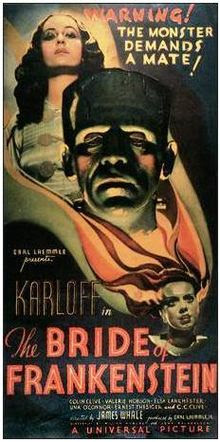
2) The Bride of Frankenstein (1935)

I prefer the sequel to the first Universal picture because it lets James Whale and his cast loose from the limitations of the first movie's roots in a stage play adaptation of the novel. It's wilder, weirder, and a lot more fun all the way through, especially with Ernest Thesiger, Una O'Connor, and Elsa Lanchester joining Karloff and Clive for this outing. If you only see one of the classic Universal entries, this is the one to watch.

3) Son of Frankenstein (1939)

The next generation succumbs to the family's penchant for reanimation in this follow-up, with Karloff returning as the Creature and Basil Rathbone stepping in as Wolf Frankenstein, the son of the original scientist. This one is also notable for its gorgeous German expressionist sets and for Bela Lugosi's appearance as Ygor, the first time that name refers to Dr. Frankenstein's assistant. This is probably the best of the later Universal films, although I do enjoy Frankenstein Meets the Wolf Man (1943) for its revival of the long-suffering werewolf, Larry Talbot (Lon Chaney, Jr.).

4) Abbott and Costello Meet Frankenstein (1948)

More treat than terror, this horror comedy is a Halloween favorite that pits Abbott and Costello against a ghoulish gang of classic monsters, including Glenn Strange as the Creature, Bela Lugosi as Dracula, and Lon Chaney, Jr. as Larry Talbot, aka the Wolf Man. If you want to introduce kids to classic Universal monsters without scaring them too much, this movie is a great choice. You even get Vincent Price making a cameo "appearance" as the Invisible Man at the very end!

5) The Curse of Frankenstein (1957)

Hammer started its own series of Frankenstein films with this adaptation, which stars a very creepy looking Christopher Lee as the Creature and Peter Cushing as Dr. Frankenstein. Scream queen Hazel Court also appears as Elizabeth, and the whole thing is rendered gorier because it's in color. Although Cushing's character is condemned to execution in the first movie, he survives to wreak more havoc with his experiments in The Revenge of Frankenstein (1958), The Evil of Frankenstein (1964), Frankenstein Created Woman (1967), Frankenstein Must Be Destroyed (1969), and Frankenstein and the Monster from Hell (1974).

6) Young Frankenstein (1974)

No list of Frankenstein movies would be complete without this comedy gem from Mel Brooks, with Gene Wilder starring as Frederick Frankenstein, the unwilling heir to his family's legacy who nonetheless ends up building a Creature of his own. The movie uses sets from the original Universal films and is stuffed with gags that work best if you've seen both the 1931 movie and the 1935 sequel. Often hailed as one of the best comedies of all time, it's still uproariously funny 50 years later.

7) Frankenweenie (1984)

Tim Burton has a long-standing love affair with the Frankenstein story, as evidenced by Edward Scissorhands (1990) and the 2012 stop motion remake of this 1984 live action short, but I like the short for its brevity and concentrated weirdness. Disney originally considered this version too scary for kids and fired Burton because of it, but Burton's later success caused Disney to reconsider the short's appeal. Kids today are unlikely to be phased by anything in Frankenweenie, especially those who have already seen any of Burton's other, later films.

8) The Bride (1985)

Fair warning that I haven't rewatched The Bride in a long time, but it makes the list for nostalgia's sake because I first saw it in the 80s and loved it then, partly for its focus on a female Creature (played by Jennifer Beals) and partly for its casting of rock god Sting as Dr. Frankenstein. The movie also stars Clancy Brown as the male Creature and Cary Elwes as another man with a romantic interest in the heroine. I won't pretend this is a brilliant movie, but it is very much a product of its era, and my inner teenager still regards it with affection.

9) The Monster Squad (1987)

Speaking of the 80s and nostalgia, The Monster Squad brings plenty of love for classic monsters and a Goonies sensibility to its horror comedy hijinks, with a group of kids who band together to fight the evil schemes of Count Dracula (Duncan Regehr) and his minions. Frankenstein's Creature, played by Tom Noonan, is supposed to be helping the vampire but turns out to be an ally to the kids, and his friendship with a little girl (Ashley Bank) makes a sweet counterpoint to the tragic scene with a different girl in the 1931 film. This one might actually be too scary (and too free-wheeling with its profanity and sexual references) for very young kids, but it's a perfect pick for tweens, teens, and adult monster kids.

10) Gods and Monsters (1998)

Although it isn't technically a horror movie or an adaptation of Shelley's novel, this fictionalized account of the last days of James Whale is an insightful look at the director's life and work, and it seems fitting to end this list here. Ian McKellen gives a brilliant and moving performance as the aging Whale, and the picture includes flashbacks to the making of Whale's most memorable films. Brendan Fraser costars as Whale's young gardener. Gods and Monsters earned three Oscar nominations, with nods for McKellen as Best Actor and Lynn Redgrave as Best Supporting Actress, and it won the award for Best Screenplay. 

See also: 10 Classic Movies Starring Boris Karloff and 10 Classic Movies Directed by James Whale