Showing posts with label classic movie stars. Show all posts

Monday, May 27, 2024

Meeting Marilyn at Universal Studios

This spring has been one thing after another! Family travel, a totaled car, an actual tornado that hit my neighborhood, and a couple of bouts of minor illness have kept me away from the blog for too long. I hope to get a full movie review up soon, but to make up for my absence here's a highlight from my trip to Universal Studios Orlando in April: me cracking up the Marilyn Monroe impersonator with my impression of Jack Lemmon saying "Daphne!" 


In spite of Universal's tremendous history as a film studio, the parks really lean into the more recent blockbusters (I'm hoping the new Universal Monsters area at Epic Universe will actually honor the classic versions and not just the reboots, but we'll see). Marilyn is one of relatively few classic movie characters featured at the theme park, and she didn't have much of a line when we saw her out greeting guests. Of course I complimented her dress from The Seven Year Itch (1955). That led to a wonderful little conversation about Billy Wilder and then Some Like It Hot (1959), which I had just rewatched a few weeks before our trip.


I was impressed by the performer's knowledge of Marilyn and her films; she had clearly worked hard to know her character even though most of the guests won't be able to appreciate her efforts. If you happen to visit the Orlando parks, do take a few minutes to chat with "Marilyn" if you see her!

Monday, July 10, 2023

A Vivien Leigh Tribute in Stratford-Upon-Avon


As I was walking from the Royal Shakespeare Company to Holy Trinity Church in Stratford-Upon-Avon, I came across this sweet little tribute to legendary actress Vivien Leigh. Best remembered today for Oscar winning film roles as Scarlett O'Hara in Gone with the Wind (1939) and Blanche DuBois in A Streetcar Named Desire (1951), Leigh was also a stage actress who starred in productions of Twelfth Night, Macbeth, and Titus Andronicus at the Royal Shakespeare Company in 1955. You can learn more about Leigh's connections to Shakespeare in this 2015 post from Sylvia Morris at The Shakespeare Blog. It's clear that someone in the area continues to honor Leigh's memory; one of the two potted plants was a fairly recent arrival and still boasted blooms.

If you're ever in Stratford-Upon-Avon, I highly recommend the backstage tour at the RSC, which includes wonderful stories about classic stars of stage and screen. There's also a free exhibit onsite called "The Play's the Thing," which tells the history of the RSC and features costumes worn by some of the most notable performers to appear there (you will NOT spend a day at the RSC without learning a lot about Judi Dench, but she's fabulous and deserves the attention). You'll also find displays dedicated to Laurence Olivier and John Gielgud, both of whom shared the stage with Leigh. Olivier, of course, also shared a turbulent romance with the beautiful actress, who suffered from mental illness and tuberculosis throughout much of her career. If you want to learn more about Leigh and Olivier, check out the excellent blog, Vivien Leigh & Laurence Olivier, by Kendra Bean.


Monday, May 15, 2023

Big Stars on the Small Screen: THE MUPPET SHOW

This post is part of the CMBA Spring Blogathon - Big Stars on the Small Screen: In Support of National Classic Movie Day. Check out all of the participating blogs and posts by visiting the Classic Movie Blog Association's post about the blogathon!


Big Stars on the Small Screen: Classic Movie Guest Stars on The Muppet Show

Guest stars on the original Muppet Show television series spanned the full range of celebrity types in the public eye during the late 1970s, from singers and actors to puppeteers, dancers, and musicians. For many children watching the episodes, The Muppet Show provided a kid-friendly introduction to entertainers they had never encountered before, including many classic movie stars entering the later decades of their careers. If you were four years old in 1976, as I was that year when the first season of The Muppet Show aired, you might not know who most of the Season 1 guest stars were, but a Muppet curated introduction to Vincent Price might prove a watershed moment in your young life. For five seasons, The Muppet Show entertained adults and children alike with its quirky mix of old and new, high and low, classy and wacky, all mingled together to form the joyful chaos so quintessential to the Muppet aesthetic. Here's a look at some of the classic movie stars featured in each season of the series, with highlights on some of my personal favorites.


Season One

The 24 episodes of Season One offer a wide range of guest stars, including Joel Grey, Ruth Buzzi, Florence Henderson, Paul Williams, Sandy Duncan, and Phyllis Diller, and of course many stars who were fairly new in 1976 are considered "classics" today. Among the guest stars who hail from the Golden Age of Hollywood are Rita Moreno, Lena Horne, Peter Ustinov, Vincent Price, and Ethel Merman. Of the group, both the Rita Moreno and Vincent Price episodes are standouts, with both stars fully committed to interacting with their puppet hosts.

For me, the Vincent Price episode is a special favorite. The campy horror maestro is totally at home with his weird monster companions, including the delightful Uncle Deadly, who appears as Price's "beautiful assistant" in one horror movie parody sketch. Price also gets to tout his reputation as a gourmet and art lover, although of course the sketches veer into vampirism, cannibalism, and other gruesome but silly twists. It's a thoroughly essential episode for any fan of the Muppets, Price, or classic horror in general.


Season Two 

Classic movie stars in the second season include many performers who were also famous for their radio and television work, like Don Knotts, Milton Berle, George Burns, and Bob Hope, but you'll also find stars like Julie Andrews and Peter Sellers in the mix ("modern" guest stars for this season include Rich Little, Madeline Kahn, Elton John, and John Cleese). Both the Julie Andrews and Peter Sellers episodes are noteworthy in their own, separate ways, although the Sellers episode suffers some for Sellers' outdated and stereotyped performance of "A Gypsy's Violin."

I can't really choose between the Peter Sellers and Julie Andrews episodes because they're both great. While the first sketch with Sellers is culturally problematic, the Queen Victoria sketch is a brilliant bit of meta comedy that is one of my all-time favorite Muppet Show moments, and the segment with Sellers as a sadistic German masseur who mangles Link Hogthrob is another demented gem. The Sellers episode is also notable for featuring Kermit's performance of "Bein' Green," which would become a signature song for the character. The Julie Andrews episode is sweeter in tone, with Andrews performing "The Lonely Goatherd" from The Sound of Music (1965) for her first number. Andrews is very natural and funny with her puppet costars throughout the episode, and for added humor you can watch Carol Burnett be jealous of Andrews' popularity on the show in Burnett's Season 5 appearance.


Season Three

The most memorable episode of Season 3, for me, at least, is the one featuring Alice Cooper, who might as well be a Muppet given how well he fits in with the monsters of the group. The Faust angle of the episode's plot also makes it a hit. Among the newer stars featured, the episodes guest starring Gilda Radner and Roger Miller also stand out. Classic movie stars appearing in the third season include Jean Stapleton, Raquel Welch, Harry Belafonte, Danny Kaye, and Roy Rogers and Dale Evans (who appear together, naturally). 

While the Danny Kaye episode is cute, the must-see classic star of the season is definitely Harry Belafonte, who collaborated closely with the show's creative team to make a truly special episode. "Day-O" is a Belafonte hit that adult viewers would have recognized, but the real highlight is Belafonte's performance of "Turn the World Around," a song that would prove so meaningful to Muppets creator Jim Henson that Belafonte performed it at Henson's New York memorial service in 1990. While this episode of The Muppet Show focuses on Harry Belafonte's skill as a singer, his acting ability serves him well in his interactions with the puppets. I couldn't help but think of this episode and the song, "Turn the World Around," when Belafonte died on April 25, 2023.


Season Four

The fourth season includes fewer guests who really qualify as "classic movie stars" in the strictest sense, and overall there are a lot of popular singers represented, such as John Denver, Arlo Guthrie, Crystal Gayle, Andy Williams, and Diana Ross. The best episode of the season is the one featuring the stars of Star Wars, with Mark Hamill absolutely game for the comedy shenanigans and accompanied by C-3PO (Anthony Daniels), R2-D2, and Chewbacca (Peter Mayhew). The most "classic" of the stars included in this season are Liza Minnelli and Carol Channing, and both of their episodes are worth watching.

If you're interested in episodes where The Muppet Show varied its usual format (as it did several times during its five season run), the Liza Minnelli episode is the one to watch. The usual songs and comedy skits are organized as part of a murder mystery with Kermit as the detective and Minnelli as his client. The episode earned an Emmy for Outstanding Directing, and the Mystery Writers of America honored it with a Raven Award, as well. If you want to see how a human Muppet interacts with actual Muppets, see the episode with Carol Channing, who really fits in perfectly and performs some delightfully nutty numbers.


Season Five

The final season of The Muppet Show ran from the fall of 1980 to the spring of 1981, and it followed the fourth season in leaning toward newer celebrity guests. Some of the best include Brooke Shields (in an Alice in Wonderland themed episode), Carol Burnett, Johnny Cash, Marty Feldman, Linda Ronstadt, and Paul Simon. The classic movie stars featured in this season are, however, truly classic, with Gene Kelly, James Coburn, and Tony Randall all making appearances. As great a star as Kelly was, he looks uncomfortable with the puppets, and it's not a great performance (his episode aired around the same time as his appearance in the 1980 film, Xanadu). Tony Randall is having more fun, but the wackiest of the lot turns out to be James Coburn.

I'll admit that, having seen the entire series multiple times and co-edited two books about Jim Henson, I can't really remember a lot about the Tony Randall episode, which is why I'm giving the nod to James Coburn as the best classic star guest for this season. The finale, which involves a chaotic tribute to Japan that turns into a square dance with invading cowboys, has some of the same cultural sensitivity issues as the Peter Sellers episode, but James Coburn going for broke with a bunch of Muppets is just too wacky to resist. The sketches poke great fun at Coburn's tough guy reputation, especially in the salute to the Roaring 20s segment. Coburn also has a fun cameo as the owner of the El Sleezo Cafe in The Muppet Movie (1979), if you want another bit of Coburn-Muppet collaboration.


If you're interested in reading more of my posts about the Muppets, check out these links:

Classic Movie Stars on THE MUPPET SHOW

The Lovers, the Dreamers, and Me: Reflections on The Muppets

From Phantom to Phenom: The Evolution of Uncle Deadly

Christmas Movie Blogathon: THE MUPPET CHRISTMAS CAROL (1992) 

Making News with The Muppets


Thursday, August 25, 2022

Five Favorite Films: Claude Rains Villains

With his distinctive English voice and intensely intelligent manner, Claude Rains made himself at home in a wide variety of memorable roles, although he was more often the heavy or a supporting character instead of a leading man. Born in London in 1889, the actor grew up in the English theater scene but made an indelible mark with his first big film role as the unseen protagonist of James Whale's horror classic, The Invisible Man (1933). He would go on to be nominated for four Academy Awards for Best Actor in a Supporting Role, and even though he never took an Oscar home he became one of classic Hollywood's iconic stars. Rains didn't always play villains, but his dark characters are delightfully complicated, so my list here compiles five of my favorite Rains rascals, each a slippery cinematic sinner worthy of your time.


The Invisible Man
(1933)

It's no surprise that Rains would become a favorite Hollywood heavy after his breakthrough performance in this Universal horror adaptation of the novel by H.G. Wells. Completely unseen except for the last shot of the picture, Rains nevertheless triumphs as the increasingly insane Dr. Jack Griffin, who uses himself as a test subject for his invisibility formula. Even more than his other horror films for Universal, The Invisible Man lets director James Whale indulge his very dark sense of humor, and Rains goes over the top with Griffin's murderous, mad antics.

The Adventures of Robin Hood (1938)

Rains is just one of many great stars packing into Sherwood Forest for this glorious Technicolor adventure, but his Prince John is a villain you'll love to hate. Sadistic, petty, and vain, the prince usurps the English throne in the absence of his brother, King Richard (Ian Hunter), only to be plagued by the rebellious Robin (Errol Flynn) and his merry band. Fans of the Disney version from the 1973 animated Robin Hood will enjoy comparing the vocal performance of Peter Ustinov with Rains' live action incarnation.

Mr. Smith Goes to Washington (1939)

Director Frank Capra spins a story of political idealism clashing with corruption and cynical power in this beloved picture. James Stewart stars as naive newcomer Jefferson Smith, who is suddenly thrust into the machinations of the US Senate. Rains plays Joseph Paine, the senior Senator who is Stewart's hero and mentor, but he turns out to be far less noble than Jefferson originally believes. Paine is one of Rains' more realistic antagonists, not so much outright evil as self-interested and jaded, but Rains gives a terrific performance in the role and earned his first nomination for Best Supporting Actor as a result. 

Notorious (1946)

Rains gets to be a subtler, more devious sort of villain in this Hitchcock thriller, but he's still delightfully bad as the Nazi Ingrid Bergman is asked to spy on by the US government. Rains' character, Alexander Sebastian, marries Alicia (Bergman) but is also willing to murder her in order to protect himself and his secrets. His duplicitous nature gives Rains plenty of opportunities to be both charming and chilling, especially in scenes with Alexander's sinister mother (Leopoldine Konstantin). The role earned Rains his final Oscar nomination for Best Supporting Actor.

The Unsuspected (1947)   

This noir mystery from director Michael Curtiz is another role that makes great use of Rains' fantastic voice by casting him as the popular host of a radio mystery show. Unfortunately, Rains' suave radio star, Victor Grandison, goes from just talking about murder to actually committing it. Rains has a much more central role in this picture as the "unsuspected" murderer of the title, but it's pretty obvious from the beginning, in spite of the title, that Victor is up to no good. The movie also stars Joan Caulfield, Audrey Totter, Constance Bennett, and Hurd Hatfield.

For more of the darker side of Claude Rains, see Kings Row (1942), Phantom of the Opera (1943), and Angel on My Shoulder (1946). Get a sense of his range with The Wolf Man (1941), Casablanca (1942), Mr. Skeffington (1944), and Caesar and Cleopatra (1945). Rains made his final screen appearance as one of the greatest villains of human history, King Herod the Great, in The Greatest Story Ever Told (1965).

Sunday, April 10, 2022

Classic Movie Duos: Katharine Hepburn and Cary Grant

Katharine Hepburn and Cary Grant only made four movies together, but each one is worth watching for the formidable duo and the ways in which they are markedly different from one another. Two of their collaborations, Bringing Up Baby (1938) and The Philadelphia Story (1940), are highly regarded and much beloved, but their other two pictures, Sylvia Scarlett (1935) and Holiday (1938), are less celebrated, and, in fact, three of their four movies together were originally box office duds. With only four films to get through, it's a worthwhile project to sit and down and watch all of these movies as a group in order to appreciate the ways in which the stars work together and the career trajectories that they were charting when these pictures were being made.

Hepburn and Grant in Sylvia Scarlett (1935)

Hepburn and Grant first worked together on the most obscure of the four films, the gender-bending dramedy, Sylvia Scarlett (1935), in which Hepburn takes the title role and Grant plays the English conman who becomes her mentor and travel companion. George Cukor, who directed all but one of the pair's collaborations, is at the helm here, too. This is the only one of the four movies in which Hepburn and Grant do not play romantic partners, and in retrospect it seems odd that they don't get together here, especially since Sylvia's partner of choice, an egotistical painter played by Brian Aherne, seems just as problematic a mate as Grant's slippery but ultimately compassionate con artist. For Grant the movie was a step along the way to stardom, but for Hepburn it came during a troublesome slump that saw her cast in one flop after another. It's not a perfect movie, but Hepburn's cross-dressing provides a delightful opportunity for the star to show off her athleticism and escape the glamorous trap of a typical leading lady role. 

Bringing Up Baby (1938)

The second outing, Bringing Up Baby (1938), switches to Howard Hawks for direction, but that change did not save the screwball comedy from a bad box office showing on its release. Hawks thought that the movie flopped because all of its characters are crazy, but it has since soared to the status of a beloved masterpiece of its genre. The wacky story of a free spirit socialite (Hepburn) who wrecks the measured life of a paleontologist (Grant) casts our two stars in very different roles from their previous collaboration, and each gives a fantastic performance. Hepburn makes the leap to full-blown comedy and is simply hilarious, while Grant embodies a meeker personality driven to distraction by the outrageous obstacles he faces. While the movie didn't immediately pull Hepburn's career out of its slump, it has become a favorite film for her fans, and it set the two stars up for more romantic pairings in their next two films.

Holiday (1938)

Holiday
(1938) came out shortly after Bringing Up Baby but found the two stars and director George Cukor at Columbia instead of RKO, which had made the two previous films. Once again the movie failed to gain traction with audiences, although the critical response was more positive. Adapted from a hit play by Philip Barry, the story once again put Hepburn and Grant into a mix of comedy and drama but this time set them up as characters who are obviously destined to get together, never mind that Grant's upwardly mobile protagonist, Johnny Case, opens the movie as the intended groom of the wrong sister. Hepburn once again plays a free spirit socialite, but this time family pressure has kept her penned in and unhappy until Grant arrives as a breath of fresh air in the oppressively lavish mansion. Edward Everett Horton and Jean Dixon also liven up the place as Johnny's friends, and Grant gets to show off a little of his acrobatic skill with Hepburn very game as his partner. While it's not as hellbent for hilarity as Bringing Up Baby, Holiday deserves attention for its compelling performances and its artful casting of the two leads, who are each just right for the parts they play.

The Philadelphia Story (1940)

Hepburn fans already know that the last of the duo's collaborations, The Philadelphia Story (1940), proved to be her big comeback. The romantic comedy from MGM picked up six Oscar nominations, including nods for Hepburn, Cukor, and supporting actress Ruth Hussey, with Jimmy Stewart winning for Best Actor and Donald Ogden Stewart taking home the award for Best Screenplay. Like Holiday, this movie was adapted from a play by Philip Barry, but in this case the original role had been written specifically for Hepburn, who also owned the film rights thanks to Howard Hughes. The story opens as if it might be a sequel to Holiday, with Hepburn and Grant's romance gone sour and the lovers now divorced, but Grant's character, C.K. Dexter Haven, isn't willing to give up his ex-wife to a new groom without a fight. Tracy Lord is another of Hepburn's socialite roles, beautiful and smart but rather spoiled, although Tracy is not about to be bossed around by anyone, especially her wayward father. 

Although only the final film proved to be a box office success, each of the Hepburn-Grant collaborations contributed to that last production in different ways, whether by building the relationships between the stars and their director, refining the character types the stars played, or establishing that Philip Barry's work was a good fit for the pair. Hepburn would make one more film adapted from a Barry play, Without Love (1945), which was also originally written for her, but in that picture her costar would be her longtime companion and collaborator, Spencer Tracy. While Hepburn and Grant would each make many more films, their work together ended on a high note with The Philadelphia Story.

Thursday, January 20, 2022

Fantastic at 50: Classic Movie Actresses

Earlier this month I celebrated my 50th birthday, one of those milestone events that feels important even if the pandemic kept me from doing much to mark the occasion. Several years ago, when I was 42, I wrote a post about 42 year old classic movie actresses and the films they made at that age, so this seems like a good time to revisit the idea and think about stars who enjoyed significant moments in their careers when they were 50. Of course, being 50 in 2022 is quite a bit different from being 50 in 1952, and Hollywood actresses in the studio era faced tremendous age discrimination. The women who managed long careers did so through versatility, perseverance, talent, and sheer determination. Here are a few of my favorite classic movie actresses and the films they made in their 50th year.

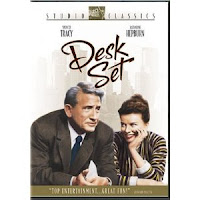
Katharine Hepburn, born in 1907, made the great romantic comedy Desk Set in 1957, one of her many pictures with costar Spencer Tracy. It's a funny, sweet story that highlights middle aged romance and women with careers, and it's actually one of my favorite movies that the pair made together. Of course, Hepburn would go on to even more great roles and Oscar nominations after 50, including three Best Actress wins.

Hepburn's Desk Set costar, Joan Blondell, was a year older, but she also enjoyed a long career. In 1956 the 50 year old star appeared as part of the ensemble cast in The Opposite Sex, a remake of the 1939 hit, The Women. Although she's best remembered today for her dozens of Pre-Code and other 1930s films, Blondell went right on acting until her death in 1979.

Bette Davis, born in 1908, was mostly doing television work in 1958, with a couple of guest spots on different series over the course of her 50th year. Even top stars like Davis and Crawford found big film roles harder to come by as they aged, especially if they wanted to avoid playing supporting characters like mothers to younger leading ladies. Davis, however, would eventually lean into horror roles and make the most of her lifelong ability to transform herself into extreme characters. Like Blondell, she would continue acting right up until her death in 1989.

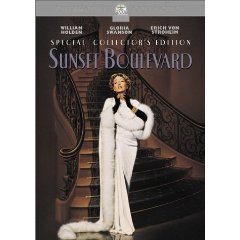
Gloria Swanson was 51 by the time Sunset Blvd. appeared in theaters in 1950, but the actress really was 50 years old when she played the 50 year old Norma Desmond. It's a role that digs into the crisis of aging for a Hollywood actress, and it's not exactly flattering. Still, Swanson is brilliant in the film, and it's a shame the movie didn't inspire a revival for the star. Her leading man, William Holden, was still enjoying big movie roles well into his 50s, but Swanson, who earned a Best Actress Oscar nomination for Sunset Blvd., moved on to television appearances and semi-retirement.

Of course, some actresses fared better after 50 than others, with comic character actresses being some of the best at maintaining their careers. Long-legged Charlotte Greenwood made Down Argentine Way (1940), Mary Wickes appeared in Cimmaron (1960), Marjorie Main made seven films in 1940, and her friend Spring Byington took on ten roles in her 50th year in 1936. They had never been famous for their glamorous youth and beauty, and they trooped along through the decades in supporting roles that allowed them to keep working long after the starlet types had been forced into retirement.

When I look at modern actresses who are turning 50 this year, I see Cameron Diaz, Rebecca Romijn, Toni Collette, Jennifer Garner, and Gwyneth Paltrow, all of whom are still working and even thriving with their careers. I doubt they'll have to resort to hagsploitation roles like Davis and Crawford, and it's encouraging to think that we see 50 differently now than we did during the classic movie era. Personally, I'm feeling pretty good about being 50, and I plan to celebrate with several special blog posts in the weeks ahead.

If you're turning 50 this year, too, happy birthday, and remember, Jessica Tandy won an Oscar at 80, so you're definitely not too old to accomplish something big!

Monday, September 20, 2021

Five Favorite Films: Bette Davis

It's really difficult for me to pick only five films for Bette Davis. She's one of my favorite stars, and her career spanned decades, with juicy, memorable roles from her early years right up to her death in 1989 at the age of 81. She was nominated for 11 Best Actress Oscars and won twice, first for Dangerous (1935) and then for Jezebel (1938). I'm choosing my five favorite films with an eye toward representing and respecting the breadth of her career, rather than just picking five from the 1940s ( a decade in which she made some 20 pictures!). A true cinema icon with a taste for the most challenging, complicated roles, Bette is justly celebrated today as one of classic Hollywood's brightest luminaries, and these five films provide a primer on the versatility and talent she possessed.

Of Human Bondage (1934)

Davis' big breakout role was one she had to fight for, but she proved herself more than capable of playing Mildred, the opportunistic working class girl who seduces Leslie Howard's aimless protagonist and then spirals into self-destruction. Davis begins the drama as a pert, attractive waitress but deteriorates horrifically as her character turns to alcohol, drugs, and prostitution; never content to play only glamorous parts, she would continue to embrace such challenging roles throughout her career. She picked up her first Oscar nomination for Best Actress for this picture but would not win until the next year for her leading role in Dangerous (1935).

Of Human Bondage (1934)

Jezebel (1938)

Released the year before Gone with the Wind (1939), this Civil War tale of a Southern belle bad girl stars Davis as stubborn, headstrong Julie, who wrecks her relationship with her beau (Henry Fonda) by violating the social norms of their community. Julie then wants to mend the damage but finds a Northern bride has filled the spot she carelessly abandoned; an outbreak of yellow fever throws her set into a panic but gives Julie a long-desired opportunity to show how much she has changed. While the plantation setting of the story raises problems for modern audiences, I do like the redemptive arc for Davis' protagonist and her great performance, which earned her second and final win for the Best Actress Oscar.


Now, Voyager
(1942)

Davis shines in this beloved melodramatic romance, in which nervous, oppressed Charlotte Vale gets a makeover and a second chance at happiness after she's whisked away from her domineering mother for treatment at a sanitarium. Paul Henreid plays the unhappily married love of her life, who can't bring himself to leave his difficult wife but takes comfort in the bond that develops between Charlotte and his troubled young daughter. Davis achieves one of her many remarkable transformations during the early part of the picture, culminating in a polished, elegant Charlotte whom her relatives hardly recognize. She picked up her seventh nomination for Best Actress for this role, while Max Steiner won for the picture's excellent score.

Whatever Happened to Baby Jane? (1962)

Always willing to be ugly for the sake of a juicy role, Davis is relentlessly awful in both appearance and manner as the titular Baby Jane in this hagsploitation classic. While some dismiss it as camp, the tragedy and horror of the picture are very real in the roles played by Davis and Joan Crawford, who famously clashed during production. Baby Jane, undeniably deranged and even violent, at first comes across as simply villainous but slowly reveals the grief, pain, and confusion that have driven her to such a state. Davis picked up the final Best Actress nomination of her career for this performance, which I appreciate more the older I get.

The Whales of August (1987)

The Whales of August (1987)

I find this quiet drama deeply moving every time I revisit it, and Davis gives a brilliant performance in this, her penultimate role and the last picture she actually completed; she walked off production of Wicked Stepmother (1989), which would be her final screen credit. Davis and silent star Lillian Gish play elderly, widowed sisters spending the summer in a New England cottage, and the rest of the characters are also played by iconic stars in their own twilight years. Gish actually plays the younger of the sisters even though she was 93 at the time, but Davis had survived breast cancer, a mastectomy, a massive stroke, and a broken hip, which made her utterly credible as the frailer elder sister. Davis made dozens of movies that are more celebrated, but this one is special for showing how her talent and determination to keep working stayed with her in spite of everything else that happened in her long career.

This is by no means a list of Bette Davis' five best films; it's a list of personal favorites that reflect my own tastes. Other Davis fans might offer a completely different list of favorites, and there are plenty of outstanding options to choose. For more Bette Davis hits, see The Petrified Forest (1936), Dark Victory (1939), The Letter (1940), and All About Eve (1950).

You'll find more full reviews of Bette Davis' films in my book, Beyond Casablanca: 100 Classic Movies Worth Watching, available in the Amazon Kindle Store.

Thursday, September 9, 2021

Five Favorite Films: Leslie Howard

English actor Leslie Howard is best remembered today for his role as Ashley Wilkes in Gone With the Wind (1939), but Howard himself was not a fan of the part or his own casting in it. He said of the role, "I hate the damn part. I'm not nearly beautiful or young enough for Ashley, and it makes me sick being fixed up to look attractive." He also called the novel a "terrible lot of nonsense"and only took the role because he was promised producer credit on a different project by David Selznick. Like Howard, I'm not a big fan of GWTW, but I do love Howard's performances in many other pictures. If you've only seen him as Ashley, you owe it to Leslie Howard to see his work in the movies that he felt were more suited to his talents. Here are five of my favorite Leslie Howard films to get you started.

Of Human Bondage (1934)

Howard plays the lead in this adaptation of the novel by W. Somerset Maugham, which also provided a breakout role for Bette Davis as the opportunistic young woman who almost destroys her lover as well as herself. Hapless artist Philip is exactly the kind of dramatic role that suits Howard; he's full of good intentions but not particularly strong against temptation or inertia, an easy mark for a schemer like Davis' Mildred.

The Scarlet Pimpernel (1934)

Although Howard is not an actor we really associate with the swashbuckler, he delivers a delightful performance in this adaptation of the classic adventure tale. It's especially fun to watch Howard simper in his character's public persona as a vain, shallow fop in order to protect his real passion for rescuing victims of the Reign of Terror. Merle Oberon plays Sir Percy Blakeney's conflicted French wife, who reluctantly agrees to help capture the Scarlet Pimpernel without realizing that her own husband is the hero himself. 

Bette Davis and Leslie Howard in The Petrified Forest

The Petrified Forest (1936)

Howard had starred in the original stage version of this story before Hollywood decided to film it, and it was his insistence that his stage costar Humphrey Bogart also reprise his role that finally launched Bogart's successful film career. Howard plays a world weary writer whose aimless wandering brings him to a moment of purpose and tragedy on the edge of the Petrified Forest, where he meets both an artistic young girl with dreams of Paris (Bette Davis) and a dangerous gangster at the end of the line (Bogart). Alan Squier is another perfect Leslie Howard role, a mix of weakness, intelligence, and disaffection with the world with whom we sympathize in spite of his obvious flaws.


It's Love I'm After
(1937)

This clever little comedy reunites Howard with leading lady Bette Davis and brings Olivia de Havilland into the mix as a starstruck fan who has fallen in love with Howard's character. Howard and Davis play a pair of actors whose stormy personal relationship spills over into their performances, but even more chaos ensues when Howard agrees to behave as badly as possible to cool his fan's ardor so that her fiance (Patric Knowles) can get her affection back. This delightful, underrated gem is well worth tracking down for fans of any of the three leads.

Pygmalion (1938)

Howard earned his second and final Oscar nomination for Best Actor for his performance in this film adaptation of George Bernard Shaw's influential play, in which Howard plays the irascible Professor Henry Higgins to Wendy Hiller's Eliza Doolittle. Hiller also picked up an Oscar nod for her role, and the two make for an electric pair as they battle their way through Eliza's transformation from Cockney flower girl to polished society lady. This is another film where Howard gets to demonstrate his talent for comedy, although his Higgins can be so nasty and selfish that he's by far the most unlikable of the characters in this list. If you like My Fair Lady (1964), you definitely need to see this earlier version of the same story.

Leslie Howard's film career was cut tragically short in 1943 when his plane was shot down by the Nazis during a trip to support the British cause against the Germans. Howard had been an outspoken advocate for Britain against the Nazis, leading to speculation that the plane was intentionally targeted because of Howard's presence. In addition to stage roles, he left behind 33 film appearances, so there are numerous other movies where you can see Howard in action, including The Animal Kingdom (1932), Berkeley Square (1933), and Romeo and Juliet (1936).

Tuesday, September 7, 2021

A Tallulah Tribute in CRUELLA (2021)

We finally got to watch Disney's latest entry in the live action treatments of 101 Dalmatians characters, which this time moves the focus off the dogs entirely and charts the early misadventures of its title anti-heroine, Cruella de Vil. Early reviews of Cruella (2021) were mixed enough that we chose not to pay for Premiere Access and instead waited for the movie to drop to regular subscriber streaming, but I thought it was a fun romp with a lot going for it in spite of some flaws. For fashion nerds and Emma Stone/Emma Thompson fans there's a lot to love, although it's certainly far afield from the original 1961 Disney movie, which was itself notably different from the 1956 novel by Dodie Smith. 

One small detail that endeared the movie's creators to me is the inclusion of a quick but much appreciated tribute to Huntsville native and stage legend Tallulah Bankhead, whose throaty laugh, mannerisms, and infamous London driving inspired the Disney animators who first brought Cruella to life on screen. In an early scene in Cruella, the young Estella is in a room where Tallulah appears on a small television screen, her head thrown back as she delivers her deliciously raucous laugh. The scene on the television comes from Tallulah's most memorable film, Alfred Hitchcock's Lifeboat (1944), in which Tallulah stars as a reporter trapped on a small vessel with other survivors of a German U-boat attack. It's the best place for modern viewers to see the legendary star in action, although she also made memorable appearances in Stage Door Canteen (1943), A Royal Scandal (1945), and the 1960s Batman TV series.


The Cruella of the 1961 Disney film is an absolute villain who schemes to make fur coats out of puppies, but the Cruella embodied by Emma Stone is perhaps more like Tallulah herself, a complicated, flawed, sometimes bad and sometimes mad woman riding a tidal wave of misadventures through an unconventional but always interesting life. In fact, a biopic about Tallulah Bankhead would make an amazing movie and probably present an Oscar opportunity for the actress able to play her. Until some studio decides to make that movie, or adapt one of several stage plays about her life, Cruella is as close as we're going to get. 

For more about Tallulah Bankhead:

"Tallulah Bankhead's Huntsville Roots: Maple Hill Cemetery"

"Southern Voices on the Silver Screen"

Wednesday, March 17, 2021

Classic Movie Stars on THE MUPPET SHOW

Thanks to Disney Plus, viewers can finally enjoy all five seasons of The Muppet Show, and at my house we've been delighted to have access to the long-awaited fourth and fifth seasons, which were never available on DVD. The release has created some controversy about Disney's decision to include content warnings on a handful of episodes (which are, in some cases, painfully necessary), but for Muppet fans the more pressing questions often involve trying to figure out who the guest star is, since some of these folks might have been famous in the 1970s but are truly obscure now. Luckily for classic movie fans, the guest list also includes some fantastic stars from the Golden Age of Hollywood, and their appearances on the show offer a delightful snapshot of these stars as they appeared in the late 1970s. 

For many viewers who were kids in the 70s, these guest spots might well have been their first introduction to entertainers from their parents' or grandparents' eras, which means that Gen Xers in particular might have been meeting Milton Berle, Edgar Bergen, Danny Kaye, and Gene Kelly for the first time. Other stars were much more familiar to the average 10 year old of 1978, including Mark Hamill, Don Knotts, and Rich Little, while many of the British guests would have baffled American children and adults alike (the show was filmed in London, so British guests were much easier to acquire). Of course, today even the "current" stars of 1978 look like classic ones, but every season of the show mixed classic stars, current American celebrities, and British talents to provide a weirdly educational cultural smorgasbord for unsuspecting child viewers. Singers and dancers had obvious appeal, as did comedians, but that didn't stop the show from featuring action stars like James Coburn and Roger Moore or magician Doug Henning. The classic movie stars were just part of the mix.

Each season has at least one classic star, although some were better known in the 70s than others thanks to musical careers, television roles, or later film roles. In Season One, you can see Rita Moreno, Lena Horne, Peter Ustinov, Vincent Price, and Ethel Merman. Season Two offers Don Knotts, Milton Berle, Edgar Bergen, George Burns, Julie Andrews, Peter Sellers, and Bob Hope. Showing up in Season Three are Danny Kaye, Harry Belafonte, and Roy Rogers and Dale Evans. Season Four is comparatively light on classic movie stars but includes Liza Minnelli, while Season Five ends the series with James Coburn, Tony Randall, and Gene Kelly. Each of these is worth watching, but the episodes with Moreno, Price, Andrews, and Belafonte are particularly good, so start there if you're a classic film fan but not someone with a lot of previous experience with The Muppet Show. 

A handful of the classic film stars who appear on the series also have cameos in the original 1979 film, The Muppet Movie, where you can spot Bob Hope, Milton Berle, and James Coburn along with Orson Welles, Telly Savalas, and many younger stars who also appeared as guests on the show. Many of the Muppet films are also streaming on Disney Plus, so if the classic stars on The Muppet Show whet your appetite for more of Kermit and the gang, there's plenty of content available. 


Want to know everything there is to know about The Muppets? Head on over to my friends at Tough Pigs to find news, articles, podcasts, and commentary! You can also check out the essay anthology, Kermit Culture, that Anissa Graham and I edited; it's available in paperback and Kindle editions at Amazon. Our second anthology, The Wider Worlds of Jim Henson, looks at films and other productions like The Dark Crystal, Fraggle Rock, and Labyrinth.

Thursday, January 9, 2020

Ida Lupino and THE TWILIGHT ZONE

Ida Lupino is not as familiar today as screen icons like Bette Davis and Joan Crawford, but classic film fans know and love her work as both an actress and one of the few women directors working in Hollywood during the mid 20th century. If you're not familiar with Lupino in either capacity, you can get a quick introduction to her work thanks to The Twilight Zone, which features one episode in which Lupino is the star and one that she directs. Both are worthwhile episodes of the show, with Lupino proving that she had just as much to offer behind the camera as in front of it. Early 2020 is a particularly good time to see these Twilight Zone episodes because you can currently find four seasons of the series streaming on Netflix.

Ida Lupino started out as a young actress in England and then made her way to Hollywood, where she enjoyed her greatest success as a performer in films like They Drive by Night (1940), High Sierra (1941), and On Dangerous Ground (1951). Her acting career tends to overshadow her directorial work, partly because it was so difficult for women to succeed as directors during the studio era, but Lupino had better success directing episodes of television series. According to IMDB, Lupino achieved 106 screen acting appearances and 41 credits as a director, including eight episodes of Have Gun - Will Travel, five of General Electric Theater, and nine of Thriller. Although she worked on only two episodes, The Twilight Zone is an especially good introduction to Lupino because you can see her work on both sides of the camera with just a Netflix account and about 45 minutes of free time.


The first episode, "The Sixteen-Millimeter Shrine" from Season One, features Lupino as the protagonist, a middle-aged movie queen named Barbara Jean Trenton. Like Norma Desmond in Sunset Blvd. (1950), Barbara is a difficult woman unwilling to confront reality and obsessed with her own films, but unlike Norma Barbara actually manages to escape from that ugly reality by entering the world of the pictures flickering on the screen. The expected twist of the story occurs quite late, and since Barbara's wish gets fulfilled without ironic subversion it's not one of the show's more famous episodes. Lupino, however, looks great in it and gives a very solid performance playing a character type she certainly knew in real life. (For more Twilight Zone actress stories, see "Ring-a-Ding Girl" and "Queen of the Nile," both of which are also in the Netflix collection.)


The second episode, "The Masks" from Season Five, shows Lupino's skill as a director. The story focuses on a dying old man who gets revenge against his greedy, awful relatives on the night of Mardi Gras in New Orleans. In order to get their expected inheritance, the relatives are required to wear hideous masks until midnight, at which point the old man dies and they discover that their true selves have been revealed. As the director, Lupino does a wonderful job conveying the shallow selfishness of the relatives and their growing horror as they finally remove their masks. The camera frequently focuses on the faces of the relatives in close-up; we see the ugly masks with their frozen mouths, but we also see the increasingly anxious eyes of the wearers. Vulture lists "The Masks" as #18 in its top 50 Twilight Zone episodes, and Rolling Stone puts it at #25 on their best-of list, making it an episode any fan of the classic series should definitely see.

If you watch and enjoy these two episodes of The Twilight Zone, track down some of Lupino's other work. In addition to the films mentioned before, you can find her acting in Moontide (1942), The Man I Love (1946), and Road House (1948). The Trouble with Angels (1966) is probably the most available of the films Lupino directed, but she both directed and stars in The Bigamist (1953), and her other directorial efforts include Not Wanted (1949), Never Fear (1950), and The Hitch-Hiker (1953).


Monday, October 21, 2019

Tallulah Bankhead's Huntsville Roots: Maple Hill Cemetery

Tallulah Bankhead was born in Huntsville, Alabama, on January 31, 1902, and evidence of her Huntsville roots can still be seen around town, even though the infamous stage and screen star is long departed. There are numerous places and historical markers bearing witness to her family's impact on the city, but one of the more somber sites is the grave of Tallulah's mother, Adelaide Eugenia Bankhead, who died shortly after Tallulah's birth. Mrs. Bankhead is buried at Maple Hill Cemetery near Huntsville's historic district and downtown, not far from the house where Tallulah entered the world and her mother left it.

Perhaps Tallulah's life might have been different had her mother lived. Perhaps the early loss, which devastated her father, William, drove some of the darker elements of Tallulah's personality. It's impossible to say for sure, but knowing the dizzying heights and terrible lows of the actress' life one can't help but wonder when standing beside her mother's grave. In 1902 the infant Tallulah was baptized next to her mother's coffin, and she and her elder sister, Eugenia, were packed off to be raised by their paternal grandmother, their maternal grandmother having also died just after giving birth to their mother. Tallulah's mother was just 22 years old when she died; Tallulah died too soon at 66, but she packed a dozen lifetimes of success and suffering into those 44 years her mother never had.

Tallulah returns to Huntsville each year in spirit as one of the resident "ghosts" of the Maple Hill Cemetery Stroll, though she herself is buried in Maryland, where her sister lived. You'll find a costumed performer inhabiting the role of the iconic star near her mother's grave, waving a long cigarette holder and holding forth about her family and her own legendary exploits. The event is well worth a visit if you're in the area.

For more posts about Tallulah, see "Southern Voices on the Silver Screen," "Classic Films in Focus: LIFEBOAT (1944)," and "Classic Films in Focus: 101 DALMATIANS (1961)."

Wednesday, June 12, 2019

Classic Movie Style: Cary Grant's Sunglasses

On my way home from a trip to the UK last week I happened to flip through the Holland Herald on our KLM flight from Edinburgh to Amsterdam, and I was delighted to find this little article about chic sunglasses inspired by those worn by Cary Grant in the 1959 film, North by Northwest. Cary Grant is still a style icon, and Oliver Peoples is celebrating his timeless cool with these classy glasses. You can find the glasses in both regular optical and sunglasses versions on the Oliver Peoples website. Unfortunately for us classic movie fans who aren't as rich as a Hollywood mogul, the glasses run from $380 to $475, but they'll look fabulous on anybody who can afford them.

Oliver Peoples also offers eyewear inspired by other style icons and classic Hollywood stars. There's a pair of glasses created in collaboration with the Peck Estate celebrating Gregory Peck's signature style in To Kill a Mockingbird (1962), so you can wear spectacles just like Atticus Finch if you're so inclined.

Sadly, I didn't see any glasses designed for women with classic Hollywood connections, but I'd love to find a pair inspired by Edith Head's iconic eyewear or those worn by Marilyn Monroe in How to Marry a Millionaire (1953). What other stars or characters in glasses would you like to see celebrated? Maybe Ingrid Bergman in Spellbound (1945) or the fabulously four-eyed Dorothy Malone in The Big Sleep (1946)? They definitely make glasses look good!


Tuesday, November 21, 2017

Thankful for Classic Movie Stars!

Happy Thanksgiving!

I hope you get to enjoy some classic movies along with your obligatory family time this week. I'm sure many of us will kick off the official start of the Christmas season on Friday with a holiday classic or two - at our house that's White Christmas (1954), even though it almost never snows where we live.

There aren't really a lot of Thanksgiving movies out there, but if we're forced to talk about things we're thankful for at those family gatherings, we can certainly list classic movies and their stars. Here's a Thanksgiving themed list of some of my favorite stars - I wonder which stars you'd pick for your own?


Tyrone Power
Henry Fonda
Alice Faye
Norma Shearer
Katharine Hepburn
Fred Astaire
Una Merkel
Laird Cregar

Tuesday, March 29, 2016

Southern Voices on the Silver Screen

Hollywood has always had a complicated relationship with the American South and its inhabitants. In so much of the classic movie era, the South seems to exist only in the context of the Civil War; almost nobody appears as a resident of the region as it actually existed in the 1930s and 40s. Sure, the occasional hick or drawling belle shows up as an easy joke, but if you see Southerners represented in old movies you are usually watching a period piece with hoop skirts and cotton fields. Even then, the actors playing the Southerners weren't typically from there; Gone with the Wind was populated by Brits, not the sons and daughters of Dixie, and even Georgians who love the movie cringe at its tone-deaf, Tinseltown interpretations of a Southern accent (or Leslie Howard's refusal to attempt one at all).

Hollywood, however, became home to many native Southerners, people who might have given Vivien Leigh and Leslie Howard some much needed dialect coaching on the subtleties and diversity of Southern speech. We don't always recognize them as Southerners because success in show business often required the erasure of regional distinctions like accents. Actors from many parts of the world acquired voices to match the industry's homogenized image of Anglo-American whiteness just as they acquired new names and even new biographies. Southern accents were particularly undesirable for leads, since they connoted ignorance and backwardness instead of cosmopolitan sophistication or even all-American integrity. Character actors and comedians could get away with their native dialects to a greater extent, but sometimes they ended up feeding the negative attitudes audiences had toward Southern speech. It was a circular trap well known to actors from any kind of ethnic or racial minority.

Tallulah Bankhead
I know something about how all of this works from personal experience. I grew up in rural South Georgia, where nobody ever told me that I had a strong Southern accent because everyone else sounded exactly the same. When I left the South for the first time, I was in high school, and I was stunned to be confronted by people who laughed at the way I talked, called me "Scarlett," and asked me if people where I came from wore shoes. The same thing happened, though to a lesser degree, when I went to college. In urban Atlanta, nobody sounded like me; peers and professors heard my accent and assumed that I must not be very bright. My History of the English Language class voted my speech "Most Pronounced Dialect" - I was actually asked to go to the professor's office and record it for the class to study. Embarrassed and determined to fit in, I quickly learned to change the way I talked, much to my mother's dismay, but I wanted people to hear what I had to say and not just the way that I said it. Today, you can still tell I'm from the South, but the voice of my childhood exists only on old cassette tapes. I have my own complicated relationship with my identity as a Southerner and the speech that comes with it.

Miriam Hopkins
That experience makes me listen carefully to Southern actors - and actors pretending to be Southern - in classic movies. Modern actors from the South do not feel pressure to change their natural speech except for specific roles (think of Reese Witherspoon or Channing Tatum), but the old studio system dictated actors' public personae to a far greater degree. This month I have been watching movies starring Savannah native Miriam Hopkins and trying to figure out how Southern she sounds. Sometimes I can hear it, especially if she's in a comedy, but in the dramas it seems fainter and less distinct. She sounds more like the other leading ladies of her era than someone who spent her childhood in Bainbridge, GA, where my uncle once pastored a church. In Tallulah Bankhead's dripping voice, however, I can always hear the tones of a moneyed Alabama upbringing, in spite of all the tobacco, booze, and globe-trotting for which the Huntsville born actress was known. I actually laugh out loud when her character claims to be from Chicago in Lifeboat (1944). Not with that accent she isn't! Like Dietrich and Garbo, Bankhead makes the otherness of her speech part of her allure, but she's an unusual example of the Southern type, and she never had a lot of success in Hollywood. Bankhead's costar in Lifeboat, Mary Anderson, was also from Alabama, but you'd never know it listening to her in that film.

Una Merkel
The character actors are more interesting to listen to because their Southern voices tend to be more noticeable. Charles Coburn, also from Savannah, makes good use of his rich, refined Southern voice, and I absolutely love to listen to Una Merkel's snarky drawl. A Kentucky native, Merkel never became a leading lady, but she did make a Southern voice sound funny and street smart, and I wish I had known about her when I was young and painfully self-conscious about the way I talked. When she died in 1986, the Los Angeles Times obituary described Merkel's accent as "grits-thick," which doesn't sound like a compliment but I guess evokes some essential Southern quality in regions where people don't actually eat grits. I'm still partial to Star Trek star DeForest Kelley, whose film career started in the 1940s, because he sounds like a real Georgian. Of course, he was one, just like his most famous character, Dr. Leonard "Bones" McCoy. When I was a kid, hearing him on Star Trek filled me with joy. His was the first smart, authentic Southern voice that I remember from the popular culture of my youth.

The fake Southern accents in classic movies usually sound awful; they grate on my ear the way Dick Van Dyke's bad attempt at Cockney irks actual Cockneys. For one thing they tend to obliterate all regional variation, and in reality there are as many distinct Southern accents as there are types of BBQ sauce (seriously, we have a lot of types of BBQ sauce, but the only true one ordained by God is mustard-based, and I will fight you to the death in defense of it). Even in 1944 Hollywood knew it wasn't doing right by Southern voices, as this article in The Evening Independent makes clear. The whole thing has the air of a joke, but of assumed Southern accents Tallulah Bankhead is quoted as saying, "I've never heard one on either stage or screen that did justice to southerners." Bette Davis and Henry Fonda try it in Jezebel, Gary Cooper attempts it in Sergeant York, and Leigh does her honey belle thing in both Gone with the Wind and, later, A Streetcar Named Desire, but they all achieve about as much authenticity as a Bugs Bunny cartoon (like this one, which is all kinds of problematic, and I'm warning you now not to read the comment thread.)

Today things are different in the movie industry. Stars like Andy Griffith and Elvis helped to make genuine Southern voices more familiar to viewers, and the modern South shows up a lot more often in films and television shows. Still, our larger cultural sense of the South and its voices remains complicated. It's true that the South can be its own worst enemy in terms of the rest of the country's opinion of it (I'm looking at you, North Carolina and Alabama; you've both been busy lately). However, there are plenty of progressive Southern voices trying to be heard, with or without a "grits-thick" drawl. I have to wonder, when I'm listening for Southern speech in classic films, how those voices are reflecting, obscuring, and shaping a culture's identity. Maybe you will, too, the next time you sit down to Show Boat or Tobacco Road.

If you're really curious, you can hear my voice on this episode of BBC Radio's Last Word, where I'm talking about Jane Henson. My segment starts around 22.08 minutes into the broadcast.