Showing posts with label Gloria Stuart. Show all posts

Wednesday, September 4, 2019

Classic Films in Focus: THE OLD DARK HOUSE (1932)

Of course it's a dark and stormy night when Raymond Massey, Gloria Stuart, and Melvyn Douglas stumble into a strange old house whose occupants are even more menacing than the raging floods outside, and director James Whale milks the atmosphere for all it's worth in this delightfully dire horror comedy. The Old Dark House (1932) delivers on all points, with thrills and giggles in equal measure thanks to the performers who make up the cast, including Boris Karloff, Ernest Thesiger, Charles Laughton, and Eva Moore.

Massey and Stuart play married couple Philip and Margaret Waverton, who, along with their traveling companion, Penderel (Douglas), literally wash up at the old dark house during a massive storm. They're not exactly welcomed in by the occupants, a strange brother and sister whose other family members haunt the upper floors of the gloomy mansion, but they settle in to stay the night and are soon joined by fellow refugees Sir William Porterhouse (Charles Laughton) and Gladys (Lilian Bond). Things take a turn for the worse when the looming, mute butler, Morgan (Boris Karloff), gets drunk and releases the house's most dangerous resident, a pyromaniac murderer called Saul (Brember Wills).

If you're already familiar with Whale's sense of humor from Frankenstein (1931), The Invisible Man (1933), and Bride of Frankenstein (1935), you'll appreciate more of the same in The Old Dark House (1932), especially with the crusty, deaf Rebecca Femm (Eva Moore) and her brother, the fey, nervous Horace (Ernest Thesiger). The brief appearance of their father, Sir Roderick, turns out to be a treat, too; the whole family is mad as hatters, which keeps the reluctant house guests in a constant state of confusion. Karloff's shambling Morgan is a scarier version of Lurch from The Addams Family; he spends a lot of time trying to molest Margaret, who has inexplicably changed out of her wet traveling clothes into the least practical evening dress one could possibly wear in a cold, damp lunatic asylum pretending to be a family home. The sense of impending doom is also lightened by the whirlwind romance of Penderel and Gladys, with Penderel seeming to nurse something of a foot fetish where his new love interest is concerned.

The atmosphere and cinematography also make this film a lot of fun, with fabulous camera shots lingering on Morgan's scarred face in closeup or building terrible suspense with just Saul's hand at the top of the stairs appearing in the frame. There's plenty of striking storm scenery, too, especially as the Wavertons wend their hazardous way through the deluge. Flickering candles and uncertain electrical lights add to the sense of dread; nobody wants the lights to go out in this house. The Gothic ambience and focus on crumbling heaps recall Poe's "The Fall of the House of Usher" but also Horace Walpole's Castle of Otranto, and Whale shares Walpole's characteristic mingling of the ludicrous and the sublime. The joke of the title reveals the film's keen awareness of its place in relationship to earlier Gothic horror; the "old dark house" motif was a cliche of the genre long before 1932, but Whale's direction is always winking at us about the familiarity of it all.

Whale, Karloff, and Thesiger reunited for Bride of Frankenstein, while Gloria Stuart also stars in Whale's adaptation of The Invisible Man. Melvyn Douglas is not generally remembered for his horror films, but you'll also find him in The Vampire Bat (1933), and, much later, The Changeling (1980) and Ghost Story (1981). While Charles Laughton plays a solid fellow in this film, he really gets to work the horror vein in Island of Lost Souls (1932) and The Strange Door (1951). Don't miss Raymond Massey doing his own Karloff inspired turn in Arsenic and Old Lace (1944). William Castle made his own version of The Old Dark House in 1963, so you could make a double feature of it by watching both adaptations of the novel by J.B. Priestley.

Thursday, April 30, 2015

CMBA Blogathon - The Fabulous Films of the 30s: THE INVISIBLE MAN (1933)

This post is part of the CMBA Spring Blogathon celebrating The Fabulous Films of the 30s. Visit the Classic Movie Blog Association for more information and links to participating posts!

Even among the great horrors produced by Universal in the 1930s, The Invisible Man (1933) stands out. It revels in madness and genius in equal measure, presenting viewers with a shocking example of a figure we now know all too well, the insane super villain. It's the movie that made Claude Rains a star, even though we can't see him, and that's all the more reason to be impressed with his stunning performance, which gains in grandeur by being set loose from the conventional experience of being seen. Just as Rains is the picture's unseen star, James Whale is its equally invisible yet utterly palpable director, putting his ineffable stamp on every moment of chaos and comedy. Between the two of them, Rains and Whale make The Invisible Man a cinematic work like no other, a dark delight that takes us over the edge with its tragically mad protagonist.

Rains plays Jack Griffin, who has already tried his fatal experiment with invisibility by the time we first meet him. His formula has worked, but Griffin has no way to reverse the effects, and murderous insanity turns out to be a secondary result of the transformation. Griffin works feverishly to find a cure for his condition even as his madness grows, while his mentor, Dr. Cranley (Henry Travers), and fiancee, Flora (Gloria Stuart), try to help him. Unfortunately for all of them, Griffin's humanity is also vanishing, and many lives must be lost before fate catches up with the doomed madman.

One of the great shared elements of the Universal horrors is their ability to present their monsters as figures of sympathy and pity in spite of the destruction they wreak. We feel bad for them because they once were human beings, and we understand that they have not chosen this fate, even though we also recognize that death is the only possible ending for their stories. Bela Lugosi, Boris Karloff, and both Lon Chaney Sr. and Jr. invest their monsters with enough pathos to complicate our feelings about them. Claude Rains follows this tradition, but he has to evoke those simultaneous responses of revulsion and sympathy without the usual makeup or even the expressions of his own face. His voice, however, is powerful enough all on its own, gripping the audience and holding it mesmerized throughout the picture. Through that exquisite instrument Rains conveys all the panic, despair, and horrific insanity that Griffin experiences. He is monstrous, murderous, an id utterly divorced from the higher powers that once controlled it, and yet he is heartbreaking in his struggle to reclaim his humanity and hold onto his love for Flora.


Whale creates scenes around Rains' invisible protagonist that heighten the horror but also undercut it with the director's usual pitch black sense of humor. The special effects are marvelous, even by today's CGI standards, but they are also jokes that Whale is playing on the audience. It doesn't take a genius to realize that Whale basically gets away with a movie in which a naked madman parades around destroying things and riding bicycles through town. We even get scenes in which Griffin chucks his clothes, highlighting the fact that he's only invisible because he's totally nude. For Whale, the joke has its deeper side, too; Griffin's naked id, unprotected by reason or morality, is set loose, just as Griffin's naked body breaks the bounds of social convention and self-protection. His nakedness hides him, but it also leaves him exposed, especially in the final scenes, when falling snow becomes a threat to him in more ways than one. Griffin has dreamed of greatness, influence, and power, but he is reduced to a naked animal, shivering in the cold, hunted and cast out from humankind. It's a tragic ending, and when we see Rains' face at last, we remember that Griffin was a man before he became a monster.

The supporting cast also makes The Invisible Man a memorable film. Be sure to appreciate the performances of Henry Travers, Gloria Stuart, William Harrigan, and the inimitable Una O'Connor. Compare Whale's work on The Invisible Man with his direction for Frankenstein (1931) and The Bride of Frankenstein (1935). See more of Claude Rains' work in the horror genre in The Wolf Man (1941) and Phantom of the Opera (1943). The Invisible Man inspired a number of sequels, including The Invisible Man Returns (1940), in which Vincent Price takes on the title role, and The Invisible Woman (1940), which stars Virginia Bruce as a calmer and more comedic unseen protagonist.


Tuesday, January 6, 2015

Classic Films in Focus: THE PRISONER OF SHARK ISLAND (1936)

Like most biographical and historical movies, The Prisoner of Shark Island (1936) takes liberties with its source material, but for the most part it does so in the service of a more compelling narrative. The film's director, John Ford, has always been associated with a certain kind of romanticized historical moment, and Ford's hallmarks turn up in every facet of this period drama, including its themes, its use of music, and its cast. With Ford at the helm and Nunnally Johnson on the screenplay, The Prisoner of Shark Island delivers an exciting story inspired by the experiences of Dr. Samuel Mudd, the physician who set the broken leg of John Wilkes Booth and subsequently found himself imprisoned at Fort Jefferson on the desolate islands of Florida's Dry Tortugas. In the middle of the riveting action, classic film fans will find a number of favorite stars, including Warner Baxter, Gloria Stuart, Harry Carey, and John Carradine, whose performance as a vicious prison officer is especially effective.

Warner Baxter takes the lead as Dr. Samuel Mudd, who unwittingly aids Lincoln assassin Booth one fateful night in 1865. Tried by a biased court to appease an angry public, Mudd avoids execution but is sentenced to life in prison at Fort Jefferson, where horrific conditions make any term likely to end in death. Mudd's devoted wife, Peggy (Gloria Stuart), and father-in-law (Claude Gillingwater) strive to free him without success, even though a former slave, Buck (Ernest Whitman), serves as an inside man to assist Mudd in the prison. When yellow fever breaks out on the island, Mudd has the opportunity to save those who have treated him so cruelly and prove himself a better man.

Although most of the movie was shot on sound stages, Fort Jefferson was and is a real location, a perfect inspiration for this kind of harrowing prison tale. In its finest moments the picture captures the desperation of men trapped in such a place, especially when fever sweeps the island and critical supplies run dangerously low. Warner Baxter plays Mudd with vigor and intensity; he has particularly good scenes during his escape attempt and his bout with yellow fever. Whatever we might make of the real Samuel Mudd, this one clearly descends from the Count of Monte Cristo and the Man in the Iron Mask. Such characters require fierce antagonists, and Mudd gets a very sharp one in John Carradine's Sergeant Rankin, who delights in tormenting the doctor at every opportunity. Several shots offer Carradine's distinctively hawkish features in breathtaking closeup to make the most of every line and nuance in the actor's face, where we read his intelligence, energy, and cruelty as only a performer like Carradine can render them. Gloria Stuart makes a lovely sufferer in her scenes of anguish over Mudd's fate, while Harry Carey has a very solid role as the island's commandant, a good man who ultimately corrects the injustice done to Mudd.

Race ultimately proves a thornier problem for The Prisoner of Shark Island than historical fidelity, and the movie's depiction of black characters may explain why it is less celebrated today than other Ford films. Ford tries to show Mudd as a humane former slave owner and even a faithful friend to Buck, but at the same time he populates the screen with stereotypes who reinforce racist assumptions. In the picture's worst scene, Mudd approaches a mob of terrified black soldiers who have holed up together to avoid the yellow fever outbreak. Even though they are armed, the soldiers obey Mudd because they perceive him as a Southern master due to his voice and bearing. The encounter suggests that Mudd possesses an authority over the black soldiers that his Northern, non-slaver captors lack. It's not a particularly surprising attitude, given that Gone with the Wind (1939) and other movies about the Civil War South engage in the same tactics, but for the modern viewer such material can be very hard to take. In spite of those issues, the movie has enough going for it that it deserves some serious attention, especially from Ford fans, and it might usefully serve in a thoughtful discussion about Ford's engagements with race in his later, better known films.

Be sure to note the brief appearance of Frank McGlynn Sr. as Abraham Lincoln; the actor portrayed the president at least a dozen times, and you can also see him in the role in The Littlest Rebel (1935) and The Plainsman (1936). For contrast, try Ford films like Young Mr. Lincoln (1939) or the much more progressive Sergeant Rutledge (1960). Silent movie veteran Warner Baxter is not as familiar today as many other leading men of his era, but he won the Oscar for Best Actor for In Old Arizona (1928), and you'll find him in 42nd Street (1933) and the series of Crime Doctor pictures. See Gloria Stuart in The Old Dark House (1932), The Invisible Man (1933), and Titanic (1997). If you want to learn more about the real history of Samuel Mudd and Fort Jefferson, visit the National Park Service site for Dry Tortugas, or better yet make a special trip to see the island for yourself.


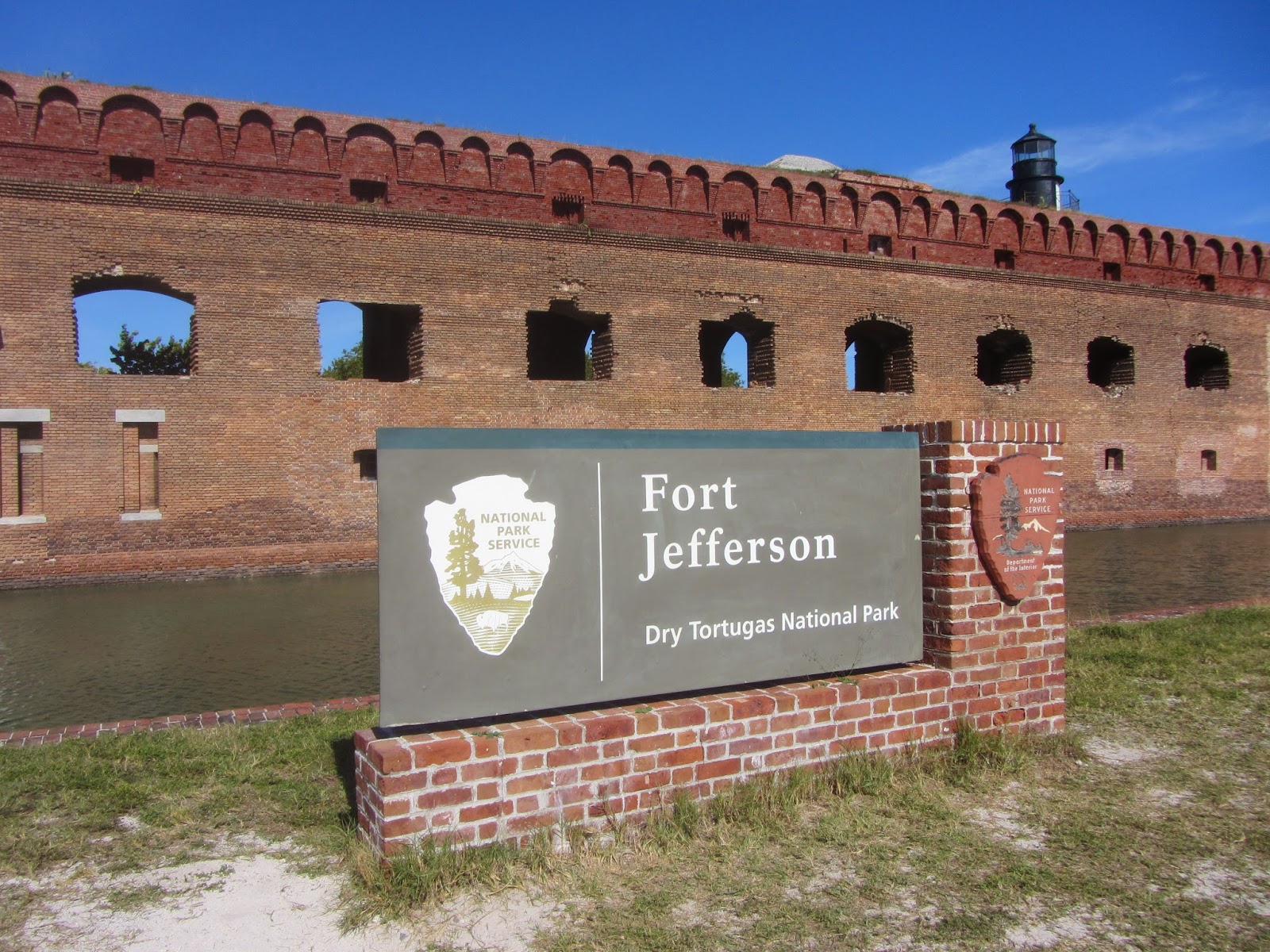
PS - I was inspired to watch The Prisoner of Shark Island by my own trip to Dry Tortugas National Park. Here are some photos of the real site that you can compare with the film's recreation of it. No, there were no sharks in the moat!


Monday, August 18, 2014

Classic Films in Focus: THE THREE MUSKETEERS (1939)

Among adaptations of Alexandre Dumas' classic novel, this 1939 version is certainly a lightweight, and not nearly as elaborate an affair as the 1948 MGM production starring Gene Kelly. The Fox incarnation, directed by Allan Dwan, revises the original tale as a musical comedy vehicle for The Ritz Brothers, who had a brief film career in the late 1930s and early 40s. They never really took off, and here they prove more of a distraction than a feature. If you like Don Ameche, however, The Three Musketeers has its charms, since the movie provides the amiable star with the kind of swashbuckling role usually reserved for his Fox peer Tyrone Power. It also features worthwhile performances from Gloria Stuart, Binnie Barnes, and Lionel Atwill, as well as brief appearances by John Carradine and Douglass Dumbrille.

Ameche plays D'Artagnan, who arrives in Paris to become a Musketeer, only to pick quarrels with Athos, Aramis, and Porthos on his very first day. The heroic trio, however, succumb to a drinking contest with The Ritz Brothers, who assume their outfits and identities before D'Artagnan arrives to fight his duels with them. Along with D'Artagnan, the fake Musketeers are then swept along into a dangerous political plot involving Queen Anne (Gloria Stuart) and her lady-in-waiting, Constance (Pauline Moore). Their adventures bring them into direct conflict with the devious Milady De Winter (Binnie Barnes) and the scheming Cardinal Richelieu (Miles Mander) as they try to retrieve the queen's brooch before its absence sparks an international scandal and war.

The Ritz Brothers get some modest laughs, but the movie shows why they never really took off as screen stars. They are neither as violent as the Stooges nor as cerebral as The Marx Brothers. The "Chicken Soup" song that introduces them sums up their comedy style; there's a lot of winking and silliness but not much thought to the act. Kids might find them sufficiently entertaining, but most adults will wonder how they manage to merit top billing with Ameche. The movie also falters by wasting Douglass Dumbrille and John Carradine, both terrific character actors, in very small roles; Dumbrille barely has a single scene, and Carradine disappears after just a few minutes. Instead we get lots of shenanigans with The Ritz Brothers as they stumble through one mishap after another, never really varying their gags or developing their characters as anything more than props.

Ameche is the real attraction; he looks quite dashing in his period hair and costumes, and his infectious charm goes a long way to make up for the movie's failings. His D'Artagnan is a gleeful combatant and an energetic romancer, and he really seems to be having a good time waving his sword and playing the swashbuckling hero. Even if the songs are not that memorable, Ameche sings them with zest, especially the "Voila" number. His leading ladies also help to move the picture along. Pauline Moore makes a lovely Constance, and Gloria Stuart is beautifully regal as the imperiled Anne. Binnie Barnes doesn't vamp as much as some Milady actresses, and she has to endure a really awful search scene with the Ritz Brothers, but she sells the character's smiling menace to great effect. Sadly, Milady's worst crimes - and best scenes - are cut to keep the picture firmly in comedy territory. Lionel Atwill, another great character actor and a reliable heavy, gets a heftier part than Carradine and Dumbrille as De Rochefort, one of the schemers working against the queen.

The 1939 adaptation is by no means the place to start with Musketeer films, but it's worth visiting for fans of Ameche's charismatic persona. Try the 1948 version for a more developed, but still imperfect, classic adaptation. Allan Dwan, a prolific director and silent film veteran, also made The Iron Mask (1929) and Heidi (1937). See more of Don Ameche in Midnight (1939), That Night in Rio (1941), and Heaven Can Wait (1943). Gloria Stuart is probably best remembered today as old Rose in Titanic (1997), but her early career included The Old Dark House (1932), The Invisible Man (1933), and Rebecca of Sunnybrook Farm (1938). If you really get into The Ritz Brothers, you'll find them in One in a Million (1936), The Gorilla (1939), and Argentine Nights (1940).

Friday, May 3, 2013

Classic Films in Focus: REBECCA OF SUNNYBROOK FARM (1938)

For family friendly classic movies, it's hard to beat Shirley Temple's pictures. Admittedly, they follow a certain formula, but they're short, sweet, and often spiced with interesting supporting players. Directed by Allan Dwan, Rebecca of Sunnybrook Farm is an excellent example of the usual Temple set-up, although fans of the 1903 novel by Kate Douglas Wiggin will be disappointed by the movie's mere lip service to the original text. Even classic movie buffs who aren't particularly wild about Shirley Temple can enjoy Rebecca of Sunnybrook Farm for its star-studded cast, which includes not only Randolph Scott and Gloria Stuart but also Jack Haley, Bill Robinson, and William Demarest.

Temple, of course, plays a sweet little girl in need of a home. This time she's Rebecca Winstead, initially under the suspect care of her stepfather, Uncle Harry (William Demarest), who tries to sell the kid into a show business contract during a radio contest. Harry pawns Rebecca off onto her aunt Miranda (Helen Westley) when he thinks his plans have failed, although radio executive Tony Kent (Randolph Scott) is really interested in having Rebecca on the air. Luckily, Tony's country retreat happens to be next door to Aunt Miranda's farm, which allows Rebecca to pursue her chance at stardom and promote a romance between Tony and her cousin, Gwen (Gloria Stuart).

Temple gives a reliably spunky, cute performance, with several song numbers and a nice dance routine with Bill "Bojangles" Robinson, who appeared with her in several films. Jack Haley, best remembered today for his role as the Tin Man in The Wizard of Oz (1939), doesn't dance this time but makes great use of his comic talent as Kent's bumbling assistant, and he does get to sing a bit. Gloria Stuart and Randolph Scott make fine romantic leads and prospective parents for the pint-sized heroine, and Scott has an especially affable charm once we move to the country scenes. Some romantic squabbling between Temple regular Helen Westley and lanky character actor Slim Summerville provides additional comic relief. The most surprising member of the cast might be William Demarest as Rebecca's oily, shiftless stepfather; he's not a very terrible villain, just a cupcake compared to some of Temple's female adversaries in other pictures, but his skill at the pratfall comes in handy, and he's certainly believable as a two-bit grifter.

For more films from Temple's heyday, try Stowaway (1936), Heidi (1937), and The Little Princess (1939). Cowboy star Randolph Scott played mostly in Westerns, including Jesse James (1939), The Tall T (1957) and Ride the High Country (1962), but he also appears with Temple in Susannah of the Mounties (1939). Gloria Stuart gained early fame for roles in films like The Invisible Man (1933) and then earned an Oscar nomination near the very end of her life for Titanic (1997). Look for William Demarest in celebrated classics like Mr. Smith Goes to Washington (1939), Sullivan's Travels (1941), and The Lady Eve (1941). He earned an Oscar nomination for Best Supporting Actor for The Jolson Story (1946) but gained more lasting fame for his role on the television series, My Three Sons. Director Allan Dwan, who had started out back in the silent era, also directed Heidi and the John Wayne war picture, Sands of Iwo Jima (1949).

An earlier version of this review originally appeared on Examiner.com. The author retains all rights to this content.