Showing posts with label Walt Disney. Show all posts

Thursday, April 28, 2022

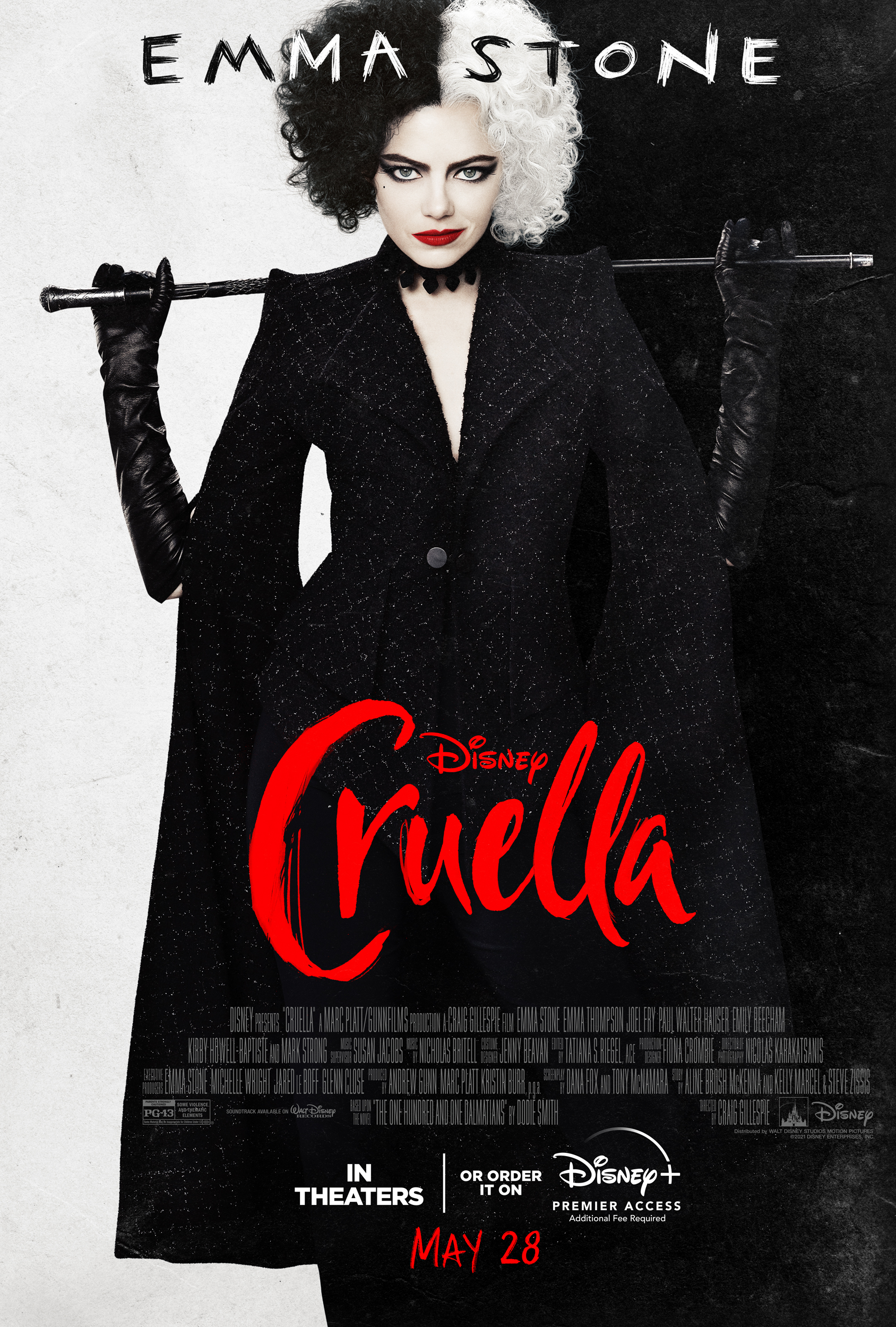
The What-If Alternate Timeline of CRUELLA (2021)

When it first arrived, Disney's 2021 reboot of the various films based on 101 Dalmatians was widely discussed as yet another "prequel" to a well-known Disney property, but in order to appreciate Cruella fully you have to stop thinking about it as a prequel and instead consider it as an alternate timeline narrative similar to the multiverse arcs now at work in the Marvel franchise. This is NOT the story of how the villain of the 1961 animated movie became that character, and it's not the story of the villain from the 1996 live action movie, either. Instead, Emma Stone's version of Cruella is a character with a narrative arc all her own, distinct from those of the other Cruellas but still affected by many of the same elements with alternate versions of the same characters. She's much like the central Loki character played by Tom Hiddleston in the Disney Plus series; she is one of many possible Cruella variants, some of whom are truly villainous and some of whom are dynamic enough to become protagonists in their own right rather than merely antagonists to more conventionally heroic characters. When read this way, Cruella becomes a much more interesting and engaging movie, one that rewrites the iconic villain, sure, but also one that reaches deep into the sources of inspiration that formed the original Disney character.


Fidelity to the 1961 animated classic is already an odd demand, not only because live action versions of that story were already made in the late 90s but because the original Disney movie is itself unfaithful to its source material in several significant ways. Dodie Smith's beloved 1956 children's novel features many characters and scenes that aren't in the Disney film. A third adult Dalmatian (the one actually named Perdita) is removed completely, with a dog originally named Missus assuming her name and erasing her from the story. The novel's Roger is wealthy because he is a "financial wizard" and not a struggling musician, so the family can afford all of their Dalmatians even when they end up with 101 of them (note that the 101st Dalmatian of the novel also isn't in the movie because he's the liver spotted love interest of the original Perdita). The Cruella of the book is more explicitly demonic and even more vicious than the movie version; she is also married to a submissive furrier who enables her obsession with fur coats. The changes don't make the Disney adaptation a bad movie, but they do make it a significantly different story from the novel. The live action versions get farther afield still, making Roger an American video game creator, Anita a fashion designer, and Cruella a fashion house owner and Anita's employer. In fact, the versions are so different (and set in different eras to boot) that the 2021 movie cannot possibly function as a true prequel to any of them.

Tallulah!

Instead, Cruella is its own story, a reinvention of the character that combines her most iconic traits with bits and pieces of the previous versions in order to make her a dynamic protagonist rather than a static villain. The movie does not attempt to make us like or forgive the other Cruellas; we like this new Cruella partly because she isn't them. Our glimpse of her childhood recalls the schoolgirl connection with Anita from the novel, her mannerisms are taken from the 1961 Disney film, and her fashion career is borrowed from the 1996 movie, but she is not simply a younger version of any of these characters. Disney opts to do something different by mining the tradition of the anti-heroine as filtered through one of the most important inspirations for the 1961 Cruella, the legendary actress and all around hellraiser Tallulah Bankhead. The film even signals the affiliation with a clip of Tallulah demonstrating her distinctive, throaty laugh in Alfred Hitchcock's 1944 thriller, Lifeboat. We see it play on a television set in a room with Estella/Cruella early in the story. Bankhead, known for her genius, self-destructive behavior, terrible driving, and theatrical personality, was definitely no saint, but this new version of Cruella has her charisma and charm as well as her less likeable qualities. It's refreshing to see a complicated, difficult, too-much female character be the heroine of her own life without having to be either a traditionally good person or a completely amoral anti-heroine of the Becky Sharp variety.

Because this Cruella is not the same as the previous versions, she can make different choices and develop different values. She loves fashion but isn't specifically obsessed with fur. She has a found family that she mistreats at times but ultimately loves, which includes several dogs. She is even the person who gives Pongo and Perdita to Roger and Anita, which she certainly wouldn't do if she wanted to make Dalmatian fur coats. Near the end of the movie, Cruella says about the Baroness: "The good thing about evil people is that you can always trust them to do something, well, evil." Cruella, despite her name, is not that kind of person, because her Estella side makes her capable of doing good. Currently, a sequel to the movie is in the works, and most fans and critics seem to expect it to launch us into the more familiar dog-napping, coat-making territory of the original story, but I really hope it doesn't go in that direction, because this Cruella deserves better. It's certainly possible that she might become a newer version of the Baroness, the murderous mother whom she deposes in the film, and therefore ruthless enough to become a full-blown villain, but it would be much more satisfying to see her continue to make bold new choices for herself, to continue to be the future she embodies in Cruella and not the past that she sees as the Baroness. To rope this Cruella back into the framework of the original story would be a grave disservice to her and to viewers who fell for her eccentric, outlandish personality.

I've watched Cruella a couple of times now, and while I have concerns about Disney's persistent efforts to strip mine its own properties, I think this movie is one of the best live action treatments of a classic Disney story and far more interesting and fun than the previous attempts to cash in on the Dalmatians' popularity, largely because it isn't about the dogs. It's fun, it's visually engaging, it features terrific performances from Stone and Emma Thompson, and it offers us a Disney "heroine" who is very different from the usual crowd of princesses and whose transgressive modernity is part of her appeal. I don't care that it isn't actually a prequel to 101 Dalmatians; that's why it works. This Cruella might well be brilliant and bad and a little bit mad, but she's more 70s counterculture rock goddess than maniacal puppy murderer, and I'd like to see any additional films about her continue to give her the freedom to be her own version of herself.


Tuesday, September 7, 2021

A Tallulah Tribute in CRUELLA (2021)

We finally got to watch Disney's latest entry in the live action treatments of 101 Dalmatians characters, which this time moves the focus off the dogs entirely and charts the early misadventures of its title anti-heroine, Cruella de Vil. Early reviews of Cruella (2021) were mixed enough that we chose not to pay for Premiere Access and instead waited for the movie to drop to regular subscriber streaming, but I thought it was a fun romp with a lot going for it in spite of some flaws. For fashion nerds and Emma Stone/Emma Thompson fans there's a lot to love, although it's certainly far afield from the original 1961 Disney movie, which was itself notably different from the 1956 novel by Dodie Smith. 

One small detail that endeared the movie's creators to me is the inclusion of a quick but much appreciated tribute to Huntsville native and stage legend Tallulah Bankhead, whose throaty laugh, mannerisms, and infamous London driving inspired the Disney animators who first brought Cruella to life on screen. In an early scene in Cruella, the young Estella is in a room where Tallulah appears on a small television screen, her head thrown back as she delivers her deliciously raucous laugh. The scene on the television comes from Tallulah's most memorable film, Alfred Hitchcock's Lifeboat (1944), in which Tallulah stars as a reporter trapped on a small vessel with other survivors of a German U-boat attack. It's the best place for modern viewers to see the legendary star in action, although she also made memorable appearances in Stage Door Canteen (1943), A Royal Scandal (1945), and the 1960s Batman TV series.


The Cruella of the 1961 Disney film is an absolute villain who schemes to make fur coats out of puppies, but the Cruella embodied by Emma Stone is perhaps more like Tallulah herself, a complicated, flawed, sometimes bad and sometimes mad woman riding a tidal wave of misadventures through an unconventional but always interesting life. In fact, a biopic about Tallulah Bankhead would make an amazing movie and probably present an Oscar opportunity for the actress able to play her. Until some studio decides to make that movie, or adapt one of several stage plays about her life, Cruella is as close as we're going to get. 

For more about Tallulah Bankhead:

"Tallulah Bankhead's Huntsville Roots: Maple Hill Cemetery"

"Southern Voices on the Silver Screen"

Tuesday, May 19, 2020

CMBA Spring Blogathon: Classics for Comfort

The Classic Movie Blog Association is holding its Spring Blogathon this week, and the theme is Classics for Comfort, which we could all use right now! CMBA members are posting their "Top 5" comforting classics, which means we'll probably be picking a lot of comedies and musicals, but I'm excited to see what everyone else picks. As for me, I have definitely been going back to my comfort zone for movies since the pandemic sent us all into crisis mode back in March. I don't want to watch anything that makes me more anxious than I already feel, but my comfort zone encompasses both classic musicals and comedies, classic Disney films, and fair bit of science fiction (especially Star Trek - I have watched SO MUCH Star Trek lately because it always gives me hope for humanity's future). In keeping with the CMBA theme, here are my top five go-to classic movies for trying times, presented in chronological order because I really don't want to try to rank these favorites!

#1 BRINGING UP BABY (1938)

I absolutely adore everything about this wacky screwball comedy starring Katharine Hepburn and Cary Grant. I've seen it many, many times, and it still makes me laugh, even though I can recite almost all of the dialogue from memory. I love life-affirming, joyful comedy, which means the screwball genre is far and away my favorite, but this one holds a special place in my heart for being my childhood introduction to Katharine Hepburn. Hilarious physical comedy and outstanding supporting players keep the laughs coming from beginning to end. I especially love to show this one to kids because the leopards and the dog are chaos agents that really young viewers can appreciate, even if they don't grasp the romantic themes.


#2 THE ADVENTURES OF ROBIN HOOD (1938)

Errol Flynn's swashbuckling classic is another great choice for kids, but it holds plenty of charm for adults, too. The gorgeous Technicolor cinematography carries me away to Sherwood Forest, and Erich Wolfgang Korngold's score is absolutely perfect. I love its stars and its supporting cast, especially the delightful chemistry between Flynn and Alan Hale and the hilarious character comedy of Una O'Connor and Eugene Pallette, but Claude Rains and Basil Rathbone are also brilliant as the bad guys. Although many other Robin Hood films have been made, this one is the cornucopia of delights that I love best, and if you haven't shown it to your kids you should put that one your to-do list right now.


#3 SINGIN' IN THE RAIN (1952)

I'm sure this iconic musical will turn up on a lot of the CMBA bloggers' lists, but I have to include it here for the sheer joy it always fills me with when I watch it. My kid was a huge Gene Kelly fan when she was little, and this was her favorite movie, so much so that she sometimes ran around the house impersonating Lina Lamont. Debbie Reynolds' energy and pep are irresistible, and you just have to grin watching Kelly and Donald O'Connor dance. I'm a big fan of the colorful, upbeat musicals of the 40s and 50s in general, but this one brings the perfect cast together in such a blitz of wonderful numbers and hilarious comedy that it definitely deserves its place in movie fans' hearts. Once again, this is a great classic movie to show kids; just be prepared for the Lina Lamont impressions and tap dancing likely to ensue!

#4 LADY AND THE TRAMP (1955)

I'm not much of a Disney princess fan, although I love the gorgeous animation of Snow White (1937) and Sleeping Beauty (1959). I'm much more enamored of Disney's classic animal tales, and Lady and the Tramp is the one I especially love to go back to for its sweet, soulful depiction of a dog's life. The charming setting, the lovely animation, and the wonderful voice performances all delight me with each new viewing. I find most of Disney's classic animal movies comforting because I loved them as a kid and then loved watching them with my kid, but this one remains a favorite with both of us, and we almost always watch it when one of us is sick and needs something familiar and cheerful to watch while convalescing on the couch.


#5 STAR WARS: A NEW HOPE (1977)

I realize I'm skirting the definition of "classic" for some people, but the original Star Wars trilogy holds a deep and special place in my heart, and I will almost always go back and watch A New Hope again when I need a serious morale boost. Just a few bars of John Williams' powerful score can send me into a reverie of memories and feelings about a galaxy far, far away. The movie itself is full of hope and courage and self-sacrifice, but it also connects me with my younger self, the lonely, hopeful farm kid I used to be, who also dreamed of escape and a different life. I return to Luke Skywalker, Princess Leia, and Han Solo as old friends, familiar if frozen in time on the screen, and the sorrows of the time that has passed (how we miss you, Carrie Fisher) make the experience sweeter still.


 I guess from this list you could probably deduce that I take a lot of comfort in music, color, adventure, and happy endings if not outright comedy. For comfort I gravitate toward movies that are gentle enough to watch with the family but exciting enough to keep the plot rolling, and romance is a welcome part of the equation as long as the heroines are plucky. These are all movies that make me feel happy when I watch them; they remind me that joy, friendship, laughter, and courage all exist in the world even when things look bleak. I'm sure my fellow CMBA bloggers will have lots of interesting choices on their lists if my five picks aren't your cup of tea, so make certain you check out the rest of the blogathon posts!

Saturday, March 21, 2020

Classics for Coronavirus: Robinson Crusoe

The world is staying home this spring as a pandemic spreads through our countries, leaving many people to cope with the unfamiliar experience of social isolation. Literature and film are suddenly lifelines to adventure, community, and knowledge, and some of them can really teach us a few things about how to live while cut off from the rest of the world. As I keep up with the news this month I find myself thinking especially about Robinson Crusoe, Daniel Defoe's iconic castaway and master of social distancing. Defoe's original novel, published in 1719, has inspired many subsequent books, films, and television series, and there's never been a better excuse or time to explore them. Here are some of my favorite Robinson Crusoe revisions and adaptations.

1) Robinson Crusoe on Mars (1964) - This is probably my favorite of the films inspired by the novel because it takes Defoe's story and mixes it into 60s sci-fi, Paul Mantee stars as the castaway astronaut on the red planet, but you'll also find Adam West in a supporting role early in the film. Try this one if you're already a fan of classic sci-fi or you really loved The Martian (2015)!

2) The Martian (2015) - Matt Damon's turn as a castaway astronaut on Mars isn't a direct adaptation of Robinson Crusoe, but it certainly owes a lot to Defoe, and it makes a perfect double feature with Robinson Crusoe on Mars. When he gets left behind on Mars, Mark Watney uses science and creativity to survive. You'll really learn to appreciate potatoes!

3) Cast Away (2000) - If you want to come back to earth for your isolation, try the Tom Hanks hit in which a FedEx employee survives a plane crash and is stranded on a remote island. This is very much a modern Crusoe tale, although Crusoe's eventual companion, Friday, is a lot more useful than the soccer ball that Hanks' character names Wilson. Hanks, of course, has been in the news recently after being diagnosed with COVID-19 while filming in Australia, but I hope his time in medical isolation was a lot less traumatic than being marooned on an uninhabited island!

4) Swiss Family Robinson (1960) - Defoe's original story inspired the 1812 family classic, which is also worth handing to your kids while they're at home, but the 1960 Disney film adaptation is probably the best known of the numerous film treatments. John Mills and Dorothy McGuire star as the parents of a shipwrecked family with several sons, and this one makes a good family pick for kids who are too young for the films I've already listed. Best of all, you can stream it on Disney Plus if you're already sick of the two Frozen movies!

5) Lost in Space (1965-1968) - The Crusoe family tree adds another branch with this 60s TV revision of Swiss Family Robinson, which gave the world the iconic line, "Danger, Will Robinson!" Make your kids watch the 1960 Disney film first and then introduce the 60s TV series, the 1998 feature film version, or the newest 2018 TV series version (although the 1998 film is not particularly good, the new series is getting high marks).

Whether you're an adult looking for interesting ways to spend your time at home or a parent trying to craft educational but fun activities for kids, an exploration of Robinson Crusoe's literary and cinematic legacy is a timely choice. The original story is a good place to start if you have the patience for 18th century literature - it's a good read and a true classic with enormous influence. Otherwise try jumping in with any of the films and TV series listed here.


Sunday, July 16, 2017

Making a Hollywood House in Alabama: Movie Posters and Art

Errol Flynn is in the bedroom, of course.
As part of an ongoing effort to make our house a more interesting and personally relevant space (as opposed to a collection of things other people chose for us or handed down), I finally got frames for the posters I bought at Larry Edmunds Bookshop in Los Angeles. If you haven't been, Larry Edmunds is a true Hollywood treasure, a place were cinephiles can revel in film posters, books, lobby cards, and other items related to cinema. If I lived in driving distance of the store I'd be in there all the time, but, sadly, it's a long haul from Alabama. Any movie buff planning a visit to L.A. should definitely put Larry Edmunds on the must-see list.

Unfortunately, the Jezebel and Adventures of Robin Hood posters I picked up are an odd size, so I never did find frames that were a perfect fit. I finally gave up and matted them, but I'll be giving that more thought if and when I manage another trip to L.A. I'm probably a little too old to just tape posters up like I did as a college student (back then my prize possession was a British quad poster for The Lost Boys). Besides, I don't want to damage them!

Wonderground Gallery postcard prints
I'm also working to frame and hang a number of pieces from the fabulous Wonderground Gallery stores at Walt Disney World and Disneyland. Everyone at my house is a serious Disney fan, and the kitchen has slowly been transforming into a Wonderground Gallery tribute space over the last few years. You can find the most unusual and interesting art at the two galleries, with prints featuring classic Disney characters, attractions, and Star Wars (a LOT of Star Wars). The smallest prints - 5x7 postcards - are only $5 each, and I come home from each Disney trip with another 4 or 5 cards. I only wish I had bought some bigger pieces on my last trip! They offer a few items from the collection at the Disney Store website, but it's a pale substitute for visiting the actual stores.

For those who can't travel, there's always AllPosters.com, where I found some good deals on a couple of classic movie posters on my most recent visit. I'm not rich enough to shop at FilmPosters.com, but if anyone wants to buy me an original Curse of the Cat People poster for $2,750.00 I'll be glad to take it!

Jezebel guards the jewelry box.
I've got a number of stills, promotional photos, and other postcard sized movie items, so I'll be working over the next few weeks and months to figure out how to get them onto the walls and out of the drawers around the house. I realize I need to stop being so cheap and go in for some larger art that will really make an impact in a room. I'm curious about how other film fans display their favorite movie posters and art, so I'd love to hear about it! Where do you buy your movie memorabilia, and what do you do with it?


Saturday, May 16, 2015

Great Movie Ride Still Awaits TCM Updates

The Great Movie Ride at Disney's Hollywood Studios is due for a makeover as part of a new partnership with Turner Classic Movies, but it appears that classic film fans will have to wait longer than the original target date of Spring 2015 to see the updated look of the attraction. As of May 2015, there is still no sign of the upgrades or TCM's sponsorship of the ride, which takes guests on a whirlwind tour of classic favorites like Singin' in the Rain, Mary Poppins, and The Wizard of Oz.

For those (like myself) who enjoy the nostalgic attraction, the announcement of the TCM partnership was good news all around. The Great Movie Ride has been a staple at the park since 1989, but its focus is decidedly old school compared to more popular rides like Star Tours and The Tower of Terror. Many guests certainly don't get the enthusiasm for old movies, and some treat it like the Studios' version of The Hall of Presidents, i.e. a really good place to take a nap. The TCM partnership signals the park's determination to keep The Great Movie Ride around even though massive renovations are on the horizon at Studios over the next few years.

According to the TCM announcement from November 2014, the refurbishment of The Great Movie Ride will include a new pre-ride video featuring Robert Osborne, a new montage at the end of the ride, and a photo opportunity for guests with a classic movie theme. The queue area will also get TCM branding and new digital movie posters to entertain guests while they wait. While it would be great to have a gift shop offering classic movie themed souvenirs, it's unclear right now whether the photo op area will include anything else that guests can take home from their adventure through film history. (Dear Disney, I do believe in fairies, I'm wishing upon a star, and I want a proper classic movie gift shop!)

While there's a lot of construction and renovation going on all around Walt Disney World right now, it seems that the updates to The Great Movie Ride are somewhat lower on the priority list. At least with the Sorcerer Mickey hat no longer obscuring the view, the ride has better visibility at the center of the park. Let's hope that Robert Osborne and the new TCM trappings will make their appearances soon.

Wednesday, April 15, 2015

Classic Films in Focus: TREASURE ISLAND (1950)

Long before Pirates of the Caribbean, Disney set sail for Treasure Island (1950), a production that charted new territory for the studio as its first live action feature. Adapted from Robert Louis Stevenson's influential tale of buccaneers and  buried gold, the Disney version edits its source material to focus primarily on the relationship between Jim Hawkins and Long John Silver, a standard approach for film treatments before and since. What it loses in fidelity to the original, the Disney Treasure Island makes up for with Robert Newton's iconic turn as the infamous one-legged pirate, at once comical and menacing, and easily the most memorable aspect of the film, although Byron Haskin provides brisk direction of the action through a colorful backdrop of coastal towns and exotic island settings.

Bobby Driscoll stars as Jim Hawkins, a young boy thrust into adventure when a dying pirate named Billy Bones (Finlay Currie) hands him a map to buried treasure. Soon, Jim embarks as cabin boy on a voyage to discover the loot, with Squire Trelawney (Walter Fitzgerald) and Dr. Livesey (Denis O'Dea) as his companions and protectors. Jim also develops a friendship with the ship's cook, Long John Silver (Robert Newton), not suspecting that Silver is really a ruthless pirate who has his own plans for taking over the ship and claiming the buried treasure for himself.

The adaptation is not without its problems. Bobby Driscoll, best remembered as the voice of Peter Pan, is an obvious choice for Jim from the studio's perspective, since the child star had already appeared in numerous Disney pictures, but he is much too flatly American for the role, and he has an unfortunate habit of squinting, open-mouthed, at adult characters when they speak. Ben Gunn, played by Geoffrey Wilkinson, is also a weak point with his shrill, over-the-top wild man act, but his part is so truncated that he has few opportunities to offend. The other supporting players generally fare better, especially Denis O'Dea and Walter Fitzgerald, but they also get little screen time to develop their characters, and Finlay Currie is sadly underused as Billy Bones. Not a single female character appears in the picture at all, making this movie quite the boys only affair, although Stevenson's novel provides a good supporting part in Jim's hard-working, determined mother.

On the plus side, the scenery is exciting and authentic looking, even though the movie was shot in England rather than the West Indies, and the action rolls along without any slow spots. Moreover, Robert Newton takes control of every scene in which he appears, making the most of the picture's best role. In film adaptations of Treasure Island, Jim Hawkins is only the nominal protagonist, and Long John Silver is always the star. Newton effectively conveys Silver's mix of geniality and calculation; we never can tell which side he really wants to be on, and when we think we know him he surprises us again. Newton's delivery of his lines informs our idea of what a pirate is supposed to sound like, while his appearance, with his one leg, his talking parrot, and his swarthy, dark looks, has become the model of the stereotypical buccaneer. Newton became so identified with the role that he reprised it for Long John Silver (1954) and the television series, The Adventures of Long John Silver (1956-1957), but neither proved as successful as the original outing, and Newton died in 1956.

For more film adaptations of Treasure Island, try the 1934 version with Wallace Beery and Jackie Cooper or Muppet Treasure Island (1996), with Tim Curry as Long John. See Robert Newton in The Beachcomber (1938), This Happy Breed (1944), and Oliver Twist (1948). Bobby Driscoll also stars in Song of the South (1946), So Dear to My Heart (1948), and The Window (1949). Get a better appreciation for Finlay Currie in Great Expectations (1946) and People Will Talk (1951). For something really different from director Byron Haskin, try Robinson Crusoe on Mars (1964).

Monday, September 29, 2014

History, Hollywood, and a Famous Train: THE GENERAL and THE GREAT LOCOMOTIVE CHASE

In The General (1926), Buster Keaton plays a Confederate train engineer who doggedly pursues his beloved locomotive when Yankees make off with it. Thirty years later, The Great Locomotive Chase (1956) tells basically the same story, this time with Jeffrey Hunter as the Southern engineer and Fess Parker as the Yankee spy who steals the train. Both the silent comedy and the Disney live action picture take their inspiration from a real event during the Civil War, when a group of Union spies stole a locomotive named The General in Kennesaw, Georgia, and drove it north, sabotaging rail lines and telegraph wires behind them. While both of the movies naturally take liberties with the historical record, classic movie fans can get the true story that inspired the films by visiting The Southern Museum of Civil War and Locomotive History in Kennesaw, where the famous train from the 1862 incident is the star attraction.


The museum, which is an affiliate of the Smithsonian, sits just off the railroad tracks in a quiet section of Kennesaw, not far from Interstate 75 but seemingly worlds away from the bustle of the metro Atlanta area. Trains roaring down the line are the most exciting spectacle outside the museum, where the enticing aroma of freshly cooked burgers wafts across the tracks from the nearby Burgerfi location. Around the grounds, visitors will find a handful of historical markers noting the starting point of The Great Locomotive Chase and Kennesaw's former identity as the town of Big Shanty. The General has its own marker, but inside the museum guests can see the real deal, a huge and meticulously restored locomotive that toured the country under its own power during Civil War anniversary years until it came to stay in Kennesaw.


While the engine is undoubtedly the crown jewel of the museum, other exhibits give visitors an in-depth look at the role played by railroads during the Civil War and the aftermath of Reconstruction. The Glover Machine Works section shows how industrial locomotives were assembled, while other displays reveal the Union's strategy for crippling the South by destroying the critical rail infrastructure. It's a must-see facility for train nuts of any age, but for cinephiles the engine itself and the display cases around it are the big draw.

The museum is well aware of the movie history associated with The General. Near the locomotive, cases hold posters and other items from the 1926 and 1956 movies, including the coat worn by Fess Parker in The Great Locomotive Chase. Segments of the Disney film dominate the museum's movie about the events, with local footage spliced in to tell a shorter and more historically accurate version of the adventure. Both classic movies are for sale on DVD in the small gift shop, where a television runs one or the other throughout the day. Sadly, you won't find much other merchandise related to the films, but you will find generic train items and Civil War themed gifts of all sorts.


Getting a sense of the real story gives film fans a chance to assess the two movies and their different takes on the events. Keaton's picture makes the Confederate character a true hero, battling some rather shady Yankee saboteurs who not only steal his train but also kidnap his girl. The Disney production casts the Union in a more positive light, with Fess Parker as a doomed war hero (the real James J. Andrews was captured and ultimately hanged by the South). Jeffrey Hunter, best remembered today for his role in The Searchers (1956), plays William A. Fuller, the Southern engineer determined to recover his stolen train. It's interesting to note that Hunter appeared in both the Western and the Civil War adventure in the same year. Other actors of note in the Disney film include Harry Carey, Jr., Slim Pickens, and Kenneth Tobey. As entertaining as both movies are - The General in particular is a cinematic masterpiece of the first order - the truth turns out to be just as fascinating, with a story full of courage, action, and daring risks on both sides. Fuller and Andrews both strike us as heroic characters, despite the great divide between North and South, and it's easy to see why Hollywood would find their stories so compelling.


If you happen to be traveling along I-75 at some point in the future, stop in at The Southern Museum in Kennesaw and see The General for yourself. It is definitely worth a visit for history buffs, train lovers, and classic movie fans.

Wednesday, September 10, 2014

Classic Films in Focus: 20,000 LEAGUES UNDER THE SEA (1954)

Adapted from the novel by Jules Verne, Disney’s large scale Technicolor adventure provides plenty of eye-popping aquatic scenery, which helped it win a pair of Oscars for Special Effects and Best Art Direction. 20,000 Leagues Under the Sea (1954) also offers classic film fans a unique combination of iconic stars, including James Mason as the enigmatic Captain Nemo, Kirk Douglas as a feisty sailor, and Peter Lorre as a scientist’s nervous assistant. While its pace might seem a bit slow by modern standards, especially for younger children, the effects and actors make the picture well worth the two hours it takes to watch, and 20,000 Leagues Under the Sea remains one of the best and most influential of Disney’s live action features.

Paul Lukas plays Professor Pierre Aronnax, who embarks on a ship with his assistant, Conseil (Peter Lorre), to investigate rumors of an enormous sea monster that is destroying vessels at sea. When the supposed monster attacks their ship, Aronnax, Conseil, and sailor Ned Land (Kirk Douglas) are thrown overboard, where they discover that the creature is, in fact, a technologically advanced submarine controlled by the misanthropic Captain Nemo (James Mason). Nemo reveals to the men a world of oceanic wonders, but his destructive methods cause them to question his sanity and look for opportunities to escape.

Lukas and Mason are the intellectual, dramatic leads as the idealistic scientist and his grimly jaded host. They represent different perspectives on science and the nature of man, and their debates hinge on philosophical, scientific, and academic principles. While Mason in particular gives a memorably brooding performance, the film does tend to slow down when Nemo and Aronnax hold the screen. Livelier scenes focus on Ned Land and the perpetually woeful Conseil, both of whom have far more pragmatic attitudes about their situation. Lorre plays comic relief with the same deadpan genius that characterizes many of his late career performances. Kirk Douglas’ Ned might be a greedy, impulsive fool, but he’s still the most energetic and charismatic character in the movie, especially when he’s singing “A Whale of a Tale” or goofing around with Nemo’s pet sea lion.

The submarine takes both the characters and the audience on an amazing adventure, with elaborate underwater scenes of divers mourning a fallen comrade and harvesting the bounty of the sea. Peril abounds, as Nemo first attempts to drown his three visitors and then involves them in dangerous expeditions, including an obligatory island encounter with cannibals. The giant squid fight sequence holds up well, even after sixty years, and the Nautilus is a fantastic early example of steampunk design, simultaneously elegant and menacing. These elements would have a lasting effect on the American cultural consciousness, especially with the ride at Walt Disney World recreating the experience for generations of fans from 1971 until 1994. Luckily, the film has outlasted the attraction it inspired.

Richard Fleischer, who directed 20,000 Leagues Under the Sea, also made The Narrow Margin (1952), Fantastic Voyage (1966), and Soylent Green (1973). See more of James Mason in A Star is Born (1954), North by Northwest (1959), and Journey to the Center of the Earth (1959). Paul Lukas won the Oscar for Best Actor for Watch on the Rhine (1943), but you’ll also find him in Dodsworth (1936) and The Lady Vanishes (1938). Other Kirk Douglas films from the 1950s include Ace in the Hole (1951), Lust for Life (1956), and Paths of Glory (1957). Be sure to catch more funny performances by Peter Lorre in Arsenic and Old Lace (1944), The Raven (1963), and The Comedy of Terrors (1963). For a family-friendly film festival of classic movie adaptations of Jules Verne, try Around the World in Eighty Days (1956), Mysterious Island (1961), and In Search of the Castaways (1962).

Tuesday, June 3, 2014

Classic Films in Focus: SNOW WHITE AND THE SEVEN DWARFS (1937)

Among Walt Disney’s greatest accomplishments, rivaling even the creation of Mickey Mouse himself, stands Snow White and the Seven Dwarfs (1937), which introduced Hollywood to the feature-length animated film. Disney wanted to create a visually stunning narrative that would appeal to both children and adults; he risked everything he had on the picture, and its success made possible all of the later Disney productions as well as animated movies made by other studios. Thus, the release of Snow White was truly a watershed moment in the history of film. Now, nearly 80 years after its debut, Snow White and the Seven Dwarfs does show its age in a few places, but it still shines brightly as an animated masterpiece, with gorgeous images, a gripping story, and a cast of unforgettable characters.

Disney’s version adapts the familiar fairy tale from the Brothers Grimm, in which a princess is abused by her jealous stepmother for being more beautiful than the older woman. The Queen sends Snow White into the forest with a huntsman who has been ordered to kill her, but instead he warns her to run away and never return. In the forest, she is assisted by kindly animals and the assorted dwarfs, who try to protect her but cannot keep the Queen’s magic mirror from revealing that she still lives. Bent on revenge, the Queen resorts to dark magic to eliminate her competition, but true love finally arrives to save the day.

Although much has been said in the decades since about the “Disneyfication” of fairy tales, Snow White actually hews pretty close to its source material. It doesn’t balk at being scary, especially during Snow White’s flight through the forest and the Queen’s transformation. It does eliminate the repetition of the Queen’s attempts to murder Snow White, but that both improves the pace of the story and downplays the heroine’s irritating gullibility. The princess herself, as lovely as she is, is the most dated character in the picture. Her childishness makes the prince’s romantic interest seem forced, and she also displays a bothersome talent for domestic despotism when she orders the dwarfs around in their own house. Later Disney princesses have more developed and mature personalities, but Snow White sets a pattern for domesticity, passivity, and starry-eyed romanticism that takes a very long time for Disney films to break. On the plus side, the movie nails the concept of the Disney villain and paves the way for a great tradition that will include such memorable menaces as Maleficent, Cruella De Vil, Ursula, and Scar.

Snow White won a special Oscar honoring its achievement as a pioneer effort in animation, and it still shows us what brilliant traditional animation can look like. The 1937 film did for hand-drawn animation what Pixar would later do for CGI with Toy Story (1995), but along with great films using the medium both movies also opened the door for a lot of mediocre imitations. Unlike so much of the bad animation that has flooded the market over the years, Snow White lavishes detail and attention on every character and scene, using live models to give the dwarfs in particular their distinctive heft and bounce. Snow White’s innocent beauty and the Queen’s violent pride come to life thanks to teams of artists who rendered their subjects with equal measures of devotion and skill. Every element of the picture, from its uncredited voice cast to its musical score, contributes to Disney’s ambitious vision, but the animation itself is the heart and soul of the production, a revelation about the art form’s potential to tell deeply compelling stories of adventure, love, and even death.

For more of Walt Disney’s classic animated films, see Pinocchio (1940), Dumbo (1941), and Sleeping Beauty (1959). Animation is not merely an American medium; for a global perspective on Disney’s legacy, try modern masterpieces like My Neighbor Totoro (1988), The Triplets of Belleville (2003), The Secret of Kells (2009), and The Illusionist (2010). You’ll find very different takes on the Snow White story in Ball of Fire (1941), Snow White and the Huntsman (2010), Mirror Mirror (2012), and Blancanieves (2012). The 2007 Disney feature, Enchanted, pokes loving fun at the studio’s past princess tales, especially Snow White and Cinderella (1950).


NB - Although it's gone from Orlando, you can still ride Snow White's Scary Adventures at Disneyland in California. I have vague memories of seeing the movie for the first time, but I'll never forget the sheer terror induced by this ride when the witch popped out at every turn. Scary adventures, indeed! In the Magic Kingdom at Walt Disney World, Snow White is attracting a whole new generation of fans with the opening of the Seven Dwarfs Mine Train.

Tuesday, December 17, 2013

Disney Report - December 2013

Depending on how you feel about Disney, Walt Disney World might be considered a gold mine for classic movie fans, since it contains rides, tributes, and swag devoted to films like Snow White and the Seven Dwarfs, Sleeping Beauty, and Cinderella. Disney films are probably the only classic movies some people ever see, and plenty of children get their first experience with  "old movies" in front of a TV where some grand old Disney classic is playing.

I'm a lifelong Disney fan, and this month we made another trek to the Land of the Magnificent Mouse to spend a week mugging with characters and flying around on Dumbo. We head to Orlando every two or three years, which is enough time for there to be something new every trip. Here's a rundown of the recent additions we encountered on our December 2013 trip.

New Fantasyland - Sure, Beauty and the Beast and The Little Mermaid are too recent to be classics in the strictest sense, but it has been 22 years since Belle fell for her hairy prince, and 24 years have passed since Ariel wished for those feet! The new section of Fantasyland celebrates the Disney renaissance of the 1990s with some gorgeous new attractions. Ariel has a high-tech ride with some very spiffy animatronics, and Belle has an elaborate meet-and-greet that features some eye-popping technology. Be Our Guest takes the Disney restaurant experience to a whole new level, and the food is pretty darn good, too. Overall, the new section is a great addition to Fantasyland and shows how much progress Disney has made in improving its experiences, even if the recently rolled out Magic Bands are creating some problems throughout the park (we didn't use them, so I can't really speak to that aspect of the park experience).

Sorcerers of the Magic Kingdom - Disney has introduced interactive games in several parks to keep folks busy while they wait for their Fastpass times on rides, and SotMK seems to be the big hit of the bunch. You can get free packs of starter cards and then use them to battle Disney villains throughout the Magic Kingdom; the technology and theming for these encounters are top-notch, with Disney using otherwise dead space in some very creative ways. If you get hooked, you can buy booster packs of cards in the park or online at the Disney Store. Judging from the huge binders of cards folks were toting around, this game really has a addictive appeal for card-collecting types. There's also a home game you can play with the cards when you aren't tooling around the Magic Kingdom.

Test Track - What happened? The corporate sponsor changed, and it feels like all the humor and charm in this already rather flat attraction has fizzled completely. We never loved the old Test Track, but the new version made us positively nostalgic for it. At least you still get the high speed experience at the end.


Mickey's Very Merry Christmas Party - This was our first time doing a special seasonal event, and we really enjoyed it. The park was not at all crowded, we snacked on "free" cocoa and cookies, and we got great character encounters with special characters who aren't usually out. If you want to meet the Disney princes or the Seven Dwarfs, then this is the party for you. (Note: These events also have special Sorcerers of the Magic Kingdom cards!)

As always, I had a ball on The Great Movie Ride at Hollywood Studios, although the Kid tells me she was not impressed with their version of Gene Kelly. Our favorites continue to be classic rides like The Haunted Mansion, The Jungle Cruise (currently the "Jingle" Cruise with seasonal jokes), and Pirates of the Caribbean. I missed Snow White's Scary Adventures, but the princess greeting hall that replaced it seems to be jam-packed at all hours, and hopefully the new Dwarfs coaster will open soon to bring that film back into action in the park.


One of the biggest pleasures of this trip was having photos made with the characters. The Kid decided to hunt autographs and photos this time, after several years of pin trading, and we all loved interacting with the hilarious characters. Chip & Dale tried on the Kid's bracelet, Tigger stole her autograph book, and the Wicked Stepmother and Stepsisters from Cinderella had us cracking up at their antics. If you're only in the parks for the rides, you're really missing a lot of the fun, and we were glad we stopped to visit with Mickey, Goofy, and the rest of the colorful inhabitants of the parks.

What's your favorite Disney film or Disney theme park experience? Let me know in the comments!


Tuesday, December 3, 2013

Classic Films in Focus: ALICE IN WONDERLAND (1951)

As a longtime devotee of Lewis Carroll, I'm well aware that Disney's Alice in Wonderland (1951) takes some liberties with its source material, but it remains one of my favorite classic Disney films nonetheless. It's certainly one of the weirder Walt pictures, thanks to Carroll's strange characters and penchant for Victorian nonsense, but it paints a vibrant, memorable picture, and it also offers some fiendishly catchy tunes and a number of great voice performances from classic character actors like Sterling Holloway and Ed Wynn. More importantly, Alice in Wonderland breaks away from Disney's princess in peril tradition to depict a determined heroine making it through her adventures all by herself, without a single prince in sight.

Like Carroll's original story, the Disney adaptation follows the adventures of young Alice (Kathryn Beaumont) as she chases the White Rabbit (Bill Thompson) into Wonderland. Once there, Alice encounters all sorts of odd inhabitants, including the grinning Cheshire Cat (Sterling Holloway), the Mad Hatter (Ed Wynn), and the Caterpillar (Richard Haydn). She also makes the acquaintance of the murderous Queen of Hearts (Verna Felton), who invites Alice to play croquet but also threatens to cut off her head. Alice wants to return home, but first she must stand trial before the Queen's court and confront her strange adversaries.

Carroll's two books, Alice's Adventures in Wonderland and Through the Looking-Glass, revel in in-jokes and clever wordplay, and most of this gets streamlined or eliminated in the Disney film, although the core story about a girl's adventure remains the same. Alice is grappling with the strangest adventure of all, that of growing up, and to her the world of adults is as bizarre and incomprehensible as anything Wonderland has to offer. Like Wendy in Peter Pan, Alice stands on the edge of leaving childhood behind, but unlike Wendy Alice doesn't have to play second fiddle to any boys. She must navigate complex social rules, conquer etiquette, and learn to deal with false friends. That might not sound as exciting as fighting pirates or slaying a dragon, but for Alice it turns out to be quite a challenge, and her reward is not a prince but a reclamation of herself and her place in the real world. In an era when most Disney heroines passively waited for their princes to save them, Alice's story makes a very refreshing change.

Aside from its proto-feminist heroine, Alice in Wonderland offers plenty of charms in its bouncy tunes and crazy characters. "A Very Merry UnBirthday," "I'm Late," and even "Painting the Roses Red" have an infectious energy that makes them irresistible earworms (don't let your kids watch the picture if you aren't prepared to listen to them sing the songs for days afterward). Kathryn Beaumont, who would also provide Wendy's voice for the 1953 Peter Pan, gives Alice a very proper English accent without laying it on too thick, but the veteran character actors steal the show, especially Sterling Holloway as the mischievous Cheshire Cat. Ed Wynn, Verna Felton, and Richard Haydn are joined by Heather Angel, Thurl Ravenscroft, J. Pat O'Malley, and The Mellomen as some of Wonderland's other residents, and hardcore Disney fans will have no trouble recognizing most of their voices.

Alice in Wonderland has been adapted many times both before and after the 1951 Disney version, with the most recent big screen treatment also coming from Disney in 2010. For the sake of comparison, you might also have a look at the 1985 and 1999 TV movies, although the 1933 version might appeal more to classic movie fans, since it features W.C. Fields as Humpty-Dumpty and Cary Grant as the Mock Turtle (Sterling Holloway is in it, too, but in this earlier outing he plays the Frog). Brooke Shields plays Alice in a quick but crazy adaptation on a 1980 episode of The Muppet Show, and that's a fun one if you can track it down. Listen for Verna Felton as unpleasant matriarchal types in Dumbo (1941) and Lady and the Tramp (1955) and as the sweeter Fairy Godmother in Cinderella (1950). Don't miss Ed Wynn in Mary Poppins (1964), and be sure to appreciate Sterling Holloway's distinctive rasp in Dumbo, Mickey and the Beanstalk (1947), and, of course, the original Disney stories about Winnie the Pooh.

Monday, December 2, 2013

Classic Films in Focus: DUMBO (1941)

Disney classics are probably the one group of “old” movies that many people see even if they aren’t particularly enthusiastic about film. After all, these movies surround us throughout our lives, thanks in part to relentless Disney marketing. They inspire theme park rides and countless toys, harried parents trot them out to entertain moody toddlers, and they have become such a part of American childhood that you’d worry about a kid who doesn’t know who Dumbo is. With familiarity, however, comes apathy, if not actual contempt. We might easily take a movie like Dumbo for granted, especially because even the very youngest viewers seem attracted to it, but this 1941 animated feature can speak just as eloquently to a thoughtful adult who is willing to give it some time and attention.

You probably know the story. Dumbo is a baby elephant born into the circus, where his oversized ears become a source of embarrassment and endless abuse. As much as his mother loves him, she cannot protect him from the cruelty of others, and eventually she winds up imprisoned. Poor Dumbo, alone and frightened, has to find his own place in the circus, but he gets some help from a tiny mouse named Timothy and a flock of friendly crows. When Dumbo finally discovers his talents, he’s ready to confront those who mistreated him and take pride in his unique identity.

It seems like a simple story, and it is simply told, but there’s a lot of heartbreak and soul-searching in Dumbo. Anyone who has ever been teased or bullied will recognize the psychological damage that Dumbo endures. His mother’s peers criticize and reject him, the circus patrons mock and provoke him, and the clowns assume that nothing they do to him matters because “elephants ain’t got no feelings.” Dumbo is the individual as outcast, the lonely soul cast adrift on a cold sea. Neither his innocence nor his youth protect him. Difference marks him as the object of scorn and derision, and thus the little elephant stands in for all of the oppressed. His moment of terror and sacrifice, high on the burning circus platform, might as well be a crucifixion.

Think that’s reading too much into a children’s film? Look at Dumbo’s cinematic peers. Like Charlie Chaplin’s Little Tramp, he is a silent everyman, sweet-natured but suffering. Compare him to the iconic martyr in The Passion of Joan of Arc (1928); clown makeup takes the place of shorn hair and a straw crown. Despite his appeal to preschoolers, Dumbo is a deep character, embodying existential and spiritual questions of the most profound nature. His happy ending is hard won, and maybe even at odds with his essence, but that’s the one place where the story defers to its audience’s desire for poetic justice. Before that triumphant finale, Dumbo will break your heart, and that’s what makes it such a powerful and enduring film.

Forgive the stereotyped crows (at least they sing well), and listen for Disney voice regulars Sterling Holloway and Verna Felton as Mr. Stork and the elephant matriarch. Dumbo won an Oscar for Best Musical Score, and it should have won Best Original Song for “Baby Mine,” which could wring sentimental tears from a turnip. For more circus stories, see Chaplin’s The Circus (1928), the Marx Brothers’ At the Circus (1939), The Greatest Show on Earth (1952), and Jumbo (1962).

Saturday, November 30, 2013

Modern Movies: FROZEN (2013)

I admit it. I had written Frozen off because of the awful trailers. I wasn't even planning to see it, which is a huge statement given that I'm a lifelong Disney fan. Luckily, early reviews started begging folks to ignore the trailers and see the picture, anyway. If you're still on the fence about Frozen, let me join the chorus of reviewers urging you to see it. Despite what might be one of the worst marketing campaigns in Disney history, Frozen is a visual and narrative delight packed with fresh characters, great songs, and an ending that has been a long time coming for the princess set.

The story, more or less inspired by Hans Christian Andersen's fairy tale, The Snow Queen, revolves around two sisters. The elder, Elsa (Idina Menzel), was born with magical powers over ice and snow, although she struggles to control them. The younger, Anna (Kristen Bell), is a rambunctious, impulsive people person who doesn't understand why her beloved sister pulls away from her as they grow up. When Anna rushes into an engagement with Prince Hans (Santino Fontana), Elsa is so horrified that she loses control over her powers right in the middle of her own coronation ball, thus revealing to everyone the strange and dangerous ability that she possesses. Elsa flees, accidentally throwing the whole country into deep winter as she goes, and Anna pursues her in hopes of reconciling with her sister and ending the magical ice age. Along the way, Anna gets some help from the rustic Kristoff (Jonathan Groff), as well as a friendly reindeer, an enchanted snowman, and a family of trolls.

One thing that sets Frozen apart from other Disney princess stories is the focus on sisters. Yes, romance develops over the course of the story, but the relationship at the movie's heart is that between Elsa and Anna. That makes Frozen a thoughtful follow-up to Brave, which was about a young heroine's relationship with her mother. At long last, Disney is moving us away from narratives where women only have poisonous, competitive relationships with each other and the goal is to snag the prince and the throne. Elsa doesn't need a prince to be queen; in fact, she doesn't need anything except acceptance of herself and a repaired relationship with her sister. Anna does need romantic love, but her narrative arc also rejects the traditional Disney formula in some very surprising - and welcome - ways.

The voice actors really bring a lot to their characters without being celebrity distractions from them. Veronica Mars star Kristen Bell is a delightful, spunky presence as Anna, and it's great to hear her perform the character's musical numbers. Idina Menzel, however, really knocks it out of the park as Elsa, especially on the power house theme, "Let It Go." Her Broadway voice soars and raises the bar for every Disney heroine song that will come after this, so much so that I'm unclear why Disney felt the need to have Demi Lovato perform a single version for the picture's closing credits. As annoying as Olaf the snowman is in the trailers, he's actually very funny in the film, especially during his ironic musings on the nature of warmth and summer. Josh Gad, who provides Olaf's voice, does a fantastically funny job with "In Summer," which will make you laugh and wince at the same time. Santino Fontana and Jonathan Groff both have excellent voices for their characters, although the scene stealer of the picture is definitely Alan Tudyk as the Duke of Weselton.

The third act contains many shocks and twists, and I'll refrain from indulging in spoilers. I will say that Frozen is good enough and nuanced enough to be worth seeing even if you don't have children. Ignore the trailers, let go of what you think Disney princess movies are like, and make time to see Frozen while it's still in theaters. The excellent and very meta Mickey Mouse short that opens the movie is just the icing on a cold but delicious holiday treat.


Monday, September 16, 2013

Classic Films in Focus: 101 DALMATIANS (1961)

Walt Disney adapted 101 Dalmatians (1961) from the popular novel by English writer Dodie Smith, and by all accounts Smith was much happier with the experience than Mary Poppins author P.L. Travers. Smith might have been pleased because 101 Dalmatians is, in fact, a fairly faithful adaptation of the original story, with some key alterations, of course, but with most of its best material firmly intact. For dog lovers, 101 Dalmatians ranks right up there with Lady and the Tramp (1955) as one of Disney’s best canine tales, while classic movie fans will appreciate the vocal performance of leading man Rod Taylor as the heroic Pongo as well as the sly send-up of Tallulah Bankhead embodied in the fantastically campy Cruella De Vil.

The story follows handsome Dalmatian Pongo (Rod Taylor) and his human pet, Roger (Ben Wright), as they meet and set up housekeeping in London with their mates, Perdita (Cate Bauer) and Anita (Lisa Davis). Soon the canine couple welcome a litter of puppies, but their happiness is spoiled by the intrusion of Cruella De Vil (Betty Lou Gerson), who tries to buy the puppies as soon as they are born. Roger rejects Cruella’s money, but the puppies are later stolen by Horace and Jasper Baddun (J. Pat O’Malley and Frederick Worlock), working on Cruella’s orders. Determined to rescue their children, Pongo and Perdita set off on a dangerous journey through the snowy English countryside to find the puppies and bring them home.

One of the nicest parts of this story is its emphasis on two parents working together to save their family. Both Pongo and Perdita are active, brave, and capable; Disney movies often come up short in the maternal department, so Perdita’s role is especially refreshing, even if Pongo tends to take the lead. With the focus on perilous adventure, this is actually one of Disney’s least musical classics, but the naughty appeal of “Cruella De Vil” makes up in quality what the movie lacks in quantity of songs. Cruella herself would be absolutely terrifying if she weren’t so ridiculous, especially since her dream is to make dog skin coats out of the plethora of Dalmatian puppies she has stashed away at her crumbling country manor. She’s at her scariest when she gets behind the wheel of her car and tries to chase the dogs down after their escape, although the inevitable joke about women drivers sounds pretty lame to twenty-first century ears.

Unlike some other Disney pictures, 101 Dalmatians mostly relies on voice actors who aren’t particularly well known today, with Rod Taylor the obvious exception. Still, the movie offers a few tidbits for classic movie fans, particularly in Betty Lou Gerson’s outrageous parody of fellow Southerner Tallulah Bankhead in the voice of Cruella. Gerson really captures the notorious star’s manner of speaking, while the animation emphasizes the campier aspects of Bankhead’s persona in Cruella’s appearance and behavior. The Disney Cruella is still tamer than Smith’s original, who appears to be much more literally what her name implies, although some well-bred Alabama ladies might have said the same about Huntsville’s most infamous daughter. Interestingly enough, prolific character actress Mary Wickes provided the live-action reference performance for Cruella, which gives the character another layer of classic Hollywood significance. Wickes is also credited as providing an unspecified voice for the picture, and she’s joined in the large background cast by Thurl Ravenscroft, Barbara Luddy, and Dal McKennon. Sharp ears might also pick out The Falcon star Tom Conway as the voice of the Quizmaster and the helpful collie. If you think that collie sounds like a much more familiar classic actor, it’s because Tom Conway was really Tom Sanders, the brother of Oscar-winning star George Sanders.

Be sure to watch for quick cameo appearances by several of the canine characters from the earlier Lady and the Tramp. With its action leading up to a Christmas climax, 101 Dalmatians makes for good holiday family viewing. Disney has since made a live action version of the story and some sequels, but the original movie is still the best of the lot. For Rod Taylor’s most memorable roles, see The Time Machine (1960) and Alfred Hitchcock’s iconic thriller, The Birds (1963). Betty Lou Gerson also provides the voice of the narrator in Cinderella (1950), but you can catch her in live action in The Fly (1958). Check out Tom Conway in The Falcon films of the 1940s and in Val Lewton horrors like Cat People (1942) and I Walked with a Zombie (1943). Finally, be sure to read Dodie Smith’s wonderful novel; it offers even more characters and scenes than the movie has room to include.

Saturday, September 7, 2013

Classic Films in Focus: ROBIN HOOD (1973)

Robin Hood has appeared on film many times, with Errol Flynn providing the most iconic version of the Sherwood outlaw, and the 1973 Disney version clearly takes its cues from the earlier pictures. The twist in this animated rendition of the classic tale is that all of the characters are depicted as talking animals, with the crafty Robin appropriately assuming the form of a handsome fox. Disney’s Robin Hood also adopts a folksy attitude that might not be historically accurate but really works quite well with the story and justifies the voices of familiar actors like Phil Harris, George Lindsey, Andy Devine, Ken Curtis, and Pat Buttram. With its classic story, colorful characters, and memorable songs, Robin Hood delivers good-humored family fun and makes a perfect starting point for introducing very young viewers to Robin and his band of friends.

In this version, as always, Robin Hood (Brian Bedford) and his comrade Little John (Phil Harris) live in Sherwood Forest and rob the rich in order to help the poor. Their enemies include the scheming Sheriff of Nottingham (Pat Buttram) and the evil Prince John (Peter Ustinov), who are using the absence of King Richard to squeeze the realm for their own gain. While dodging the Sheriff and doling out coins to the oppressed, Robin also finds time to rekindle an old romance with lovely lady fox, Maid Marian (Monica Evans), but a plot to execute Friar Tuck (Andy Devine) forces a climactic confrontation between our heroes and the Prince’s lackeys.

The movie juxtaposes its vision of "Merrie Olde England" with a distinctly American rural character, although a few key figures, including Robin and Prince John, retain their English accents and manners. We’re introduced to the film’s unique merger of English village and American country by the appearance of our narrator, Allan-a-Dale, a rooster voiced by the drawling popular singer Roger Miller. Kids today might have no idea who Miller is, but audiences in 1973 would have recognized the Grammy Award winning singer’s voice from his hit songs, including “King of the Road” and “England Swings.” The folksy ambience is enhanced by Western character actors Andy Devine as Friar Tuck, Pat Buttram as the Sheriff, and Ken Curtis as the vulture guard Nutsy. Southerner George Lindsey, best known as Goober on The Andy Griffith Show, provides the voice for Trigger, while bandleader and radio comedian Phil Harris, who grew up in Nashville, lends his lazy, subtle drawl to Little John.

The swashbuckling action is mostly light-hearted, with the archery contest fight a particular highlight, although Robin does face some more serious peril in the climactic finale. The outlaws are especially funny in an early caper conducted in drag as gypsy fortune tellers, and Phil Harris gets off some great lines in Little John’s scenes with Prince John at the contest. Terry-Thomas works the fork-tongued speech of Sir Hiss to wonderful effect, while Peter Ustinov perfectly conveys the effete villainy of Prince John, and together these two make their rotten characters more hilarious than threatening, especially when they find themselves outwitted by Robin yet again. Prince John, a lion without a mane, has a particularly hilarious habit of sucking his thumb and calling for his mother in times of distress; the psychosexual subtext of the character is undoubtedly lost on kids, but they'll still laugh heartily at the prince's childish tantrums.

Robin Hood earned an Oscar nomination for the song, “Love,” but you’ll probably find the songs performed by Roger Miller more memorable, and “Whistle Stop” has achieved a whole new level of popularity thanks to the “Hampster Dance” internet meme. Several of the voice artists appear in other Disney films: listen to Phil Harris in The Jungle Book (1967) and The Aristocats (1970), and catch Pat Buttram and George Lindsey as the troublesome hounds in The Aristocats. Adults will appreciate Peter Ustinov’s Oscar-winning performances Spartacus (1960) and Topkapi (1964). If the Disney version of the story is a hit with younger viewers, follow up with the 1938 Errol Flynn film.

Tuesday, September 3, 2013

Classic Films in Focus: MARY POPPINS (1964)

Disney has had a hit or miss history with its live action films, but Mary Poppins (1964), directed by Disney veteran Robert Stevenson, stands as a testament to the studio’s ability to make really fine pictures with human stars, and the film’s five Oscar wins and thirteen nominations make it Disney’s best contender of all time at the Academy Awards. Of course, a lot of the movie’s appeal stems from the captivating Julie Andrews, making her big screen debut as the practically perfect nanny and taking home a Best Actress Oscar for her performance. Today, Mary Poppins is still a thoroughly charming family film that also rewards seasoned cinephiles with appearances by a number of favorite stars, including Glynis Johns, David Tomlinson, and even Elsa Lanchester and Jane Darwell.

Andrews plays the title character, who arrives as the new nanny in the rather dysfunctional Banks family. Mrs. Banks (Glynis Johns) spends all of her energy on the suffragist cause, while Mr. Banks (David Tomlinson) devotes himself to his work at the bank and thinks that his home ought to be businesslike, as well. Little Jane (Karen Dotrice) and Michael (Matthew Garber) Banks, lost in this shuffle, delight in their new nanny’s magical abilities and embark on a series of adventures with her and her friend, Bert (Dick Van Dyke), but their chatter about their unusual outings only riles Mr. Banks. A crisis ensues, but Mary Poppins’ lessons eventually put everything right.

Julie Andrews demonstrates the enormous talent that would take her through an impressive subsequent career, leading to two more Best Actress nominations. She sings, dances, and acts beautifully, and she looks simply adorable with her bright eyes, pert little nose, and trim figure. It’s impossible not to fall in love with her, especially during musical numbers like “A Spoonful of Sugar,” “Stay Awake,” and, of course, “Supercalifragilisticexpialidocious.” Andrews’ Mary is always ladylike, but she still evinces a lively sense of humor, even under the most trying circumstances. The subtle suggestion of romance between Mary and Bert adds a touch of melancholy to an adult’s perception of the story, since we know that Mary will only stay until the wind changes.

Children will enjoy the combination of live action and animation used in the chalk drawing sequence, as well as the energetic dance numbers and Dick Van Dyke’s affable comedy. Be sure to point out to them that Van Dyke also plays the elderly Mr. Dawes at the bank, a role that proves he can do a decent English accent if not a plausible Cockney one. Classic movie fans will be pleased to see a variety of familiar faces among the supporting cast, including Hermione Baddeley and Reta Shaw as the servants, Elsa Lanchester as Katie Nana, Arthur Treacher as the constable, and Reginald Owen as the aptly named Admiral Boom. Ed Wynn has a particularly fun role as Uncle Albert, while the great character actress Jane Darwell makes her final screen appearance as the woman who sells food for the birds.

Robert Stevenson also directed the somewhat similar follow-up picture, Bedknobs and Broomsticks (1971), as well as Old Yeller (1957), The Love Bug (1968), and The Shaggy D.A. (1976). For more of Julie Andrews, see The Sound of Music (1965), Thoroughly Modern Millie (1967), and Victor Victoria (1982). Dick Van Dyke also stars in the family classic, Chitty Chitty Bang Bang (1968), and you’ll find both David Tomlinson and Glynis Johns in the mermaid comedy, Miranda (1948). For more magical nannies, try the two Nanny McPhee films starring Emma Thompson.

Tuesday, October 30, 2012

The Gothic Influences of Disney's Haunted Mansion

My good friend, James Graham, presented this paper at the Popular Culture Association in the South conference in September, and I thought it was much too interesting to be confined to that small audience. I asked him to share the paper here at Virtual Virago because I know a lot of people will enjoy reading about the beloved ride's history and its connections to a number of iconic horror films.

Without further prelude, here is "Welcome Foolish Mortals." Enjoy!

Welcome Foolish Mortals: The Gothic Influences of Disney's Haunted Mansion
Guest Post by James Graham

A brief for the uninitiated: The Haunted Mansion is a dark ride, a “haunted house”-style attraction at Disney theme parks. Guests board ride vehicles (termed “doom buggies”) and travel through creepy, kooky, and campy vignettes loosely organized into a three-act structure. First built over forty years ago and periodically renovated to take advantage of emerging special-effects technology, versions of the attraction exist in Disneyland, Walt Disney World, Tokyo, and Paris.

In 1948 Walt Disney began to envision his first theme park, a modest 8-acre plot he called “Mickey Park.” The heart and entrance to the park was to be the brightly lit Main Street U.S.A., with a city hall, fire and police stations, opera house, music store, encircling train, and one aspect he felt no American town should be without, ghosts. Over the next few years his ideas grew and the project moved from the Burbank studio lot to a spacious 160 acres in Anaheim he would later dub “the happiest place on earth.” The name had changed to Disneyland, but Main Street remained the entrance and many of Walt’s original ideas grew to become the four themed “lands” within the larger park: Adventure, Frontier, Fantasy, and Tomorrow.

Disney’s plans, however, full of light and fantasy and wonder, still also included a sketch of a lonely and foreboding ruin on the outskirts of the park. Walt believed that every proper American town should have at least one haunted house. Nevertheless, the park opened in 1955 without its ghosts, and Walt did not live to see the attraction completed. More years passed before the mansion would open its doors to the public, during which time the Disney imagineers disagreed as to the direction Walt would have taken had he lived.

Walt Disney’s management strategy for the design of his haunted house was both acquisitive and hands-off: he would rob other departments of their best artists and idea men, throw them into a partnership with a few other like-minded conscripts, and set them loose with an unlimited budget, infinite space, and no definite calendar. Each group, seemingly regardless of their beliefs regarding the direction the ride should finally take, was told they were doing well and that Disney himself saw the merit in their approach.

The teams would visit each other and work on similar concepts, but would pull projects from other teams at will and reedit them into new directions. Because of the encouragement from above, each crew believed that they and they alone had Disney’s master goal in mind.

One such group was led by the original concept artists: Harper Goff, Ken Anderson, Marvin Davis, and Sam McKim. Responsible for the original concept sketches in 1951, these men worked on the project when it was still thought of as a walk-thru attraction, a large manor with regularly guided tours like the real-life Sara Winchester house or Hearst Castle at San Simeon. Nevertheless, many of the features they envisioned still found a home in the finished attraction twenty years later.

A second group was led by special-effects wizard and imagineer Yale Gracey and his collaborator, artist Rolly Crump. To achieve the most frightening tour they could imagine, they tirelessly worked and reworked a detailed script involving a ship’s captain, his murdered bride, and the ghosts of multiple violent homicides. A combination of cutting-edge 1960’s hardware and 19th century stagecraft, less than a quarter of what they worked on for a decade accounted for 90% of the special effects of the completed ride.

Imagineer and former animator Marc Davis (largely responsible for the success of Pirates of the Carribean) produced hundreds of watercolor sketches for the decidedly ride-thru attraction. His volumes of concept art include nearly all of the character-driven gags that make up the last two thirds of the ride. Davis and David Schweninger (who built all the audio-animatronic figures) worked hard to make their contribution a light-hearted collection of scenes that would be funny, not frightening. Davis always felt that the end product was still much too dark for Disney.

Team four consisted of former background artists Claude Coates and Collin Campbell. Coates’ atmospheric and frightening concept paintings ultimately became the settings for Davis’ silly spooks, while Collin Campbell retouched Davis’s art and merged the two portfolios, one daffy, one dreary, into creepy room-by-room images.

While still more imagineers hammered out the mechanics of the complicated new ride vehicles, occupancy, loading times, architecture, and scenery, one very crucial team hit upon a unifying solution. Xavier Atencio and Buddy Baker created a script that was a true compromise in that it pleased no one. Too silly for some and too terrifying for others, their plan was to introduce the guests to an indifferent host and unseen, uncanny threats, then gradually introduce the spirits and lighten the mood, until the finale in a ghost-a-palooza graveyard scene that is all whacky fun.

Tying it all together is Buddy Baker’s score—as a slow dirge, a waltz, or with X. Atencio’s lyrics as the swinging “Grim Grinning Ghosts.” The melody follows the guests through the ride, giving a sense of unity and swooping all around the musical scale but deliberately avoiding what Baker and Atencio saw as a musical “cliché” in 1960’s films of using tritones or the “Devil’s interval” to jar or scare the listener with a musical cue.

Books and fan websites like doombuggies.com devote a great deal of space to the individual efforts of these and other imagineers, documenting which man or woman was responsible for which aspect of the finished product and speaking to the lasting influence of The Haunted Mansion upon our popular culture.

What has intrigued me, however, is the question “What sorts of media influenced them in their creation of the ride?” In some cases the sources are readily apparent, others require digging to identify, and at least one example is (so far) purely conjectural, as we shall see.

What follows is a partial list of Gothic influences upon the creators of The Haunted Mansion, not to pick apart the masterwork attraction as an unoriginal work, but to use the ride as a lens or time-capsule to see what was popular in the Gothic during the decade of the rides’ construction, between 1960 and 1970.

Edgar Allan Poe
“The Raven”—talking raven guide
 Evident in some of the unused early recordings and a talking character in the “story and song” album, a squawking (but nonverbal) raven (or his shadow) still follows guests through several scenes. One abandoned concept featured the cat or raven as a wicked familiar working against the ghost host to either save or doom the guests.

“The Black Cat”—talking one-eyed cat guide
Evident in some of the unused early recordings, the cat can be seen in many early concept sketches and his caterwauling can still be heard in the background of several scenes. One abandoned concept featured the cat or raven as a wicked familiar working against the ghost host to either save or doom the guests.

“The Pit and the Pendulum”
The story features an escape-proof room whose shape and dimensions silently change on the narrator to force him into the pit.
Anticipates the stretching portrait gallery with “no windows and no doors,” where suicide is the suggested “exit.”
The aforementioned chamber in the story has devils literally painted on the walls that are not visible until the chamber is heated/the lighting changes.
Anticipates some of the basic “shifting” effects in the Haunted Mansion

“The Premature Burial”
The conservatory includes a coffin whose occupant is trying to leave.

“The Black Cat” and “The Cask of Amontillado”
A crypt in the cemetery has a the arm of a skeleton attempting to finish walling himself in.

“The Tell-Tale Heart”
The effects in the attic were originally syncopated to the beating of the bride’s heart, including the appearance and disappearance of the “hat-box ghost’s” head.

The WDW attraction is described specifically in promotional material for its’ 1971 opening as “the Edgar Allan Poe-style 'Haunted Mansion'”.

Oscar Wilde - The Picture of Dorian Gray
The portrait in the foyer rapidly ages to a decaying skeleton before the eyes of guests.

Félicien Rops
Friend and part of a mutual admiration society with Charles Baudelaire and Théophile Gautier, Rops’ 1883 black and white illustration “The Supreme Vice” seems a partial inspiration for the popular (but rarely seen) pair of original attic occupants, the “hat-box ghost” and his bride.

Roger Corman
Corman is partly known for the popular cycle of six Poe-inspired films he directed (1960-1964), most starring Vincent Price:

1960 House of Usher
1961 The Pit and the Pendulum
1962 The Premature Burial
1963 The Raven
1964 The Masque of the Red Death
1964 The Tomb of Ligeia

The Raven (1963)
The film stars Boris Karloff, Vincent Price, and Peter Lorre as a wizard transformed into a talking raven.
Of unused ideas and paths not taken on the RedDot album, one is a piece of “ghost-host” narration done in imitation of Peter Lorre. [Another is as Bela Lugosi]
In the “Grim Grinning Ghosts” sequence at the end of the finished ride, a ten-second verse (on one loop of the spiel) is still sung in imitation of Boris Karloff.
[Coincidentally, not long before his death Vincent Price was hired to record an (unused) unique narration for Phantom Manor, the Disneyland Paris analogue to the Haunted Mansion]
(also on the RedDot album)

The Haunting (1963)
Robert Wise film, based on Shirley Jackson’s novel The Haunting of Hill House (1959)
a very similar "breathing" door terrorizes guests
also like the “door corridor,” menacing, pounding sounds intimidate the visitors to Hill House

A compromise, The Haunted Mansion still shows traces of the conflicting pulls of the disparate teams. By reflecting the varied interests of each squabbling group, the ride can be read as a snapshot of what was big in the Gothic during the early 1960’s.

Some found inspiration in the macabre tales of Poe and Wilde, designing premature burials and portraits that aged before the viewer’s eyes. Some thought the public needed the pounding, breathing mansion of Shirley Jackson’s novel of contemporary terror The Haunting of Hill House (and its film adaptation). Others thought the ride should be campy fun, with tongue-in-cheek horror and talking ravens as in the Poe-inspired films of Roger Corman. A fourth and final camp had naturally assumed the attraction was derived from Disney’s 1937 Animated short “Lonesome Ghosts,” and thought it should be limited to the all-ages fun of a Mickey Mouse cartoon.

While some of the imagineers drew upon older Gothic literary sources or the Disney animated archives, it is clear that several idea men were influenced by the modern Gothic films in the cinemas at the time. It is these still-visible Gothic influences that make The Haunted Mansion a uniquely chilling and amusing entertainment.