Showing posts with label Katharine Hepburn. Show all posts

Sunday, April 10, 2022

Classic Movie Duos: Katharine Hepburn and Cary Grant

Katharine Hepburn and Cary Grant only made four movies together, but each one is worth watching for the formidable duo and the ways in which they are markedly different from one another. Two of their collaborations, Bringing Up Baby (1938) and The Philadelphia Story (1940), are highly regarded and much beloved, but their other two pictures, Sylvia Scarlett (1935) and Holiday (1938), are less celebrated, and, in fact, three of their four movies together were originally box office duds. With only four films to get through, it's a worthwhile project to sit and down and watch all of these movies as a group in order to appreciate the ways in which the stars work together and the career trajectories that they were charting when these pictures were being made.

Hepburn and Grant in Sylvia Scarlett (1935)

Hepburn and Grant first worked together on the most obscure of the four films, the gender-bending dramedy, Sylvia Scarlett (1935), in which Hepburn takes the title role and Grant plays the English conman who becomes her mentor and travel companion. George Cukor, who directed all but one of the pair's collaborations, is at the helm here, too. This is the only one of the four movies in which Hepburn and Grant do not play romantic partners, and in retrospect it seems odd that they don't get together here, especially since Sylvia's partner of choice, an egotistical painter played by Brian Aherne, seems just as problematic a mate as Grant's slippery but ultimately compassionate con artist. For Grant the movie was a step along the way to stardom, but for Hepburn it came during a troublesome slump that saw her cast in one flop after another. It's not a perfect movie, but Hepburn's cross-dressing provides a delightful opportunity for the star to show off her athleticism and escape the glamorous trap of a typical leading lady role. 

Bringing Up Baby (1938)

The second outing, Bringing Up Baby (1938), switches to Howard Hawks for direction, but that change did not save the screwball comedy from a bad box office showing on its release. Hawks thought that the movie flopped because all of its characters are crazy, but it has since soared to the status of a beloved masterpiece of its genre. The wacky story of a free spirit socialite (Hepburn) who wrecks the measured life of a paleontologist (Grant) casts our two stars in very different roles from their previous collaboration, and each gives a fantastic performance. Hepburn makes the leap to full-blown comedy and is simply hilarious, while Grant embodies a meeker personality driven to distraction by the outrageous obstacles he faces. While the movie didn't immediately pull Hepburn's career out of its slump, it has become a favorite film for her fans, and it set the two stars up for more romantic pairings in their next two films.

Holiday (1938)

Holiday
(1938) came out shortly after Bringing Up Baby but found the two stars and director George Cukor at Columbia instead of RKO, which had made the two previous films. Once again the movie failed to gain traction with audiences, although the critical response was more positive. Adapted from a hit play by Philip Barry, the story once again put Hepburn and Grant into a mix of comedy and drama but this time set them up as characters who are obviously destined to get together, never mind that Grant's upwardly mobile protagonist, Johnny Case, opens the movie as the intended groom of the wrong sister. Hepburn once again plays a free spirit socialite, but this time family pressure has kept her penned in and unhappy until Grant arrives as a breath of fresh air in the oppressively lavish mansion. Edward Everett Horton and Jean Dixon also liven up the place as Johnny's friends, and Grant gets to show off a little of his acrobatic skill with Hepburn very game as his partner. While it's not as hellbent for hilarity as Bringing Up Baby, Holiday deserves attention for its compelling performances and its artful casting of the two leads, who are each just right for the parts they play.

The Philadelphia Story (1940)

Hepburn fans already know that the last of the duo's collaborations, The Philadelphia Story (1940), proved to be her big comeback. The romantic comedy from MGM picked up six Oscar nominations, including nods for Hepburn, Cukor, and supporting actress Ruth Hussey, with Jimmy Stewart winning for Best Actor and Donald Ogden Stewart taking home the award for Best Screenplay. Like Holiday, this movie was adapted from a play by Philip Barry, but in this case the original role had been written specifically for Hepburn, who also owned the film rights thanks to Howard Hughes. The story opens as if it might be a sequel to Holiday, with Hepburn and Grant's romance gone sour and the lovers now divorced, but Grant's character, C.K. Dexter Haven, isn't willing to give up his ex-wife to a new groom without a fight. Tracy Lord is another of Hepburn's socialite roles, beautiful and smart but rather spoiled, although Tracy is not about to be bossed around by anyone, especially her wayward father. 

Although only the final film proved to be a box office success, each of the Hepburn-Grant collaborations contributed to that last production in different ways, whether by building the relationships between the stars and their director, refining the character types the stars played, or establishing that Philip Barry's work was a good fit for the pair. Hepburn would make one more film adapted from a Barry play, Without Love (1945), which was also originally written for her, but in that picture her costar would be her longtime companion and collaborator, Spencer Tracy. While Hepburn and Grant would each make many more films, their work together ended on a high note with The Philadelphia Story.

Thursday, January 20, 2022

Fantastic at 50: Classic Movie Actresses

Earlier this month I celebrated my 50th birthday, one of those milestone events that feels important even if the pandemic kept me from doing much to mark the occasion. Several years ago, when I was 42, I wrote a post about 42 year old classic movie actresses and the films they made at that age, so this seems like a good time to revisit the idea and think about stars who enjoyed significant moments in their careers when they were 50. Of course, being 50 in 2022 is quite a bit different from being 50 in 1952, and Hollywood actresses in the studio era faced tremendous age discrimination. The women who managed long careers did so through versatility, perseverance, talent, and sheer determination. Here are a few of my favorite classic movie actresses and the films they made in their 50th year.

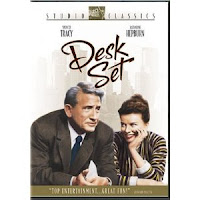
Katharine Hepburn, born in 1907, made the great romantic comedy Desk Set in 1957, one of her many pictures with costar Spencer Tracy. It's a funny, sweet story that highlights middle aged romance and women with careers, and it's actually one of my favorite movies that the pair made together. Of course, Hepburn would go on to even more great roles and Oscar nominations after 50, including three Best Actress wins.

Hepburn's Desk Set costar, Joan Blondell, was a year older, but she also enjoyed a long career. In 1956 the 50 year old star appeared as part of the ensemble cast in The Opposite Sex, a remake of the 1939 hit, The Women. Although she's best remembered today for her dozens of Pre-Code and other 1930s films, Blondell went right on acting until her death in 1979.

Bette Davis, born in 1908, was mostly doing television work in 1958, with a couple of guest spots on different series over the course of her 50th year. Even top stars like Davis and Crawford found big film roles harder to come by as they aged, especially if they wanted to avoid playing supporting characters like mothers to younger leading ladies. Davis, however, would eventually lean into horror roles and make the most of her lifelong ability to transform herself into extreme characters. Like Blondell, she would continue acting right up until her death in 1989.

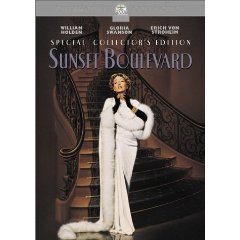
Gloria Swanson was 51 by the time Sunset Blvd. appeared in theaters in 1950, but the actress really was 50 years old when she played the 50 year old Norma Desmond. It's a role that digs into the crisis of aging for a Hollywood actress, and it's not exactly flattering. Still, Swanson is brilliant in the film, and it's a shame the movie didn't inspire a revival for the star. Her leading man, William Holden, was still enjoying big movie roles well into his 50s, but Swanson, who earned a Best Actress Oscar nomination for Sunset Blvd., moved on to television appearances and semi-retirement.

Of course, some actresses fared better after 50 than others, with comic character actresses being some of the best at maintaining their careers. Long-legged Charlotte Greenwood made Down Argentine Way (1940), Mary Wickes appeared in Cimmaron (1960), Marjorie Main made seven films in 1940, and her friend Spring Byington took on ten roles in her 50th year in 1936. They had never been famous for their glamorous youth and beauty, and they trooped along through the decades in supporting roles that allowed them to keep working long after the starlet types had been forced into retirement.

When I look at modern actresses who are turning 50 this year, I see Cameron Diaz, Rebecca Romijn, Toni Collette, Jennifer Garner, and Gwyneth Paltrow, all of whom are still working and even thriving with their careers. I doubt they'll have to resort to hagsploitation roles like Davis and Crawford, and it's encouraging to think that we see 50 differently now than we did during the classic movie era. Personally, I'm feeling pretty good about being 50, and I plan to celebrate with several special blog posts in the weeks ahead.

If you're turning 50 this year, too, happy birthday, and remember, Jessica Tandy won an Oscar at 80, so you're definitely not too old to accomplish something big!

Tuesday, May 19, 2020

CMBA Spring Blogathon: Classics for Comfort

The Classic Movie Blog Association is holding its Spring Blogathon this week, and the theme is Classics for Comfort, which we could all use right now! CMBA members are posting their "Top 5" comforting classics, which means we'll probably be picking a lot of comedies and musicals, but I'm excited to see what everyone else picks. As for me, I have definitely been going back to my comfort zone for movies since the pandemic sent us all into crisis mode back in March. I don't want to watch anything that makes me more anxious than I already feel, but my comfort zone encompasses both classic musicals and comedies, classic Disney films, and fair bit of science fiction (especially Star Trek - I have watched SO MUCH Star Trek lately because it always gives me hope for humanity's future). In keeping with the CMBA theme, here are my top five go-to classic movies for trying times, presented in chronological order because I really don't want to try to rank these favorites!

#1 BRINGING UP BABY (1938)

I absolutely adore everything about this wacky screwball comedy starring Katharine Hepburn and Cary Grant. I've seen it many, many times, and it still makes me laugh, even though I can recite almost all of the dialogue from memory. I love life-affirming, joyful comedy, which means the screwball genre is far and away my favorite, but this one holds a special place in my heart for being my childhood introduction to Katharine Hepburn. Hilarious physical comedy and outstanding supporting players keep the laughs coming from beginning to end. I especially love to show this one to kids because the leopards and the dog are chaos agents that really young viewers can appreciate, even if they don't grasp the romantic themes.


#2 THE ADVENTURES OF ROBIN HOOD (1938)

Errol Flynn's swashbuckling classic is another great choice for kids, but it holds plenty of charm for adults, too. The gorgeous Technicolor cinematography carries me away to Sherwood Forest, and Erich Wolfgang Korngold's score is absolutely perfect. I love its stars and its supporting cast, especially the delightful chemistry between Flynn and Alan Hale and the hilarious character comedy of Una O'Connor and Eugene Pallette, but Claude Rains and Basil Rathbone are also brilliant as the bad guys. Although many other Robin Hood films have been made, this one is the cornucopia of delights that I love best, and if you haven't shown it to your kids you should put that one your to-do list right now.


#3 SINGIN' IN THE RAIN (1952)

I'm sure this iconic musical will turn up on a lot of the CMBA bloggers' lists, but I have to include it here for the sheer joy it always fills me with when I watch it. My kid was a huge Gene Kelly fan when she was little, and this was her favorite movie, so much so that she sometimes ran around the house impersonating Lina Lamont. Debbie Reynolds' energy and pep are irresistible, and you just have to grin watching Kelly and Donald O'Connor dance. I'm a big fan of the colorful, upbeat musicals of the 40s and 50s in general, but this one brings the perfect cast together in such a blitz of wonderful numbers and hilarious comedy that it definitely deserves its place in movie fans' hearts. Once again, this is a great classic movie to show kids; just be prepared for the Lina Lamont impressions and tap dancing likely to ensue!

#4 LADY AND THE TRAMP (1955)

I'm not much of a Disney princess fan, although I love the gorgeous animation of Snow White (1937) and Sleeping Beauty (1959). I'm much more enamored of Disney's classic animal tales, and Lady and the Tramp is the one I especially love to go back to for its sweet, soulful depiction of a dog's life. The charming setting, the lovely animation, and the wonderful voice performances all delight me with each new viewing. I find most of Disney's classic animal movies comforting because I loved them as a kid and then loved watching them with my kid, but this one remains a favorite with both of us, and we almost always watch it when one of us is sick and needs something familiar and cheerful to watch while convalescing on the couch.


#5 STAR WARS: A NEW HOPE (1977)

I realize I'm skirting the definition of "classic" for some people, but the original Star Wars trilogy holds a deep and special place in my heart, and I will almost always go back and watch A New Hope again when I need a serious morale boost. Just a few bars of John Williams' powerful score can send me into a reverie of memories and feelings about a galaxy far, far away. The movie itself is full of hope and courage and self-sacrifice, but it also connects me with my younger self, the lonely, hopeful farm kid I used to be, who also dreamed of escape and a different life. I return to Luke Skywalker, Princess Leia, and Han Solo as old friends, familiar if frozen in time on the screen, and the sorrows of the time that has passed (how we miss you, Carrie Fisher) make the experience sweeter still.


 I guess from this list you could probably deduce that I take a lot of comfort in music, color, adventure, and happy endings if not outright comedy. For comfort I gravitate toward movies that are gentle enough to watch with the family but exciting enough to keep the plot rolling, and romance is a welcome part of the equation as long as the heroines are plucky. These are all movies that make me feel happy when I watch them; they remind me that joy, friendship, laughter, and courage all exist in the world even when things look bleak. I'm sure my fellow CMBA bloggers will have lots of interesting choices on their lists if my five picks aren't your cup of tea, so make certain you check out the rest of the blogathon posts!

Monday, August 15, 2016

Classic Films in Focus: BRINGING UP BABY (1938)

Howard Hawks' quintessential screwball comedy fell flat at the box office when it first appeared in 1938, but today Bringing Up Baby is widely regarded as a masterpiece of the genre, with Cary Grant and Katharine Hepburn in fine form as the unlikely couple thrown together by leopards, dinosaurs, and the relentless persistence of Hepburn's wacky heroine. The non-stop hilarity runs by so fast that it might take three or four viewings to catch all of the gags, but this is a picture that gets funnier every time you watch it. Outstanding supporting performances from Charlie Ruggles, May Robson, Barry Fitzgerald, and Walter Catlett add to the feast of furiously funny scenes, but the animal actors, including the titular Baby and Asta as George the dog, will have even the youngest viewers in stitches.

Grant stars as David Huxley, a scientist whose dry bones life and engagement to the very professional Alice Swallow (Virginia Walker) are upended when he meets flighty socialite Susan Vance (Hepburn). Both David and Susan hope to receive a million dollar gift from Susan's aunt, Elizabeth (May Robson), but Susan's interference keeps getting David into trouble. Susan loses a pet leopard meant for her aunt, David loses the last bone needed to finish his dinosaur, and everyone ends up in jail thanks to a series of misadventures and misunderstandings.

Bringing Up Baby offers enough cartoon physical comedy and sight gags to make it entertaining even to modern kids, with Grant and Hepburn romping about the Connecticut countryside and literally falling all over themselves. Grant, a vaudeville veteran, is in his natural element, with a talent for pratfalls and double takes reminiscent of the silent stars. His big round glasses, which evoke Harold Lloyd, further the comparison, especially when we see him carried off on the sideboard of a running car and stepping on the back of Hepburn's gown. As lovely and impossibly slim as she was at that age, Hepburn also dives right into the absurd antics; her "born on the side of a hill" bit is perfectly girlish, a moment of pure silly fun. More robust laughs erupt when the supporting players, especially Charlie Ruggles and Barry Fitzgerald, get their chance to react to the presence of Baby, the leopard on the loose, while George the dog, played by A-list canine star Asta, wreaks plenty of havoc, as well.

Beyond the obvious high jinks, however, the film offers a more sophisticated kind of comedy that springs from verbal sparring and the rapid delivery of naughty Freudian gags. David, after all, is a man who has lost his bone, and only a wild thing like Susan can help him get it back. Susan even goes to the extent of renaming David "Mr. Bone," which underlines the point rather forcibly. He's certainly sexually confused by all the chaos that Susan creates. Sabotaged by her desire to keep him around, David ends up in a feathery negligee, at which point he exclaims that he "just went gay all of a sudden!" Later, when Susan complains about losing her heel, Walter Catlett deadpans, "Don't worry about him." The characters deliver these zingers so rapidly that the Breen Office must have missed what they were saying, but at times it's a wonder that this film got past the censors at all. In a picture where Charlie Ruggles and May Robson exchange leopard mating calls by way of flirtation, almost anything can - and does - happen. This is a movie that proves its point about the love impulse revealing itself in terms of conflict, and not just in men.

Be sure to note Walter Bond looming over the other characters in a bit part as a motorcycle cop. For more of Hepburn and Grant, see Sylvia Scarlett (1935), Holiday (1938), and The Philadelphia Story (1940). Howard Hawks also directs Grant in His Girl Friday (1940), I Was a Male War Bride (1949), and Monkey Business (1952). If you love scene-stealing dogs, catch Asta in The Thin Man (1934) and its sequels and The Awful Truth (1937), which also stars Cary Grant.

Saturday, July 12, 2014

In Praise of 42 Year Old Classic Movie Actresses

Being a 42 year old woman myself, I'm fascinated by the presumption of Tom Junod's recent Esquire piece, which opens with the statement that "there used to be something tragic about even the most beautiful forty-two year old woman." The essay has swiftly and justly provoked a chorus of mockery and retort from both men and women alike. What particularly caught my attention, though, was Junod's use of Anne Bancroft in The Graduate (1967) as his touchstone for the "old view" of the forty-two year old woman's tragic sexuality. For the record, Anne Bancroft was just 36 when she played Mrs. Robinson, while her supposedly 22 year old lover, Dustin Hoffman, was actually 30. Once Junod brought up the subject of classic films and the 42 year old woman, I couldn't help but think about iconic actresses and the roles they were playing when they really were 42. Let's take a look, shall we?

Bette Davis, born in 1908, turned 42 in 1950, the year she starred in All About Eve, one of her most celebrated films. Beautiful, successful, and certainly desirable, her Margo Channing was one of her greatest characters, and one who had a lot in common with her real-life self. The movie won six Oscars, including Best Picture, and Davis picked up her ninth Best Actress nomination.

Joan Crawford, born in 1906, turned 42 in 1948. She didn't have a picture come out that year, but the next year saw her star in Flamingo Road (1949), and in 1950 she made The Damned Don't Cry and Harriet Craig. Sex appeal is her character's chief weapon in the crime drama, The Damned Don't Cry, and Joan would go on being fabulously tough and sexy in This Woman is Dangerous (1952), Torch Song (1953), and Johnny Guitar (1955).

Katharine Hepburn entered the world in 1907 and celebrated her 42nd year in 1949, when she gave Spencer Tracy every ounce of trouble she could muster in the marvelous comedy, Adam's Rib. Hepburn wasn't done, either, not by a long shot. She still had The African Queen (1951), Pat and Mike (1952), Desk Set (1957), and even Rooster Cogburn (1975) ahead of her. She would earn eight of her 12 career Oscar nominations after she was 42, and she would win three more times, all in the last two decades of her long screen career. Irrelevant? I think not. Tragic? Hardly.

Claudette Colbert, born in 1903, was by no means fading at the age of 42, which she reached in 1945. She starred that year in Guest Wife, but she had bigger hits later on, especially with The Egg and I in 1947. Funny, sassy, and classy, Colbert also starred with John Wayne in Without Reservations (1946) and with Walter Pidgeon in The Secret Heart (1946).

Living legend Maureen O'Hara, she of the fiery heart and hair, was born in 1920. She turned in 42 in 1962, a year before her iconic turn in McLintock! (1963) with frequent leading man John Wayne. In 1962 she starred in Mr. Hobbs Takes a Vacation with Jimmy Stewart, and she reunited with Stewart for The Rare Breed in 1966. She was still yanking Duke's chain as late as 1971, when they made Big Jake.

Not enough for you? We're not even close to finished.

Doris Day starred in The Glass Bottom Boat  in 1966, 42 years after her birth in 1924.

Olivia de Havilland, born in 1916, made The Proud Rebel in 1958, the year she turned 42.

Ginger Rogers, born in 1911, turned 42 in 1953, the year she starred with Cary Grant in Monkey Business and more than held her own against nubile newcomer Marilyn Monroe.

Joan Blondell, born in 1906, made Nightmare Alley in 1947, and turned 42 in 1948. The feisty Pre-Code star continued to work right up until her death in 1979.

Ingrid Bergman, who was born in 1915, turned 42 in 1957. She won an Oscar that year for Best Actress for her performance in Anastasia (1956). In 1958, she starred with Cary Grant in Indiscreet and with Robert Donat in The Inn of the Sixth Happiness. She still had two more Oscar-nominated roles ahead of her; she won Best Supporting Actress for Murder on the Orient Express (1974) and picked up her final Best Actress nod for Hostsonaten (1978).

Pause with me a moment to imagine any of these great ladies of Hollywood responding to Tom Junod's assertion that they were tragic because of their age at 42. Are your imaginary ears blistering yet? Mine sure are. Sic' em, Bette, Joan, and Kate!


Friday, May 9, 2014

Katharine Hepburn in ROOSTER COGBURN

This post is part of the Great Katharine Hepburn Blogathon hosted by Margaret Perry at The Great Katharine Hepburn. Visit her blog for links to all of the participating posts!


Young Katharine Hepburn is a glorious creature, a perfect combination of brains and beauty, but old Katharine Hepburn is the version that really gives me hope. Even when I was young I loved this weathered, grayer version of the iconic star; I grew up around older people and found them familiar, comfortable in their own skin, and inspiring because of their experience and tenacity. I still feel that way today, which is why I spend my time volunteering for lifetime learning programs. Older people are full participants in the human experience, although our popular and movie cultures often seem to think that the world belongs only to the young. Released in 1975, when Hepburn was 68 years old, Rooster Cogburn (1975) offers a welcome antidote to our collective obsession with youth, with two aging stars giving richly nuanced performances. Katharine Hepburn and John Wayne, as opposite one another as any two actors could be, prove to us that the later years of our own lives can be as adventurous, romantic, and meaningful as we choose, even if we don't find ourselves facing down desperadoes on the American frontier.

The movie is ostensibly a sequel to True Grit (1969), with Wayne reprising his Oscar-winning role as the cantankerous lawman, Rooster Cogburn. Hepburn plays yet another determined female who horns in on Cogburn's mission to bring killers to justice; like Mattie Ross in the original film, Eula Goodnight is looking for the man who murdered her father. Unlike Mattie, Eula is a Yankee spinster of advanced years who possesses a wry sense of humor. She baffles and fascinates Rooster, and a chaste kind of love blooms between them as they struggle to complete their task and survive a series of deadly encounters.

Hepburn's Eula has a lot in common with her Rose Sayer character in The African Queen (1951), but Miss Goodnight is far better prepared for the dangerous wilderness she inhabits; she seems far more at home on the frontier than we find Rose in her African village. A good rider and an excellent shot, Eula irritates Rooster with her morality but quickly earns his respect. She proves her fortitude and courage repeatedly, especially when the villainous Hawk (Richard Jordan) and his gang attack the small posse. Hepburn is utterly believable in the role; she has the grace and carriage of a lady as well as the fierce independence of a pioneer. She invests Eula with so many of the qualities that we associate with Hepburn herself: intelligence, passion, confidence, and humor. We understand why Wayne's Rooster finds her an irresistible force.

Wayne was also 68 the year Rooster Cogburn was released, but unlike Hepburn he had only a few more years to live. He would die in 1979, while Hepburn endured until 2003, almost a quarter of a century longer. Both show their ages in the film, but despite his greater size Wayne is actually the frailer of the pair. Perhaps that mellows his persona a bit; he seems content to share an amiable, bickering chemistry with his leading lady. Of course, Wayne had plenty of experience with fiery redheads as costars; his films with Maureen O'Hara were proof that he worked well with that kind of onscreen pairing. Hepburn is also mellower; despite deep differences in their political views, she really seems to glow with warmth toward Wayne, at least on screen.

I won't argue that Rooster Cogburn is among the best pictures either star ever made, or even that it is a great film. It has its flaws, and it arrived at a point in movie history when the Western was on its way out. Rooster Cogburn is, however, a great testament to the enduring appeal of its two stars; it speaks to us of aging proudly, defiantly, and with courage. Critics at the time might have complained that Hepburn and Wayne were too old for their roles, but I think they are perfectly cast. Like Rooster Cogburn himself, they can still outcrow anything in the barnyard. I hope I'm half as grand as that in 2040, when I wake up and find that I, too, am 68. Maybe I'll watch Rooster Cogburn to celebrate.


Tuesday, April 23, 2013

Classic Films in Focus: PAT AND MIKE (1952)

Following Adam's Rib (1949) in the progression of Hepburn-Tracy pictures, Pat and Mike (1952) reunites all of the key players who had made that film such a success; we have our two stars, of course, and also director George Cukor and writers Ruth Gordon and Garson Kanin, who were apparently inspired to write the story because of Katharine Hepburn's real talent for athletic pursuits. While this outing for the collaborators lacks the snap of the earlier picture, fans of the leading couple will find it worthwhile, although the most enthusiastic viewers will probably be those with an established interest in sports stars of the 1940s and 50s, since many of them make cameo appearances and demonstrate the sports for which they were known. Pat and Mike is not the best of the Hepburn-Tracy movies, but it features several solid performances and reveals a surprisingly quirky sense of humor that most people will appreciate.

Katharine Hepburn plays Patricia "Pat" Pemberton, a widowed university athletics teacher whose talent for sports dissipates whenever her pushy, condescending fiance, Collier Weld (William Ching), is on the scene. Determined to prove herself to herself if not to him, Pat accepts the offer of management from promoter Mike Conovan (Spencer Tracy), even though it's clear that Conovan has a slightly crooked idea of professional sports. They embark on a tour of tennis and golf matches, where Pat performs brilliantly until Collier shows up. Mike's evolving affection for Pat, meanwhile, inspires him to go straight, even though his investors take a dim view of any practice that hurts their chances of making money.

Pat is a different sort of character for Hepburn because of her nervousness around Collier, which is revealed to the audience through Pat's habit of putting an uncertain hand to her lip every time she spots Collier in the crowd. Away from his life-draining effect, Pat is confident and strong, even to the point of upsetting Mike by saving him from his mobster investors. Some viewers will find Pat's weakness irritating, particularly because Hepburn is playing her, but the story means to warn us against yoking ourselves to partners who undermine our abilities instead of nurturing them. We understand that Mike, class differences aside, is a better partner for Pat because he believes in her and wants her to succeed, while Collier only wants her to settle down and be a good little wife.

Hepburn is in particularly fine physical form, displaying her athleticism and looking much younger than she had in the previous year's The African Queen (1951). Tracy, however, appears older than his 52 years, and in this picture the age difference between the pair is at its most glaring. By Desk Set (1957) they would look well-matched again, the seven years between them not really being that much by Hollywood standards. Pat and Mike was their seventh picture together, and reportedly Hepburn's favorite, although most viewers prefer their first film, Woman of the Year (1942), and Adam's Rib (1949), their sixth, as the best of the nine movies they made together. Their last movie, Guess Who's Coming to Dinner (1967), is hard to watch because everyone on set knew that Tracy was dying, and the real-life emotions bleed through to give the picture a powerful but almost unbearable pathos.

Classic film fans will appreciate supporting and walk-on performances from Aldo Ray, Jim Backus, Charles Bronson, Chuck Connors, and Carl "Alfalfa" Switzer, while sports enthusiasts will enjoy seeing legends like Babe Didrikson and Alice Marble. Gordon and Kanin earned an Oscar nomination for their screenplay, the third nomination for their collaborative work. See more of George Cukor's work with Katharine Hepburn in Sylvia Scarlett (1935), Holiday (1938), and The Philadelphia Story (1940). You'll find Aldo Ray in We're No Angels (1955) and The Green Berets (1968). Look for more of William Ching in D.O.A. (1950) and In a Lonely Place (1950).

Sunday, April 7, 2013

Classic Films in Focus: WOMAN OF THE YEAR (1942)

Directed by George Stevens, Woman of the Year (1942) offers us the first fateful pairing of that iconic Hollywood duo, Katharine Hepburn and Spencer Tracy. They would make nine films together, ultimately becoming one of the most famous couples in movie history, both for their onscreen performances and their enduring offscreen affair. This first outing together sets the tone for later Tracy and Hepburn pictures, and it's a thoroughly entertaining example of their unique romantic chemistry; the undertones of the heroine's inevitable comeuppance, however, might well prove troubling for modern women who struggle to balance their own professional and personal aspirations. Although its notions of gender identity reflect the limited views of its era, Woman of the Year is still a must-see film for Hepburn and Tracy fans.

Tracy plays sports writer Sam Craig, who spars with and then falls for celebrated political columnist Tess Harding (Katharine Hepburn). Their marriage, however, is soon on the rocks because Tess remains more interested in pursuing her career and building her professional reputation. Sam feels neglected and frustrated, and his relationship with Tess is further tested when she unexpectedly brings home an orphaned Greek refugee. When Tess is named Woman of the Year, the tension between the couple reaches its peak, and Tess must figure out whether her ambition is worth the sacrifice of her chance for domestic happiness.

The stars fall into the character types that eventually defined their films together: Tracy is the man's man, affable, solid, and ultimately the winner of every romantic contest, while Hepburn is a brilliant New Woman, smarter and classier than her partner and yet destined to be reshaped according to his will. The film works hard to prove to the audience that this arrangement is right, with Fay Bainter giving a particularly nuanced performance as Tess' successful but lonely aunt, a warning to show what Tess' own fate will be if she can't hang on to Sam. Certainly there is some merit in the idea that people need to work at their relationships if they want to keep them alive, but it doesn't seem at all necessary in the movie for Sam to make any comparable sacrifices. Because Tess has been more successful and has worked harder, she also has to give up more, and that will strike most modern viewers as rather unfair. Her ultimate humiliation comes with the final kitchen scene, where she is depicted as so ridiculously incompetent that she can't even work a toaster.

The problems with the movie's sexual politics don't make it any less interesting to watch; they are, after all, common in its time period, and at least Tracy's character offers some hope for balance when, at the very end, he asks, "Why can't you be Tess Harding Craig?" If anything, it ought to make us grateful for more flexible arrangements today, when Sam Craig might well become a house husband, and Tess Harding might more easily pursue her work with some telecommuting and a good cell phone plan. In retrospect, the most troubling part of the movie is the fate of Chris, the little Greek refugee who gets returned to the orphanage by Sam when he realizes that Tess isn't interested in real parental obligations. Sam and Tess might be able to negotiate their relationship by the end, but poor Chris represents their greatest failure, one that they don't seem to recognize for the tragedy it is.

Take time to appreciate the supporting roles played by Fay Bainter, William Bendix, and Dan Tobin. Hepburn earned a Best Actress nomination for her role as Tess, and the film won the Oscar for Best Original Screenplay. For more of Hepburn and Tracy, see Adam's Rib (1949), Desk Set (1957), and Guess Who's Coming to Dinner (1967). I'm also fond of the less familiar Without Love (1945), a film that explores the romantic possibilities to two people coming to share a passion for their work together. Two time Oscar winner George Stevens also directed A Place in the Sun (1951), Shane (1953), and Giant (1956). For different takes on Hepburn, see Bringing Up Baby (1938), The Philadelphia Story (1940), and The African Queen (1951). Don't miss Tracy's brilliant dramatic performances in Fury (1936), Captains Courageous (1937), and Bad Day at Black Rock (1955).

An earlier version of this review originally appeared on Examiner.com The author retains all rights to this content.

Monday, November 26, 2012

Classic Films in Focus: HOLIDAY (1938)

Cary Grant and Katharine Hepburn starred in two films together in 1938: they made Bringing Up Baby with Howard Hawks, of course, but they also made Holiday with George Cukor. The Hawks film is the more famous of the two today, but Holiday is a great movie, too, with a more serious undertone seasoning its use of the familiar conventions of the romantic comedy. There are no leopards here, but there is genuine feeling and an acute awareness of the more painful emotions that so often erupt when one unexpectedly falls in love.

Grant stars as Johnny Case, a smart young businessman (pulled up by his own bootstraps, naturally) who has fallen in love with Julia Seton (Doris Nolan), not knowing that she is really extremely wealthy. He arrives at her address and promptly goes to look for her in the servants' quarters, assuming that she must be a maid or a secretary in this imposing edifice. Imagine his surprise when he learns that his intended is not only loaded but that she has some pretty firm plans of her own about what their marriage is going to entail. Johnny soon finds himself being pushed and pulled in several directions at once, caught between his own hopes and dreams and the increasingly insistent demands of his future wife and father-in-law. His expectations are further altered by his introduction to Julia's sister, Linda (Katharine Hepburn), a free spirit painfully stifled by the overly controlled atmosphere that comes with the Seton wealth and privilege.

Classic Hollywood films so often promote the fantasy of the whirlwind romance, where boy meets girl and then both of them immediately meet the justice of the peace. It's an aspect of the romantic comedy that I find troubling, although sudden marriage helps explain the popularity of the second marriage plot in other films, where characters who previously fell for each other too quickly have to learn to understand their relationship properly the second time around. Holiday points out some of the problems with the usual gallop to the altar: Johnny doesn't know anything about Julia, and the more he knows the less in love he becomes, but by then they are already engaged and everybody expects a wedding. Of course, Linda has lived with Julia all her life, and she doesn't seem to know her sister any better than Johnny does. The two of them discover Julia's true nature together, and along the way they find out that they have a lot in common, including a perverse sense of loyalty to the unworthy Julia that might end up wrecking their own chance at happiness.

The principal performers bring a balanced mix of drama and comedy to their roles. Hepburn and Grant are two of a kind, both witty and elegant, equally capable of wild physical comedy and stirring emotional depth. Grant's acrobatics are particularly fun to watch; his Johnny is a man who literally bounds with zeal, even as Julia attempts to contain and repress that lovable energy. Hepburn is funny and wry but also bitterly unhappy as Linda; she yearns to break free from her buried life but can only take refuge in the playroom until Johnny appears and shows her the way out. Even more tragic is the role of Ned, beautifully played by Lew Ayres. Ned has the misfortune to be his father's only son, his natural talent for music crushed and wasted by the old man's desire for an heir to the business throne. Ned sees alcohol as his only way of escaping and avenging himself, and no movie drunk was ever more graceful or more pitiful than this young man. The final scene between Ned and Linda is especially moving; he wants to go with her, wants her to go, but he seems too much resigned to his fate to be able to defy his scowling father once and for all.

Edward Everett Horton and Jean Dixon have some wonderful scenes as Johnny's friends, a dotty academic couple who love Johnny like a son and only want to see him happy with someone who is right for him. Anyone who has ever been thrust into an uncomfortably high class social setting will sympathize with the Potters as they fidget and squirm their way through Johnny and Julia's engagement party. Every minor faux pas unsettles them and becomes magnified until they are reduced to hiding from the rest of the guests. In the vocabulary of the film, this is how we know that they are real people and not stuffed shirts like the majority of the Seton crowd. Their inclusion in the playroom set reveals their worth as individuals, just as it tells us that Johnny and Linda are made for each other. Being a proper grown-up isn't all that it's cracked up to be, since the childish characters are the only ones who seem to know how to have any fun. Tragedy is the province of the adults in this movie; comedy belongs to those who can listen to their inner child.

Holiday earned an Oscar nomination for Best Art Direction but could not compete with The Adventures of Robin Hood (1938), which won that award and two others in a year of stiff competition. For more of Hepburn and Grant, see Sylvia Scarlett (1935) and The Philadelphia Story (1940). George Cukor, who directed both of those films, also directed Dinner at Eight (1933), The Women (1939), and My Fair Lady (1964). Lew Ayres earned an Oscar nomination for Best Actor for Johnny Belinda (1948), but you can also see him in All Quiet on the Western Front (1930), the Dr. Kildare movies, and Advise & Consent (1962). Don't miss the delightful Edward Everett Horton providing comic relief to Fred Astaire and Ginger Rogers in The Gay Divorcee (1934), Top Hat (1935), and Shall We Dance (1937).

An earlier version of this review originally appeared on Examiner.com. The author retains all rights to this content.

Saturday, September 1, 2012

Classic Films in Focus: UNDERCURRENT (1946)


Directed by Vincente Minnelli, Undercurrent (1946) plays with the same thematic elements as other feminine thrillers like Suspicion (1941), Gaslight (1944), and Dial M for Murder (1954), but in spite of a very attractive cast the picture falls short of its genre peers. It’s an interesting and very unusual foray into noir territory for star Katharine Hepburn, with Robert Taylor and noir stalwart Robert Mitchum along for the ride, but Undercurrent never quite comes together as a picture, and it doesn’t use its impressive cast to the best effect.

Hepburn plays Ann Hamilton, the awkward spinster daughter of a scientist (Edmund Gwenn) whose latest work attracts the attention of a suave industrialist named Alan Garroway (Robert Taylor). Alan acquires more than he came for when he meets and marries Ann, taking her with him to Washington, D.C., California, and his family’s estate in Virginia. In every place, Ann learns more confusing clues about Alan’s history with his missing brother, Michael (Robert Mitchum), while Alan begins to seem less and less like the man Ann believed him to be.

The plot reworks the motifs of Gothic romance and film noir, with Ann hiding behind doors, peering into forbidden spaces, and playing detective in the mystery of her brother-in-law’s disappearance. Hepburn might make a better Ann if the heroine possessed more nerve, but she seems miscast as the coltish, self-doubting victim, if only because she has too much inherent strength of character herself. She gives as good a performance as possible considering the stark contrast between performer and part, but even Hepburn has her limits. Robert Taylor also does his best with Alan, but he needs more scenes in which to work the character’s darker side, and Robert Mitchum has so little screen time that he barely gets to do anything at all with Michael.

The supporting cast fare no better than the top-billed stars. Both Edmund Gwenn and Marjorie Main appear only briefly. Both were glorious character actors capable of breathing life into almost any picture, which leaves us to wonder why they were cast in the parts if they weren’t going to be put to good use. Leigh Whipper has better luck and more scenes as the Garroway estate’s caretaker, and he does a good job adding to the home’s Gothic ambience.

None of the actors can really be faulted for the movie’s failure to deliver, but Undercurrent is best appreciated by hardcore fans looking to see all of Hepburn’s minor films or survey the lesser entries in the noir canon. For a better pairing of Hepburn and Gwenn as father and daughter, try Sylvia Scarlett (1935). See Robert Mitchum’s signature performances in Out of the Past (1947), The Night of the Hunter (1955), and Cape Fear (1962). For different takes on Robert Taylor, try Westward the Women (1951) and Ivanhoe (1952).

This review was originally posted on Examiner.com. The author retains all rights to this content.

Wednesday, August 22, 2012

Classic Films in Focus: SYLVIA SCARLETT (1935)


Before they made well-remembered classics like Bringing Up Baby (1938) and The Philadelphia Story (1940), Katharine Hepburn and Cary Grant first starred together in the more obscure Sylvia Scarlett (1935), a George Cukor picture with a plot straight out of Shakespeare’s play book. The story, adapted from a novel by Compton MacKenzie, is convoluted and thin, but the movie is worth watching for the performances of the two stars and the always entertaining Edmund Gwenn.

Hepburn stars as Sylvia, who first loses her French mother and then learns that her English father (Edmund Gwenn) is a crook. In order to escape the authorities, father and daughter flee to England, with Sylvia disguised as “Sylvester” to lower their profile. Along the way they take up with Jimmy Monkley (Cary Grant), a shady character who tries to make them his accomplices but ends up traveling with them as a caravan of entertainers. Sylvia maintains her male identity throughout these adventures but yearns to reclaim her femininity when she falls for a manly artist (Brian Aherne).

The cross-dressed role played by Hepburn is known as a “breeches part” and was quite popular during the Elizabethan period, where the ultimate irony of a girl dressed as a boy depended on the audience’s knowledge that the performer was, in fact, male. Kate might as well be playing Viola in Twelfth Night or Rosalind in As You Like It, and the caravan scenes highlight the feeling of being transported to an appropriate version of merry old England, with Henry Scarlett as a drunken Falstaff thrown in for good measure. The gender confusion allows the picture to flirt with homoerotic moments as female characters make plays for “Sylvester” and Sylvia pines after the artist, Michael Fane. Brian Aherne, who plays Fane, was an actor so regal that he appeared as King Arthur in two different films.

As spunky as Hepburn is in her boyish guise, it’s hard not to focus on Cary Grant’s slippery Jimmy as the more interesting character. This is one of the rare roles in which Grant actually sounds like Archie Leach in his music hall days, milking a Cockney accent for all it’s worth. Grant was born in Bristol, far beyond the sound of Bow Bells, but the characteristic accent heard in most of his roles was as made up as the name “Cary Grant.” Jimmy proves too slick a character to peg as either good or bad for most of the film, but somehow we get the feeling he ought to attract Sylvia a lot more than he does. A rogue is always more fun than royalty, no matter how much Sylvia swoons over Michael’s leonine charm. Grant would have better luck getting Hepburn’s attention in their next three pictures together, which might explain why most viewers prefer the later films.

George Cukor also directed Hepburn and Grant in Holiday (1938). See The Women (1939), Gaslight (1944), and Adam’s Rib (1949) for more of Cukor’s best work. Both stars appeared in more great films than can be listed here, but look for memorable Hepburn performances in Woman of the Year (1942), The African Queen (1951), and Guess Who’s Coming to Dinner (1967). See Cary Grant in Gunga Din (1939), Notorious (1946), and Charade (1963). Edmund Gwenn is best remembered today as Kris Kringle in Miracle on 34th Street (1947).

This review was originally published at Examiner.com. The author retains all rights to her content.