Showing posts with label children's books. Show all posts

Thursday, April 28, 2022

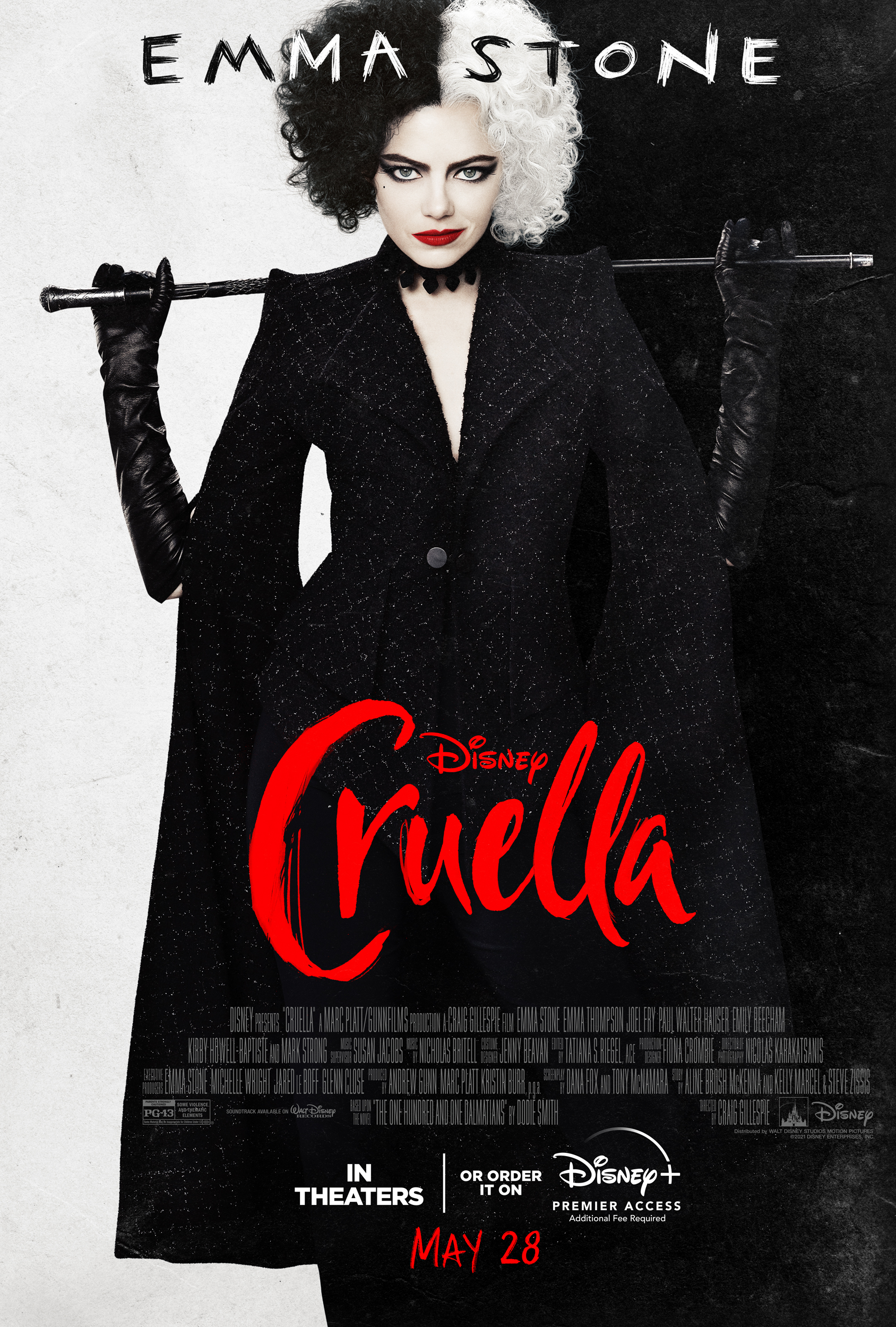
The What-If Alternate Timeline of CRUELLA (2021)

When it first arrived, Disney's 2021 reboot of the various films based on 101 Dalmatians was widely discussed as yet another "prequel" to a well-known Disney property, but in order to appreciate Cruella fully you have to stop thinking about it as a prequel and instead consider it as an alternate timeline narrative similar to the multiverse arcs now at work in the Marvel franchise. This is NOT the story of how the villain of the 1961 animated movie became that character, and it's not the story of the villain from the 1996 live action movie, either. Instead, Emma Stone's version of Cruella is a character with a narrative arc all her own, distinct from those of the other Cruellas but still affected by many of the same elements with alternate versions of the same characters. She's much like the central Loki character played by Tom Hiddleston in the Disney Plus series; she is one of many possible Cruella variants, some of whom are truly villainous and some of whom are dynamic enough to become protagonists in their own right rather than merely antagonists to more conventionally heroic characters. When read this way, Cruella becomes a much more interesting and engaging movie, one that rewrites the iconic villain, sure, but also one that reaches deep into the sources of inspiration that formed the original Disney character.


Fidelity to the 1961 animated classic is already an odd demand, not only because live action versions of that story were already made in the late 90s but because the original Disney movie is itself unfaithful to its source material in several significant ways. Dodie Smith's beloved 1956 children's novel features many characters and scenes that aren't in the Disney film. A third adult Dalmatian (the one actually named Perdita) is removed completely, with a dog originally named Missus assuming her name and erasing her from the story. The novel's Roger is wealthy because he is a "financial wizard" and not a struggling musician, so the family can afford all of their Dalmatians even when they end up with 101 of them (note that the 101st Dalmatian of the novel also isn't in the movie because he's the liver spotted love interest of the original Perdita). The Cruella of the book is more explicitly demonic and even more vicious than the movie version; she is also married to a submissive furrier who enables her obsession with fur coats. The changes don't make the Disney adaptation a bad movie, but they do make it a significantly different story from the novel. The live action versions get farther afield still, making Roger an American video game creator, Anita a fashion designer, and Cruella a fashion house owner and Anita's employer. In fact, the versions are so different (and set in different eras to boot) that the 2021 movie cannot possibly function as a true prequel to any of them.

Tallulah!

Instead, Cruella is its own story, a reinvention of the character that combines her most iconic traits with bits and pieces of the previous versions in order to make her a dynamic protagonist rather than a static villain. The movie does not attempt to make us like or forgive the other Cruellas; we like this new Cruella partly because she isn't them. Our glimpse of her childhood recalls the schoolgirl connection with Anita from the novel, her mannerisms are taken from the 1961 Disney film, and her fashion career is borrowed from the 1996 movie, but she is not simply a younger version of any of these characters. Disney opts to do something different by mining the tradition of the anti-heroine as filtered through one of the most important inspirations for the 1961 Cruella, the legendary actress and all around hellraiser Tallulah Bankhead. The film even signals the affiliation with a clip of Tallulah demonstrating her distinctive, throaty laugh in Alfred Hitchcock's 1944 thriller, Lifeboat. We see it play on a television set in a room with Estella/Cruella early in the story. Bankhead, known for her genius, self-destructive behavior, terrible driving, and theatrical personality, was definitely no saint, but this new version of Cruella has her charisma and charm as well as her less likeable qualities. It's refreshing to see a complicated, difficult, too-much female character be the heroine of her own life without having to be either a traditionally good person or a completely amoral anti-heroine of the Becky Sharp variety.

Because this Cruella is not the same as the previous versions, she can make different choices and develop different values. She loves fashion but isn't specifically obsessed with fur. She has a found family that she mistreats at times but ultimately loves, which includes several dogs. She is even the person who gives Pongo and Perdita to Roger and Anita, which she certainly wouldn't do if she wanted to make Dalmatian fur coats. Near the end of the movie, Cruella says about the Baroness: "The good thing about evil people is that you can always trust them to do something, well, evil." Cruella, despite her name, is not that kind of person, because her Estella side makes her capable of doing good. Currently, a sequel to the movie is in the works, and most fans and critics seem to expect it to launch us into the more familiar dog-napping, coat-making territory of the original story, but I really hope it doesn't go in that direction, because this Cruella deserves better. It's certainly possible that she might become a newer version of the Baroness, the murderous mother whom she deposes in the film, and therefore ruthless enough to become a full-blown villain, but it would be much more satisfying to see her continue to make bold new choices for herself, to continue to be the future she embodies in Cruella and not the past that she sees as the Baroness. To rope this Cruella back into the framework of the original story would be a grave disservice to her and to viewers who fell for her eccentric, outlandish personality.

I've watched Cruella a couple of times now, and while I have concerns about Disney's persistent efforts to strip mine its own properties, I think this movie is one of the best live action treatments of a classic Disney story and far more interesting and fun than the previous attempts to cash in on the Dalmatians' popularity, largely because it isn't about the dogs. It's fun, it's visually engaging, it features terrific performances from Stone and Emma Thompson, and it offers us a Disney "heroine" who is very different from the usual crowd of princesses and whose transgressive modernity is part of her appeal. I don't care that it isn't actually a prequel to 101 Dalmatians; that's why it works. This Cruella might well be brilliant and bad and a little bit mad, but she's more 70s counterculture rock goddess than maniacal puppy murderer, and I'd like to see any additional films about her continue to give her the freedom to be her own version of herself.


Monday, September 17, 2012

Classic Films in Focus: BEDKNOBS AND BROOMSTICKS (1971)


Loosely based on the novel by Mary Norton, Bedknobs and Broomsticks (1971) followed up Disney's enormous success with Mary Poppins (1964), and on paper the two pictures must look very similar. Here we have two musical comedies set in England, both involving magic and a handful of cute but troublesome children, both combining live action and animation, and both directed by Robert Stevenson and starring David Tomlinson. Bedknobs and Broomsticks, however, differentiates itself from the earlier film by replacing its spoonful of sugar with equal parts vinegar and poisoned dragon's liver, and the result is a more nuanced, less treacly story that offers a thoughtful treatment of its adult characters while still delivering plenty of entertainment for the kids.

Angela Lansbury stars as independent spinster Eglantine Price, who reluctantly takes in three orphaned children evacuated from London because of the Blitz. Carrie, Paul, and Charlie (Cindy O'Callaghan, Roy Snart, and Ian Weighill) soon discover that Miss Price is secretly training to become a witch in order to fight the Nazis with her magic, but her correspondence course in witchcraft comes to an abrupt end. Determined to finish the lessons, Miss Price and the children travel to London using an enchanted bedknob, where they meet "Professor" Emelius Browne (David Tomlinson), who turns out to be nothing but a former stage magician and con man. Nevertheless, they enlist Browne's assistance and embark on a series of adventures to learn the rest of the spells needed to repel a Nazi invasion.

Lansbury and Tomlinson really shine in their roles. Both of the successful character actors are here solidly middle-aged and an unlikely pair for a romance, but they balance the humor and pathos of their characters beautifully. Their musical numbers are lively and fun, although the melancholy tint of "Portobello Road" most accurately captures the subtler mood of the film as a whole. The London waifs, truly a Dickensian trio, are played with enthusiasm by the child actors, particularly Ian Weighill. A wonderful cast of supporting players helps to round out the film, including Roddy McDowall, Sam Jaffe, and Reginald Owen. These are names that veteran classic movie fans will certainly recognize; McDowall, however, is probably the most familiar, having starred as a child in top-shelf classics like How Green was My Valley (1941) and Lassie Come Home (1943).

The scenes that combine live action and animation serve as the film's show pieces, but the numerous musical numbers also have their charms. In addition to "Portobello Road" we get the aquatic duet, "The Beautiful Briny," and the hypnotically catchy "Substitutiary Locomotion." DVD versions of the film also include an extended cut of "Portobello Road" plus an additional number from Tomlinson called "With a Flair." The longer rendition of "Portobello Road" provides an energetic - if historically incorrect - introduction to the many different countries that formed part of the British Empire at the time of World War II, and it's well worth watching even though it was deemed too long at the time of the film's original release. 

The serious war theme that persists underneath the merriment of music and magic might escape the notice of very young viewers, but adults should pick up on it immediately. The children, already orphans, lose their guardian in London when a Nazi bomb falls on their home. Another bomb, this one unexploded, provides Emelius with a swanky temporary refuge, even though his general cowardice has prevented him from signing up for military duty. Nobody, however, really escapes the war, and the film offers an excellent opportunity to discuss the nature of war and its impact on non-combatants with children who might not have thought about such issues before. Contrast Eglantine's determination to help with Emelius' reluctance, and give some attention to the old men, veterans of World War I, who form the slightly silly but deeply noble Home Guard.

Bedknobs and Broomsticks earned five Oscar nominations and won for Best Visual Effects. If you want to see the breadth of Angela Lansbury's career, catch her early appearances in Gaslight (1944) and The Picture of Dorian Gray (1945) and then move on to The Manchurian Candidate (1962) and more recent films like Nanny McPhee (2005). Kids, of course, will recognize her as the voice of Mrs. Potts in Disney's Beauty and the Beast (1991). You can see a young David Tomlinson in the 1948 mermaid comedy, Miranda, starring his Mary Poppins costar, Glynis Johns; he can also be found in Tom Jones (1963) and The Love Bug (1968). 

An earlier version of this review originally appeared on Examiner.com. The author retains all rights to this content.

Monday, September 10, 2012

Classic Disney Movies Based on Children's Books


Most of the classic Disney princess movies come straight out of fairy tales, but the family film studio has also combed other literary sources for many of its popular productions. Successful children's novels from around the world have served as the inspiration for some of Disney's most beloved animated and live-action pictures, although Walt Disney and his screenwriters were rarely very faithful to the original texts. Whether you're trying to get youngsters interested in classic movies or in reading good books, these Disney adaptations can make for a good starting point. Here are just a few of the classic Disney films that owe their existence to novels written for young readers.

Pinocchio (1940) - Italian writer Carlo Collodi created the original story of the wooden boy, which first appeared in Italy in 1883. Today you can find many versions of Pinocchio's story, and the novel that first imagined this puppet hero remains a classic in its own right. Try the Puffin Classics edition of the book for an inexpensive introduction to Collodi's enduring tale of adventure, transformation, and paternal love. Be forewarned, though, that a lot of bad things happen to Pinocchio, and Collodi's story has a moral tone much like the work of Hans Christian Andersen.

Bambi (1942) - While some of the novels adapted for Disney films remain well-known and widely available, Austrian author Felix Salten's 1923 tale of a young deer is harder to find. Older children who can handle more somber and realistic depictions of animal life might find the story very engaging, but, like the Disney movie, it might be too much for younger children to handle. Aladdin has a 1988 paperback edition still available from online retailers like Amazon.com, although the 1929 sequel, Bambi's Children, appears to be out of print. Try your local library for copies of both books.

101 Dalmatians (1961) - Disney has turned Dodie Smith's original novel into a whole series of movies and spin-off productions, including its own 1996 live-action remake of the animated film. The 1961 picture simplifies the novel by reducing the number of adult dogs involved in the story, but for the most part the Disney film takes its cues from Smith's charming tale. Dog lovers are sure to find the original book a winner, and anglophiles will enjoy its very English character. The Puffin edition provides Smith's full text for a very reasonable price, and the story is a perfect choice for reading aloud, particularly at Christmas, when much of the action takes place. Starlight Barking, a long-forgotten sequel to Smith's novel, is also now back in print.

Mary Poppins (1964) - P.L. Travers' long contention with Walt Disney over the adaptation of her very popular book series has been much discussed in Disney movie circles, but the 1964 live-action musical proved a watershed event in the career of its star, Julie Andrews, and hopefully the film's success has brought readers back to the English writer's original works. The movie won five Oscars and was nominated for thirteen, making it one of Disney's greatest screen accomplishments. Numerous paperback editions of all of the Mary Poppins novels are in print, and kids who enjoy the movie will probably like to find out about all of Mary's other adventures with the Banks family.

The Jungle Book (1967) - Film studios have frequently turned to the works of Rudyard Kipling for their stories, so it should be no surprise that Disney would offer its own adaptation of a Kipling tale. Kipling's original novella (it's really more a collection of stories than a proper novel) appeared in 1894. Although it's a fun movie with some terrific songs, the Disney version strays pretty far from the source material. Kids who enjoy talking animal novels like The Warriors and The Guardians of Ga'Hoole series ought to enjoy this influential literary classic. Disney also produced a live-action version starring Jason Scott Lee in 1994, although it's more interesting for its cast than its fidelity to Kipling. If your kids enjoy the original story, they should also love Neil Gaiman's Newbery-winning revision, The Graveyard Book (2008).

Bedknobs and Broomsticks (1971) - Adapted from the novels by Mary Norton, who also penned The Borrowers books, the 1971 Disney live-action film capitalized on the similar combination of Englishness, magic, and music that had made Mary Poppins such a hit. The movie is very good, especially with Angela Lansbury and David Tomlinson in the lead roles, but it has very little in common with Norton's texts. Look for Norton's original stories as The Magic Bed-knob and Bonfires and Broomsticks; a combined edition of both stories is available from Sandpiper. There's no guarantee, though, that fans of one version will like the other.

Other classic Disney films adapted from books include Song of the South (1946), Alice in Wonderland (1951), Treasure Island (1950), Peter Pan (1953), 20,000 Leagues Under the Sea (1954), and Old Yeller (1957). Almost all of these are based on true classics that you and your children can find at your local library or bookstore, and many of them are also free on ereaders like the Kindle and the Nook.

An earlier version of this article originally appeared on Examiner.com. The author retains all rights to this content.