Thursday, December 9, 2021

Five Favorite Films: Christmas Movies

Every Christmas brings new holiday movies, especially with streaming services like Netflix cooking up batches of them like trays of cinematic sugar cookies, but the classics are those we return to year after year. They become beloved traditions in many families, and ours is no different. I know there's plenty of debate about what makes a "classic" or even what counts as a Christmas movie, but here are five favorites that my family revisits every year, along with lots of suggestions for other seasonal stories you might try.
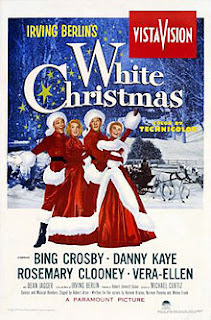
White Christmas (1954)

This musical delight starring Bing Crosby, Danny Kaye, Vera-Ellen, and Rosemary Clooney is THE family Christmas movie at our house. We usually watch it for the first time right after Thanksgiving, and we often make three or four viewings by the New Year. Everything about White Christmas is perfect Yuletide cheer, but at our house it's all about Danny Kaye, one of our favorite classic movie stars. "The Best Things Happen When You're Dancing" has nothing to do with Christmas but is so catchy and fun that I hum it for days after every viewing. Dean Jagger and Mary Wickes also help to make this movie the top pick on our nice list. If you're looking for more classic Christmas comedy, follow this one up with Christmas in Connecticut (1945) and Bachelor Mother (1939).

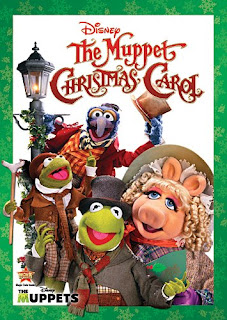
The Muppet Christmas Carol (1992)

Here's another favorite that the whole family has to watch at least once, often on Christmas Eve. I'm a huge fan of A Christmas Carol in general - both the original story and its many adaptations - but this is my favorite of the lot. Gonzo makes a fabulous Charles Dickens, with Rizzo as his audience and sidekick, and Michael Caine is clearly having a ball as the miserly Scrooge. In spite of the Muppets in most of the roles, this film is surprisingly faithful to its source material and has some of the best Ghosts of Christmas in any production, especially the luminous and childlike Ghost of Christmas Past. I remember seeing this movie in the theater back in 1992, and I have loved it ever since. Make sure you watch the extended version with the restored scene featuring the song, "When Love is Gone," which was cut from the original theatrical release. The Muppets made several other Christmas specials, but for sheer delight follow this one up with Emmet Otter's Jug-Band Christmas (1977).
Scrooged (1988)

Bill Murray offered his own take on Scrooge a few years before the Muppet version, and this 80s tale of Christmas redemption holds up really well. The Ghosts played by David Johansen and Carol Kane always crack us up, and "Niagara Falls!" has become part of our family's extensive movie quote language. Richard Donner directs a fantastic cast that also includes Karen Allen, Bobcat Goldthwait, Robert Mitchum, John Forsythe, Buddy Hackett, and Alfre Woodard. It's by no means the first Christmas Carol adaptation you should watch, and it's not really for kids, but we come back to it every year and enjoy it all over again. For a behind-the-scenes story about Dickens' enduring tale, try The Man Who Invented Christmas (2017), which shows Dickens being haunted by his characters as he tries to write the book.

A Christmas Story (1983)

Speaking of highly quotable 80s Christmas movies, who can forget "You'll shoot your eye out" and "It's a major award!" This one rose on our family list over the years as our kid got older and fell in love with its wacky, nostalgic look at childhood yearning and misery. Now we watch it every holiday season and wait for our favorite scenes, most of which feature Ralphie's elaborate fantasies. "It was... soap poisoning!" Darren McGavin is a cranky delight as Ralphie's dad, and Melinda Dillon is wonderful as the long-suffering mother, but Peter Billingsley carries the picture as few child actors could. Be wary of showing it to little ones if you don't want to explain the "fudge" scenes, but for just about anyone else this is a surefire hit. They made a sequel to this picture in 2012, but I've never seen it, and on IMDB it only has a 3.3 rating.
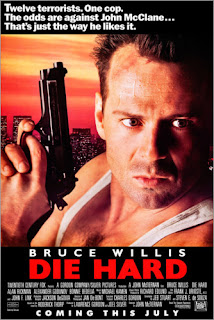
Die Hard (1988)

Yes, I know, some people insist that Die Hard isn't a Christmas movie, but it's a great choice for those who need an antidote to the sugary sweetness of most holiday fare. As the rest of this list proves, we're fans of somewhat perverse or at least comedic takes on Christmas, and this Bruce Willis action comedy delivers the quotable lines, humor, and Gen X sensibility that appeal to us at the holidays. It's lighter than The Long Kiss Goodnight (1996) and slightly more realistic than Gremlins (1984), both of which also tend to make our annual viewing schedule. Alan Rickman makes a brilliant film debut as Hans Gruber, and Bonnie Bedelia is excellent as the hero's almost ex-wife. If you want to explore the debate and pop culture surrounding Die Hard as a Christmas movie, check out the new Netflix film, Love Hard (2021), a rom com that takes its name from this picture and that much more romantic holiday hit, Love, Actually (2003).

This list only scratches the surface of the holiday movie genre, and there are dozens of films out there to suit different tastes and moods. What are your five favorite holiday films? Let me know in the comments!


Thursday, November 18, 2021

Five Favorite Films: Marvel Movies

Recently I've seen both of the newest MCU movies, Shang-Chi and The Legend of the Ten Rings (2021) and The Eternals (2021), and that inspired me to reflect on the MCU pictures as a group and my favorites among them. There are already more than 25 movies to choose from, not including the Disney Plus television series or the many upcoming releases slated for the next year, so there's a lot to consider when trying to pick just five favorites. My list isn't based on box office returns, critical reviews, or other fans' priorities; it's my top picks for the Marvel movies I enjoy watching the most and revisit the most frequently. Here are my five favorite films (so far!) from the MCU.

Captain America: The First Avenger (2011)

As a classic movie fan I'm a sucker for the 1940s setting of this first Captain America adventure, but it's the heart of this picture that brings me back again and again. Chris Evans is perfectly cast as an old-fashioned good guy with a steady moral compass, and I simply adore Hayley Atwell as Peggy Carter (I'm still bitter about the cancellation of Agent Carter). Sebastian Stan begins a long but engrossing character arc as Steve's friend, Bucky, and it's refreshing to go back to this first outing and see him before his dark period in the Winter Soldier role.

Ant-Man (2015)

Even though Edgar Wright left the project and was replaced by Peyton Reed as the director, Wright's distinctive sense of humor is still readily apparent in this smaller scale Marvel hero origin story. The zippy comedy, heist movie tropes, and casting all make this one a hit for me, and I also love its soft center theme of fathers who love their daughters. Paul Rudd, recently crowned the 2021 Sexiest Man Alive by People Magazine, deserves a lot of credit for merging the comedic and dramatic demands of his role as Scott Lang. The supporting cast of loser ex-con buddies is so much fun that it's great to see them reunited in Ant-Man and the Wasp (2018), and I hope we'll see them again in the upcoming Quantumania sequel.

Doctor Strange (2016)

Here's another pick that has a lot to do with my personal preferences as a fan; I love the supernatural side of both DC and Marvel comics, and I really enjoy Benedict Cumberbatch's work in general, so Cumberbatch joining the MCU as the Sorcerer Supreme is a real treat. The What If...? Disney Plus series has shown us that Stephen Strange's journey could have taken a much darker route, but in the main timeline story we see him develop as a character and overcome his hubris, despair, and frustration. Benedict Wong is a scene stealer as Wong, and I really enjoyed seeing him return for Shang-Chi. I also appreciate the fact that Dr. Strange saves the day not by fighting and punching but basically by annoying his opponent until Dormammu finally gives up. In a universe full of muscle gods, a hero who thinks his way through a problem deserves special attention.


Thor: Ragnarok
(2017)

Speaking of muscle gods, here's Chris Hemsworth back in the fray as Thor in the third and by far the best of the Thor stories to date. A hilarious script and direction by the brilliant Taika Waititi make all the difference in this picture, although it also has a fantastic cast, great action scenes, moments of grand dramatic gravitas, and some truly inspired use of Led Zeppelin. Jeff Goldblum runs away with his scenes, giving regular scene stealer Tom Hiddleston a run for his money, and Tessa Thompson is brilliant as Valkyrie. Cate Blanchett radiates gleeful malevolence as Hela, an Asgardian so dangerous and twisted she makes Loki look like a saint. If I were ranking these five films by preference rather than release date, Thor: Ragnarok would be my top pick. It's just that much fun.

Black Panther (2018)

It's not just respect for the tragically short career of Chadwick Boseman that makes me include this movie in my five favorites; it's a gorgeous, riveting action picture with a fabulous cast and a fascinating glimpse of Afrofuturism that sets it apart from all of the earlier Marvel movies. Boseman is pitch perfect as T'Challa, but the movie provides such good roles for women, too, especially Danai Gurira as Okoye and Letitia Wright as Shuri. The MCU has come a long way from Black Widow as the only girl in the boys' club, but Black Panther does a particularly good job of showcasing different female characters, with different talents, attitudes, and relationships, and even though I will miss T'Challa I'm excited to see where Wakanda Forever will take the remaining characters.


Final note: 

I thoroughly enjoyed Shang-Chi and the Legend of the Ten Rings, and it might well displace one of these older movies in my top five over the next few months, but it's too early to say how many times I'll feel drawn to rewatch it. 2022 will bring us a lot of sequels featuring heroes we've already met, so we'll see if those stories can beat the appeal of the previous installments!

Monday, October 25, 2021

Killing Bill: Female Vengeance in THE BRAIN THAT WOULDN'T DIE (1962)

Long before Uma Thurman's relentless Bride swore to kill Bill in the Quentin Tarantino movies, Jan in the Pan killed her own treacherous Bill in the low-budget horror classic, The Brain That Wouldn't Die (1962). Despite its B-horror status and sleazy male gaze, The Brain That Wouldn't Die turns out to be a surprisingly effective iteration of the women's revenge plot, in which the wronged female protagonist metes out bloody justice to those who harmed her. It also raises more serious issues than its cheap production and shock value climax might lead viewers to expect, chiefly the very real problems of women's agency and bodily autonomy in a dangerously patriarchal society.

The women's revenge narrative often hinges on rape as an obvious expression of masculine violence and misogyny, although mutilation and other forms of physical harm are also depicted. Hannie Caulder (1971), a Western that partly inspired Tarantino's Kill Bill movies, is one significant example of the first, while Gloria Grahame's disfigured moll in The Big Heat (1953) provides an example of the second. In The Brain That Wouldn't Die, Jan (Virginia Leith) is actually deprived of her entire body by her fiance's mad obsession. After he causes a car crash by driving recklessly toward his remote medical laboratory, Bill (Jason Evers) retrieves Jan's head from the wreckage and keeps it alive with his unethical experimental treatments. Jan has previously been shown as a woman who lives very much in her body; she can't wait to marry Bill and have children, and she demonstrates her physical desire for him very clearly. The loss of her body deprives her of these expected pleasures while also revealing to her the true nature of the man she planned to marry. Bill's scheme to acquire a new body for Jan offers her no comfort, since she realizes that he intends to murder an innocent woman to get it, and she feels very strongly that the transplanted body would be an unnatural horror.

Before the crash, Jan is fully alive and eager to marry.
 

We often talk about women's consent in sexual terms, in both fiction and real life situations, but medical consent is another component of women's bodily experience, especially when we look at the frequency with which women were denied medical autonomy in the past (and still are today, especially where their reproductive care is concerned). Bill assumes/usurps the right to make medical decisions for Jan. He keeps her head alive against her will, even when she begs for death. He intends to put her head on a stolen body of his choosing - one selected for his own prurient enjoyment - despite her objections. When Jan protests, Bill tapes her mouth. He feels that his authority as a man/surgeon/fiance gives him the right to violate Jan's wishes again and again, not to mention those of Peggy (Marilyn Hanold), the artist's model whose body Bill has decided to claim for Jan. While Bill provides an extreme example, there is plenty of real life history behind it. Well into the 20th century husbands, fathers, and other male relatives made medical decisions for women without their consent and often even without their knowledge. Women were considered too fragile or emotional to be in charge of their own medical care, and many dying women weren't told about their prognosis by "caring" men. Rex Harrison, for example, knew that his lover and then wife Kay Kendall was dying of leukemia, but he and her doctor told her it was just an iron deficiency. That took place from 1957 to 1959, so Jan's plight in the 1962 film is by no means outdated.

Jan hates Bill for keeping her alive as a head in a pan.

Deprived of her body and her ability to make her own decisions, Jan seems like a helpless victim, and Bill certainly thinks he has all the power, but Jan realizes that the experimental chemicals give her an uncanny ability to communicate with one of Bill's previous victims, a mutated captive made of amputated limbs and grafted tissue. She and the nameless prisoner plot their revenge against Bill and his complicit assistant, which they eventually accomplish in appropriately bloody fashion. Jan's hysterical laughter, existence as a disembodied head, and yearning for revenge present her as a monster, which is how she sees herself, too, but it's worth noting that Jan's moral compass is never compromised. Bill, the real monster, lacks empathy and see other people as his playthings, but Jan is determined to save Peggy while also punishing Bill. In the last scene of the movie, the mutant carries Peggy to safety while Jan remains in the burning lab with Bill's corpse, content with death and the justice she has wrought. This finale is also in keeping with the women's revenge narrative, although Jan has much more reason than most of her fellow avenging angels for being satisfied with her own death as the conclusion. Unlike the protagonist of Promising Young Woman (2020), for example, Jan is really already dead, and her release is what she herself has wanted all along.

Bill plans to get a "perfect" body for Jan by killing Peggy.

When we look at it from Jan's point of view, The Brain That Wouldn't Die becomes a fascinating variation on the women's revenge story, one that addresses some very real horrors for women in a pervasively misogynist culture that denies women bodily autonomy and free will. Jan is not a monster, despite her extreme physical condition; she's a heroine who overcomes disability and an abusive relationship to assert her right to dictate the terms of her own existence. She stops a madman's sadistic, ego-driven rampage and prevents him from claiming more victims. She liberates Bill's tortured captive, saves Peggy from being murdered, and unknowingly gets revenge for all of the other women Bill tried to abduct. The movie might be best known today as an example of cheap "schlock" horror, but there's a lot more going on in the tortured mind of The Brain That Wouldn't Die than one might at first expect. We just have to see it from the perspective in the pan.


Monday, October 18, 2021

Five Favorite Directors: Classic Horror


Even people who don't care for classic horror movies have probably heard of Bela Lugosi, Boris Karloff, and Vincent Price, but behind every horror classic there's also a director asking for heavier fog, more menacing closeups, and louder screams. Alfred Hitchcock, although not primarily a horror director, might be the most familiar to modern viewers thanks to Psycho (1960) and The Birds (1963), and more recent masters of the genre include George Romero, John Carpenter, and Wes Craven, but my personal favorites tend to be the earlier icons whose work influenced everyone after them. Most of the films from these directors are light on gore and heavy on atmosphere, which is how I like my creepy midnight thrills, and many worthy contenders aren't listed here only because I limit myself to five. These are the directors I most often turn to when I want something spooky to send a shiver down my cinematic spine.

Tod Browning

Browning is best remembered today for two horror classics, Dracula (1931) and Freaks (1932), but his directorial career started with silent shorts in 1915, and he helmed a number of notable silent horror pictures before his date with Dracula. Browning's movies with Lon Chaney, "the man of a thousand faces" and a master of silent horror, are especially good; try The Unholy Three (1925), The Unknown (1927), and West of Zanzibar (1928) for a sense of Browning's work before Dracula.

James Whale

Like Browning, James Whale is best remembered today for his iconic Universal monster movies, including Frankenstein (1931), The Invisible Man (1933), and Bride of Frankenstein (1935). Whale's work combines the usual elements of horror with a very dark sense of humor that sometimes tips right over into black comedy, especially with Claude Rains in the lead role for The Invisible Man. In between these more famous films Whale also directed The Old Dark House (1932), a wonderful spooky house picture with his usual flair for mixing giggles with screams.

Jacques Tourneur

As the son of French director Maurice Tourneur, Jacques Tourneur grew up in the movie making business in both France and the US; his career really took off when he teamed up with RKO horror boss Val Lewton for films like Cat People (1942), I Walked with a Zombie (1943), and The Leopard Man (1943). Later Tourneur would make memorable pictures in a number of genres, but he returned to horror for Night of the Demon (1957) and The Comedy of Terrors (1963). Cat People is justly celebrated today for its moody ambience and loaded subtext, but I'm also very fond of I Walked with a Zombie for its imaginative revision of Jane Eyre.


Robert Wise

Like Tourneur, Robert Wise enjoyed a fruitful collaboration with Val Lewton early in his career, even though he later became more famous as the Oscar-winning director of musicals like West Side Story (1961) and The Sound of Music (1965). His work in horror remains an important part of his oeuvre and the genre as a whole, with early Lewton projects like The Curse of the Cat People (1944) and The Body Snatcher (1945) laying the foundation for the horror masterpiece, The Haunting (1963), which is so good that it alone justifies Wise's place in this list. Watch it with the lights out and the sound turned up, and you won't sleep a wink.

Roger Corman

Roger Corman directed more than 50 movies, many of them low-budget shockers and now cult classics, and Corman has lived long enough to see himself become a true Hollywood legend. As much as I enjoy a really ridiculous B-movie romp like Attack of the Crab Monsters (1957), my favorite Corman horror films are the Poe adaptations he made with Vincent Price, some of them more faithful than others but all of them very entertaining. House of Usher (1960) kicked off the series, but two later entries, The Masque of the Red Death (1964) and The Tomb of Ligeia (1964) are probably my top picks for being less campy and more evocative of Edgar Allan Poe's works than a picture like The Raven (1963), even though that one is also a lot of fun.

Looking for even more classic horror directors? Try F.W. Murnau, Mario Bava, Mark Robson, and Terence Fisher for additional thrills and chills. 

See also: "The Kiss That is the Kill: Sex and Death in Three Classic Vampire Movies"


Friday, October 8, 2021

Five Favorite Films: Halloween Treats

Halloween is my favorite holiday, even though I'm too old for trick-or-treating and don't have a little one now to take around the neighborhood. It's an especially good time of year to revisit the movie monsters and film phantoms of Golden Age Hollywood, but there's a lot more to enjoy than the obvious Universal pictures. I love classic horror in general, but I especially love the funnier, less scary Halloween treats of the spooky season, with goofy ghosts and wacky witches and some of the great stars of classic Hollywood dressing up for the occasion. Here are five of my favorite Halloween appropriate comedies to go with your candy corn and caramel apples as you savor the season.

The Ghost Goes West (1935)

This British production is probably the least well-known entry in this list, but it's absolutely worth tracking down. It has a number of plot points in common with the later picture, The Canterville Ghost (1944), but in this story the haunted castle gets moved to the United States by a wealthy American businessman (Eugene Pallette), and the ghost (Robert Donat) is forced to come along. Donat plays a double role here as both the ghost and his modern day descendant, which is handy for leading lady Jean Parker. More romantic comedy than ghost story, this is such fun that it deserves to be seen by more people, which is why I include it here. It also features the marvelous Elsa Lanchester in a supporting role.

I Married a Witch (1942)

Veronica Lake stars as Jennifer, the witch in question in this hilarious screwball comedy with a supernatural twist, and Fredric March is the cursed descendant of the man who burned her and her father (Cecil Kellaway) at the stake many centuries ago. When their spirits awaken from a long slumber, Jennifer and her dad intend to resume their persecution of the stuffy, wealthy Wooley family, but love upsets the plans for revenge. Fun special effects, a wicked sense of humor, and a fantastic cast make this a perfect pick for the season.

 Arsenic and Old Lace (1943)

Cary Grant might not have liked his work in this adaptation of the darkly hilarious stage play, but audiences loved him and it so much that it has been a perennial favorite for decades. Frank Capra directs a pitch perfect cast, many of them reprising their roles from the stage production, and Jean Adair and Josephine Hull run away with every scene as the dotty old aunts whose "charity work" involves poisoning elderly men. Although there's nothing supernatural about the characters, the story takes place on Halloween and costars horror regular Peter Lorre; Raymond Massey plays the murderous brother whose role in the original play had been filled by Boris Karloff, but Karloff wasn't able to to reprise the role in this film. 

The Canterville Ghost (1944)

Loosely adapted from the story by Oscar Wilde, this is a ghostly comedy with lots of laughs and a surprisingly sweet heart, thanks to charming performances by Charles Laughton, Robert Young, and Margaret O'Brien. Laughton stars as the ghost, Sir Simon, who hopes to break the curse of his long, lonely existence by demonstrating the courage that eluded him in life. When a group of American soldiers are stationed at the Canterville family castle during World War II, Sir Simon meets Cully (Young), who might be able to help him. O'Brien's role as a central character and the themes of courage and friendship make this movie a great choice for younger viewers.


Abbott and Costello Meet Frankenstein
(1948)

Universal was happy to transform its iconic monsters into comedy stars for this wonderful installment in the Abbott and Costello series of pictures, in which the duo play Chick (Bud Abbott) and Wilbur (Lou Costello), two hapless freight handlers who unwittingly get tangled up with Dracula (Bela Lugosi), the Wolf Man (Lon Chaney Jr.), and Frankenstein's monster (Glenn Strange). Hilarious antics ensue as the monsters scheme to remove Wilbur's brain and use it to restore Frankenstein's creature. Even if kids haven't seen the original Universal movies starring these characters, they'll recognize the monsters and get a kick out of this delightful film, but it's a must-see for classic horror fans of all ages.

For even more fun Halloween classics, try Topper (1937) and its sequels, The Ghost and Mrs. Muir (1947), Bell Book and Candle (1958), and The Comedy of Terrors (1963).

Monday, September 20, 2021

Five Favorite Films: Bette Davis

It's really difficult for me to pick only five films for Bette Davis. She's one of my favorite stars, and her career spanned decades, with juicy, memorable roles from her early years right up to her death in 1989 at the age of 81. She was nominated for 11 Best Actress Oscars and won twice, first for Dangerous (1935) and then for Jezebel (1938). I'm choosing my five favorite films with an eye toward representing and respecting the breadth of her career, rather than just picking five from the 1940s ( a decade in which she made some 20 pictures!). A true cinema icon with a taste for the most challenging, complicated roles, Bette is justly celebrated today as one of classic Hollywood's brightest luminaries, and these five films provide a primer on the versatility and talent she possessed.

Of Human Bondage (1934)

Davis' big breakout role was one she had to fight for, but she proved herself more than capable of playing Mildred, the opportunistic working class girl who seduces Leslie Howard's aimless protagonist and then spirals into self-destruction. Davis begins the drama as a pert, attractive waitress but deteriorates horrifically as her character turns to alcohol, drugs, and prostitution; never content to play only glamorous parts, she would continue to embrace such challenging roles throughout her career. She picked up her first Oscar nomination for Best Actress for this picture but would not win until the next year for her leading role in Dangerous (1935).

Of Human Bondage (1934)

Jezebel (1938)

Released the year before Gone with the Wind (1939), this Civil War tale of a Southern belle bad girl stars Davis as stubborn, headstrong Julie, who wrecks her relationship with her beau (Henry Fonda) by violating the social norms of their community. Julie then wants to mend the damage but finds a Northern bride has filled the spot she carelessly abandoned; an outbreak of yellow fever throws her set into a panic but gives Julie a long-desired opportunity to show how much she has changed. While the plantation setting of the story raises problems for modern audiences, I do like the redemptive arc for Davis' protagonist and her great performance, which earned her second and final win for the Best Actress Oscar.


Now, Voyager
(1942)

Davis shines in this beloved melodramatic romance, in which nervous, oppressed Charlotte Vale gets a makeover and a second chance at happiness after she's whisked away from her domineering mother for treatment at a sanitarium. Paul Henreid plays the unhappily married love of her life, who can't bring himself to leave his difficult wife but takes comfort in the bond that develops between Charlotte and his troubled young daughter. Davis achieves one of her many remarkable transformations during the early part of the picture, culminating in a polished, elegant Charlotte whom her relatives hardly recognize. She picked up her seventh nomination for Best Actress for this role, while Max Steiner won for the picture's excellent score.

Whatever Happened to Baby Jane? (1962)

Always willing to be ugly for the sake of a juicy role, Davis is relentlessly awful in both appearance and manner as the titular Baby Jane in this hagsploitation classic. While some dismiss it as camp, the tragedy and horror of the picture are very real in the roles played by Davis and Joan Crawford, who famously clashed during production. Baby Jane, undeniably deranged and even violent, at first comes across as simply villainous but slowly reveals the grief, pain, and confusion that have driven her to such a state. Davis picked up the final Best Actress nomination of her career for this performance, which I appreciate more the older I get.

The Whales of August (1987)

The Whales of August (1987)

I find this quiet drama deeply moving every time I revisit it, and Davis gives a brilliant performance in this, her penultimate role and the last picture she actually completed; she walked off production of Wicked Stepmother (1989), which would be her final screen credit. Davis and silent star Lillian Gish play elderly, widowed sisters spending the summer in a New England cottage, and the rest of the characters are also played by iconic stars in their own twilight years. Gish actually plays the younger of the sisters even though she was 93 at the time, but Davis had survived breast cancer, a mastectomy, a massive stroke, and a broken hip, which made her utterly credible as the frailer elder sister. Davis made dozens of movies that are more celebrated, but this one is special for showing how her talent and determination to keep working stayed with her in spite of everything else that happened in her long career.

This is by no means a list of Bette Davis' five best films; it's a list of personal favorites that reflect my own tastes. Other Davis fans might offer a completely different list of favorites, and there are plenty of outstanding options to choose. For more Bette Davis hits, see The Petrified Forest (1936), Dark Victory (1939), The Letter (1940), and All About Eve (1950).

You'll find more full reviews of Bette Davis' films in my book, Beyond Casablanca: 100 Classic Movies Worth Watching, available in the Amazon Kindle Store.

Thursday, September 16, 2021

Five Favorite Films: Val Lewton

I wouldn't normally think about making a five favorite films list for a producer, but Val Lewton is special. Born Vladimir Leventon in what is now Ukraine, Lewton headed the horror unit for RKO in the 1940s and made brilliant, moody horror pictures on shoestring budgets. He eschewed gimmicks and gore in favor of subtext and atmosphere, even when the titles assigned to him to make films out of suggested conventional B horror fare. Lewton worked with his writers and directors throughout the making of his horror films, giving his productions a distinct character that can be seen in all five of the films listed below. Don't be afraid to give Lewton a try if you're not into blood and guts; these are smart, delightfully creepy pictures that let your imagination do most of the work.

Cat People (1942)

The most famous of Lewton's pictures and arguably the best, Cat People features direction by Jacques Tourneur and a terrific performance from Simone Simon, who stars as the Serbian bride of a bland American engineer (Kent Smith). The couple can't consummate the marriage because Irena fears that doing so will transform her into a murderous cat, but the strain on the relationship also threatens to drive her to extremes. Female monsters are rare in classic horror, which makes Irena even more important, as she struggles with many of the same fears and doubts that plague Larry Talbot (Lon Chaney Jr.) in The Wolf Man (1941).

I Walked with a Zombie (1943)

Tourneur also directs this dreamy post-colonial revision of Jane Eyre, which stars Frances Dee as a Canadian nurse who travels to the West Indies to care for the comatose wife of a plantation manager (Paul Holland). Local rumors say that the wife has been turned into a zombie, which sets Nurse Betsy on a quest to find out the truth about her patient and cure her if possible. Important supporting performers include the calypso musician Sir Lancelot and Edith Barrett as the manager's mother. This one is a must for fans of the many Jane Eyre inspired movies that followed the success of Rebecca in 1940.

The Curse of the Cat People (1944)

Tasked with crafting a sequel to the successful original, Lewton instead produced this completely different story about a lonely little girl (Ann Carter) and her "imaginary" friend, using the love triangle from the original as the setup for the adult characters. Oliver Reed (Kent Smith) is still a bland stick but has replaced the dead Irena with more conventional wife Alice (Jane Randolph), and they don't know what to make of their sad, misfit daughter, Amy. Only the ghostly Irena (Simone Simon) brings the child company and comfort, but Irena might not be able to help Amy against the paranoid threat posed by a kindly neighbor's mentally unstable daughter. Robert Wise, who was brought in to finish the picture, earned his first directing credit for this film.

The Body Snatcher (1945)

Wise is also the director for this adaptation of a short story by Robert Louis Stevenson, which features horror icons Boris Karloff and Bela Lugosi as well as Henry Daniell as a doctor who benefits from the infamous corpse stealing trade of 19th-century Edinburgh. The story capitalizes on the notoriety of the Burke and Hare crimes of the period and provides a truly menacing role for Karloff as Cabman John Gray, the body snatcher of the title. Karloff would end up getting some of his best roles in Lewton pictures and was perfectly suited for the more intellectual, artistic brand of horror that the producer specialized in making.

Bedlam (1946) 

This original story about the infamous 18th-century London madhouse is a personal favorite; Lewton got the idea from William Hogarth's Bedlam scene in The Rake's Progress and even stages a shot to recreate the image. Anna Lee stars as feisty comic actress Nell Bowen, who makes enemies of the wrong people and is thus falsely identified as a madwoman and locked up in Bedlam, where the villainous keeper (Boris Karloff) grossly abuses his authority. Mark Robson directs this unabashedly artsy period piece, which might not appeal to everyone but hits all the right buttons for those familiar with Hogarth's prints and the history of the notorious asylum.   

For even more films from Val Lewton, check out The Leopard Man (1943), The Seventh Victim (1943), and Isle of the Dead (1945). Lewton might have made more great films but died tragically young of a heart attack in 1951, at the age of 46.

See also: "Hogarthian Gothic: Imagining the Madhouse in Val Lewton's Bedlam"