Showing posts with label Christmas movies. Show all posts

Thursday, December 9, 2021

Five Favorite Films: Christmas Movies

Every Christmas brings new holiday movies, especially with streaming services like Netflix cooking up batches of them like trays of cinematic sugar cookies, but the classics are those we return to year after year. They become beloved traditions in many families, and ours is no different. I know there's plenty of debate about what makes a "classic" or even what counts as a Christmas movie, but here are five favorites that my family revisits every year, along with lots of suggestions for other seasonal stories you might try.
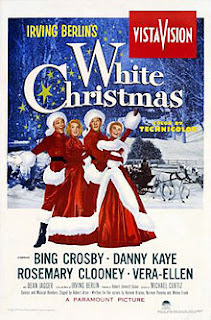
White Christmas (1954)

This musical delight starring Bing Crosby, Danny Kaye, Vera-Ellen, and Rosemary Clooney is THE family Christmas movie at our house. We usually watch it for the first time right after Thanksgiving, and we often make three or four viewings by the New Year. Everything about White Christmas is perfect Yuletide cheer, but at our house it's all about Danny Kaye, one of our favorite classic movie stars. "The Best Things Happen When You're Dancing" has nothing to do with Christmas but is so catchy and fun that I hum it for days after every viewing. Dean Jagger and Mary Wickes also help to make this movie the top pick on our nice list. If you're looking for more classic Christmas comedy, follow this one up with Christmas in Connecticut (1945) and Bachelor Mother (1939).

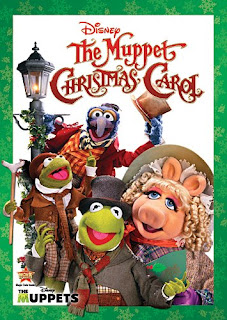
The Muppet Christmas Carol (1992)

Here's another favorite that the whole family has to watch at least once, often on Christmas Eve. I'm a huge fan of A Christmas Carol in general - both the original story and its many adaptations - but this is my favorite of the lot. Gonzo makes a fabulous Charles Dickens, with Rizzo as his audience and sidekick, and Michael Caine is clearly having a ball as the miserly Scrooge. In spite of the Muppets in most of the roles, this film is surprisingly faithful to its source material and has some of the best Ghosts of Christmas in any production, especially the luminous and childlike Ghost of Christmas Past. I remember seeing this movie in the theater back in 1992, and I have loved it ever since. Make sure you watch the extended version with the restored scene featuring the song, "When Love is Gone," which was cut from the original theatrical release. The Muppets made several other Christmas specials, but for sheer delight follow this one up with Emmet Otter's Jug-Band Christmas (1977).
Scrooged (1988)

Bill Murray offered his own take on Scrooge a few years before the Muppet version, and this 80s tale of Christmas redemption holds up really well. The Ghosts played by David Johansen and Carol Kane always crack us up, and "Niagara Falls!" has become part of our family's extensive movie quote language. Richard Donner directs a fantastic cast that also includes Karen Allen, Bobcat Goldthwait, Robert Mitchum, John Forsythe, Buddy Hackett, and Alfre Woodard. It's by no means the first Christmas Carol adaptation you should watch, and it's not really for kids, but we come back to it every year and enjoy it all over again. For a behind-the-scenes story about Dickens' enduring tale, try The Man Who Invented Christmas (2017), which shows Dickens being haunted by his characters as he tries to write the book.

A Christmas Story (1983)

Speaking of highly quotable 80s Christmas movies, who can forget "You'll shoot your eye out" and "It's a major award!" This one rose on our family list over the years as our kid got older and fell in love with its wacky, nostalgic look at childhood yearning and misery. Now we watch it every holiday season and wait for our favorite scenes, most of which feature Ralphie's elaborate fantasies. "It was... soap poisoning!" Darren McGavin is a cranky delight as Ralphie's dad, and Melinda Dillon is wonderful as the long-suffering mother, but Peter Billingsley carries the picture as few child actors could. Be wary of showing it to little ones if you don't want to explain the "fudge" scenes, but for just about anyone else this is a surefire hit. They made a sequel to this picture in 2012, but I've never seen it, and on IMDB it only has a 3.3 rating.
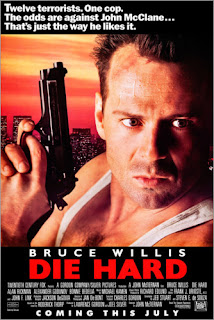
Die Hard (1988)

Yes, I know, some people insist that Die Hard isn't a Christmas movie, but it's a great choice for those who need an antidote to the sugary sweetness of most holiday fare. As the rest of this list proves, we're fans of somewhat perverse or at least comedic takes on Christmas, and this Bruce Willis action comedy delivers the quotable lines, humor, and Gen X sensibility that appeal to us at the holidays. It's lighter than The Long Kiss Goodnight (1996) and slightly more realistic than Gremlins (1984), both of which also tend to make our annual viewing schedule. Alan Rickman makes a brilliant film debut as Hans Gruber, and Bonnie Bedelia is excellent as the hero's almost ex-wife. If you want to explore the debate and pop culture surrounding Die Hard as a Christmas movie, check out the new Netflix film, Love Hard (2021), a rom com that takes its name from this picture and that much more romantic holiday hit, Love, Actually (2003).

This list only scratches the surface of the holiday movie genre, and there are dozens of films out there to suit different tastes and moods. What are your five favorite holiday films? Let me know in the comments!


Wednesday, December 23, 2020

Classic Films in Focus: A CHRISTMAS CAROL (1938)


I'm generally a fan of adaptations of Charles Dickens' holiday standard, even the loose and the weird ones, but the 1938 version of A Christmas Carol from MGM strikes me as a bowdlerized, lightweight entry into the category, pleasant enough but not really willing to get to the heart of the story lest it dampen the audience's Yuletide cheer. The desire to keep things merry leads the film to make big changes to the source material, expanding the roles of the likable Fred and Bob and downplaying the darkness of Scrooge's journey. If you're looking for a spooky, thoughtful, or faithful adaptation of A Christmas Carol, look elsewhere; this one is more punch and pudding than poltergeists and poverty. That said, classic movie fans will enjoy the presence of stars like Reginald Owen and the Lockhart family, and I'm sure this gentle, condensed version has its ardent admirers.

Owen leads the cast as the cranky old miser, Scrooge, who berates his cheerful nephew, Fred (Barry MacKay), for enjoying the season and then fires his mild-mannered clerk, Bob Cratchit (Gene Lockhart), for accidentally hitting him with a snowball on Christmas Eve. Throwing economy to the wind, Bob then surprises his family with a lavish holiday feast and makes the best of the celebration while Scrooge endures his encounters with the various spirits, starting with his deceased partner, Jacob Marley (Leo G. Carroll). Scrooge's ghostly guides repeatedly take him to spy on the domestic lives of Fred and Bob, which inspires Scrooge to become invested in their welfare and wish to be included in their happiness. After his supernatural adventure, Scrooge makes Fred a partner in his firm and rehires Bob at double his old salary, thus forming around himself a happy circle of families who will benefit from his newfound generosity.

I genuinely enjoy inventive revisions of the Dickens story, but I like for them to be transparent about it. You know The Muppet Christmas Carol (1992) is going to take liberties with the story because most of the characters are Muppets, and even then it ends up being a surprisingly faithful version that leans into some of the darker elements of the narrative. The 1938 film, directed by Edwin L. Marin and with a screenplay by Hugo Butler, plays fast and loose with its source but keeps the atmosphere, the setting, and the most familiar bits of dialogue, making it seem like a faithful retelling even though it's not. For me the worst problem with this kind of adaptation of the Dickens text is its pandering to an audience that wants to identify with the sympathetic characters and not confront the uncomfortable truth that is central to the original story - WE ARE SCROOGE. Dickens didn't want or need to change the hearts of the Tiny Tims and Bobs and Freds; he wanted to confront the financially comfortable, the people who begrudgingly pay taxes and don't see "the poor" as their problem. If audiences don't feel called out by A Christmas Carol, then that version of the story is doing it wrong. Vastly enlarging the parts of Bob and Fred, diminishing Scrooge's meanness, and cutting out or radically altering whole chunks of the narrative lets the audience off the hook. We're left with a feel good story that won't even for a second consider the ruinous financial consequences of Bob's shopping spree. In Dickens' time the Cratchits would have been out on the street before New Year and the brood of children dispersed to the workhouses, as Dickens himself was when he was a child. The specter of real poverty haunted Dickens and haunts his stories, and it ought to be lurking under the robe of every Christmas Carol adaptation if one is going to do right by the story and its author, even if that particular scene about Ignorance and Want gets left out of most film versions.

I won't lay the blame for these shortcomings at the feet of the film's actors, for each of them embodies the watered-down versions of their characters as well as they can. Reginald Owen's Scrooge is pinched but never very terrible, and he melts like a snowball when confronted with his own childhood. He's a cranky, fussy, little old man, and Owen gives him lively feeling in his more childish moments. Barry MacKay's Fred is a handsome if conventional romantic lead, the first character we meet in the opening scene and thus more central to the story than is typical, while Gene Lockhart plays Bob Cratchit as genial, round, and playful. One of the more interesting tidbits of this picture is the presence of the gathered Lockhart family, including Gene's wife, Kathleen, as Mrs. Cratchit, and introducing classic TV favorite June Lockhart in an uncredited role as the Cratchits' daughter, Belinda. Of the ghosts I think the most convincing is character actor Leo G. Carroll as Marley, but Ann Rutherford makes an attractive Ghost of Christmas Past, even if she looks nothing like the apparition imagined by Dickens. Terry Kilburn's Tiny Tim doesn't seem particularly frail aside from his obligatory crutch; he's downright hearty as Tiny Tims go, but that decision is entirely in keeping with the rest of this picture, and thus it's no surprise that the end of the movie feels no need to reassure us about his continued existence.

As one of the most popular texts for adaptation, there's a Christmas Carol movie for every fan's taste, but the 1938 picture doesn't suit mine. Those who love it are welcome to it, but if it isn't for you, either, try the 1951 adaptation starring Alistair Sim, which is considered by many to be the gold standard of Christmas Carol movies, or the more recent live action versions starring George C. Scott (1984) or Patrick Stewart (1999). I'm deeply fond of the Muppet treatment, mainly for Michael Caine's dead serious performance as Scrooge and the fantastic puppetry that brings the Christmas Ghosts to life, but I also love the modernized Bill Murray version in Scrooged (1988) because it brings the themes of Dickens' story into the 20th century in a thoughtful, funny, and provocative way. There's also the fictionalized account of Dickens' experience writing the story in The Man Who Invented Christmas (2017), which takes its own liberties with Dickens' biography but works beautifully as a commentary on the heart of his story and the personal history that inspired it.

Thursday, December 12, 2019

Classic Films in Focus: BUNDLE OF JOY (1956)

If you've already watched all of your regular Christmas classics, you might consider trying out some less familiar holiday fare, including the 1939 comedy Bachelor Mother and its 1956 musical remake, Bundle of Joy. Although the original movie is generally considered the better picture, Bundle of Joy has plenty of color and music to make it a satisfying seasonal sweet, especially with the adorable Debbie Reynolds stepping into the lead role first filled by Ginger Rogers. Bright, cute, and cheerful, Bundle of Joy makes for a nice break from heavier holiday classics like It's a Wonderful Life (1946), and the supporting cast includes extra gifts for classic movie fans with appearances by Adolphe Menjou and Una Merkel.

Reynolds stars as Polly Parish, a department store salesgirl who gets fired just before Christmas. While hunting a new job she picks up a crying infant on a doorstep, only to be mistaken for the child's mother.  The foundling home arranges to get her rehired on the condition that she claim and care for the baby, which Polly is at first extremely reluctant to do, but nobody will believe the truth. She catches the attention of the store owner's son, Dan (Eddie Fisher), and the two begin a sort of friendship that quickly snowballs into something more, but soon enough Dan finds himself on the wrong side of the bassinet as his father (Adolphe Menjou) believes that the baby is a joint production by Polly and Dan.

In 1956, audiences would have been expected to know that Reynolds and Fisher were newlyweds in real life, making the onscreen pairing especially appealing, and Fisher was a big singing star himself at the time. Those watching the picture today will immediately recognize Reynolds as the real star of the show and probably view the romance with Fisher as ironic, given his scandalous affair with Elizabeth Taylor and the couple's divorce in 1959. The pair's first child, actress Carrie Fisher, was born the same year that Bundle of Joy appeared, and in fact Reynolds was pregnant with her daughter during the making of the picture. Those biographical details color a modern viewing of the movie and lend it an edge that it doesn't contain within itself, where Reynolds' mega watt charms obliterate all shadows, even the social taboo against unwed motherhood.

Eddie Fisher strikes me as a bit flat in his role, there for his singing ability and marriage to Reynolds and not for his acting talent, but I might be biased by all that biographical baggage. More amusing than Fisher are the supporting players, especially Adolphe Menjou as the aspiring grandfather and Una Merkel as Polly's understanding landlady. Both of their characters are more than ready to fit Dan up for fatherhood, with Merkel's landlady giving Dan a very shrewd squint when she sees him and the baby together. Menjou lands the funniest line of the film when he exclaims, "I don't care who the father is, I'm the grandfather!" Tommy Noonan is also memorable as the irritating opportunist, Freddie, who refuses to be shaken off by Polly and hopes to benefit from her relationship with Dan. Nita Talbot has some fun scenes as Polly's friend, Mary, who helps to shoo Freddie away whenever he turns up to pester Polly at the store.

Bundle of Joy was directed by Norman Taurog, who won an Oscar for Skippy (1931) but is probably better remembered for Boys Town (1938). For more of the delightful Debbie Reynolds, see Singin' in the Rain (1952), Tammy and the Bachelor (1957), and The Unsinkable Molly Brown (1964). You'll find Eddie Fisher with his next wife, Elizabeth Taylor, in Butterfield 8 (1960), but after that his career fizzled. For more classic Christmas romance, try Holiday Affair (1949), It Happened on Fifth Avenue (1947), Christmas in Connecticut (1945), and The Bishop's Wife (1947).

Thursday, February 4, 2016

Classic Films in Focus: MIRACLE ON 34TH STREET (1947)

Although it has been remade several times, the original 1947 release of Miracle on 34th Street is still the best and most charming incarnation of this heart-warming tale of holiday faith. Its attractions include an Oscar-winning Santa Claus performance courtesy of Edmund Gwenn and a memorable early appearance from a very young Natalie Wood, as well as lovely Maureen O’Hara and the very likable John Payne as the romantic leads. With its three Oscar wins and its enduring appeal, Miracle on 34th Street thoroughly deserves its status as a holiday classic, one of those movies that it just wouldn’t be Christmas without.

The story opens at the Macy’s Thanksgiving Day Parade, where Macy’s employee Doris Walker (Maureen O’Hara) recruits a singular Santa (Edmund Gwenn) as a last-minute replacement. Soon the kindly Kris Kringle is working at the store, where he delights customers and their children but alarms Doris by insisting that he really is Santa Claus. When Kris’ sanity is called into question, Doris’ handsome neighbor (John Payne) comes to his defense in court.

The love story between O’Hara and Payne works perfectly well, but the movie is really more interested in Kris Kringle and little Susan (Natalie Wood), Doris’ skeptical daughter. Their scenes together burst with sentimental feeling and gentle good humor as they pretend to be monkeys, blow bubble gum, and gradually build a relationship despite Susan’s doubts. For many people, Gwenn’s Kris is the quintessential Santa Claus, generous and droll with just a hint of mischief in his twinkling eyes. The story leaves it up to the viewer to decide if Kris really is the jolly old elf, but, as the Magic 8 Ball would say, “Signs point to yes.”

Behind the holiday cheer lie some serious themes, including Doris’ loss of faith following the end of her marriage to Susan’s father. Susan clearly yearns for a paternal figure, as her friendship with the neighborly Fred makes clear, but she’s also incomplete because her mother has discouraged her from believing in anything or even using her imagination. Fred and Kris must work together to heal this broken little family, an accomplishment perfectly symbolized by the film’s closing scene. Like most of the very best Christmas movies, this one balances its sweetness with melancholy and the bitterness of experience, and the spirit of Christmas is as much about acknowledging those feelings as it is about merriment and goodwill.

Director George Seaton had his other big directorial success with The Country Girl (1954), but he wrote twice as many screenplays as he directed. Maureen O’Hara can be found in How Green Was My Valley (1941), The Black Swan (1942), and The Quiet Man (1952). Look for John Payne in The Razor’s Edge (1946) and Kansas City Confidential (1952). Edmund Gwenn also stars in Sylvia Scarlett (1935), Pride and Prejudice (1940), and Them! (1954). See a more grown-up Natalie Wood in Rebel Without a Cause (1955), The Searchers (1956), and West Side Story (1961). Don’t miss memorable character actress Thelma Ritter in a brief, uncredited role as a mother who speaks to Santa.

Friday, June 20, 2014

Classic Films in Focus: 3 GODFATHERS (1948)

John Ford offers a distinctly Western take on the Christmas story in 3 Godfathers (1948), where there’s no sign of the usual snow and comfortable holiday cheer. In their place we witness the parched terrain of the desert frontier and a grueling journey by our protagonists, three not so very bad men struggling to save an orphaned newborn even though they are on the run from the law. As usual, much of the appeal of a John Ford picture stems from its cast, with John Wayne leading a collection of the usual suspects, including Ward Bond, Harry Carey, Jr., Jane Darwell, and Mildred Natwick. With Ford’s characteristic blend of toughness and sentiment and a visual style bursting with religious iconography, 3 Godfathers delivers a surprisingly soulful tribute to the original story of the three wise men, but Western devotees will find it worthwhile at any time of year.

Wayne leads a trio of cattle rustlers turned bank robbers as Robert Hightower, with the Mexican Pete (Pedro Armendáriz) and the boyish Abilene Kid (Harry Carey, Jr.) as his accomplices. The three men ride into Welcome, Arizona, and accidentally make small talk with the sheriff (Ward Bond) and his wife (Mae Marsh) before robbing the bank, and their luck only gets worse from there. As the sheriff’s posse cuts them off from all sources of water, Hightower and his gang are forced to run ever deeper into the desert, where they find a dying woman who places her newborn son under their protection. The three men put the child’s welfare before their own to fulfill their promise to his mother, but they have little hope of saving themselves, much less the helpless baby.

As he had in Ford’s Stagecoach (1939) nearly a decade earlier, Wayne plays an outlaw with a sentimental side, but his tribulation in the desert suggests that Hightower still has some penance to pay for his sins. The pervasive themes of the picture deal with redemption, self-sacrifice, and the symbolic importance of water, a precious commodity in both the American wilderness and the land of the Israelites. Musical cues reinforce these elements, from the mournful lament of “Streets of Laredo” to “Shall We Gather at the River.” The camera dwells on the relentless heat of the arid frontier, the drops of water falling on the baby’s face, and the image of a derelict wagon sitting forlornly beside a hopelessly broken tank. Wayne’s best scenes occur in the extremity of these moments, especially when he returns from his first visit to the wagon and the useless water tank. The film has many dark episodes, but that is the worst of the lot, as Hightower sits contemplating the countless lives that will be lost because of one man’s foolish actions. For that man there is no redemption; even his wife rejects him by naming her baby Robert William Pedro Hightower, after the three men who arrive just in time to help the child be born. Bob Hightower, whose paternal nature has already revealed itself in his behavior toward the wounded Kid, becomes a true father in that moment, and his arc toward salvation begins.

Ford’s regular supporting players are all in fine form, with Ward Bond enjoying an especially meaty role as the sheriff, Perley Sweet. Harry Carey, Jr. is a credit to his father, to whom the picture is dedicated, with his performance as the sweet-natured William, whose outlaw title as the Abilene Kid contrasts with his inherent goodness and faith. At 43, Mildred Natwick is more than a decade too old for her character, and she only has one big scene, but she really knows how to make it count. Other reliable Ford actors in the background include Jane Darwell, Ben Johnson, and Hank Worden. In addition we get the delightful Pedro Armendáriz and silent film veteran Mae Marsh. Armendáriz proves quite the scene-stealer with his exuberant personality, while Marsh makes a good counterpart to Ward Bond as the sheriff’s wife, especially in the final scenes.

Fans of the Western are sure to appreciate the film’s opening tribute to Harry Carey, who died in 1947. For more of John Ford, John Wayne, and the Ford crowd of characters, see Fort Apache (1948), She Wore a Yellow Ribbon (1949), The Quiet Man (1952), and The Searchers (1956). Ford also directed powerhouse classics like The Grapes of Wrath (1940), How Green Was My Valley (1941), and The Man Who Shot Liberty Valance (1962). Mae Marsh is best remembered as the doomed sister in The Birth of a Nation (1915), but she actually has uncredited roles in a number of Ford pictures, and both she and Pedro Armendáriz appear in Fort Apache. Be sure to catch the late-career performances of Harry Carey, Jr. in The Long Riders (1980), Gremlins (1984), and especially The Whales of August (1987).

Friday, December 27, 2013

Classic Films in Focus: IT HAPPENED ON 5TH AVENUE (1947)

Most holiday movie viewers are familiar with a handful of classic pictures that get a lot of airing this time of year, especially It's a Wonderful Life (1946), but there are actually quite a few seasonally appropriate movies that attract admiration from serious fans. It Happened on 5th Avenue (1947) is not as celebrated as other Christmas classics, but it's a favorite with the classic movie crowd nonetheless, largely because of its lighter take on the well-worn holiday themes of generosity, reformation, and hope. This domestic comedy about a hobo who changes the lives of everyone around him also offers viewers some great performances from lesser known stars, particularly Victor Moore and Charles Ruggles, as well as a chance to see a young Alan Hale, Jr. before his Gilligan's Island days.

Victor Moore stars as Aloysius T. McKeever, a homeless man who moves into a business tycoon's New York mansion when the owner vacates the premises for the winter. Generosity inspires him to invite the newly evicted Jim (Don DeFore) to join him in the house, but both men are surprised when the owner's daughter, Trudy (Gale Storm), turns up, although Trudy adopts a false identity in order to convince them to take her in. Soon the house gains several other occupants, much to McKeever's consternation, while Trudy's father, Mike (Charles Ruggles), and mother, Mary (Ann Harding), also move in under assumed identities at Trudy's insistence.

The action takes place in the last several weeks of the year, with Christmas playing a large part in the story, but really you could watch the movie at any time. The message, however, takes on a particular resonance during the holidays, when the parallels to A Christmas Carol and It's a Wonderful Life become clearer. McKeever, a strange angel indeed, is an agent of redemption and renewal who works his peculiar magic on Mike, Mary, Trudy, and Jim, helping each to gain a new perspective and attain the things that really matter in life. Jim, whom we meet early on, has a George Bailey quality about him; he's full of plans and frustrations, but he needs some intervention - divine or otherwise - to set him on the right path up from his low point. Mike is our Scrooge, a rich man who has lost sight of himself and his family in pursuit of more and more money. Divorced from his wife and somewhat estranged from his daughter, Mike has created a lot of unhappiness in the people around him, but he ends up eating a pretty big slice of humble pie during his incognito residence in his own home.

Most classic movie fans will recognize Victor Moore from his supporting role as Fred Astaire's sidekick in Swing Time (1936), and It Happened on 5th Avenue really puts him in the spotlight. He reflects all the facets of his character's complex personality, and like most great clowns he is both funny and deeply sad. Don DeFore and Charles Ruggles both play it more or less straight against Moore, but Ruggles also has a plum role that lets him explore different moods and emotions. Of the lot, Ruggles has the most dynamic character to play, and his best scenes are those with Ann Harding. The rekindled romance between the older O'Connors has more depth to it than the love affair blooming between the younger couple, and once Trudy's mother shows up much of our attention shifts to Mike and Mary. It's a treat, though, to see Alan Hale, Jr. in a supporting role as one of Jim's wartime pals, even if he doesn't have that much to do.

It Happened on 5th Avenue earned an Oscar nomination for Best Original Story, but without big name stars or constant television airings it has never become a really well-known holiday classic. That makes it a great choice for anyone looking to get beyond the usual menu of holiday fare before the season officially ends, and it would be an excellent New Year entertainment if your plans involve a comfy spot on the couch. See more of silent film veteran Victor Moore in Gold Diggers of 1937 (1937), Make Way for Tomorrow (1937), and Ziegfeld Follies (1945). Look for Charles Ruggles, often credited as Charlie, in Trouble in Paradise (1932), Ruggles of Red Gap (1935), and Bringing Up Baby (1938). Don DeFore stars in Romance on the High Seas (1948), while Ann Harding appears opposite Leslie Howard in The Animal Kingdom (1932). Director Roy Del Ruth made the 1931 version of The Maltese Falcon and other pre-Code pictures like Blonde Crazy (1931) and Lady Killer (1933) before moving on to comedies and musicals like Du Barry Was a Lady (1943).

Tuesday, December 24, 2013

Merry Christmas from Virtual Virago!

Merry Christmas, Season's Greetings, and Happy Holidays to everyone who takes the time to visit here at Virtual Virago! Hope your holiday is filled with good friends and classic movies. May 2014 be a great year for all film buffs, book lovers, and LEGO fans!

Whether you're watching It's a Wonderful Life, A Christmas Carol, White Christmas, Die Hard, or Scrooged, Christmas is a great time to remember all that the movies do to enrich our lives. It's a genuine pleasure to be part of a community of people who love and appreciate film, not just the classics but all movies. You make the internet a better, nicer, and more knowledgeable place.

I'm looking forward to sharing another year of movies with all of you!

Friday, December 20, 2013

Christmas Movie Blogathon: THE MUPPET CHRISTMAS CAROL (1992)

This post is part of the Christmas Movie Blogathon hosted by Family Friendly Reviews. Check out the links for all of the related posts!

Charles Dickens' A Christmas Carol has been adapted for the big screen many times, and almost all versions have their merits, but as both a former English Literature professor and a Muppet scholar I have to admit that The Muppet Christmas Carol (1992) is far and away my favorite take on the classic holiday tale. Despite its alterations for the sake of its furry, feathery, and felt-made cast, The Muppet Christmas Carol is surprisingly faithful to the spirit of the original text, and it goes one better than many more traditional adaptations with its inclusion of a Dickensian narrator and its representation of the three Christmas Ghosts.

Michael Caine takes the lead role as Scrooge, playing a rather demented and imposing version of the old miser, while the Muppets fill most of the supporting roles. Kermit the Frog plays long-suffering Bob Cratchit, with Miss Piggy as his loyal if temperamental spouse, and Fozzie Bear appears as Fozziewig, Scrooge's generous old employer. Statler and Waldorf split the Marley role into a duo (Jacob and Bob), and other familiar Muppet characters make appearances throughout the picture. The Great Gonzo lives up to his name as Charles Dickens, who narrates the story with the help of Rizzo the Rat. The collected cast of human and Muppet players goes through a more or less familiar version of the story, with songs and comedy added to bring the text in line with the usual Muppet style.

Several elements of this version stand out. First, Gonzo's performance as Charles Dickens is one of his best roles, combining the wry narratorial voice of the original story with the Muppet's inherent weirdness for a startlingly funny but effective commentary on the action as it unfolds. "I know this story like the back of my hand," Gonzo boasts to Rizzo. When pressed to prove it, he then covers his eyes and begins to describe his hand instead of telling the story. Rizzo is, as always, a hilarious sidekick to the blue daredevil; Dave Goelz and Steve Whitmire had already perfected their comic chemistry with the two characters by the time this film was made, and their dialogue together makes for the movie's most quotable lines. More importantly, Gonzo's presence returns to the story something that is missing in most adaptations. We get back lines like, "He was a tight-fisted hand at the grindstone, Scrooge!" and "Darkness was cheap, and Scrooge liked it." Dickens' narrator is a crucial part of the story's humor and appeal, but most versions lose him in the dramatic revision.

The Ghosts are another outstanding element of the Muppet adaptation. Specially created for the film, the Ghosts are strikingly faithful to Dickens' descriptions of them, especially the luminous Ghost of Christmas Past, who floats hauntingly thanks to a special shooting technique that involved the puppet being filmed in a tank of oil. The Ghost of Christmas Present lacks Ignorance and Want hidden beneath his robes, but his forgetful good humor and size make him a delightful presence, combining elements of both Father Christmas and Christ. The Ghost of Christmas Yet to Come is so scary that Gonzo and Rizzo abandon the picture until the finale, but the film's creators make the right call by keeping the gravitas and foreboding of those scenes. Taken together, the Ghosts are not only marvels of puppetry innovation but also compelling realizations of Dickens' figures, more spectral and miraculous than human actors because the medium liberates them from mortal constraints.

Like many family friendly adaptations of the story, The Muppet Christmas Carol does shift the focus of Dickens' text by casting its primary figure, Kermit, as Bob Cratchit. This encourages us to see ourselves in Bob and to see him as the story's central figure (the Mickey Mouse version does the same thing). Michael Caine, however, does such a terrific job as Scrooge that we never lose him among the Muppets, and that helps us to keep our attention where it's supposed to be. Dickens never wanted us to see ourselves as Bob Cratchit; his story depends on us understanding that we are Scrooge, selfish and querulous even in the face of our own salvation. Caine revels in Scrooge's meanest lines, but he also conveys nostalgia, regret, and tenderness in the character, all emotions that have to exist within him already in order to be called forth by the Ghosts' visitations. Bob is an object to rouse Scrooge's dormant pity, but A Christmas Carol isn't his story; he has no dynamic narrative arc to pursue. For contrast, you might watch Kermit taking on the George Bailey role in It's a Very Merry Muppet Christmas Movie (2002), which revises It's a Wonderful Life (1946) and prefigures the plot of The Muppets (2011) in quite a few ways.

For more literary Muppetry, you might try Muppet Treasure Island (1996), which features Tim Curry as Long John Silver. Brian Henson, who directed both adaptations, is of course the son of Muppets creator Jim Henson, who died in 1990. The Muppet Christmas Carol was the first feature made after his death, which gives it a certain bittersweet quality for lifelong Muppet fans. Head back to The Muppet Movie (1977) for the first big-screen Muppet adventure, or flash forward to The Muppets (2011) to see what Disney is doing with the characters now. Muppets Most Wanted, the newest Muppet movie, is due out in 2014.

Can't get enough Muppet-inspired criticism and commentary? I really am something of an expert on the subject. Check out Kermit Culture: Critical Perspectives on Jim Henson's Muppets and The Wider Worlds of Jim Henson. Both books were published by McFarland and are available in paperback and Kindle editions on Amazon. If movie reviews are more your thing, try Beyond Casablanca: 100 Classic Movies Worth Watching, which is also in both paperback and Kindle versions on Amazon.

Thursday, December 5, 2013

My Christmas Movies

Every film buff has a favorite Christmas movie, a picture that is such a part of the holiday that it just isn't Christmas without it. Plenty of us even have lists of such movies, and I'm no exception. As we head into the holidays, these are the movies - both classic and more recent - that I'll be watching to get into the holiday spirit.


IT'S A WONDERFUL LIFE (1946)

Sure, it's the obvious choice, but for me the Jimmy Stewart classic is a holiday necessity because I often feel down during the Christmas season, and George Bailey's story reminds me that Christmas is a hard time for a lot of people. Besides, it has such a fantastic cast, and every year as I watch more classic movies I appreciate the actors more, from Lionel Barrymore and Thomas Mitchell to Beulah Bondi and Gloria Grahame. 


WHITE CHRISTMAS (1954)

I love pretty much everything about this musical, but I'm especially fond of Danny Kaye and the movie's depiction of soldiers' lives after the war. "Snow" is a beautiful tune (they should play it on the holiday radio stations more often), and Mary Wickes is such a hoot as the nosy housekeeper. The drag performance of "Sisters" by Crosby and Kaye cracks me up, and the finale's salute to Dean Jagger's character always gets me right in the old ticker.


SCROOGED (1988)

My taste in Christmas Carol adaptations tends toward the bizarre, and this is certainly one of the weirdest and funniest versions. I just can't resist Carol Kane's sadistic sugar plum Ghost of Christmas Present or David Johansen's hilarious cab driver Ghost of Christmas Past - "Niagara Falls!" It even has Robert Mitchum in it! I don't love everything Bill Murray has done, but this picture and Groundhog Day are right up there with Ghostbusters in the comedian's canon. I laugh, I cry; it's better than Cats.


THE MUPPET CHRISTMAS CAROL (1992)

As the co-editor of two books about Jim Henson, I'm definitely a Muppet fan, and this twist on Dickens is such a fun outing for the familiar cast of characters. Gonzo, my favorite Muppet, gets an especially good part as Charles Dickens himself, and the Ghost puppets represent some of the Henson group's most beautiful creative designs. Michael Caine is a delight as Scrooge, even if he experiences his essential change of heart rather too quickly to be as mean as he's supposed to be. When I saw this movie in the theater after its original release, it made me sad because Jim Henson had died in 1990, and this picture was the first to appear after his passing. Today, its bittersweet quality has softened, but like the original story it remains a sentimental experience.

What movies make your Christmas holiday complete? Let me know in the comments!


Monday, December 24, 2012

Classic Films in Focus: CHRISTMAS IN CONNECTICUT (1945)

Although not as well-known, perhaps, as It’s a Wonderful Life (1946) or White Christmas (1954), Christmas in Connecticut (1945) is a holiday charmer justly beloved by many classic movie fans. Headliner Barbara Stanwyck makes an engaging heroine in this comedy of yuletide romance, but the real attractions here are the supporting players, particularly Sydney Greenstreet and S.Z. Sakall as two funny fat fellows who constantly steal the show from the more serious leads. With lively direction from Peter Godfrey and entertaining performances from Dennis Morgan, Reginald Gardiner, and Una O’Connor, Christmas in Connecticut is a great addition to the “must-see” list of holiday films.

Stanwyck stars as Elizabeth Lane, a successful columnist whose idyllic tales of married domestic life are pure fiction. Her elaborate deception catches up with her when a Navy war hero (Dennis Morgan) and her unsuspecting publisher (Sydney Greenstreet) ask to spend Christmas at her imaginary farm, forcing Elizabeth to procure a home, a husband, and a baby on short notice. Elizabeth is even set to marry bland boyfriend John (Reginald Gardiner) to sell the holiday ruse, but sparks fly when she meets Jeff, the handsome hero, even though he’s engaged to another girl.

Stanwyck is best remembered today for her femme fatale roles in noir classics like Double Indemnity (1944), but she was adept at romantic comedy, as well. Christmas in Connecticut shows a softer, more relaxed Stanwyck than we see in most of her other films. As Elizabeth, her hair is longer and her look is more natural; she’s not playing the tough cookie type this time. The love triangle of the plot gives her two leading men to play against, the wet blanket, all work and no play architect played by Gardiner and the all-American wartime good guy played by Morgan. Of course Morgan’s Jeff is the man for her; we know it from the way her eyes light up the moment he walks in the door, but the fun comes from seeing how the two of them will overcome the obvious but largely fictional obstacles to their romance.

As good as Stanwyck’s performance is, the comedians in the supporting roles are the real gems. Greenstreet and Sakall, both portly character actors with talent as great as their girths, are simply hilarious, especially as they begin to work in cahoots near the movie’s close. Una O’Connor has less to do, but she’s in fine form, sporting her full Irish accent and the usual busybody bluster at which she excels. I would say Joyce Compton’s drawl as Mary Lee is a bit much had the actress not been born in Kentucky, but she certainly does pour it on. Try watching the 1939 short, Hollywood Hobbies, for a different sense of Compton’s sound and style.

See more of Stanwyck’s comedic roles in The Lady Eve (1941) and Ball of Fire (1941). Greenstreet is celebrated today primarily for his debut role in The Maltese Falcon (1941), but you’ll also find him in Casablanca (1942) and Across the Pacific (1942). S.Z. Sakall appears with Stanwyck in Ball of Fire and also has a role in Casablanca, but he turns up in Yankee Doodle Dandy (1942) and In the Good Old Summertime (1949), as well. Look for Dennis Morgan in Kitty Foyle (1940) and My Wild Irish Rose (1947). Don’t miss the marvelous Una O’Connor in classics like The Bride of Frankenstein (1935), The Adventures of Robin Hood (1938), and Witness for the Prosecution (1957).

An earlier version of this review originally appeared on Examiner.com. The author retains all rights to this content.

Friday, December 7, 2012

Having Myself a Classic Movie Christmas

We're a full week into December, and it's time to get serious about classic Christmas movies. TCM is showing 33 of them this month, including several fan favorites and a lot of less obvious choices, but I'm mostly a traditionalist when it comes to classic holiday films (with a few notable exceptions). Here are six movies I have to watch over the holidays this year, or it just won't be Christmas.

1) It's a Wonderful Life (1946) - My father loves this movie, and I grew up watching it several times each holiday season. It still gets to me today, and I love the huge cast of memorable performers, from the big name leads to the veteran character players. This year I actually get to host a screening of the Capra classic at our local library!

2) White Christmas (1954) - I just love everything about this film, from its WWII patriotism and selfless themes to its crazy drag version of "Sisters" and Mary Wickes' nosy housekeeper. The songs are fantastic, the mood is nostalgic and sweet, and the holidays aren't complete without Danny, Bing, Rosemary, and Vera-Ellen.

3) Three Godfathers (1948) - So I've got a well-established thing for classic Westerns, especially those John Ford/John Wayne collaborations, and this one is simply a Yuletide treasure. Yes, it's another iteration of the now familiar "three men and a baby" plot, and not even the first Western to have the title or tell the story, but the Duke, Pedro Armendariz, and Harry Carey, Jr., are just so lovable and rough that I can't resist them. Personal favorites like Ward Bond, Mildred Natwick, and Jane Darwell help to make this one a holiday essential at my house.

4) The Muppet Christmas Carol (1992) - Yes, there are lots of great versions of Charles Dickens'  Christmas tale, but this one is my favorite hands-down, not just for the goofy Muppet humor but for the incredible puppetry work on the Ghosts, especially the Ghost of Christmas Past. Hey, I love the Muppets so much I co-edited two books about them, so nobody can be surprised if I spend time watching Muppet holiday movies every time December rolls around (I watch all of the other Muppet holiday shows, too, but this one is the best). Gonzo as Charles Dickens? Genius! Michael Caine as Scrooge? Fabulous!

5) Scrooged (1988) - Bill Murray's irreverent take on A Christmas Carol is a riot, and it's even got Robert Mitchum! The Ghosts are especially fun, thanks to over-the-top performances from David Johansen and Carol Kane. Bobcat Goldthwait steals his scenes as an ex-employee pushed a little too far by Bill Murray's modern-day Scrooge.

6) Rudolph, the Red-Nosed Reindeer (1964) - Having grown up a veritable resident of the Island of Misfit Toys, I find Rudolph's outcast protagonist deeply sympathetic in this quirky TV classic. We actually watch all of the Rankin/Bass holiday specials each year, but this one is especially funny and poignant, and full of quotable lines thanks to Larry Mann as Yukon Cornelius. "It's a night not fit for man nor beast! Here's the man... and here's the beast!" - such lines are endlessly repeated in my family this time of year.

Of course, I'll be watching other holiday films this month, including Christmas in Connecticut (1945), Miracle on 34th Street (1947), 101 Dalmatians (1961), A Christmas Story (1983), and even Gremlins (1984), but these six are at the top of my nice list when it comes to Christmas pleasures. Bake some cookies, make a cup of cocoa, and tell me about your favorite Christmas movies in the comments section below!

Wednesday, December 5, 2012

Classic Films in Focus: IT'S A WONDERFUL LIFE (1946)

The vast array of memorabilia that has sprung up around It's a Wonderful Life (1946) over the last two decades tends to support the general sense of the holiday staple as the ultimate example of director Frank Capra's corny sentimentality, strengthening that idea we have of the movie being all about angels and family values and the treacly sweetness embodied in a kid named Zuzu. There are snow globes and coffee table books, Christmas tree ornaments and talking greeting cards, all of them spouting the fuzzy warmth of the movie's ending: "Every time a bell rings, an angel gets its wings!"

These things, as ubiquitous as they are, do not go to the heart of It's a Wonderful Life; they show us only the the last glimpse of a story that has endured not because of its few bright moments, but because of its deeper understanding of the dark side of Christmas and of life, as well. It's a Wonderful Life is a Christmas story for the losers, the nice guys who finish last, the Bob Cratchits drowning in a world of Scrooges. It's a holiday film for those who find themselves miserably and helplessly depressed, not in spite of the season, but because of it. For these reasons it remains ones of the best and most truthful of seasonal films, and people who only ever catch the ending have missed everything that matters about it.

George Bailey (Jimmy Stewart) is a good man, yes, but this is a story that finds him trying to commit suicide at Christmas; his life has overwhelmed him so completely that the view from the bridge looks awfully tempting. Neither his loving wife (Donna Reed) nor their brood of young children are compelling enough reasons to keep George from jumping; it takes divine intervention to interrupt his despair, and that intervention turns up in the person of a daft little fellow named Clarence (Henry Travers), who tells a skeptical George that he is an angel. George, still miserable, wishes that he had never been born, and with this utterance the action of the story gets into gear, telling both the story of George's life and the story of life without George.

The memorabilia enshrines only the final scene of the film, that of a happy George and his family beneath the Christmas tree, but the darker scenes work themselves more subtly into the viewer's memory. George, having never been born, meets the woman who would have been his mother, and of course she does not know him. Lovely Mary, a lonely spinster, runs from him in fear. The grief stricken pharmacist whom George saved from a fatal mistake now wanders the town a broken drunk, mocked and reviled. Loathsome Potter, like a fat spider, looms over this town full of flies, and in George's absence the whole scene sinks and gasps and gives itself up to despair. Without George, the town becomes like him at the beginning of the film. His suffering is replaced by that of everyone else in Bedford Falls.

Of course, the ultimate message is positive, that one person makes a difference, that people will come together and do what is right when the time comes, that it really is a wonderful life, no matter how bad it may seem in the short term. Still, it acknowledges depression and suffering as a part of the Christmas experience, and it presents George as a sympathetic protagonist even when he is most unhappy. Looking at George's life in review, we have to admit that he has plenty of things to be unhappy about, and the redemption of George's faith at the end of the film is not a correction of his erroneous attitude so much as it is a long-overdue evening of the balance. George is not Scrooge, hardened and cruel, but Cratchit pushed one last lump of coal too far. We want to see him win for a change because we feel like him, overburdened, always one step behind our dreams, never in the right place at the right time to make life work for us for once.

Most of us have days when the view from the bridge looks tempting, and it's because of that shared misery that George speaks to us. If you have been a winner all your life and are happy at Christmas then you don't need to watch It's a Wonderful Life; it's not for you. It's for those of us who doubt, who grieve, who harbor sadness in our hearts as the carols are sung. It's for those of us who need to be reminded not so much that it's a wonderful life, but that we aren't alone in sometimes feeling that it's not.

If Capra's holiday classic is your only experience with the director, be sure to see Mr. Deeds Goes to Town (1936), You Can't Take It with You (1938), and Mr. Smith Goes to Washington (1939). George Bailey was Jimmy Stewart's first post-war role; see him in Destry Rides Again (1939) and The Philadelphia Story (1940) for more pre-war work, and then compare those with other post-war films like Rope (1948), Winchester '73 (1950), and Vertigo (1958). For more Christmas classics, try Christmas in Connecticut (1945), Miracle on 34th Street (1947), and White Christmas (1954).

An earlier version of this review originally appeared on Examiner.com. The author retains all rights to this content.