Showing posts with label Bette Davis. Show all posts

Tuesday, January 30, 2024

The Colors of Contagion in JEZEBEL (1938)

Bette Davis won her second Academy Award for Best Actress for the Civil War melodrama, Jezebel (1938), which took advantage of the cultural mania over Gone with the Wind by using many of the same plot elements and beating the 1939 blockbuster to theaters. Like Gone with the Wind, Jezebel tells the story of a spoiled, headstrong Southern belle who pines for the love of a married man, and the two pictures also share problematic visions of the antebellum South and slavery that perpetuate fantasies about happy plantations with graceful ladies in hoop skirts. The films even share the same composer, the great Max Steiner. Gone with the Wind, however, boasts one very important advantage over Jezebel because it had the time and budget to be a lavish Technicolor spectacle, while Jezebel unfolds in cheaper, faster black and white. The lack of color onscreen is particularly ironic for Jezebel as it's very much a story about color, specifically the sexually charged red of the scandalous dress Davis' heroine wears but also the deadly yellow of the fever outbreak that dominates the film's second half. In both cases, Jezebel connects color with contagion, something that spreads and infects the simple black and white world around it and thus should be avoided at all costs.

Davis plays Julie Marsden, a wealthy and temperamental young woman living in New Orleans before the start of the Civil War. Julie loves her prim suitor, Preston (Henry Fonda), but she also loves getting her own way, and she retaliates when Pres chooses business over pleasure by making a spectacle of herself at the Olympus Ball, which causes Pres to break off their engagement. One year later, Pres returns with his Northern bride, Amy (Margaret Lindsay), and Julie is once again torn between her love for Pres and her desire to stir up trouble for the sake of revenge. Julie is finally forced to reckon with her transgressions when Pres becomes one of the thousands suffering from yellow fever and in danger of being quarantined to a desolate leper colony.

The first, and most memorable, contagious color is red, the shade of the inappropriate dress Julie wears to the Olympus Ball, where all unmarried young ladies are expected to wear white. In the movie we can't actually see a red dress, only a dark one, but the characters discuss its vulgarity and shocking color at length. The dressmaker tells Julie and her Aunt Belle (Fay Bainter) that the gown was made for a local woman of ill repute, but this information only strengthens Julie's perverse desire to wear it to a ball intended to celebrate the virginal purity of young ladies of her station. Julie's plan to punish Pres backfires when he grimly insists on parading her around the ball, where everyone recoils from her in horror. The camera looks down from above to show us Pres and Julie dancing while girls in white dresses fly away from them, fearful of being associated with such disregard for convention and the sexual knowledge that the red dress strongly suggests. In this scene, it is Julie herself who is contagious, contaminating the reputation of everyone close to her. She has very literally made herself a scarlet woman, although she is thoughtless and perhaps naive enough not to realize the implications of her appearance. Pres, who understands the extent of her transgression, dares anyone to insult her because he still feels obligated by their social code to duel to the death in her defense, but after the ball he breaks with her and leaves town. Julie is so struck by his rejection and her own humiliation that she becomes something of a hermit for the next year, waiting at home with her white dress ready for the day Pres returns, but Julie doesn't realize how permanently she has contaminated their relationship. 

In the second half of the story, yellow replaces red as the contagious color, this time a color of fever and death. New Orleans and its surrounding areas succumb to a yellow fever outbreak, which people in the 19th century believed to be spread from person to person (as opposed to being spread by infected mosquitos). The film shows the audience that Pres is, indeed, bitten by an infected mosquito in a small but crucial moment at Julie's plantation outside the city, but the other characters only know that yellow fever is highly contagious and terrifying. Their fear is compounded by the city's decree that every known sufferer be exiled to an island normally used as a leper colony, where the chance of survival is almost nonexistent. Julie rushes to New Orleans to tend Pres, even though she might be shot for sneaking across the quarantine lines, but her desire to shake off her moral contamination is stronger than her fear of viral contagion. Julie argues with Amy for the right to accompany Pres to the fatal island; although Amy is Pres' wife, Julie needs the redemption her sacrifice can offer. She begs Amy, "Help me make myself clean again as you are clean. Let me prove myself worthy of the love I bear him." Ironically, one form of contagion counteracts the other; her willingness to embrace death by yellow fever serves to atone for Julie's moral contamination as embodied by the red dress. Julie wins the argument and is last seen in a wagon rolling away toward exile, suffering, and almost certain doom, very like Sidney Carton at the end of A Tale of Two Cities. In many ways it's a conventional ending for a woman who crosses the moral and sexual boundaries of her culture, whether she exists in the 19th century or under the tight control of the Hays Code. Julie, however, makes a triumph of her martyrdom because she believes that dying with Pres is better than living without him, and her sacrifice means that she will be remembered for her heroic final act rather than her many sins. 

While neither color actually appears on the screen, red and yellow dominate the imagination of the viewer as Jezebel unfolds, and both signal danger and contagion to the inhabitants of the film's world. Director William Wyler and cinematographer Ernest Haller skillfully evoke the effects of the red dress and yellow fever, but it would have been fascinating to see how those two fatal hues could have been used in a color production. One need only think of the iconic use of red in Black Narcissus (1947) and The Red Shoes (1948) or the way that color enhances every shot in Gone with the Wind. For more of Bette in black and white, watch Dark Victory (1939), The Letter (1940), and Now, Voyager (1942). If you're interested in seeing period melodramas in lavish color, check out Blanche Fury (1948) or Raintree County (1955). According to an interview with Robert Osborne, Bette Davis herself preferred black and white to Technicolor, but you can see her in color in movies like The Private Lives of Elizabeth and Essex (1939), The Virgin Queen (1955), and The Whales of August (1987).


* If you like my posts here, you can read more in my Silver Screen Standards column for Classic Movie Hub!

Thursday, January 20, 2022

Fantastic at 50: Classic Movie Actresses

Earlier this month I celebrated my 50th birthday, one of those milestone events that feels important even if the pandemic kept me from doing much to mark the occasion. Several years ago, when I was 42, I wrote a post about 42 year old classic movie actresses and the films they made at that age, so this seems like a good time to revisit the idea and think about stars who enjoyed significant moments in their careers when they were 50. Of course, being 50 in 2022 is quite a bit different from being 50 in 1952, and Hollywood actresses in the studio era faced tremendous age discrimination. The women who managed long careers did so through versatility, perseverance, talent, and sheer determination. Here are a few of my favorite classic movie actresses and the films they made in their 50th year.

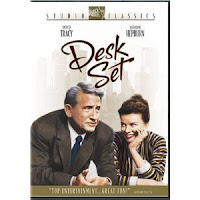
Katharine Hepburn, born in 1907, made the great romantic comedy Desk Set in 1957, one of her many pictures with costar Spencer Tracy. It's a funny, sweet story that highlights middle aged romance and women with careers, and it's actually one of my favorite movies that the pair made together. Of course, Hepburn would go on to even more great roles and Oscar nominations after 50, including three Best Actress wins.

Hepburn's Desk Set costar, Joan Blondell, was a year older, but she also enjoyed a long career. In 1956 the 50 year old star appeared as part of the ensemble cast in The Opposite Sex, a remake of the 1939 hit, The Women. Although she's best remembered today for her dozens of Pre-Code and other 1930s films, Blondell went right on acting until her death in 1979.

Bette Davis, born in 1908, was mostly doing television work in 1958, with a couple of guest spots on different series over the course of her 50th year. Even top stars like Davis and Crawford found big film roles harder to come by as they aged, especially if they wanted to avoid playing supporting characters like mothers to younger leading ladies. Davis, however, would eventually lean into horror roles and make the most of her lifelong ability to transform herself into extreme characters. Like Blondell, she would continue acting right up until her death in 1989.

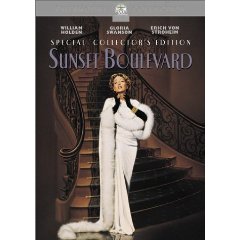
Gloria Swanson was 51 by the time Sunset Blvd. appeared in theaters in 1950, but the actress really was 50 years old when she played the 50 year old Norma Desmond. It's a role that digs into the crisis of aging for a Hollywood actress, and it's not exactly flattering. Still, Swanson is brilliant in the film, and it's a shame the movie didn't inspire a revival for the star. Her leading man, William Holden, was still enjoying big movie roles well into his 50s, but Swanson, who earned a Best Actress Oscar nomination for Sunset Blvd., moved on to television appearances and semi-retirement.

Of course, some actresses fared better after 50 than others, with comic character actresses being some of the best at maintaining their careers. Long-legged Charlotte Greenwood made Down Argentine Way (1940), Mary Wickes appeared in Cimmaron (1960), Marjorie Main made seven films in 1940, and her friend Spring Byington took on ten roles in her 50th year in 1936. They had never been famous for their glamorous youth and beauty, and they trooped along through the decades in supporting roles that allowed them to keep working long after the starlet types had been forced into retirement.

When I look at modern actresses who are turning 50 this year, I see Cameron Diaz, Rebecca Romijn, Toni Collette, Jennifer Garner, and Gwyneth Paltrow, all of whom are still working and even thriving with their careers. I doubt they'll have to resort to hagsploitation roles like Davis and Crawford, and it's encouraging to think that we see 50 differently now than we did during the classic movie era. Personally, I'm feeling pretty good about being 50, and I plan to celebrate with several special blog posts in the weeks ahead.

If you're turning 50 this year, too, happy birthday, and remember, Jessica Tandy won an Oscar at 80, so you're definitely not too old to accomplish something big!

Monday, September 20, 2021

Five Favorite Films: Bette Davis

It's really difficult for me to pick only five films for Bette Davis. She's one of my favorite stars, and her career spanned decades, with juicy, memorable roles from her early years right up to her death in 1989 at the age of 81. She was nominated for 11 Best Actress Oscars and won twice, first for Dangerous (1935) and then for Jezebel (1938). I'm choosing my five favorite films with an eye toward representing and respecting the breadth of her career, rather than just picking five from the 1940s ( a decade in which she made some 20 pictures!). A true cinema icon with a taste for the most challenging, complicated roles, Bette is justly celebrated today as one of classic Hollywood's brightest luminaries, and these five films provide a primer on the versatility and talent she possessed.

Of Human Bondage (1934)

Davis' big breakout role was one she had to fight for, but she proved herself more than capable of playing Mildred, the opportunistic working class girl who seduces Leslie Howard's aimless protagonist and then spirals into self-destruction. Davis begins the drama as a pert, attractive waitress but deteriorates horrifically as her character turns to alcohol, drugs, and prostitution; never content to play only glamorous parts, she would continue to embrace such challenging roles throughout her career. She picked up her first Oscar nomination for Best Actress for this picture but would not win until the next year for her leading role in Dangerous (1935).

Of Human Bondage (1934)

Jezebel (1938)

Released the year before Gone with the Wind (1939), this Civil War tale of a Southern belle bad girl stars Davis as stubborn, headstrong Julie, who wrecks her relationship with her beau (Henry Fonda) by violating the social norms of their community. Julie then wants to mend the damage but finds a Northern bride has filled the spot she carelessly abandoned; an outbreak of yellow fever throws her set into a panic but gives Julie a long-desired opportunity to show how much she has changed. While the plantation setting of the story raises problems for modern audiences, I do like the redemptive arc for Davis' protagonist and her great performance, which earned her second and final win for the Best Actress Oscar.


Now, Voyager
(1942)

Davis shines in this beloved melodramatic romance, in which nervous, oppressed Charlotte Vale gets a makeover and a second chance at happiness after she's whisked away from her domineering mother for treatment at a sanitarium. Paul Henreid plays the unhappily married love of her life, who can't bring himself to leave his difficult wife but takes comfort in the bond that develops between Charlotte and his troubled young daughter. Davis achieves one of her many remarkable transformations during the early part of the picture, culminating in a polished, elegant Charlotte whom her relatives hardly recognize. She picked up her seventh nomination for Best Actress for this role, while Max Steiner won for the picture's excellent score.

Whatever Happened to Baby Jane? (1962)

Always willing to be ugly for the sake of a juicy role, Davis is relentlessly awful in both appearance and manner as the titular Baby Jane in this hagsploitation classic. While some dismiss it as camp, the tragedy and horror of the picture are very real in the roles played by Davis and Joan Crawford, who famously clashed during production. Baby Jane, undeniably deranged and even violent, at first comes across as simply villainous but slowly reveals the grief, pain, and confusion that have driven her to such a state. Davis picked up the final Best Actress nomination of her career for this performance, which I appreciate more the older I get.

The Whales of August (1987)

The Whales of August (1987)

I find this quiet drama deeply moving every time I revisit it, and Davis gives a brilliant performance in this, her penultimate role and the last picture she actually completed; she walked off production of Wicked Stepmother (1989), which would be her final screen credit. Davis and silent star Lillian Gish play elderly, widowed sisters spending the summer in a New England cottage, and the rest of the characters are also played by iconic stars in their own twilight years. Gish actually plays the younger of the sisters even though she was 93 at the time, but Davis had survived breast cancer, a mastectomy, a massive stroke, and a broken hip, which made her utterly credible as the frailer elder sister. Davis made dozens of movies that are more celebrated, but this one is special for showing how her talent and determination to keep working stayed with her in spite of everything else that happened in her long career.

This is by no means a list of Bette Davis' five best films; it's a list of personal favorites that reflect my own tastes. Other Davis fans might offer a completely different list of favorites, and there are plenty of outstanding options to choose. For more Bette Davis hits, see The Petrified Forest (1936), Dark Victory (1939), The Letter (1940), and All About Eve (1950).

You'll find more full reviews of Bette Davis' films in my book, Beyond Casablanca: 100 Classic Movies Worth Watching, available in the Amazon Kindle Store.

Thursday, September 9, 2021

Five Favorite Films: Leslie Howard

English actor Leslie Howard is best remembered today for his role as Ashley Wilkes in Gone With the Wind (1939), but Howard himself was not a fan of the part or his own casting in it. He said of the role, "I hate the damn part. I'm not nearly beautiful or young enough for Ashley, and it makes me sick being fixed up to look attractive." He also called the novel a "terrible lot of nonsense"and only took the role because he was promised producer credit on a different project by David Selznick. Like Howard, I'm not a big fan of GWTW, but I do love Howard's performances in many other pictures. If you've only seen him as Ashley, you owe it to Leslie Howard to see his work in the movies that he felt were more suited to his talents. Here are five of my favorite Leslie Howard films to get you started.

Of Human Bondage (1934)

Howard plays the lead in this adaptation of the novel by W. Somerset Maugham, which also provided a breakout role for Bette Davis as the opportunistic young woman who almost destroys her lover as well as herself. Hapless artist Philip is exactly the kind of dramatic role that suits Howard; he's full of good intentions but not particularly strong against temptation or inertia, an easy mark for a schemer like Davis' Mildred.

The Scarlet Pimpernel (1934)

Although Howard is not an actor we really associate with the swashbuckler, he delivers a delightful performance in this adaptation of the classic adventure tale. It's especially fun to watch Howard simper in his character's public persona as a vain, shallow fop in order to protect his real passion for rescuing victims of the Reign of Terror. Merle Oberon plays Sir Percy Blakeney's conflicted French wife, who reluctantly agrees to help capture the Scarlet Pimpernel without realizing that her own husband is the hero himself. 

Bette Davis and Leslie Howard in The Petrified Forest

The Petrified Forest (1936)

Howard had starred in the original stage version of this story before Hollywood decided to film it, and it was his insistence that his stage costar Humphrey Bogart also reprise his role that finally launched Bogart's successful film career. Howard plays a world weary writer whose aimless wandering brings him to a moment of purpose and tragedy on the edge of the Petrified Forest, where he meets both an artistic young girl with dreams of Paris (Bette Davis) and a dangerous gangster at the end of the line (Bogart). Alan Squier is another perfect Leslie Howard role, a mix of weakness, intelligence, and disaffection with the world with whom we sympathize in spite of his obvious flaws.


It's Love I'm After
(1937)

This clever little comedy reunites Howard with leading lady Bette Davis and brings Olivia de Havilland into the mix as a starstruck fan who has fallen in love with Howard's character. Howard and Davis play a pair of actors whose stormy personal relationship spills over into their performances, but even more chaos ensues when Howard agrees to behave as badly as possible to cool his fan's ardor so that her fiance (Patric Knowles) can get her affection back. This delightful, underrated gem is well worth tracking down for fans of any of the three leads.

Pygmalion (1938)

Howard earned his second and final Oscar nomination for Best Actor for his performance in this film adaptation of George Bernard Shaw's influential play, in which Howard plays the irascible Professor Henry Higgins to Wendy Hiller's Eliza Doolittle. Hiller also picked up an Oscar nod for her role, and the two make for an electric pair as they battle their way through Eliza's transformation from Cockney flower girl to polished society lady. This is another film where Howard gets to demonstrate his talent for comedy, although his Higgins can be so nasty and selfish that he's by far the most unlikable of the characters in this list. If you like My Fair Lady (1964), you definitely need to see this earlier version of the same story.

Leslie Howard's film career was cut tragically short in 1943 when his plane was shot down by the Nazis during a trip to support the British cause against the Germans. Howard had been an outspoken advocate for Britain against the Nazis, leading to speculation that the plane was intentionally targeted because of Howard's presence. In addition to stage roles, he left behind 33 film appearances, so there are numerous other movies where you can see Howard in action, including The Animal Kingdom (1932), Berkeley Square (1933), and Romeo and Juliet (1936).

Friday, February 7, 2020

Classic Films in Focus: OLD ACQUAINTANCE (1943)

Old Acquaintance (1943) is primarily famous today for a scene in which Bette Davis violently shakes her off screen nemesis Miriam Hopkins and then offers a very insincere "sorry" to her victim, but if you watch the entire film you'll be completely on Bette's side about Miriam needing to be shaken. Directed by Vincent Sherman, this romantic melodrama stars the two feuding actresses as lifelong friends who weather ups and downs and disappointment together, but Miriam's character is just about the worst, most annoying frenemy a woman could imagine, leaving the viewer to praise Bette's heroine for just shaking her instead of opening up on her like Leslie Crosbie at the beginning of The Letter (1940). The picture is a compelling depiction of life with an emotional vampire, with a great performance from Davis and very solid support from John Loder, Gig Young, and Delores Moran, but Miriam Hopkins is the one you'll love to hate for her role as selfish, shallow, envious Millie Drake.

Davis plays up and coming novelist Kit Marlowe, who returns to her hometown at the beginning of the film and is reunited with her childhood friend, Millie (Miriam Hopkins). Jealous of Kit's success, Millie then becomes a writer of pulpy romances and enjoys immense wealth but still envies Kit's critical praise. As the years pass, Millie makes her husband, Preston (John Loder), miserable, and he yearns for a second chance at happiness with Kit, who also acts as a substitute mother for Millie's daughter, Deirdre (Dolores Moran). Kit is torn between her loyalty to Millie and her love for Preston, and her decision has lasting consequences for everyone involved.

Although she could play the diva as well as anyone, Davis is the straight arrow here, modest, loyal, practical, and self-sacrificing. Kit embodies the writer as a quiet intellectual, determined to make great art even if it only brings modest success. Millie, on the other hand, craves the limelight and the show of wealth; she churns out frothy popular romances like sausages, as one journalist (played by Anne Revere) accurately but too candidly observes. The public eats up Millie's romances, but Millie never outgrows her persistent jealousy of Kit. Hopkins chews the scenery with her tantrums and hysterics while everyone else has to react to them and attempt to placate Millie, who manages to make other people apologize for her bad behavior. The film wants us to accept that this friendship is important enough for Davis' Kit to make huge sacrifices to maintain, but modern audiences might be too keenly aware of the danger signs of unhealthy relationships to think either Kit or Preston should put up with Millie's emotional blackmail and constant theatrics.

Like numerous other romantic melodramas of this era, Old Acquaintance takes place over several decades and offers us scenes from different key points in the characters' lives. I admit to being a sucker for this kind of story because I love to see the ways in which the costumes, makeup, and lighting try to make young girls out of grown women and then continue on to show them as they grow old. Davis moves from a college girl's suit and energy at the opening to a matronly World War II uniform and a prominent gray streak in her hair near the end, while Hopkins' Millie never gives up her preference for showy, floating confections no matter how old she gets. The decades offer us an opportunity to contemplate what changes and what remains constant in the characters' lives, and for the two leads the passage of time is more distinctly emphasized by the growth of baby Deirdre into a young woman with romantic aspirations and frustrations of her own. Kit in particular is forced to think about herself in contrast with Deirdre when she finds out that Deirdre is in love with Kit's much younger boyfriend, Rudd (Gig Young). The situation puts Kit on the spot once again as she has to choose whether to fight for her own happiness or prioritize her loyalty to another woman.

If you enjoy the pairing of the two rivals, be sure to watch The Old Maid (1939), which also stars Davis and Hopkins as women tied together by jealousy and love. For more decades spanning stories with Bette Davis, see Mr. Skeffington (1944) and Payment on Demand (1951). Miriam Hopkins also stars in The Smiling Lieutenant (1931), Trouble in Paradise (1932), and Becky Sharp (1935), the last of which earned her an Oscar nomination for Best Actress.

See also: In Praise of Women's Pictures

Wednesday, February 14, 2018

Classic Films in Focus: ANOTHER MAN'S POISON (1951)

Adapted from a stage play by Leslie Sands, Another Man's Poison (1951) offers a wickedly ironic title and a chance for Bette Davis to sink her teeth into another maneater role, this time as the femme fatale protagonist of a devious noir plot. Irving Rapper directs Davis and her real-life husband at the time, Gary Merrill, as two unscrupulous people entangled in their own lies, and they do have a palpable - if violent - chemistry. Despite the location shoot at the brooding Malham Tarn Estate, the movie never quite shakes its stage roots, but Davis and Merrill make up for that in spades with their knack for driving each other into a rage. The lies and violence build to a pitch-black finale that will satisfy the most cynical film noir fan.

Davis schemes as Janet Frobisher, a mystery novelist occupying a grand home in a remote English village. When bank robber George Bates (Gary Merrill) comes looking for Janet's long absent husband, he finds that Janet has already dispatched her criminal spouse. George decides to fill the vacancy by pretending to be the man of the house, a plan Janet doesn't appreciate, especially when George suggests it's a permanent arrangement. Janet has her own plans regarding her secretary's handsome fiance, Larry (Anthony Steel), and she worries about keeping up the deception with her neighbor, Dr. Henderson (Emlyn Williams), who is constantly dropping by.

It quickly becomes apparent that Janet has no redeeming qualities whatsoever, which enables Davis to play her villainous nature to the hilt. There's no moral gray area here; the only thing Janet gives a damn about is her horse, Fury, and everyone else in the world can go to Hell for all she cares. She has no pity for her innocent secretary, Chris (Barbara Murray), from whom she steals the attractive Larry simply because she can. She poisons her husband not because he's a criminal and a terrible person but because she just doesn't want him around, and then she gets George to dump his corpse into the tarn. Later, she works hard to get rid of George, too. When karma catches up with Janet, it's a delicious bit of payback that the audience relishes, and Davis knows exactly how to exploit our loathing for her character.

Merrill's George is also reprehensible, especially in his sexist assumption that he can outfox Janet, but he's never as clever as she is. He develops a strange jealousy of Larry, seemingly buying into his own usurped rights as Janet's husband; he's furious that she keeps the door joining their bedrooms locked even though he's a total stranger. George is not quite as cold-hearted as Janet when it comes to murder; he first shows up because Janet's husband shot the policeman in the bank heist that went wrong, and George wants his name cleared in the killing. He pales when Janet suggests that her husband was actually alive when George pitched him into the tarn, and he's shocked when he realizes that Janet is trying to kill him, too. He even offers a little romantic advice to Chris to help her hold onto Larry, but that doesn't make him a good guy. When he takes out his anger on Janet's horse, he crosses a line with her and the audience's sympathy. We all know from there that there's no going back.

Enjoy the more subtle twists of Emlyn Williams' performance as the neighborly vet who keeps asking for his deadly horse medicine back; he's as close as we get to a detective in this film. Davis and Merrill made three pictures together; the other two are All About Eve (1950) and Phone Call from a Stranger (1952). Irving Rapper also directed Bette Davis in Now, Voyager (1942), The Corn is Green (1945), and Deception (1946). Look for Emlyn Williams in I, Claudius (1937) and Ivanhoe (1952), and see Anthony Steel in The Master of Ballantrae (1953)


Monday, May 29, 2017

Orry-Kelly and WOMEN HE'S UNDRESSED (2015)

Gillian Armstrong's 2015 documentary film about Hollywood costume designer Orry-Kelly is currently streaming on Netflix, and it offers an intriguing look at the life of the three time Oscar winner, who dressed stars as iconic and diverse as Bette Davis, Ingrid Bergman, Marilyn Monroe, and Natalie Wood. The documentary uses dramatic recreation and a wry performance by Darren Gilshenan as Orry-Kelly to tell the story of the Australian costume designer's early life and long - if uneven - career in Hollywood. While it's obviously of interest to classic film fans with an eye for fashion, Women He's Undressed also provides a straightforward consideration of the problems of being a gay man in Golden Age Hollywood, when many stars and people behind the scenes were driven to keep their personal lives secret for fear of exposure, scandal, and expulsion.

The dramatic recreations are fun, sometimes quite cheeky, and good at conveying Orry-Kelly's sense of humor. The documentary also relies on interviews with various stars and costume designers who knew Orry-Kelly, including Jane Fonda, Angela Lansbury, and Ann Roth. These segments flesh out different aspects of Orry-Kelly's life, including his experience as part of the industry's gay community and his relationships with people like Jack Warner and his wife. One thing we don't see much of is film footage of Orry-Kelly himself, although we do get some still photos and snippets of letters, particularly those between the designer and his devoted mother. Film clips instead focus on the clothes and the actresses he dressed in his most successful work; these are, of course, important to understanding the designer's contributions to cinema, but it would be nice to see more of the real Orry-Kelly in the mix.

The documentary wades right into the ongoing debate about Cary Grant's sexual orientation; Orry-Kelly and Grant - then Archie Leach - knew one another and lived together early in their careers in New York, but Grant snubbed Orry-Kelly once stardom arrived. In fact, Grant really doesn't come off in a positive light, which is sure to upset some viewers, but it's clear that Orry-Kelly was deeply hurt by the end of their friendship, and this film is about his perspective.

Overall, Women He's Undressed succeeds at raising interest in and awareness of Orry-Kelly's life and work; it will send a lot of classic movie fans back to Jezebel, Some Like It Hot, and Gypsy for a fresh look at the ways in which the clothes make the pictures. Bette Davis devotees should, in particular, make time to watch the documentary and consider the designer's crucial role in shaping Davis' look in many of her most memorable roles. If you're interested in seeing more films from Australian director Gillian Armstrong, you might try her 1994 adaptation of Little Women or her 2010 documentary, Love, Lust & Lies.


Monday, April 11, 2016

Classic Films in Focus: THE LITTLE FOXES (1941)

The Little Foxes (1941) reunites stars Bette Davis and Herbert Marshall with director William Wyler after their collaboration the previous year in The Letter (1940), in which Davis had also played a morally bankrupt wife who wrecks Marshall's life. The original stage version of the play by Lillian Hellman had starred Tallulah Bankhead, who hailed from Alabama, where the story takes place around the turn of the last century. The movie version pulled in a whopping nine Oscar nominations, with Teresa Wright and Patricia Collinge actually pitted against each other for Best Supporting Actress, but the lack of any wins is more a testament to the year's embarrassment of cinematic riches than a reflection on the merits of this picture. Smart, sharp, and ruthless in its depiction of a truly awful trio of ambitious siblings, The Little Foxes is a must for Davis and Marshall fans.

Davis leads as the heartless Regina Giddens, who hopes to rake in riches by convincing her husband, Horace (Herbert Marshall), to go in with her two brothers (Charles Dingle and Carl Benton Reid) on a cotton mill scheme. When Horace refuses, his shifty nephew, Leo (Dan Duryea), steals valuable railroad bonds from Horace's safety deposit box to get enough money to proceed with the plan. The brothers also hope to consolidate the family's wealth by marrying Leo to Regina's innocent daughter, Alexandra (Teresa Wright), a plot strenuously resisted by Horace and Alexandra's unhappy aunt, Birdie (Patricia Collinge).

The Hubbard brothers and their sister make most dysfunctional families look like the Brady Bunch. They share a Shakespearean hunger for importance and wealth, and destruction falls on anyone who stands in their way. Eldest brother Ben (Dingle) hides his grasping avarice beneath a veneer of Southern geniality, while second son Oscar (Reid) berates and belittles his alcoholic wife after marrying her for her family's name and property. Shut out from the Hubbard inheritance because of her sex, Regina competes with her brothers by manipulating her ailing husband and pushing relentlessly for the largest share in the cotton mill scheme. Davis, Dingle, and Reid are at their best when they get to be the worst; they really send chills up the spine with their cold eyes and their infinite greed. Davis in particular freezes the heart when Regina watches Horace succumb to a heart attack without lifting a finger to help him. It's murder by sitting still, but the look on Davis' face speaks volumes. Dan Duryea makes a perfect heir to the Hubbards' black nature as the corrupt but spineless Leo; if he lacks the grandeur of his elders, he is, at least, everything that they deserve.

The siblings behave so badly that the movie would be unbearable without the relief provided by the sympathetic characters, particularly Herbert Marshall's dying Horace and Teresa Wright as his devoted daughter. Wright's Alexandra is the dynamic character of the narrative; her elders have already made the decisions that dictate their fates, but she has the opportunity to reject their choices and strike out for a life of her own. She has several key figures to help her, including her father and her playful love interest, David (Richard Carlson), but the good women around her also show her the way. Her Aunt Birdie serves as a tragic object lesson in the dangers of letting the Hubbards control her, and Patricia Collinge plays the character beautifully, so that we see her failings but forgive them because of her sweet nature and her suffering. More importantly, Alexandra has a true mother figure in Addie, played by Jessie Grayson with quiet fortitude and unshakable poise. She might be a paid household servant, but Addie makes the single greatest difference in Alexandra's life, having obviously raised her to be a generous, sincere person in spite of her mother and uncles. The most moving scene in the film unites all of these good characters at a table outside the house, where they form a kind of quiet resistance to the devouring evil of Regina and her brothers. The elders might not be able to save themselves, but they support one another and do their best to protect Alexandra, who is the heir to their humanity just as Leo is the heir to the Hubbards' depravity. Worlds collide when Alexandra eventually stands up to Regina, especially in the movie's powerful final scenes.

Bette Davis already had two Oscars by the time she got her nomination for The Little Foxes. She would end her career with eleven nominations in all, including wins for Dangerous (1935) and Jezebel (1938), both of which were also directed by William Wyler. Wyler won his own Oscars for Mrs. Miniver (1942), The Best Years of Our Lives (1946), and Ben-Hur (1959). For more of Herbert Marshall, see Trouble in Paradise (1932), The Enchanted Cottage (1945), and Angel Face (1952). Don't miss Teresa Wright and Patricia Collinge playing daughter and mother in Shadow of a Doubt (1943); Wright, who also appears in The Best Years of Our Lives, won the Oscar for Best Supporting Actress for Mrs. Miniver. If you want to know how the Hubbards got to be such a rotten crowd, you might track down the prequel, Another Part of the Forest (1948), in which Dan Duryea plays the younger Oscar and Ann Blyth plays Regina. Other films adapted from Lillian Hellman's plays include Watch on the Rhine (1943) and The Children's Hour (1961).


Wednesday, November 19, 2014

Classic Films in Focus: A STOLEN LIFE (1946)

Bette Davis stars as a pair of identical twins, one good and one bad, in A Stolen Life (1946), but the title grossly oversimplifies the circumstances that lead one twin to usurp the identity of the other. What we get is really a romantic drama, not a mystery or a thriller, but it's a very compelling story, nonetheless, with Davis giving her usual top-notch performance in both roles. Curtis Bernhardt directs the action with an excellent eye for the staging of this unusual set-up, which puts double the Davis onscreen a lot for a 1946 picture, and the effects still look good almost seventy years later. While Davis naturally dominates A Stolen Life with her dual role, Glenn Ford, Dane Clark, and Charlie Ruggles all make memorable appearances, and Max Steiner's music perfectly sets the tone for a story of love, loss, and unexpected second chances.

Davis first appears as Kate Bosworth, an aspiring artist who cleverly convinces a crusty old lighthouse keeper (Walter Brennan) to let her paint his portrait. The man she really wants to spend time with, however, is handsome Bill (Glenn Ford), who works at the lighthouse, as well. Despite Kate's best efforts, Bill eventually meets her more flirtatious twin sister, Pat, who pursues Bill mostly because she knows that Kate wants him. When Bill marries Pat, Kate is heartbroken, but a tragic accident gives her the chance to enjoy the life her sister had stolen.

It's hard not to imagine the dual casting of Davis as a gimmick of the Patty Duke and Hayley Mills variety, but it never feels that way onscreen. Davis plays both parts for their full melodramatic value, with introverted Kate and extroverted Pat as clearly defined, well-developed individuals. The split screen scenes give us ample opportunity to contrast the body language, tone, and expression of the two sisters. In one especially striking bit, we even see them touch, but the special effect is secondary to the moment's emotional import. Kate sincerely loves her sister, but Pat's selfish actions wound her deeply; at the wedding Kate deftly sidesteps the bouquet that Pat throws toward her, a quiet but pointed way of demonstrating her unhappiness with her thoughtless sibling. When Pat conveniently drowns, Kate assumes her identity because everyone around her believes that she is the other sister, and the deception proves a terrible strain, especially because Pat has made such a mess of the marriage that Bill wants to be divorced and done with it. Of course, Bill's unhappiness is his own fault for picking the wrong sister in the first place, but the movie suggests that Kate should have fought harder to keep man she loved. Kate has bought into Pat's selfishness and enabled it to a dangerous degree. "Must you always let that sister of yours get ahead of you?" asks her cousin, Freddie (Charlie Ruggles). Even after Pat's death Kate still lets her be the dominant sister, sacrificing "Kate" as the victim to make "Pat" the survivor. It takes Kate the whole narrative to step out from behind her sister's shadow and assert her own identity.

The men in the sisters' lives contribute to the story's effect, with particularly strong performances from Charlie Ruggles as Freddie and Dane Clark as the temperamental artist Karnock. Ruggles exudes charm and sympathy as the genial older cousin, rightly aligning himself with Kate from the very start. Clark proves a scene-stealer as the caustic, passionate Karnock, so much so that we wonder why Kate doesn't gravitate toward him and get on with her life after Bill drops her for Pat. Like Kate herself, Karnock lacks style but bursts with substance, and he's unfailingly true to himself and his art. Moreover, it's clear that he harbors some intense emotions regarding Kate, even if he's too rough to articulate them in a conventionally romantic fashion. His portrait of her, done after her supposed death, speaks volumes about his real feelings. He's quite the foil to leading man Glenn Ford, who has a less rewarding role since we understand that Bill is a dope who prefers style over substance. The early scenes, in which we watch him fall for Pat and cool toward Kate, are especially irritating. Ford has his best moments when Bill gets angry, especially after Kate takes Pat's place and learns the truth about her sister's marriage. In those scenes the hard edged intensity that Ford embodies gets some vent, and we realize that Pat was a fool to imagine a man like that would put up with her bedroom games. The ending is neat and conventional, perhaps too much so, but it's exactly what one expects from a 1940s romantic drama. Running off with Karnock is not, unfortunately, ever presented as a real option.

Be sure to note Clara Blandick and Bruce Bennett in small supporting roles. A Stolen Life earned an Oscar nomination for its special effects but lost to Blithe Spirit (1945). For more films directed by Curtis Bernhardt, see My Reputation (1946), Possessed (1947), and Miss Sadie Thompson (1953). Bette Davis also plays twins in Dead Ringer (1964); for other Davis pictures from the mid-1940s try Mr. Skeffington (1944) and Deception (1946). Look for Glenn Ford in Gilda (1946), The Big Heat (1953), and 3:10 to Yuma (1957). Dane Clark and Bette Davis both appear in Hollywood Canteen (1944), while Charlie Ruggles and Glenn Ford can be found in Gallant Journey (1946). For a double feature of dual roles, try pairing A Stolen Life with The Prisoner of Zenda (1937), That Night in Rio (1941), or The Dark Mirror (1946), in which Olivia de Havilland also plays identical twins.


Thursday, November 6, 2014

Classic Films in Focus: DEAD RINGER (1964)

Despite its gruesome title, Dead Ringer (1964) provides a sharp contrast to the better known hagsploitation movies Bette Davis made during the same period. In both Whatever Happened to Baby Jane? (1962) and Hush... Hush, Sweet Charlotte (1964), Davis plays aging women well beyond the verge of a nervous breakdown, but in Dead Ringer the actress returns to more glamorous territory as a wealthy widow and the vengeful twin who assumes her identity. Between the two characters, Davis plays callous, resentful, homicidal, and deceptive, but neither Margaret nor Edith ever comes across as crazy. Paul Henreid, one of Davis' most important leading men from the old days, directs the action with an eye for its melodramatic sensibilities more than its thrills, while Davis' costars Karl Malden and Peter Lawford also emphasize the romantic angles as each of the twins' love interests. Thriller fans looking for high tension might find Dead Ringer a bit of a letdown, but Davis admirers will get twice the gratification from this story of thwarted love and deeply ironic justice.

Davis opens the film as Edith Phillips, a middle-aged spinster with a failing Los Angeles cocktail bar and a cop boyfriend, Jim (Karl Malden). When Edith attends the funeral of her brother-in-law, the lover her sister, Margaret, stole from her years ago, the twin sisters meet again for the first time in nearly two decades. Angry about the old betrayal and desperate to escape her bleak life, Edith murders Margaret, stages the body as her own suicide, and takes the rich sister's place in a lavish mansion. Unfortunately for Edith, Jim proves more dedicated to her memory than she expects, while Margaret's lover, Tony (Peter Lawford), has dangerous secrets of his own to protect.

We actually see very little of the real Margaret in the movie; a double stands in for Davis, conveniently wearing a mourning veil, in most of the early scenes, and Edith kills Margaret in the first act. When we do see both sisters in the same frame, the effects work looks convincing, and Davis does an excellent job acting opposite herself. She had played twins before, in the 1946 film, A Stolen Life, so she had experience with the trick of seeming to be two different people in the same shot, although the older film actually employs the technique more frequently and to more startling effect. Davis spends most of Dead Ringer playing Edith pretending to be Margaret, a challenging task made more difficult by the constant presence of servants, family members, friends, and, worst of all, Margaret's suspicious lover. Not having seen her sister in so many years, Edith naturally has no idea who Margaret's friends are or how to behave around them, and her suddenly cooled ardor toward Tony quickly tips him off that a changeling has taken Margaret's place. In the third act, however, Davis has some truly triumphant moments as Edith finally realizes the extent of Margaret's crimes and makes a fateful decision to protect the integrity of her old identity from the person she has become. There the picture plunges into the melodramatic territory that Davis knows so well, and her final moments as the bravely masquerading "Margaret" are quite as good as any of the climactic scenes she played in her younger days.

A strong supporting cast helps to elevate the material, as well, particularly Karl Malden as Edith's rather prosaic beau. Edith doesn't understand how much Jim cares about her until she has already gone too far to reclaim him, and Malden is especially good in the later acts, when Jim doggedly hangs around the DeLorca mansion because "Margaret" reminds him so much of Edith. Malden doesn't play Jim as a dope, but he has to be thick enough not to see through Edith's disguise. Peter Lawford, on the other hand, is every bit the wolf; his Tony is as sharp-eyed and callous and Jim is gullible and sentimental. Fifteen years younger than Davis, Lawford has the air of a gigolo, handsome but opportunistic and calculating. Since Margaret is only in the movie for the first act, Tony becomes the real villain of the piece, and he's marvelously awful, so much so that the viewer will cheer his much-deserved doom. Jean Hagen has a small role as Margaret's socialite friend, Dede, and Paul Henreid's daughter, Monika, plays Margaret's maid, but Estelle Winwood is the most memorable of the bit players as the elderly Dona Anna.

Davis' other pictures from the early 1960s include A Pocketful of Miracles (1961) and The Nanny (1965), but A Stolen Life makes an especially good double feature for a double dose of Davis twins. See Paul Henreid in front of the camera with Davis in Now, Voyager (1942) and Deception (1946); he is best remembered today for his performance in Casablanca (1942), but he directed a number of films and television series, including 28 episodes of Alfred Hitchcock Presents. Karl Malden won an Oscar for A Streetcar Named Desire (1951); catch more of him in On the Waterfront (1954), Baby Doll (1956), and Gypsy (1962). Peter Lawford also stars in Easter Parade (1948), Royal Wedding (1951), and Ocean's Eleven (1960). For more actors in dual roles, try Lady of the Night (1925), The Prisoner of Zenda (1937 or 1952), That Night in Rio (1941), and Cat Ballou (1965).


Sunday, October 19, 2014

Classic Films in Focus: WHATEVER HAPPENED TO BABY JANE? (1962)

Robert Aldrich's quintessential example of Grande Dame Guignol is often discussed for its value as camp, but Whatever Happened to Baby Jane? (1962) offers genuine horrors as well as pitch black comedy. Bette Davis and Joan Crawford, fierce rivals and determined survivors of the Hollywood fame machine, invest their characters with layers of psychological depth that lesser actresses could never achieve, and the result is a horror film that stirs the imagination long after the terrible irony of the final scene. Like Sunset Boulevard (1950), Baby Jane is a story about the fickle nature of stardom, but it's also a dark fairy tale of sibling rivalry pushed to murderous extremes. You may watch it for camp and laugh at Davis' shrieking hag, but the true genius of Baby Jane reveals itself in the quieter moments, where we witness the awful power of jealousy, love, and hate to wreak havoc on human souls.

Davis plays former child star Baby Jane Hudson, whose heyday on the Vaudeville stage gave way to failure as a screen actress once she grew up. Crawford is her sister, Blanche, once the jealous wallflower but later a huge Hollywood success. Blanche's career ended when a mysterious car accident paralyzed her legs, and years later she is confined to a wheelchair and dependent on the increasingly unstable Jane. Jane's outrageous abuse makes Blanche fear for her life, but a terrible secret binds the two sisters together in a fatal knot of guilt and resentment.

The garish white face of Baby Jane is one of the picture's most iconic elements, along with the infamous rat on a tray, and it might seem like a bizarre moment in Bette Davis' career for those unfamiliar with her particular talent for transforming herself into monstrous objects of pity and revulsion. Take it instead as part of a whole that reaches back to Of Human Bondage (1934) and Marked Woman (1937) and continues through Now, Voyager (1942) and Mr. Skeffington (1944). Davis revels in this kind of role, and it shows in her sharp, poignant performance. Her Jane is as much Blanche DuBois as Norma Desmond, not merely a crazed harridan but a broken soul that longs for acceptance and even love. In the tradition of all great monster performers, Davis works hard to make us feel the tragedy beneath the horror. Jane was young once, beautiful and beloved. If she has fallen so far, there must be dreadful reasons for it, which the film itself will only tease us with, even in the confessional moments of the closing scene. Davis invites us to consider the hidden things, the slow decline of Jane's mind and the toll of living with Blanche all those years.

Joan Crawford plays a subtler psychological game as Blanche, wearing her terrified martyr face but leaning on that buzzer with a vengeance. Without the opening scenes, where young Blanche eyes her sister and father with steely hatred, we might be inclined to believe that Blanche is merely the victim here, the sweet and tragically crippled star pining for a quiet life with her devoted maid, Elvira (Maidie Norman). Gina Gillespie, who plays Blanche as a child, gives a short but critical performance that warns us not to take Blanche's act at face value. Crawford's Blanche is consciously playing a role, but that buzzer shatters Jane's fragile mind at every opportunity, as shrill and profane as Blanche pretends to be long-suffering and refined. Only at the end do we understand the extent of Blanche's responsibility for the fate that befalls her, but then we see her own mask of virtue set aside, as much a false face as Jane's gruesome paint.

Other performances are also worth noting. Victor Buono earned an Oscar nomination for his avaricious, amoral Edwin Flagg, and he has a screen presence reminiscent of Laird Cregar in his sleazier villain roles. Maidie Norman is simply brilliant as Elvira, who distrusts crazy Jane but falls hook, line, and sinker for Blanche's assumed sweetness. Anna Lee provides some context and contrast as the neighbor, Mrs. Bates, who remembers Blanche Hudson's stardom but also reminds us of the normal life that neither sister got to have. Julie Allred, all blonde curls and bad attitude, provides a perfect introduction to Jane as the child star at the height of her career; her temper tantrum at the backstage door is quite a moment, with a deliciously dark connection to the movie's final scene. Oddly enough, Bette Davis' daughter, Barbara Merrill, appears as Mrs. Bates' teenage daughter; her scathing tell-all book about her famous mother was still more than 20 years away, but she would marry at the age of sixteen the year after Baby Jane was released.

In a rare showing of Academy enthusiasm for a horror film, Whatever Happened to Baby Jane? won an Oscar for Best Costume Design, with four more nominations, including a nod for Davis as Best Actress. Ernest Haller's cinematography also picked up a well-deserved nomination. Davis and Aldrich reunited for Hush... Hush, Sweet Charlotte (1964), but Crawford famously dropped out and was replaced by Olivia de Havilland. For more from Aldrich, try Vera Cruz (1954), Kiss Me Deadly (1955), and The Dirty Dozen (1967). See more Bette Davis horror in Dead Ringer (1964), The Nanny (1965), Burnt Offerings (1976), and The Watcher in the Woods (1980). Crawford's late career also includes horror films like Strait-Jacket (1964), I Saw What You Did (1965), and the infamous Trog (1970), which would be her final film credit.

Saturday, July 12, 2014

In Praise of 42 Year Old Classic Movie Actresses

Being a 42 year old woman myself, I'm fascinated by the presumption of Tom Junod's recent Esquire piece, which opens with the statement that "there used to be something tragic about even the most beautiful forty-two year old woman." The essay has swiftly and justly provoked a chorus of mockery and retort from both men and women alike. What particularly caught my attention, though, was Junod's use of Anne Bancroft in The Graduate (1967) as his touchstone for the "old view" of the forty-two year old woman's tragic sexuality. For the record, Anne Bancroft was just 36 when she played Mrs. Robinson, while her supposedly 22 year old lover, Dustin Hoffman, was actually 30. Once Junod brought up the subject of classic films and the 42 year old woman, I couldn't help but think about iconic actresses and the roles they were playing when they really were 42. Let's take a look, shall we?

Bette Davis, born in 1908, turned 42 in 1950, the year she starred in All About Eve, one of her most celebrated films. Beautiful, successful, and certainly desirable, her Margo Channing was one of her greatest characters, and one who had a lot in common with her real-life self. The movie won six Oscars, including Best Picture, and Davis picked up her ninth Best Actress nomination.

Joan Crawford, born in 1906, turned 42 in 1948. She didn't have a picture come out that year, but the next year saw her star in Flamingo Road (1949), and in 1950 she made The Damned Don't Cry and Harriet Craig. Sex appeal is her character's chief weapon in the crime drama, The Damned Don't Cry, and Joan would go on being fabulously tough and sexy in This Woman is Dangerous (1952), Torch Song (1953), and Johnny Guitar (1955).

Katharine Hepburn entered the world in 1907 and celebrated her 42nd year in 1949, when she gave Spencer Tracy every ounce of trouble she could muster in the marvelous comedy, Adam's Rib. Hepburn wasn't done, either, not by a long shot. She still had The African Queen (1951), Pat and Mike (1952), Desk Set (1957), and even Rooster Cogburn (1975) ahead of her. She would earn eight of her 12 career Oscar nominations after she was 42, and she would win three more times, all in the last two decades of her long screen career. Irrelevant? I think not. Tragic? Hardly.

Claudette Colbert, born in 1903, was by no means fading at the age of 42, which she reached in 1945. She starred that year in Guest Wife, but she had bigger hits later on, especially with The Egg and I in 1947. Funny, sassy, and classy, Colbert also starred with John Wayne in Without Reservations (1946) and with Walter Pidgeon in The Secret Heart (1946).

Living legend Maureen O'Hara, she of the fiery heart and hair, was born in 1920. She turned in 42 in 1962, a year before her iconic turn in McLintock! (1963) with frequent leading man John Wayne. In 1962 she starred in Mr. Hobbs Takes a Vacation with Jimmy Stewart, and she reunited with Stewart for The Rare Breed in 1966. She was still yanking Duke's chain as late as 1971, when they made Big Jake.

Not enough for you? We're not even close to finished.

Doris Day starred in The Glass Bottom Boat  in 1966, 42 years after her birth in 1924.

Olivia de Havilland, born in 1916, made The Proud Rebel in 1958, the year she turned 42.

Ginger Rogers, born in 1911, turned 42 in 1953, the year she starred with Cary Grant in Monkey Business and more than held her own against nubile newcomer Marilyn Monroe.

Joan Blondell, born in 1906, made Nightmare Alley in 1947, and turned 42 in 1948. The feisty Pre-Code star continued to work right up until her death in 1979.

Ingrid Bergman, who was born in 1915, turned 42 in 1957. She won an Oscar that year for Best Actress for her performance in Anastasia (1956). In 1958, she starred with Cary Grant in Indiscreet and with Robert Donat in The Inn of the Sixth Happiness. She still had two more Oscar-nominated roles ahead of her; she won Best Supporting Actress for Murder on the Orient Express (1974) and picked up her final Best Actress nod for Hostsonaten (1978).

Pause with me a moment to imagine any of these great ladies of Hollywood responding to Tom Junod's assertion that they were tragic because of their age at 42. Are your imaginary ears blistering yet? Mine sure are. Sic' em, Bette, Joan, and Kate!


Monday, February 24, 2014

Classic Films in Focus: JIMMY THE GENT (1934)

James Cagney and Bette Davis only made two pictures together, the first of which was Jimmy the Gent (1934), and the second The Bride Came C.O.D. (1941). The pairing of these two huge personalities might seem like a match made in heaven, but neither of their collaborations is as good as their individual films, perhaps because both put Bette Davis into uncertain territory as a comedic heroine. In Jimmy the Gent, Michael Curtiz directs the two stars through a rocky romance that plays like a tamer version of a typical Pre-Code comedy, which makes sense given the movie’s release date in 1934, just as the Hays Code really started to be enforced. There are laughs to be found in Jimmy the Gent, thanks to Cagney and the daffy charms of Alice White, but the picture will mostly appeal to those who have a vested interest in the careers of the two iconic leads.

Cagney plays Jimmy Corrigan, who specializes in providing imaginary heirs for the fortunes of dead millionaires, with a generous cut for himself as the reward. Bette Davis bristles as the more ethical Joan Martin, who used to work for Jimmy but jumped ship to his upscale rival, Wallingham (Alan Dinehart). As Jimmy makes an effort to polish his act, he and Wallingham end up supporting rival heirs to an old lady’s fortune, but Jimmy’s real plan is to win back Joan by exposing Wallingham as a cheat and a heel.

With his shaved head topped with a cockscomb of wavy hair, Cagney has the feisty demeanor of a barnyard rooster, strutting and crowing in an office full of attractive hens. He plays up the comedic aspects of his character, who talks like a gangster but is really a much milder kind of crook, and his most violent acts involve throwing things at his sidekick, Louie (Allen Jenkins). Jimmy yearns for class and the appearance of respectability, but he doesn’t fully comprehend either. In fact, Jimmy is crooked to the core; even his show of “ethics” to win back Joan is merely that. Cagney invests the character with such energy and humor that we want to like him in spite of his amoral behavior, but some of his dealings are so shady that it’s hard to forgive him, especially when Jimmy plans ahead of time to cheat Gladys Farrell (Mayo Methot) out of her cut of the money that he promises to give her.

Bette Davis ends up being another problem with our final sense of the picture. A different leading lady, perhaps Jean Harlow or Joan Blondell, might have made Jimmy the Gent a real corker of a comedy, but Bette Davis plays it perfectly straight, and her performance creates a jarring sense of dual genres. The shift is especially noticeable in her scenes with Alan Dinehart, when his smirks and double takes contrast with her melodramatic delivery of her lines. The movie also saddles Davis with an odd hairstyle and camera angles that don’t necessarily flatter her face, but this is still early in her career, before she was a big enough star to have a say in such matters. Her breakout role would come later the same year, when her dramatic talents were put to much better use in Of Human Bondage (1934). I would never say that Bette Davis was bad in anything, but Jimmy the Gent is by no means the best place to see her, and her performance suggests that she knows this isn't her kind of movie or the sort of character she was meant to play.

For more of Cagney’s early comedic roles, try Blonde Crazy (1931), Lady Killer (1933), and A Midsummer Night’s Dream (1935). See Bette Davis come into her own in The Petrified Forest (1936), Marked Woman (1937), and Jezebel (1938). Bette Davis could do comedy very well when the material was right; try, for example, the very funny It's Love I'm After (1937), in which Davis stars with Leslie Howard and Olivia de Havilland. For more of Allen Jenkins, look for Lawyer Man (1932), Blondie Johnson (1933), and The Mayor of Hell (1933). Michael Curtiz is best remembered today as the director of Casablanca (1942), but his other films from the early 1930s include Doctor X (1932), Mystery of the Wax Museum (1933), and Captain Blood (1935).

Jimmy the Gent is currently available for streaming on Warner Archive Instant.

Tuesday, February 4, 2014

Classic Films in Focus: MARKED WOMAN (1937)

The world of the gangster movie is largely a boys' club, where women exist only as victims or commodities and the mobsters' guns serve as constant reminders of their phallic power. In opposition to that trend we have director Lloyd Bacon's very effective Marked Woman (1937), which features Bette Davis as the leader of a group of women who fight back against the mob's control over their lives. Inspired by the real-life fall of mobster Lucky Luciano in 1936, Marked Woman is a film that took a lot of finesse to get by the censors, but it's an excellent example of a classic Warner Bros. gangster picture that also offers something different from the studio's better-known films.

Davis stars as Mary Dwight, one of five "hostesses" at a night club newly acquired by Johnny Vanning (Eduardo Ciannelli), a vicious crime lord. At first, Mary and her friends agree to play by Vanning's rules, and Mary even helps the mobster beat a murder charge prosecuted by a crusading assistant district attorney named David Graham (Humphrey Bogart). Later, Vanning murders Mary's innocent kid sister, Betty (Jane Bryan), and the devastated Mary leads the women in a dangerous bid to help Graham bring Vanning to justice for his crimes.

Of course the women are prostitutes. The movie calls them "hostesses" to placate the censors, but there's little doubt about their real occupation at the club. When Vanning first takes over, his speech to the assembled girls pointedly includes directions to soften up the suckers for the gambling tables by any means necessary, and later scenes show them cozying up to various men according to the management's orders. The seedy nature of their work contrasts with their beautiful clothes and attractive faces, but they are all tough survivors underneath, pragmatic and jaded enough to cover up Vanning's crimes and keep their mouths shut. The actresses who play the women are all very good at projecting those facets of their characters' personalities. Davis is the undisputed star, but Isabel Jewell is very good as the soiled Southern belle, Emmy Lou, and Lola Lane, Mayo Methot, and Rosalind Marquis all give solid performances, as well. In the most powerful scene in the film, the gangsters beat and mutilate Davis' Mary behind closed doors while the other girls (and the audience) shudder in horror at the sounds of screams and blows. When the door opens, we see only the girls' white-faced reaction shots as clues to the carnage inside. Davis proves her talent for dramatic transformation when she later appears bandaged and beaten in a hospital bed, the wrecked visage and copious gauze a result of her own decision to make the scene more realistic than Bacon and the make-up department had intended.

Bogart's role is comparatively small, although the film marks a reunion with Davis following their appearance together in The Petrified Forest in 1936. At least the part of David Graham put him on the other side of the law for a change. More importantly for Bogart, the film introduced him to Mayo Methot, whom he married in 1938, although the union would prove to be a train wreck that ended with divorce in 1945. Eduardo Ciannelli has a meatier part as the gangster boss, and he makes a truly horrifying villain. Jane Bryan is fresh-faced and sweet as Davis' kid sister, a perfect contrast to the streetwise group who avenge her tragic death.

You'll find plenty of more masculine gangster action in films like Little Caesar (1931), The Public Enemy (1931), and Scarface (1932). For more of Bogart and Davis, see Kid Galahad (1937) and Dark Victory (1939). Isabel Jewell is probably best remembered today for her performance as the unlikable Emmy Slattery in Gone with the Wind (1939). Look for Mayo Methot with Davis and James Cagney in Jimmy the Gent (1934). For more from Lloyd Bacon, try 42nd Street (1933), Footlight Parade (1933), and Brother Orchid (1940).

An earlier version of this review originally appeared on Examiner.com. The author retains all rights to this content.

Wednesday, January 22, 2014

Classic Movie Cryptoquiz: Bette Davis

A cryptoquiz is a puzzle in which all of the letters of the alphabet have been switched. Can you solve all twelve of the scrambled movie titles in the list below? Each of the movies in this quiz stars Bette Davis.

Bette Davis Movies


GSUIMO  FVGSE
VY LTGSE  QVEOSAM
SWW  SQVTD  MKM
EVF  KVPSAMU
OSUI  KXZDVUP
DLM  FLSWMJ  VY  STATJD
BMRMQMW
DLM  HMDUXYXMO  YVUMJD
DLM VWO  GSXO
OMSO  UXEAMU
DLM  WMDDMU
GU.  JIMYYXEADVE

If you haven't solved a lot of cryptoquizzes before, you might find it helpful to print the puzzle out. I'll post the answers in the comments section below, but don't look until you are finished! I hope to make cryptoquizzes a regular feature of the blog if people enjoy them, so let me know if you want to see more classic movie puzzles and games in the future.