Showing posts with label Harry Carey. Show all posts

Wednesday, March 30, 2016

Classic Films in Focus: BARBARY COAST (1935)

Howard Hawks made far better and more memorable films than the 1935 period drama, Barbary Coast, but the movie is worth watching for a number of reasons, not least of which is Edward G. Robinson with an earring. The title identifies the setting of this rather gritty picture as the wildest section of San Francisco during the California Gold Rush; within this powder keg location we find Robinson ensconced as one of his most flamboyant heavies, playing opposite a grimly determined Miriam Hopkins and a naive Joel McCrea. If you're a particular fan of any of those stars you'll find enough in Barbary Coast to keep you entertained, but the film also boasts several bonuses in its supporting players, including Walter Brennan, Brian Donlevy, Frank Craven, and Donald Meek. Basically a Western with a melodramatic slant, Barbary Coast isn't perfect, but it is an interesting depiction of a woman's struggle to survive in a world of violence, gold, and lawless, dangerous men.

Hopkins stars as Mary Rutledge, who arrives in San Francisco to find her impending marriage ruined by the murder of the man she meant to wed. Undeterred, Mary quickly gets herself into the good graces of the local crime boss and gambling hall owner, Louis Chamalis (Robinson). As Swan she serves as the attractive bait that lures gold-loaded miners to try their luck at Louis' rigged roulette wheel, but Louis becomes violently jealous when he suspects that she has met a man whom she likes better than him. The newcomer is handsome Jim Carmichael (Joel McCrea), a poetic miner ready to head back East if he can get out of San Francisco without losing his gold, his heart, and his life.

With its Western trappings and melodramatic perspective, the movie has to juggle the masculine elements of its world with the heroine's emotional narrative, a task made more complicated by the enforcement of the Hays Code. Anyone paying the slightest bit of attention understands that Mary is Louis' mistress, but the scenes tend to be coy enough that a stubbornly prudish person - say, Joseph Breen - could pretend that Mary's moral crisis is only about working a crooked wheel. Mary is the only female character with any screen time of note; it's clear that she's fighting to get by in an aggressively male society, and she does that by embracing stereotypes of hyper femininity like beauty, charm, and heartlessness. The dirty men of the city, agog at the arrival of a "white woman," carry her over the filthy streets to keep her dress from getting muddy; they treat her as if she were made of fine china, and she encourages it, especially because it subjects them to her control. Her chance encounter with Jim Carmichael catches her off guard and reminds her of the person she was before San Francisco, but that endangers both of them because it becomes harder for Mary to return to her life as Swan. She overcompensates at first, then relents, while around her the fierce male world erupts into violence and vigilante retribution. The ending lays bare some of the problems with the uneasy coupling of the two genres and their gendered worlds; it doesn't work, partly because it forces murderous Louis to shift abruptly from Western blackguard to melodramatic love martyr.

Hopkins gives a very solid performance as the morally conflicted Mary; she has a perfect look for the role but is also able to convey her character's calculated coldness and desire for gold. The men dwarf her physically, but she dominates the screen; only Robinson really wrests attention away from her, and he has help from his oddly piratical costume. Robinson doesn't really break any new ground with the Louis character, but he's always such a compelling villain that it doesn't matter. McCrea comes into the movie like a lamb to the slaughter; he seems too big and strong to be credible as a guy who only survives because of lucky chances, but at least it's easy to see why Hopkins' character likes him. The supporting players bring the Western atmosphere to life, with Walter Brennan in fine form as the mischievous coot, Old Atrocity, lovable in spite of his many flaws, and Frank Craven tragic and compelling as the crusading journalist who wants to tell the city the truth about its crooked ways. Brian Donlevy, always useful as a tough guy, doesn't talk much as Louis' muscle, Knuckles, but he does make his ominous presence felt. Donald Meek gets a few good scenes as Sawbuck, one of many miners to fall prey to Swan's spinning wheel, and Harry Carey leads the town's vigilantes with dogged purpose. With all of these actors in the mix, Western aficionados will have plenty to appreciate, even if the melodramatic elements of the picture don't appeal.

Be aware that Barbary Coast lives up to its setting's reputation for racial antagonism, especially of the Chinese. The picture earned an Oscar nomination for Best Cinematography, but Howard Hawks went on to more enduring hits with Bringing Up Baby (1938), The Big Sleep (1946), and Rio Bravo (1959). See Miriam Hopkins in Dr. Jekyll and Mr. Hyde (1931), Trouble in Paradise (1932), and The Old Maid (1939). Edward G. Robinson is best remembered today for noir films like Double Indemnity (1944) and Key Largo (1948), but he's delightful in the less familiar comedy, Brother Orchid (1940), in which he pokes fun at his earlier roles in gangster films. I find Joel McCrea irresistible in Sullivan's Travels (1941) and The More the Merrier (1943), but for contrast in his Western work try Ride the High Country (1962). If you thrill to tales of the Barbary Coast, check out Frisco Kid (1935), San Francisco (1936), or Flame of Barbary Coast (1945).

Tuesday, January 6, 2015

Classic Films in Focus: THE PRISONER OF SHARK ISLAND (1936)

Like most biographical and historical movies, The Prisoner of Shark Island (1936) takes liberties with its source material, but for the most part it does so in the service of a more compelling narrative. The film's director, John Ford, has always been associated with a certain kind of romanticized historical moment, and Ford's hallmarks turn up in every facet of this period drama, including its themes, its use of music, and its cast. With Ford at the helm and Nunnally Johnson on the screenplay, The Prisoner of Shark Island delivers an exciting story inspired by the experiences of Dr. Samuel Mudd, the physician who set the broken leg of John Wilkes Booth and subsequently found himself imprisoned at Fort Jefferson on the desolate islands of Florida's Dry Tortugas. In the middle of the riveting action, classic film fans will find a number of favorite stars, including Warner Baxter, Gloria Stuart, Harry Carey, and John Carradine, whose performance as a vicious prison officer is especially effective.

Warner Baxter takes the lead as Dr. Samuel Mudd, who unwittingly aids Lincoln assassin Booth one fateful night in 1865. Tried by a biased court to appease an angry public, Mudd avoids execution but is sentenced to life in prison at Fort Jefferson, where horrific conditions make any term likely to end in death. Mudd's devoted wife, Peggy (Gloria Stuart), and father-in-law (Claude Gillingwater) strive to free him without success, even though a former slave, Buck (Ernest Whitman), serves as an inside man to assist Mudd in the prison. When yellow fever breaks out on the island, Mudd has the opportunity to save those who have treated him so cruelly and prove himself a better man.

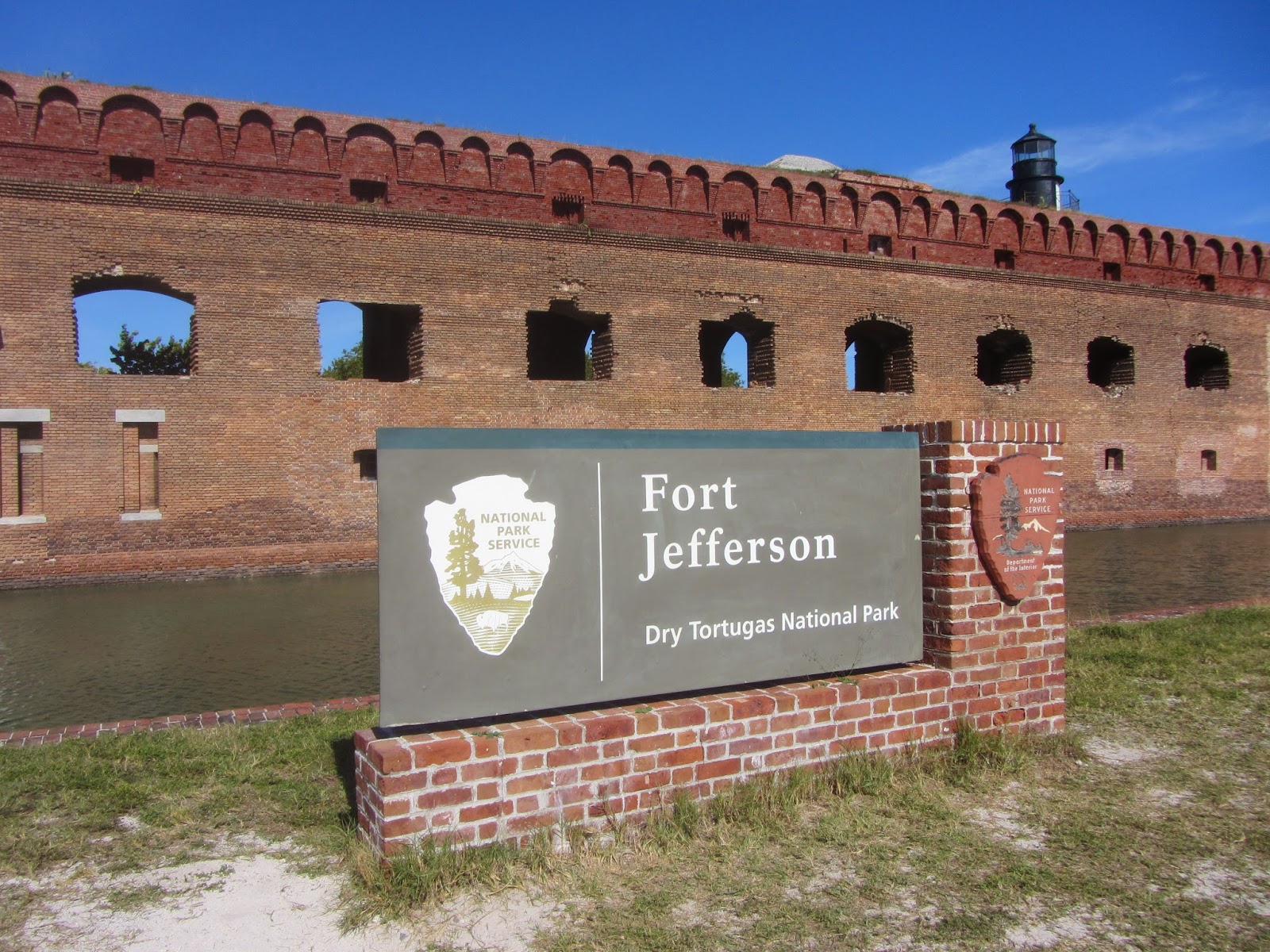
Although most of the movie was shot on sound stages, Fort Jefferson was and is a real location, a perfect inspiration for this kind of harrowing prison tale. In its finest moments the picture captures the desperation of men trapped in such a place, especially when fever sweeps the island and critical supplies run dangerously low. Warner Baxter plays Mudd with vigor and intensity; he has particularly good scenes during his escape attempt and his bout with yellow fever. Whatever we might make of the real Samuel Mudd, this one clearly descends from the Count of Monte Cristo and the Man in the Iron Mask. Such characters require fierce antagonists, and Mudd gets a very sharp one in John Carradine's Sergeant Rankin, who delights in tormenting the doctor at every opportunity. Several shots offer Carradine's distinctively hawkish features in breathtaking closeup to make the most of every line and nuance in the actor's face, where we read his intelligence, energy, and cruelty as only a performer like Carradine can render them. Gloria Stuart makes a lovely sufferer in her scenes of anguish over Mudd's fate, while Harry Carey has a very solid role as the island's commandant, a good man who ultimately corrects the injustice done to Mudd.

Race ultimately proves a thornier problem for The Prisoner of Shark Island than historical fidelity, and the movie's depiction of black characters may explain why it is less celebrated today than other Ford films. Ford tries to show Mudd as a humane former slave owner and even a faithful friend to Buck, but at the same time he populates the screen with stereotypes who reinforce racist assumptions. In the picture's worst scene, Mudd approaches a mob of terrified black soldiers who have holed up together to avoid the yellow fever outbreak. Even though they are armed, the soldiers obey Mudd because they perceive him as a Southern master due to his voice and bearing. The encounter suggests that Mudd possesses an authority over the black soldiers that his Northern, non-slaver captors lack. It's not a particularly surprising attitude, given that Gone with the Wind (1939) and other movies about the Civil War South engage in the same tactics, but for the modern viewer such material can be very hard to take. In spite of those issues, the movie has enough going for it that it deserves some serious attention, especially from Ford fans, and it might usefully serve in a thoughtful discussion about Ford's engagements with race in his later, better known films.

Be sure to note the brief appearance of Frank McGlynn Sr. as Abraham Lincoln; the actor portrayed the president at least a dozen times, and you can also see him in the role in The Littlest Rebel (1935) and The Plainsman (1936). For contrast, try Ford films like Young Mr. Lincoln (1939) or the much more progressive Sergeant Rutledge (1960). Silent movie veteran Warner Baxter is not as familiar today as many other leading men of his era, but he won the Oscar for Best Actor for In Old Arizona (1928), and you'll find him in 42nd Street (1933) and the series of Crime Doctor pictures. See Gloria Stuart in The Old Dark House (1932), The Invisible Man (1933), and Titanic (1997). If you want to learn more about the real history of Samuel Mudd and Fort Jefferson, visit the National Park Service site for Dry Tortugas, or better yet make a special trip to see the island for yourself.


PS - I was inspired to watch The Prisoner of Shark Island by my own trip to Dry Tortugas National Park. Here are some photos of the real site that you can compare with the film's recreation of it. No, there were no sharks in the moat!