Showing posts with label Warner Baxter. Show all posts

Tuesday, August 1, 2017

Classic Films in Focus: WEST OF ZANZIBAR (1928)

Tod Browning's silent 1928 story of revenge in the African Congo provides a challenge to modern viewers, given that it relies on hyper-racist stereotypes and deeply rooted misogyny for much of its horror, but if you're looking for something truly horrifying then West of Zanzibar (1928) certainly fits the bill. It packs an astounding amount of perverse cruelty into 65 minutes of film, most of it perpetuated by Lon Chaney as a paralyzed villain on a vendetta against his romantic rival and the child who symbolizes his betrayal. Lionel Barrymore and Warner Baxter also have prominent roles, although Mary Nolan takes most of the abuse as the young woman persecuted by Chaney's monstrous vengeance. Chaney is, as always, mesmerizing in a dark and complicated role, but be warned that this film is no stroll in the park.

Chaney plays the magician Phroso, who loses the use of his legs in a fight with Crane (Barrymore), the man who is stealing his wife. Later the wife turns up again with a baby in tow and promptly dies. Over his wife's corpse, Phroso swears vengeance on Crane and his child, thus embarking on an eighteen year mission to ruin Crane, debauch his daughter, and murder them both by invoking the ritual sacrifice performed by a tribe of African cannibals. Phroso makes himself a voodoo master in the remote African camp by using his magician's tricks, but his relentless desire for revenge blinds him to a painful truth until it is almost too late to change.

Chaney's performance is the highlight here. He begins as a sympathetic victim, a good man buffeted by unkind fate. His world crumbles when his beloved wife abandons him and her suitor cripples him, but these events alone do not change him. He only chooses evil over good in the church where he finds his wife's body, with the helpless infant crying nearby. The scene swells with terrible irony; Phroso looks on the Virgin and Child, and instead of pity for his wife's daughter chooses hate. From then on he embraces cruelty, sending the girl to be raised in a Zanzibar brothel while he cheats Crane of his ivory haul. Chaney plays Phroso as tragic, then monstrous, with slight hints of the vestiges of his humanity peeking through from time to time just to remind us of what he once was. His dead legs provide a physical parallel to his withered soul, and Chaney is, of course, brilliant in the way he manages to convey both the bodily and the spiritual wreckage.

Everyone else mainly reacts to Chaney, and the emotions called for are horror, disgust, fear, and loathing. In his own way, Lionel Barrymore's Crane is just as much a monster as Phroso, wreaking havoc and creating misery without ever worrying about the consequences of his actions. He laughs at Phroso's folly because he feels no pity for its victims. Mary Nolan, as Maizie, is chief among these; her tragic eyes and body language suggest so much more about her suffering than the title cards can convey. Warner Baxter plays a good man mired in Hell as Doc, but Maizie's arrival stirs his numbed conscience, and the pair eventually gather the courage to defy Phroso. These two characters get more nuanced development in the 1932 version of the story, Kongo, which fleshes out the doctor's narrative and their budding romance. The superstitious natives also react to Phroso, but they're so hideously stereotyped that they remove the viewer from the moment, and it's hard to blame the actors playing them for being unenthusiastic about selling their roles.

If nothing else, West of Zanzibar proves (yet again) that silent horror is by no means tame; Browning pushes buttons and tests limits in ways that no horror director of the 40s or 50s could. It suffers from the usual limitations of its era, especially where racist, colonialist attitudes are concerned, and it exploits the sexual degradation of its main female character in deeply uncomfortable ways. It might be preferable to start with other Chaney films if you aren't already well versed in his work or silent movies in general; try The Phantom of the Opera (1925), The Unholy Three (1925), or The Unknown (1927). For some of Browning's more controversial work, see Freaks (1932), or try his very weird collaboration with star Lionel Barrymore in The Devil-Doll (1932), in which Barrymore plays the man obsessed with revenge. Browning and Barrymore also team up for The Show (1927). For a different look at Warner Baxter, try The Prisoner of Shark Island (1936).


Tuesday, January 6, 2015

Classic Films in Focus: THE PRISONER OF SHARK ISLAND (1936)

Like most biographical and historical movies, The Prisoner of Shark Island (1936) takes liberties with its source material, but for the most part it does so in the service of a more compelling narrative. The film's director, John Ford, has always been associated with a certain kind of romanticized historical moment, and Ford's hallmarks turn up in every facet of this period drama, including its themes, its use of music, and its cast. With Ford at the helm and Nunnally Johnson on the screenplay, The Prisoner of Shark Island delivers an exciting story inspired by the experiences of Dr. Samuel Mudd, the physician who set the broken leg of John Wilkes Booth and subsequently found himself imprisoned at Fort Jefferson on the desolate islands of Florida's Dry Tortugas. In the middle of the riveting action, classic film fans will find a number of favorite stars, including Warner Baxter, Gloria Stuart, Harry Carey, and John Carradine, whose performance as a vicious prison officer is especially effective.

Warner Baxter takes the lead as Dr. Samuel Mudd, who unwittingly aids Lincoln assassin Booth one fateful night in 1865. Tried by a biased court to appease an angry public, Mudd avoids execution but is sentenced to life in prison at Fort Jefferson, where horrific conditions make any term likely to end in death. Mudd's devoted wife, Peggy (Gloria Stuart), and father-in-law (Claude Gillingwater) strive to free him without success, even though a former slave, Buck (Ernest Whitman), serves as an inside man to assist Mudd in the prison. When yellow fever breaks out on the island, Mudd has the opportunity to save those who have treated him so cruelly and prove himself a better man.

Although most of the movie was shot on sound stages, Fort Jefferson was and is a real location, a perfect inspiration for this kind of harrowing prison tale. In its finest moments the picture captures the desperation of men trapped in such a place, especially when fever sweeps the island and critical supplies run dangerously low. Warner Baxter plays Mudd with vigor and intensity; he has particularly good scenes during his escape attempt and his bout with yellow fever. Whatever we might make of the real Samuel Mudd, this one clearly descends from the Count of Monte Cristo and the Man in the Iron Mask. Such characters require fierce antagonists, and Mudd gets a very sharp one in John Carradine's Sergeant Rankin, who delights in tormenting the doctor at every opportunity. Several shots offer Carradine's distinctively hawkish features in breathtaking closeup to make the most of every line and nuance in the actor's face, where we read his intelligence, energy, and cruelty as only a performer like Carradine can render them. Gloria Stuart makes a lovely sufferer in her scenes of anguish over Mudd's fate, while Harry Carey has a very solid role as the island's commandant, a good man who ultimately corrects the injustice done to Mudd.

Race ultimately proves a thornier problem for The Prisoner of Shark Island than historical fidelity, and the movie's depiction of black characters may explain why it is less celebrated today than other Ford films. Ford tries to show Mudd as a humane former slave owner and even a faithful friend to Buck, but at the same time he populates the screen with stereotypes who reinforce racist assumptions. In the picture's worst scene, Mudd approaches a mob of terrified black soldiers who have holed up together to avoid the yellow fever outbreak. Even though they are armed, the soldiers obey Mudd because they perceive him as a Southern master due to his voice and bearing. The encounter suggests that Mudd possesses an authority over the black soldiers that his Northern, non-slaver captors lack. It's not a particularly surprising attitude, given that Gone with the Wind (1939) and other movies about the Civil War South engage in the same tactics, but for the modern viewer such material can be very hard to take. In spite of those issues, the movie has enough going for it that it deserves some serious attention, especially from Ford fans, and it might usefully serve in a thoughtful discussion about Ford's engagements with race in his later, better known films.

Be sure to note the brief appearance of Frank McGlynn Sr. as Abraham Lincoln; the actor portrayed the president at least a dozen times, and you can also see him in the role in The Littlest Rebel (1935) and The Plainsman (1936). For contrast, try Ford films like Young Mr. Lincoln (1939) or the much more progressive Sergeant Rutledge (1960). Silent movie veteran Warner Baxter is not as familiar today as many other leading men of his era, but he won the Oscar for Best Actor for In Old Arizona (1928), and you'll find him in 42nd Street (1933) and the series of Crime Doctor pictures. See Gloria Stuart in The Old Dark House (1932), The Invisible Man (1933), and Titanic (1997). If you want to learn more about the real history of Samuel Mudd and Fort Jefferson, visit the National Park Service site for Dry Tortugas, or better yet make a special trip to see the island for yourself.


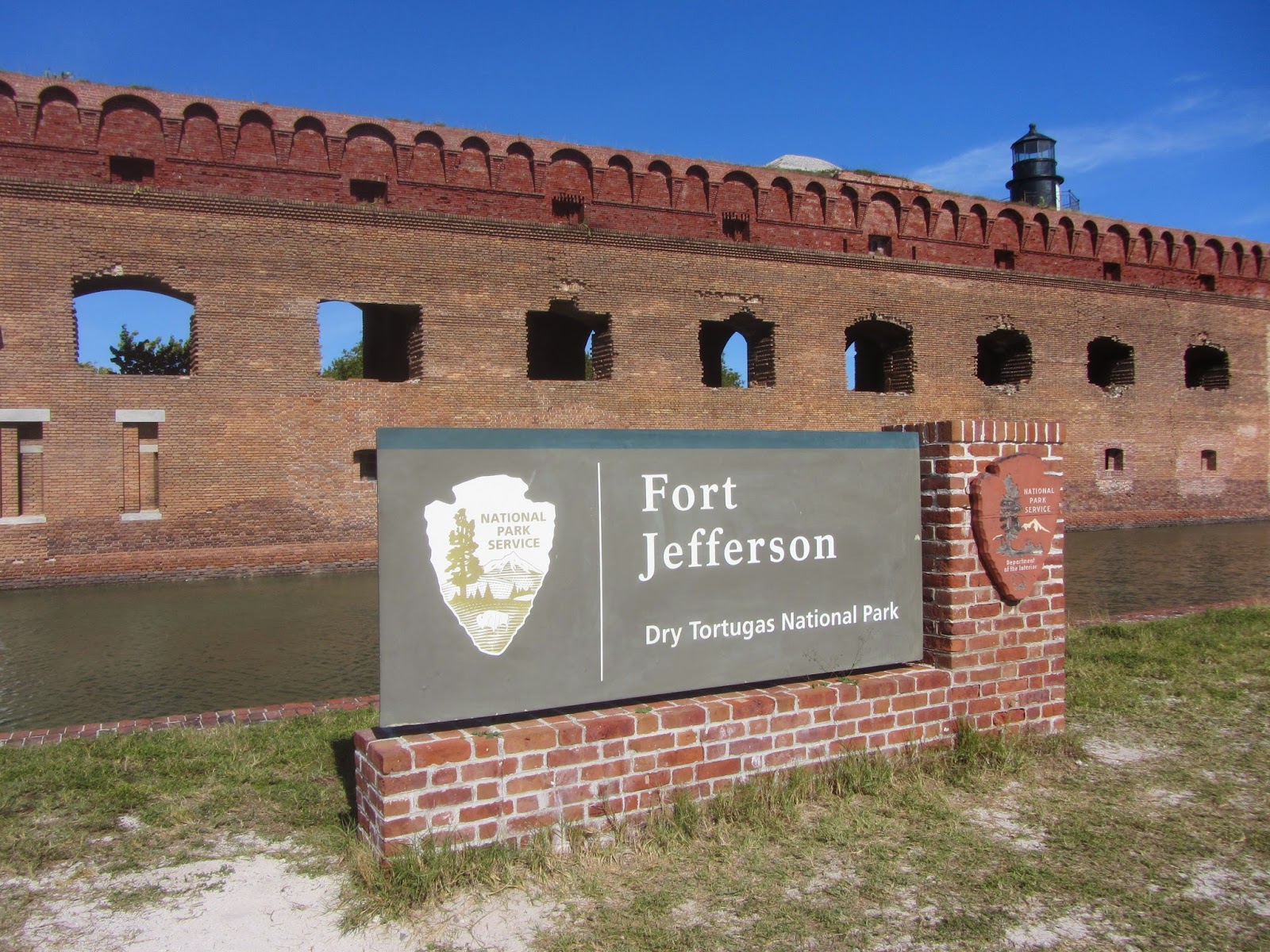
PS - I was inspired to watch The Prisoner of Shark Island by my own trip to Dry Tortugas National Park. Here are some photos of the real site that you can compare with the film's recreation of it. No, there were no sharks in the moat!


Tuesday, January 29, 2013

Classic Films in Focus: 42ND STREET (1933)

In the Depression Era, frothy, upbeat musicals were a much appreciated form of relief, and nobody made musicals any frothier or more upbeat than choreographer Busby Berkeley, who didn't actually direct the films but rather constructed elaborate, show-stopping musical numbers around which the directors filled in the gaps. Of the Busby Berkeley films, 42nd Street (1933) is the best known, partly because of visually dazzling musical interludes like "Shuffle Off to Buffalo" and partly because director Lloyd Bacon's surrounding story is the ultimate backstage theater tale that so many later films have imitated, parodied, and revised.

The picture features Berkeley regulars Dick Powell and Ruby Keeler as two of the performers in a troubled stage musical being produced by the brilliant but dangerously overworked Julian Marsh (Warner Baxter). Powell plays Billy, one of the principal performers, while Keeler is Peggy, a nervous first timer. After a couple of more experienced chorus girls (Ginger Rogers and Una Merkel) help Peggy get a spot in the show, she finds out just how demanding life on the stage can be. Meanwhile, the show's star, Dorothy Brock (Bebe Daniels), depends on a wealthy admirer for the musical's financial support, but she can't seem to give up her old flame (George Brent) for the sake of her career. When Dorothy breaks her ankle just before opening night, Peggy is forced to sink or swim as her last minute replacement.

The musical numbers are great fun, especially the cheeky "Shuffle Off to Buffalo," and "42nd Street" has become a classic of the genre. Baxter's line to Keeler, "You're going out a youngster, but you've got to come back a star!" is hopelessly sappy but still one of Hollywood's most memorable moments. Ruby Keeler really is the new kid in the film; this was her first screen appearance, and she is somewhat overshadowed by the scene stealing comediennes Ginger Rogers and Una Merkel. Rogers, of course, would go on to lasting fame as Fred Astaire's dancing partner, but she has a great role in "Anytime Annie" that lets her show how spunky, funny, and smart she could be.

42nd Street earned two Oscar nominations, including one for Best Picture. Lloyd Bacon and Busby Berkeley worked with Powell and Keeler again for Footlight Parade, which also appeared in 1933. George Brent went on to meatier roles as a leading man, starring with Bette Davis in Jezebel (1938), The Old Maid (1939), and Dark Victory (1939), among others. You'll find Ginger Rogers making her first screen appearance with Astaire in Flying Down to Rio (1933), but don't miss her starring comedic performance in The Major and the Minor (1942) or her Oscar winning work in the women's melodrama, Kitty Foyle: The Natural History of a Woman (1940). The delightful Una Merkel can also be seen in Destry Rides Again (1939) and It's a Joke, Son! (1947).

An earlier version of this review originally appeared on Examiner.com. The author retains all rights to this content.