Showing posts with label John Ford. Show all posts

Monday, May 16, 2016

Top 10 List: My Favorite Westerns

My Westerns lifetime learning class is wrapping up this week, and my students have asked me about a top ten list of classic Westerns. I imagine there are plenty of such lists naming the "best" Westerns, but I'd rather make mine a list of personal favorites. I do aim for some diversity in terms of decade, focus, director, and stars, but these are all Westerns that I enjoy tremendously every time I see them. I'm not including the comedy and parody films that prospered late in the day, although I do really love Cat Ballou (1965), Butch Cassidy and the Sundance Kid (1969), and, for reasons even I can't fully explain, Paint Your Wagon (1969). Here, then, are ten of of my all-time favorite Westerns, listed in chronological order.

1. STAGECOACH (1939)

2. MY DARLING CLEMENTINE (1946)

3.WESTWARD THE WOMEN (1951)

4. HIGH NOON (1952)

5. SHANE (1953)

6. THE MAN FROM LARAMIE (1955)

7. BAD DAY AT BLACK ROCK (1955)

8. THE SEARCHERS (1956)

9. RIO BRAVO (1959)

10. THE PROFESSIONALS (1966)

What are your favorite classic Westerns?

Monday, May 9, 2016

10 Great Westerns of the 1950s

The 1950s produced a bumper crop of A-level Westerns with some of Hollywood's biggest stars in the leading roles, including some we don't necessarily associate with the genre. Over the course of the decade, darker and more complex psychological Westerns appealed to adult viewers, even as the matinee cowboys continue to ride high with the Saturday morning crowd. Westerns and film noir provided fertile territory for directors and actors, with many jumping between the two genres and even blurring the line at times about which was which. Of course, John Wayne and John Ford were still on the scene, but a new generation of Western icons was also developing, with Lee Marvin making his presence known and director Delmer Daves venturing into the genre with Broken Arrow in 1950. You could spend a long time watching Westerns from the 1950s (check out 50 Westerns from the 50s for proof), but here are just ten great Westerns - one from each year of the decade - to get you started.

1) WINCHESTER '73 (1950) - Anthony Mann and James Stewart begin a fruitful collaboration in the genre with this picture, which focuses on the hands through which the coveted title rifle must travel. The cast also includes Shelley Winters, Dan Duryea, and Stephen McNally, but viewers will also find early appearances by Rock Hudson (as a Native American) and Tony Curtis. Mann and Stewart would go on to make four more Westerns together: Bend of the River (1952), The Naked Spur (1953), The Far Country (1954), and The Man from Laramie (1955), all of which are well worth watching.

Westward the Women

2) WESTWARD THE WOMEN (1951) - Probably the least familiar picture on this list, this women's Western is truly unique in its focus on the suffering and determination of a group of women headed West by wagon train to marry settlers on the frontier. William A. Wellman directs an ensemble cast headed up by Robert Taylor as the women's guide, with Denise Darcel and Hope Emerson getting top billing among the many fine actresses. Renata Vanni gives an especially moving performance as one of the group's older members.

3) HIGH NOON (1952) - A four-time Oscar winner, this dramatic Western appears on almost any top ten list for the genre, and for good reason. Its real-time unfolding adds urgency to the story as we watch the clock tick down to Frank Miller's fateful arrival, while Gary Cooper's Oscar-winning performance is noble and moving, even if he is much too old to be marrying Grace Kelly. A terrific supporting cast helps seal the deal, including Thomas Mitchell, Lon Chaney Jr., Henry Morgan, Lloyd Bridges, and Katy Jurado. Tex Ritter, a singing cowboy from the matinee herd, provides the film's mournful title song, which inspired many later Westerns to have their own, similar themes.

4) SHANE (1953) - George Stevens directs this chivalric romance recast as frontier drama with Alan Ladd in the lead as the Wild West's version of a knight errant. Building their own rustic Camelot on the range are Van Heflin and Jean Arthur as the Starretts, with young Brandon De Wilde giving an Oscar-nominated performance as their son. Jack Palance, also nominated for Best Supporting Actor, is Shane's rival gunslinger. Other familiar faces in the cast include Ben Johnson, Elisa Cook Jr., and Ellen Corby.

5) JOHNNY GUITAR (1954) - Joan Crawford makes a rare genre appearance in this very unusual Western from Nicholas Ray, with Sterling Hayden as the title character. There's a lot of noir atmosphere seeping through, no surprise with Ray in the director's chair and Crawford and Hayden in the leads. The supporting cast is full of Western favorites, though, including Ward Bond, John Carradine, Royal Dano, Ernest Borgnine, and Paul Fix. Look out for a truly vicious performance by Mercedes McCambridge as Crawford's rival.

6) BAD DAY AT BLACK ROCK (1955) - Spencer Tracy stars in John Sturges' modern take on Western themes, once again with noir atmosphere turning everything a shade darker and dirtier. Tracy's one-armed WWII veteran comes to Black Rock on a mission of peace, but he finds out that Black Rock has a secret its residents will kill to hide. The landscape and the town speak to the lingering traces of the Old West, and the rest of the cast is packed with genre stalwarts, including Robert Ryan, Walter Brennan, Ernest Borgnine, and Lee Marvin. Tracy earned an Oscar nomination for Best Actor for his performance, while Sturges picked up a nod for Best Director, but every aspect of this film exudes excellence. It's just as hard-hitting today as it was in 1955.

7) THE SEARCHERS (1956) - John Ford and John Wayne deliver their most iconic collaboration with this epic tale of loss and obsession, with Wayne in the lead as ex-Confederate soldier Ethan Edwards, who embarks on a years-long quest to find his niece (Natalie Wood) after she is kidnapped by the Comanche. This is a darker, more morally complicated character for Wayne, but he suits the role perfectly. Widely considered one of the greatest Westerns of all time, this picture is the go-to example of Ford and Wayne's work together, with a rich subtext and emotional supporting performances that reward multiple viewings.

8) 3:10 TO YUMA (1957) - Delmer Daves directs Van Heflin and Glenn Ford in this tense character study of two very different men brought together by fate. Ford plays the smooth-talking, opportunistic outlaw, while Heflin plays the upright rancher with the dangerous job of getting the captured bandit to the train that will take him to prison. From there the lines between good man and bad begin to blur, with the outlaw and the rancher each coming to understand the nature of the other. Frankie Laine sings the theme song, which harks back to the melancholy theme of High Noon.

9) THE BIG COUNTRY (1958) - At 165 minutes, this is an epic Western, indeed, with Gregory Peck leading an impressive cast under the direction of William Wyler. Peck plays a former sea captain who heads West to take up ranching with his fiancee but, predictably, finds drama and strife as he becomes embroiled in a bitter feud. Burl Ives won the Oscar for Best Supporting Actor for his performance, but other notable cast members include Jean Simmons, Charlton Heston, Chuck Connors, Carroll Baker, and Alfonso Bedoya.

10) RIO BRAVO (1959) - Howard Hawks and John Wayne strike back against the serious (and often left-leaning) tone of many 1950s Westerns with the rollicking Rio Bravo, which is more interested in action than psychological analysis. Wayne plays Sheriff John T. Chance, who gets a very motley crew of assistants when the bad guys turn up to reclaim one of their own from Chance's jail. Dean Martin is the alcoholic Dude, trying to sober up enough to hold a gun, and Walter Brennan plays crusty old Stumpy. Dreamy Ricky Nelson sings and shoots as Colorado, while Angie Dickinson gives Wayne some romantic trouble as Feathers. The picture is usually seen as a rebuttal to High Noon, and it presages the kind of movie Wayne would continue to make from here until the end of his career. However, for the A Western as pure entertainment, this one is hard to beat.

For even more great Westerns from the 1950s, try The Gunfighter (1950), The Baron of Arizona (1950), The Furies (1950), Vera Cruz (1954), Seven Men from Now (1956), and Gunfight at the O.K. Corral (1957). You'll find full-length reviews for many of the Westerns listed here in my books, Beyond Casablanca: 100 Classic Movies Worth Watching and Beyond Casablanca II. Both are available on Amazon Kindle.

Tuesday, January 6, 2015

Classic Films in Focus: THE PRISONER OF SHARK ISLAND (1936)

Like most biographical and historical movies, The Prisoner of Shark Island (1936) takes liberties with its source material, but for the most part it does so in the service of a more compelling narrative. The film's director, John Ford, has always been associated with a certain kind of romanticized historical moment, and Ford's hallmarks turn up in every facet of this period drama, including its themes, its use of music, and its cast. With Ford at the helm and Nunnally Johnson on the screenplay, The Prisoner of Shark Island delivers an exciting story inspired by the experiences of Dr. Samuel Mudd, the physician who set the broken leg of John Wilkes Booth and subsequently found himself imprisoned at Fort Jefferson on the desolate islands of Florida's Dry Tortugas. In the middle of the riveting action, classic film fans will find a number of favorite stars, including Warner Baxter, Gloria Stuart, Harry Carey, and John Carradine, whose performance as a vicious prison officer is especially effective.

Warner Baxter takes the lead as Dr. Samuel Mudd, who unwittingly aids Lincoln assassin Booth one fateful night in 1865. Tried by a biased court to appease an angry public, Mudd avoids execution but is sentenced to life in prison at Fort Jefferson, where horrific conditions make any term likely to end in death. Mudd's devoted wife, Peggy (Gloria Stuart), and father-in-law (Claude Gillingwater) strive to free him without success, even though a former slave, Buck (Ernest Whitman), serves as an inside man to assist Mudd in the prison. When yellow fever breaks out on the island, Mudd has the opportunity to save those who have treated him so cruelly and prove himself a better man.

Although most of the movie was shot on sound stages, Fort Jefferson was and is a real location, a perfect inspiration for this kind of harrowing prison tale. In its finest moments the picture captures the desperation of men trapped in such a place, especially when fever sweeps the island and critical supplies run dangerously low. Warner Baxter plays Mudd with vigor and intensity; he has particularly good scenes during his escape attempt and his bout with yellow fever. Whatever we might make of the real Samuel Mudd, this one clearly descends from the Count of Monte Cristo and the Man in the Iron Mask. Such characters require fierce antagonists, and Mudd gets a very sharp one in John Carradine's Sergeant Rankin, who delights in tormenting the doctor at every opportunity. Several shots offer Carradine's distinctively hawkish features in breathtaking closeup to make the most of every line and nuance in the actor's face, where we read his intelligence, energy, and cruelty as only a performer like Carradine can render them. Gloria Stuart makes a lovely sufferer in her scenes of anguish over Mudd's fate, while Harry Carey has a very solid role as the island's commandant, a good man who ultimately corrects the injustice done to Mudd.

Race ultimately proves a thornier problem for The Prisoner of Shark Island than historical fidelity, and the movie's depiction of black characters may explain why it is less celebrated today than other Ford films. Ford tries to show Mudd as a humane former slave owner and even a faithful friend to Buck, but at the same time he populates the screen with stereotypes who reinforce racist assumptions. In the picture's worst scene, Mudd approaches a mob of terrified black soldiers who have holed up together to avoid the yellow fever outbreak. Even though they are armed, the soldiers obey Mudd because they perceive him as a Southern master due to his voice and bearing. The encounter suggests that Mudd possesses an authority over the black soldiers that his Northern, non-slaver captors lack. It's not a particularly surprising attitude, given that Gone with the Wind (1939) and other movies about the Civil War South engage in the same tactics, but for the modern viewer such material can be very hard to take. In spite of those issues, the movie has enough going for it that it deserves some serious attention, especially from Ford fans, and it might usefully serve in a thoughtful discussion about Ford's engagements with race in his later, better known films.

Be sure to note the brief appearance of Frank McGlynn Sr. as Abraham Lincoln; the actor portrayed the president at least a dozen times, and you can also see him in the role in The Littlest Rebel (1935) and The Plainsman (1936). For contrast, try Ford films like Young Mr. Lincoln (1939) or the much more progressive Sergeant Rutledge (1960). Silent movie veteran Warner Baxter is not as familiar today as many other leading men of his era, but he won the Oscar for Best Actor for In Old Arizona (1928), and you'll find him in 42nd Street (1933) and the series of Crime Doctor pictures. See Gloria Stuart in The Old Dark House (1932), The Invisible Man (1933), and Titanic (1997). If you want to learn more about the real history of Samuel Mudd and Fort Jefferson, visit the National Park Service site for Dry Tortugas, or better yet make a special trip to see the island for yourself.


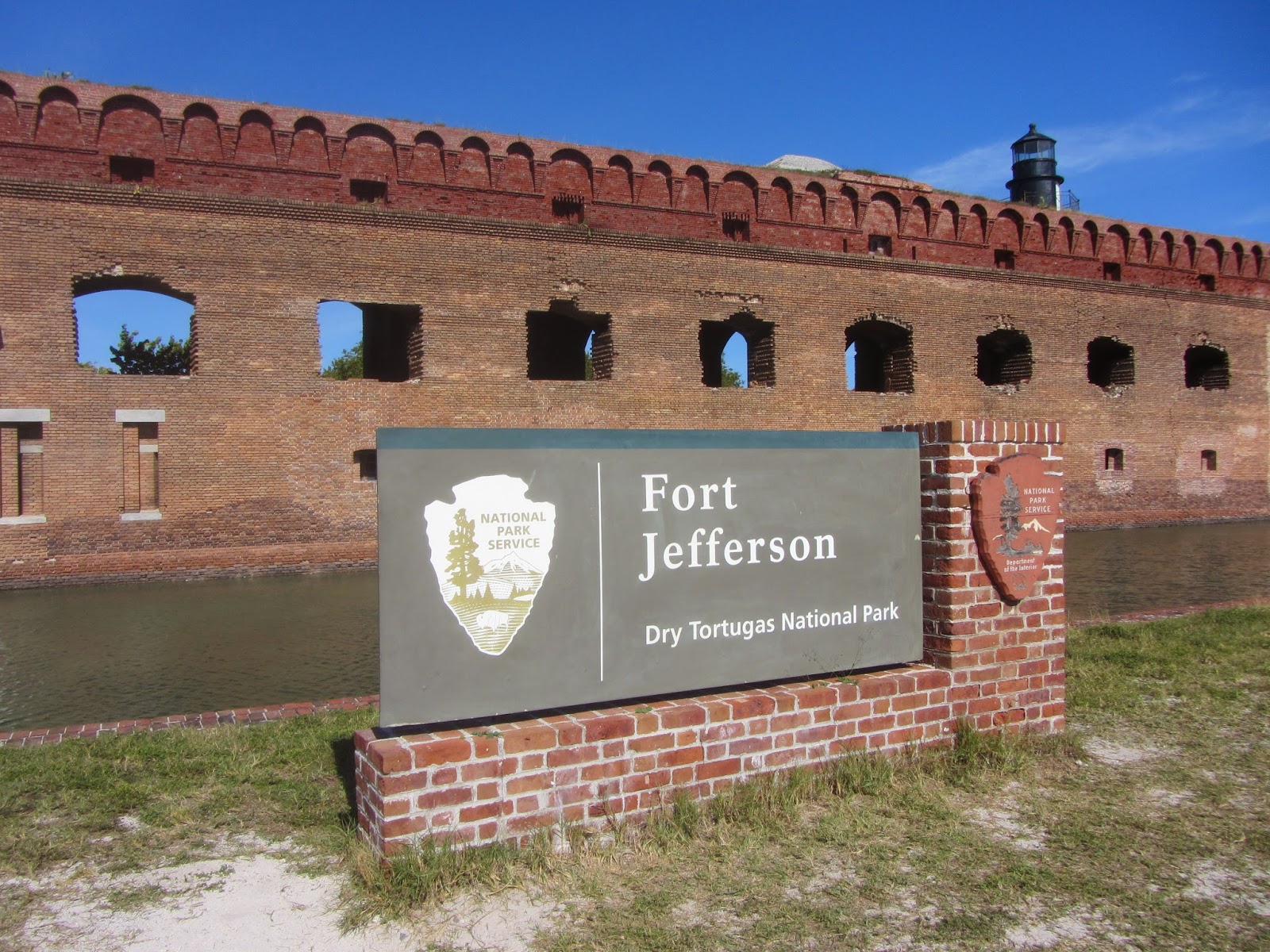
PS - I was inspired to watch The Prisoner of Shark Island by my own trip to Dry Tortugas National Park. Here are some photos of the real site that you can compare with the film's recreation of it. No, there were no sharks in the moat!


Friday, June 20, 2014

Classic Films in Focus: 3 GODFATHERS (1948)

John Ford offers a distinctly Western take on the Christmas story in 3 Godfathers (1948), where there’s no sign of the usual snow and comfortable holiday cheer. In their place we witness the parched terrain of the desert frontier and a grueling journey by our protagonists, three not so very bad men struggling to save an orphaned newborn even though they are on the run from the law. As usual, much of the appeal of a John Ford picture stems from its cast, with John Wayne leading a collection of the usual suspects, including Ward Bond, Harry Carey, Jr., Jane Darwell, and Mildred Natwick. With Ford’s characteristic blend of toughness and sentiment and a visual style bursting with religious iconography, 3 Godfathers delivers a surprisingly soulful tribute to the original story of the three wise men, but Western devotees will find it worthwhile at any time of year.

Wayne leads a trio of cattle rustlers turned bank robbers as Robert Hightower, with the Mexican Pete (Pedro Armendáriz) and the boyish Abilene Kid (Harry Carey, Jr.) as his accomplices. The three men ride into Welcome, Arizona, and accidentally make small talk with the sheriff (Ward Bond) and his wife (Mae Marsh) before robbing the bank, and their luck only gets worse from there. As the sheriff’s posse cuts them off from all sources of water, Hightower and his gang are forced to run ever deeper into the desert, where they find a dying woman who places her newborn son under their protection. The three men put the child’s welfare before their own to fulfill their promise to his mother, but they have little hope of saving themselves, much less the helpless baby.

As he had in Ford’s Stagecoach (1939) nearly a decade earlier, Wayne plays an outlaw with a sentimental side, but his tribulation in the desert suggests that Hightower still has some penance to pay for his sins. The pervasive themes of the picture deal with redemption, self-sacrifice, and the symbolic importance of water, a precious commodity in both the American wilderness and the land of the Israelites. Musical cues reinforce these elements, from the mournful lament of “Streets of Laredo” to “Shall We Gather at the River.” The camera dwells on the relentless heat of the arid frontier, the drops of water falling on the baby’s face, and the image of a derelict wagon sitting forlornly beside a hopelessly broken tank. Wayne’s best scenes occur in the extremity of these moments, especially when he returns from his first visit to the wagon and the useless water tank. The film has many dark episodes, but that is the worst of the lot, as Hightower sits contemplating the countless lives that will be lost because of one man’s foolish actions. For that man there is no redemption; even his wife rejects him by naming her baby Robert William Pedro Hightower, after the three men who arrive just in time to help the child be born. Bob Hightower, whose paternal nature has already revealed itself in his behavior toward the wounded Kid, becomes a true father in that moment, and his arc toward salvation begins.

Ford’s regular supporting players are all in fine form, with Ward Bond enjoying an especially meaty role as the sheriff, Perley Sweet. Harry Carey, Jr. is a credit to his father, to whom the picture is dedicated, with his performance as the sweet-natured William, whose outlaw title as the Abilene Kid contrasts with his inherent goodness and faith. At 43, Mildred Natwick is more than a decade too old for her character, and she only has one big scene, but she really knows how to make it count. Other reliable Ford actors in the background include Jane Darwell, Ben Johnson, and Hank Worden. In addition we get the delightful Pedro Armendáriz and silent film veteran Mae Marsh. Armendáriz proves quite the scene-stealer with his exuberant personality, while Marsh makes a good counterpart to Ward Bond as the sheriff’s wife, especially in the final scenes.

Fans of the Western are sure to appreciate the film’s opening tribute to Harry Carey, who died in 1947. For more of John Ford, John Wayne, and the Ford crowd of characters, see Fort Apache (1948), She Wore a Yellow Ribbon (1949), The Quiet Man (1952), and The Searchers (1956). Ford also directed powerhouse classics like The Grapes of Wrath (1940), How Green Was My Valley (1941), and The Man Who Shot Liberty Valance (1962). Mae Marsh is best remembered as the doomed sister in The Birth of a Nation (1915), but she actually has uncredited roles in a number of Ford pictures, and both she and Pedro Armendáriz appear in Fort Apache. Be sure to catch the late-career performances of Harry Carey, Jr. in The Long Riders (1980), Gremlins (1984), and especially The Whales of August (1987).

Monday, June 16, 2014

Classic Films in Focus: SHE WORE A YELLOW RIBBON (1949)

She Wore a Yellow Ribbon (1949) is the second act in John Ford’s trilogy of cavalry films, and it does indeed wave the patriotic frontier banner pretty fervently, but the title’s feminine pronoun also suggests the picture’s deep preoccupation with the familial and romantic aspects of cavalry life. With John Wayne cast in a distinctly paternal role, this narrative contemplates an older man’s relationship with his substitute children, both the younger officers under his command and a young woman who stands in for his own lost daughters. While the usual Western battles and chases, plus Ford’s beloved Monument Valley, provide the story with its excitement and grandeur, the domestic scenes form its sentimental heart. Wayne and Ford fans justly rank She Wore a Yellow Ribbon as a favorite, but fine performances from Victor McLaglen, Mildred Natwick, and Ben Johnson also help to cement the picture’s enduring appeal.

Wayne plays Captain Nathan Brittles, a career cavalry officer facing a plethora of problems in the days just before his retirement. A massive Indian uprising is destabilizing the entire territory, even as Brittles’ commanding officer (George O’Brien) saddles his patrol with two women trying to catch the stagecoach back to the East. The tough and experienced Abby Allshard (Mildred Natwick) proves her mettle as a cavalry officer’s wife, but her attractive niece, Olivia (Joanne Dru), creates conflict between Brittles’ junior officers, Lieutenant Cohill (John Agar) and Lieutenant Pennell (Harry Carey, Jr.). With the brash younger chiefs of the tribes stirring up trouble and the women slowing his progress, Brittles must keep order within his ranks and strive to head off a deadly frontier war.

John Wayne gives a particularly sensitive performance that prefigures some of his later, more mature roles, especially those in which he takes on overtly paternal roles. In his early forties when he made this picture, Wayne is aged with a little makeup and a lot of gray hair to portray the older Captain Brittles, who dreads his retirement from the only life he has known for forty years. The usual Duke bravado is tempered by Brittles’ emotional attachment to his long dead wife, who lies buried in the fort’s cemetery along with his two small daughters. Brittles frequently visits the graves to tend to them and report on the day’s events. We understand that his fatherly interest in the headstrong Olivia has a lot to do with his yearning for his lost family; his own daughters might be about Olivia’s age had they lived, and he even tells his wife that Olivia reminds him of her. With the living he is less able to articulate his feelings; he silently pats Olivia on the shoulder and jokingly bickers with his devoted comrade, Sgt. Quincannon (Victor McLaglen), but the people around him know exactly how to interpret his behavior, and he is fiercely admired and respected by his men.

Ford stocks the supporting cast with his usual company of players, a reliable crowd of tremendously talented actors who lend both humor and gravitas to all of Ford’s films. Victor McLaglen provides comic relief as the thirsty sergeant who is following his captain into retirement, while Mildred Natwick brings great courage and warmth to her role as “Old Iron Pants,” the cavalry wife who only leaves the fort to get her niece away before the long, hard winter. John Agar and Harry Carey, Jr. both look fine in their blue uniforms, even if Carey seems a bit miscast as a privileged son of eastern wealth, but Ben Johnson steals their thunder with his charismatic, casually brave Southerner, Sgt. Tyree. It’s never clear why Olivia doesn’t set her sights on him instead of the other young men. Beautiful Joanne Dru, who had already starred with John Wayne in Red River (1948), makes an excellent Olivia; her strong chin and flashing eyes tell us that she could, in fact, “be Army” if she would just set aside her stubborn pride and settle on one of her suitors. Filling in the smaller roles are George O’Brien, Arthur Shields, and Chief John Big Tree as the elderly Pony That Walks, who laments that old men like himself and Brittles cannot stop young men from going to war.

She Wore a Yellow Ribbon won an Oscar for its sweeping Technicolor cinematography, making it the only Academy Award winner or nominee of the cavalry trilogy. For the full trio, see Fort Apache (1948) and Rio Grande (1950). John Ford’s best pictures with John Wayne include Stagecoach (1939), The Searchers (1956), and The Man Who Shot Liberty Valance (1962), though you’ll find Victor McLaglen and Mildred Natwick joining the director and star for memorable roles in the cherished Irish romance, The Quiet Man (1952). Catch Ben Johnson, Joanne Dru, and Harry Carey, Jr. in Ford’s Wagon Master (1950). Take time to appreciate Ford’s love affair with popular songs and music; just as “She Wore a Yellow Ribbon” dominates the score of this film, so “Streets of Laredo” informs 3 Godfathers (1948) and “My Darling Clementine” lends its yearning theme to the 1946 film that shares its name.

Wednesday, March 19, 2014

Classic Films in Focus: THE SEARCHERS (1956)

The darkest and most iconic of John Ford's Westerns, The Searchers (1956) also presents cowboy legend John Wayne in one of his most psychologically complex roles as a man whose attitudes and decisions clearly place him on the losing side of history. Ford offers all of the elements that serve as his genre hallmarks: Monument Valley's desolate grandeur, Wayne's rugged masculinity, and moments of domestic humor that leaven the narrative's somber tone. Many of Ford's favorite stock players bring their contributions, as well, including Ward Bond, Olive Carey, Ken Curtis, Hank Worden, and Harry Carey, Jr. The story, more or less faithfully adapted from the novel by Alan Le May, resonates powerfully thanks to Ford's approach and the thoughtful performances of the principal stars, making The Searchers essential viewing for Western fans and anyone interested in the art of cinema.

Wayne plays former Confederate soldier Ethan Edwards, who returns home to visit his brother's family just before they are brutally slaughtered in a Comanche attack led by Scar (Henry Brandon). The raiding party abducts Ethan's nieces, the only survivors, prompting Ethan to set out on a quest to reclaim the girls. Martin Pawley (Jeffrey Hunter), a young man taken in by the Edwards clan, joins Ethan in the search, even though many years pass before they find any trace of Debbie (Natalie Wood), who has since grown up as part of the Comanche tribe.

Wayne's character is undoubtedly the protagonist of this adventure, but his role as hero is not so clear, especially when we understand that he means to kill Debbie in order to erase the sexual and racial pollution of her Comanche experience. Ethan harbors an intensely racist hatred for the Comanche, partly as a result of his mother's death in an earlier raid, but his decision to fight for the Confederacy in the Civil War suggests other, connected prejudices as part of his basic nature. Ford also hints at Ethan's adulterous love for his brother's wife, Martha (Dorothy Jordan); his dogged quest for revenge might be as much about penance for his own sins as it is about family honor, Debbie's suffering, or any heroic impulses.

The other participants in this drama have more straightforward motivations. Jeffrey Hunter's handsome features perfectly express the loyalty and sincerity of Ethan's constant companion, Martin, who takes a more progressive view of Native Americans thanks to his own racially mixed heritage. Martin first joins Ethan to save the girls from the Comanche raiders, but he ultimately stays, despite the life and love that slip through his fingers at home, to save Debbie from Ethan himself. Sisters Lana and Natalie Wood play Debbie in the bookend scenes that frame the central search, and both make the most of their brief appearances. They remind us that Debbie is a person in her own right, not merely a symbol of Ethan's failures or the unwilling embodiment of his deepest fears. The film might stir our consciences with its depiction of Ethan's deadly prejudice, but it falls back on genre stereotypes in the casting of the German actor Henry Brandon as Scar, an absolute villain who revels in showing off his collection of settlers' scalps.

Be sure to appreciate leading lady Vera Miles in a supporting role as Martin's love interest, Laurie. For more of John Ford's Westerns with John Wayne, see Stagecoach (1939), She Wore a Yellow Ribbon (1949), and The Man Who Shot Liberty Valance (1962). Jeffrey Hunter stars in Belles on Their Toes (1952), King of Kings (1961), and The Proud Ones (1956), but he is also remembered today as the original captain of the USS Enterprise in the pilot episode of Star Trek. You'll find Vera Miles in The Wrong Man (1956), Psycho (1960), and in The Man Who Shot Liberty Valance, while Natalie Wood stars in Rebel without a Cause (1955), West Side Story (1961), and Splendor in the Grass (1961).

Friday, August 23, 2013

Classic Films in Focus: WAGON MASTER (1950)

John Ford directed many more famous Westerns than Wagon Master (1950), but this modest oater about a Mormon wagon train reveals many of Ford’s signature touches and favorite players. It’s a dramatic tale that focuses on the interactions of several different kinds of frontier outsiders, including the Mormon settlers, their drifter guides, a small cadre of show people, and a dangerous gang of outlaws. Accompanied by the distinctive sounds of The Sons of the Pioneers, Wagon Master offers taut drama as well as the iconic scenery one expects from Ford’s films. Western fans will also appreciate the performances of genre stalwarts like Ben Johnson, Harry Carey, Jr., Ward Bond, Joanne Dru, Jane Darwell, and even a young James Arness.

Ben Johnson and Harry Carey, Jr. star as Travis and Sandy, a pair of wandering horse traders who take on a job as wagon masters for a group of Mormon settlers crossing a dangerous wilderness. The Mormons are led by Elder Wiggs (Ward Bond), who sees the young men’s presence as a gift from God, even if they cause some conflict within the religious group. The wagon train takes on a trio of stranded snake oil peddlars, including the attractive Denver (Joanne Dru), but they are then joined by a band of outlaws led by the injured Uncle Shiloh Clegg (Charles Kemper), who uses the settlers to hide from the law. Forbidding terrain and encounters with Native Americans add to the obstacles that the group must face on their long journey, but the Cleggs within their midst present the worst and most constant danger.

Wagon Master is not a flashy showpiece picture; it depends more on an ensemble cast of characters than a single, dominating personality. Each group, however, has its central figure: Ward Bond is gruff but good-natured as the Mormon Elder, Joanne Dru is saucy and charming as the worldly Denver, and Charles Kemper hides his menace beneath a folksy veneer as Uncle Shiloh. Ben Johnson’s Travis acts as the force that binds them, but the actor wisely plays the role with a frank, casual air that befits his cowboy persona. Harry Carey, Jr. makes an excellent partner to Johnson’s understated hero as a younger and more eager character who rapidly falls for one of the Mormon maidens. Jane Darwell, always an impressive presence, doesn’t have as much to do as one might hope, but James Arness gets a memorable opportunity to play the villain as one of the murderous Cleggs. Alan Mowbray has a small but noteworthy role as the medicine show leader, and Ruth Clifford is faded but kindly as his companion, Miss Fleuretty. These more colorful characters attract the viewer’s attention more than the mass of Mormons who make up most of the train, although Russell Simpson and Kathleen O’Malley get a few good scenes as Adam and his pretty daughter, Prudence.

Like Westward the Women (1951), this wagon train story doesn’t shy away from depicting the hazards of frontier settlement, and there are tense encounters with the natives as well as some dramatic moments of wagons in peril. The representation of the Mormon pioneers is unfailingly sympathetic, although polygamy is really only winked at when one settler’s wives look on dourly as he dances with a Navajo woman. Like the Quakers in other Westerns, the Mormons are shown as deeply religious people who oppose violence and immoral behavior but do not attempt to force others to live by their beliefs. We do see the settlers being run out of town early in the film, reminding us that they, like the rest of our characters, are treated as undesirables, but the Mormons are the opposite of the Cleggs in every way that matters.

With its unassuming hero and prominent musical accompaniment, Wagon Master has more in common with the popular “B” Westerns of its era than it does with Ford’s most lauded genre efforts, but it’s still an excellent picture. For contrast with the director’s other Westerns, see Stagecoach (1939), The Searchers (1956), and The Man Who Shot Liberty Valance (1962). Catch Ben Johnson in She Wore a Yellow Ribbon (1949), Shane (1953), and The Wild Bunch (1969). Harry Carey, Jr., whose father was also a veteran Western star, has good roles in 3 Godfathers (1948), The Searchers, and The Whales of August (1987). Ward Bond, Joanne Dru, and Jane Darwell all turn up in other Ford films, and Darwell even won an Oscar for Best Supporting Actress for her role in The Grapes of Wrath (1940).

Wagon Master is currently available for streaming on Warner Archive Instant. The film inspired the popular television series, Wagon Train, and you'll find several of the original movie's stars in various episodes.

Wednesday, July 31, 2013

Classic Films in Focus: WEE WILLIE WINKIE (1937)

John Ford, best known as the director of masterful Westerns like Stagecoach (1939) and The Searchers (1956), seems an odd choice for a Shirley Temple feature, but the story that actually unfolds in Wee Willie Winkie (1937) plays on many of Ford's favorite themes. Darker and more mature than most of Temple's childhood movies, Wee Willie Winkie might not appeal to youngsters as much as some of her other films, but it makes worthwhile viewing for adult fans of either the director or the star.

Priscilla Williams (Temple) and her widowed mother, Joyce (June Lang), arrive in colonial India to live with Priscilla's grandfather, Colonel Williams (C. Aubrey Smith). Priscilla, nicknamed Private Winkie by the soldiers, befriends both the burly Sergeant MacDuff (Victor McLaglen) and the captured rebel leader, Khoda Khan (Cesar Romero), while her mother falls for a handsome lieutenant (Michael Whalen). A treacherous spy, however, helps Khoda Khan escape and puts Priscilla in the middle of a deadly confrontation between the British soldiers and the rebel troops.

The film's most important relationship is that developed between Priscilla and MacDuff, who proves far more paternal than any of the other men in the little girl's life. McLaglen gives his character tremendous appeal, and his death part way through the film highlights the adult nature of the story. If your children aren't ready for Bambi (1942), then they aren't ready for Wee Willie Winkie, either. Most Temple films build on a tragic backstory that is already in the heroine's past, but these offscreen events generally pass over the heads of young viewers without much observation. With the death of MacDuff, Ford brings the child protagonist's experience of loss right into the foreground, and, while it works beautifully, it left my resident junior film fan so traumatized that she almost refused to watch the rest of the picture.

The secondary plots fall short of this emotional power. The budding romance between Priscilla's mother and the lieutenant lacks heart, partly because Michael Whalen is awfully dull. It doesn't help that charismatic Cesar Romero is there as an unrealized alternative; a story in which Joyce fell in love with him might have been really interesting. Chinese actor Willie Fung makes an especially ridiculous and unpalatable traitor; he had appeared with Temple in Stowaway (1936), but nobody is going to believe he's Indian for a second, and his character seems to be something of a lunatic to boot.

John Ford directed Temple again in the 1948 film, Fort Apache, which makes a good follow-up to Wee Willie Winkie and also features Victor McLaglen. If colonial India proves appealing, see Gunga Din (1939), which also stars McLaglen as a British soldier, this time in company with Cary Grant and Douglas Fairbanks, Jr. You'll find Cesar Romero playing another Indian character in Temple's signature film, The Little Princess (1939). For more of Temple's most compelling early work, see Bright Eyes (1934), Captain January (1936), and Heidi (1937).

An earlier version of this review originally appeared on Examiner.com. The author retains all rights to this content.

Sunday, February 10, 2013

Classic Films in Focus: FORT APACHE (1948)

The classic Western has many moods, but the tone of John Ford's Fort Apache (1948) is decidedly dark. Its clouds gather slowly, relieved sometimes by deceptive moments of gaiety and light, but still the storm comes on. Loosely based on the events of Custer's Last Stand, Fort Apache is technically a John Wayne picture, although Wayne takes a secondary role, while the full weight of hubris and its subsequent punishment fall on the shoulders of Henry Fonda as the doomed colonel who stubbornly leads his men to death.

Fonda plays Lieutenant Colonel Owen Thursday, who arrives with his sprightly daughter, Philadelphia (Shirley Temple), at Fort Apache only to upset the balance of the residents' lives. Determined to win glory and prove himself to the world, Thursday ignores the experience and advice of those around him, including the seasoned Captain York (Wayne), and pushes toward a disastrous encounter with the Apache chief, Cochise, and his warriors.

Ford balances comedy and tragedy in his scenes and his actors, reflecting the ebb and flow of ordinary life, even in times of crisis. Without Thursday, the denizens of the fort have formed a benevolent community of friendship and mutual respect, but their new leader soon undermines their peace with his arrogance and contempt. He even forbids his daughter to keep company with the fort's favorite son, although the young lovers persist in their romance in spite of his authority. As Thursday, Fonda gives a brilliantly layered performance; he knows to soften just enough every now and then to keep us hoping that he'll live to see the error of his ways, even though his doom is clearly written on his brow. Temple is pertly pretty as Philadelphia, an energetic rather than an elegant girl, but filled with a pioneer spirit that promises much for her survival in this untamed frontier. Wayne watches the events unfold with a grim recognition of the coming end, but his presence is a comfort to the viewer because we know that he can be trusted when everything else falls apart.

Other supporting players also contribute to the film's powerful effect. Ward Bond is jovial and kind as the O'Rourke family patriarch, and George O'Brien has a particularly moving role as Captain Collingwood. Anna Lee and Irene Rich make the fort's women solid and sympathetic, and Guy Kibbee is very good as the sociable doctor. Ford favorites like Victor McLaglen and Pedro Armendariz also put in reliable character performances. The role of young Michael O'Rourke was the first screen appearance of John Agar, who happened to be married to Shirley Temple at the time. The couple would divorce in 1949, but Agar's acting career continued, and he went on to appear in a number of noteworthy Westerns, including Ford's She Wore a Yellow Ribbon (1949) and Big Jake (1971), as well as many cult sci-fi films.

For more of John Ford's Westerns with John Wayne, see Stagecoach (1939), The Searchers (1956), and The Man Who Shot Liberty Valance (1962). Fonda made a number of memorable Westerns, including The Ox-Bow Incident (1943) and My Darling Clementine (1946), but you could also explore other sides of the actor in Jezebel (1938), The Lady Eve (1941), and 12 Angry Men (1957). See more of teenage Shirley Temple in The Bachelor and the Bobby-Soxer (1947), or for contrast catch her earlier work with John Ford in Wee Willie Winkie (1937). With well over 200 screen appearances, the marvelous character actor Ward Bond can be found almost everywhere, from The Maltese Falcon (1941) to It's a Wonderful Life (1946) and Rio Bravo (1959), but he was a particular favorite with John Ford, who gave him memorable roles in many of his films.

An earlier version of this review originally appeared on Examiner.com. The author retains all rights to this content.

Monday, July 30, 2012

A Day with the Duke on August 1


Turner Classic Movies kicks off its 2012 Summer Under the Stars program with an all-day celebration of John Wayne on August 1, which will thrill some classic movies fans and irritate others. John Wayne has always been a polarizing figure – people either love him or hate him. Younger women, in particular, often tell me of their disdain for Wayne and for Westerns in general. Now, I happen to love the Duke, which might be an odd thing for a feminist literary scholar to admit, but there’s a lot to be said in John Wayne’s defense, and these highlights from the TCM lineup provide some compelling evidence of the star’s true value.

Take STAGECOACH (1939), for instance. As the Ringo Kid, Wayne is a younger, gentler outlaw figure, courting Claire Trevor’s fallen angel with deference and tact. Viewers who are only accustomed to the old, craggy Duke of the late 1960s and early 70s might be surprised at the smooth, handsome features of the youthful star. Wayne was already 32 when STAGECOACH was released, and he had been in Hollywood for more than a decade, but the film represents a major turning point in the actor’s career as the first film he would make with director John Ford.

THE SEARCHERS (1956) is the film many consider the best of Ford’s pictures with Wayne; it has even been called the greatest example of the entire Western genre. Wayne takes a much darker role as Ethan Edwards, a man obsessed with finding his niece (Natalie Wood) after Comanche raiders kill her family and kidnap her. If you don’t think John Wayne could act, try watching this picture and thinking about how much of the story is left in the subtext, with only the characters’ expressions to suggest what is really going on. 

In opposition to the heavy drama of THE SEARCHERS are films like RIO BRAVO (1959) and MCLINTOCK! (1963), where the Duke shows his lighter side. Whether he’s being flustered by Angie Dickinson or rattled by Maureen O’Hara, Wayne has a wonderful knack for playing the manly man utterly confused by the womanly woman. You don’t think that John Wayne can be funny? Try the scene in RIO BRAVO in which he plants a big kiss on Walter Brennan’s cantankerous old Stumpy.

Finally, SHE WORE A YELLOW RIBBON (1949) shows Wayne playing a character much older than himself, a sentimental widower who still visits his wife’s grave and questions his place in the world on the eve of his retirement from the Army. Despite his name, Nathan Brittles is really quite a softie, taking a very paternal interest in Joanne Dru’s heroine and her romantic conflicts. 

What all of these films have in common is a Wayne character deeply involved with the women in his world, which is fascinating given that Wayne is so often held up as the ultimate macho star. We think of Wayne with a rifle in his arms, but just as often it’s a woman he holds. The rifle determines the outcomes of other men’s lives, but the woman dictates the destiny of the man himself. This dynamic makes Wayne’s Westerns endlessly interesting to me, and the films being shown on TCM offer a great chance to catch the Duke in action with a variety of leading ladies and in several different modes. It’s also a perfect opportunity for viewers who don’t think they like John Wayne to give the star another chance.


This post is part of the TCM Summer Under the Stars Blogathon hosted by ScribeHard On Film and Sittin On a Backyard Fence. The TCM celebration of John Wayne begins at 6 a.m. Eastern on August 1, 2012, with FLYING LEATHERNECKS (1951). 

The Virtual Virago also writes about classic movies as the National Classic Movies Examiner. For full-length reviews of other John Wayne films, try FORT APACHE (1948), THE QUIET MAN (1952), and THE SHOOTIST (1976).

Saturday, June 23, 2012

Cemetery Scenes: The Presence of the Dead in John Ford’s Westerns


The great Westerns strike a balance between the opposing experiences that define life on the frontier; they understand that the thrill of adventure comes hand in hand with the very real threat of death. Cowboys and cavalry fire their guns and gallop across the open land like eternal mythic heroes, but all around them we see evidence of mortality and feel the burden shouldered by survivors. Nowhere is this memento mori sensibility more present than in the Westerns of John Ford, where dead characters frequently function as mute participants in the lives of the protagonists, watching and listening from the grave while those still living struggle to make sense of the events that unfold. In three of Ford’s best known films, My Darling Clementine (1946), She Wore a Yellow Ribbon (1949), and The Searchers (1956), cemetery scenes highlight the relationships between the living and the dead and remind us of the human cost of settling the Western frontier.

In My Darling Clementine, Henry Fonda’s Wyatt Earp is a quiet, reflective character, and his visits to the lonely grave of his youngest brother, James, remind us that Wyatt has already paid dearly for his life on the range. Only briefly alive in the film, James is the sacrificial lamb whose murder roots his brothers in Tombstone and spurs them to action against the corrupt Clanton family. Ironically, Wyatt seems to talk more to his dead brother than he does to the two who are still alive, perhaps because James is no longer bound by the masculine code of behavior that normally governs men’s relationships. The graveside chats with James allow Wyatt to reveal a more sensitive, communicative side of himself, one that must be carefully guarded in the world of living men, where stoicism and action are highly prized. James’ persistent presence, symbolized by his grave, also reminds the audience why Wyatt and his remaining brothers are in this fight, not because they enjoy killing but because justice demands it. 

The humanizing element of the cemetery scene is particularly important in She Wore a Yellow Ribbon, in which John Wayne’s aging Captain Nathan Brittles frequently visits the graves of his wife and daughters. We never learn the exact cause of their deaths, although the graves indicate that all three died more or less at the same time, suggesting either an Indian attack or some terrible accident. While the younger men vie for the attentions of Olivia Dandridge (Joanne Dru), Brittles clearly considers himself still married to his dead wife, making reports to her about events at the fort and his own reflections on them. Other reminders of the dead family appear throughout the film. Photographs of Mrs. Brittles and the two daughters repeatedly turn up in important shots, and the frame that holds them is decorated with a yellow ribbon that connects them to Olivia and the other women of the fort. It’s clear from the way that the film treats the Brittles family relationship that Olivia functions as a surrogate daughter to Nathan; she is about the same age that his daughters would be had they lived. Bittersweet and tender, these moments in the film soften Wayne’s character and suggest the importance of love and family even to career soldiers on the rugged frontier.

In The Searchers, the film’s critical cemetery scene takes place very early, when young Debbie Edwards (Lana Wood) is kidnapped by the Indian raiding party led by Scar (Henry Brandon). The grave in question belongs to Debbie’s grandmother, the mother of Wayne’s troubled protagonist, Ethan Edwards. The grave suggests the way in which the Edwards’ tragic frontier story repeats itself, with the elder Mrs. Edwards also a victim of Indian attack. Just before her entire family is murdered by the Comanche raiders, Debbie is sent to the grave to hide, but this time the dead can provide no consolation to the living. Mrs. Edwards serves only as a silent witness to her granddaughter’s fate. Driven almost to madness by these repeated losses at the hands of the Comanche, Ethan launches an obsessive search for his niece (who might actually be his daughter, but that’s a different thread of the film’s twisted plot). His goal is to kill Debbie and thus return her to the family circle symbolized by the Edwards cemetery plot, which will complete the connection between Debbie and her grandmother, even though Debbie actually survives the original attack. Although it offers no protection to the little girl, the grave does offer the audience a better understanding of the Edwards story and a glimpse into the true origin of Ethan’s hatred.

In each of these films, the cemetery represents the presence of the past in the lives of the protagonists. For Wyatt Earp, Nathan Brittles, and the Edwards clan, the cemetery holds family members who remain crucial to the stories of the surviving characters, reaching out beyond the grave to motivate, comfort, or bear witness. In their own ways, they are as important as any of the living characters in the films, reminding us that the dead are always with us. 

This post was originally published at the now defunct classic movie blog, The Cinementals.

Friday, May 4, 2012

Mythmaking in America: Reflections on the Western


I have always loved Westerns. I started watching them when I was very young, and I’ve never lost my taste for them, even if Hollywood and the general public got tired of them years ago. It might seem odd, even heretical, for a liberal feminist scholar to admit to a yen for horse opera, but to me the Western represents the only truly American mythology, and as such it has endless allure, particularly to a cinephile who cut her critical teeth on Northrop Frye, Joseph Campbell, and the idea of the Jungian archetype. The Western is our Iliad, our Odyssey, our story of the founding of empire and the time of heroes. It is not and should never be confused with our history, but it is our story, a troubled, colorful, bloody, awful, funny, and brilliant tale with roots that reach far back into the very dawn of narrative.

Like Achilles, Aeneas, and Odysseus, the heroes of the Western are soldiers, wanderers, and men who have greatness thrust upon them. They live in extraordinary times, although they often yearn for peace and domestic quiet. Certain actors embodied the types more evocatively than the rest: John Wayne, of course, but also James Stewart, Gary Cooper, Randolph Scott, and Joel McCrea. They had to look at home outdoors and on a horse, with a rifle slung across the saddle. They had to be able to stand out against the grandeur of the landscape around them. They didn’t always play nice, but they had to earn our respect if not our friendship.

The time of the Western hero is not our time, a theme reflected in the many films that function as elegies. Like all myths, Westerns tell the story of a golden age that never was, and their regret at its passing is tempered with recognition that we live in a safer, better, more civilized age. Think of Tom Doniphon surrendering the future to Ransom Stoddard in The Man Who Shot Liberty Valance (1962). The gunslingers ride out when the films end, or they lie dead in the street, or they hang up their guns and settle down. Civilization moves in, the West changes, and the world of the Western is always past tense, presented with a swan song and a bow.

Women in the Western also follow the old mythic models. They are patient Penelopes guarding the ranch, contested Helens, and tragic Cassandras. Maiden, mother, and crone, they symbolize the transformative forces of civilization and family. A man who is not changed by an encounter with a woman is a beast, a savage beyond saving. Even Paint Your Wagon (1969) understands that code, but we see it in Shane (1953), The Gunfighter (1950), and dozens of other films. The actresses who played Western women had to embody that civilizing force but also be strong enough to survive on the frontier. We could believe in sturdy heroines like Maureen O’Hara or Yvonne De Carlo and tough matrons like Mildred Natwick. In High Noon (1952), even Grace Kelly has to pick up a gun. It takes smart, resourceful, true-hearted women to transform the wilderness and its wild men into farms and husbands, towns and fathers.

The Western has its flaws, of course. Native Americans were mythologized into bogeymen, especially in the earlier films, Mexicans and African-Americans appeared mostly as comic relief or second fiddle sidekicks, and other outdated notions about gender, class, and race plagued the genre’s heyday, as they did pretty much every other cinema genre of the same period. Movies are not history; they are stories that reflect the attitudes of their own day much more accurately than they reflect those of their settings. The prejudices of the early 20th century bleed into the Western more noticeably, but that’s because everyone has a gun. The Homeric epics and Shakespeare have similar problems, but scholars embrace them as part of the conversation rather than throwing the whole canon out. 

I know a lot of people today who dismiss the Western because they feel that it doesn’t speak to them, but maybe they ought to listen differently to what it has to say. This is an old, old story being told, recast against a peculiarly American backdrop. It’s not just the story of cowboys and Indians, or white hats and black. It’s the story of the human quest to build civilization and find a place in the world. It’s the story of greatness and cowardice, struggle and triumph, hubris and defeat. Akira Kurosawa understood that, and so did Sergio Leone. They knew, like John Ford before them, that the Western is really a story for all time, a great myth always in the past but ever unfolding, endlessly retold. It sings of arms and a man. Tell us, O muse, of those heroes once more.

Thursday, December 8, 2011

Bushwhacked by the Nightmare Native: The Western Roots of Firefly's Reavers

In Finding Serenity, Lawrence Watt-Evans likens Firefly's Reavers to the legendary sixteenth-century cannibal, Sawney Beane, thus linking Joss Whedon's space-roaming savages to a rich tradition of bogeymen and monsters who symbolize the dangers of the uncontrolled id. At the conclusion of his essay, Watt-Evans asks the question, "and just who are the Reavers, then? ...Androids, perhaps? Madmen? Criminals offered amnesty if they survive?... Who's out there?" (28) In the context of Firefly as Western, the answer to Watt-Evans' question is obvious: on the edge of the frontier, where settlers stake their claims and outlaws ply their trade, there are always the Indians. With their ritualistic self-mutilation, pack behavior and barbaric practices, the Reavers embody the most paranoid images of the native Other that colonizing whites could devise. The image of the Indian as predatory savage stretches back far into the roots of the Western's development, beyond the first actual films and novels of the genre to the original tales of the blood-stained American frontier, the popular and often propagandist Indian captivity narratives that appeared from the seventeenth century until the end of Western expansion. Thus, the Western roots of Firefly's Reavers can also be traced back to these early texts, and we can see in them the images and ideologies that have developed over the centuries to give the Reavers their unnervingly familiar and deeply disturbing presence on the series, in the film, and in our collective imagination.
            The Firefly episode "Bushwhacked" brings these connections into focus particularly well because it features many of the same conventional elements of the early captivity narratives, and it also parallels later Western films that share the continuing obsession with the idea of Indian captivity and its effects. To illustrate the connections between the Reavers and Indians as whites imagined them, I will look at "Bushwhacked" in conjunction with two specific texts, Mary Rowlandson's 1682  account, A True History of the Captivity and Restoration of Mrs. Mary Rowlandson, and John Ford's 1956 film, The Searchers. In their representation of the Reavers, particularly in “Bushwhacked,” Joss Whedon and the Firefly writers borrow heavily from the conventions of these works to create a nightmare version of the native, but they also alter the image in order to make the Reavers an appropriately modern symbol of an expanding civilization's deepest fears.
            In order to understand the relationship between "Bushwhacked" and the Western, we have to look back at the history of the particular genre that it adapts. Much of the episode's language and imagery parallel those of traditional Indian captivity narratives, which depict settlers viciously attacked by varying tribes, depending on the location and historical moment of the narrative's setting. The Indian captivity narrative, as the first popular literature about experience on the American frontier, is the direct ancestor of the more modern genre of the Western. Captivity narratives often feature women as the primary victims or heroines because Native American captors were more likely to take women alive and because women made for more symbolically charged imagery within a text. Among the better known and more interesting captivity narratives are the stories of white women settlers like Mary Rowlandson, Hannah Dustan, Elizabeth Hanson, Jemima Howe, Mary Kinnan, Mary Jemison, Mary Godfrey, Sarah Wakefield, and Cynthia Ann Parker. Most of these women escaped or were eventually released from captivity and returned to life in white communities, although Mary Jemison and Cynthia Ann Parker both identified themselves as members of their adopted tribes and resisted return to their original families and communities.
            One of the earliest and best known captivity narratives is Mary Rowlandson's A True History of the Captivity and Restoration of Mrs. Mary Rowlandson, first published in 1682. In her narrative, Rowlandson describes the Indian attack on her community in terms that clearly identify the attackers as inhuman monsters, and she particularly dwells on the killing of children and injured settlers. She concludes her account of the attack with the following comments:
When we are in prosperity, Oh the Little that we think of such dreadful Sights, and to see our dear Friends and Relations lie bleeding out their Heart-Blood upon the Ground! There was one who was chopp'd into the Head with a Hatchet, and stripp'd naked, and yet was crawling up and down. It is a solemn Sight to see so many Christians lying in their Blood, some here, and some there, like a company of Sheep torn by Wolves. All of them stript naked by a company of hell-hounds, roaring, singing, ranting and insulting, as if they would have torn our very hearts out..."  (14).
This kind of language appears throughout Rowlandson's text. She refers to the Indians as "inhuman creatures" (15), she describes one Indian who "was so wicked and cruel, as to wear a string about his neck, strung with Christian fingers" (38), and she compares the Indians to "Bears bereft of their whelps, or so many ravenous Wolves, rending us and our Lambs to death" (43). Rowlandson steadfastly refuses to regard her captors as human beings; even when they appear to be kind to her, she gives the credit to God and not to the generosity of the Indians. Eventually Rowlandson is ransomed and released from her captivity, after which she returns to her husband and white community to write her account and become something of a seventeenth-century celebrity.
            Although Rowlandson's captivity ends very differently from that of the Firefly settler, many parallels are immediately obvious. We don't see the Reaver attack on the settlers' ship, but we can certainly imagine that it would have been similar to the attack Rowlandson describes in many ways. Before the Serenity crew discovers the truth about the derelict ship, River's psychic talents pick up on the echoes of the violence that has taken place. "I can't sleep," she says, "There's too much screaming." Simon replies that "there is no screaming," and River eerily whispers, "There was." Rowlandson describes in her account of the attack the crying out of the women and children, the pleading cries of dying settlers, the shouting and hallowing of the attackers, the echoes of which can all be heard in River's evocative comment. Of course, we do see a similar attack at the beginning of the film, Serenity, and there the parallels between Rowlandson's Indians and the Reavers also stand out. Of the attack on her village, Rowlandson says, "Thus were we butchered by those merciless Heathen, standing amazed, with the Blood running down to our Heels" (13). Of the attack on the settlers' ship, the "Bushwhacked" survivor says, "Cattle for the slaughter... No mercy. No resistance..." Rowlandson and the settler use strikingly similar language: the victims are "lambs" and "cattle"; they are "butchered" and "slaughtered" like livestock by the attackers. In both cases, the attack is depicted as sudden, brutal, without mercy, and the victims are too overwhelmed to mount any real defense. Rowlandson says that they stood "amazed" as they were killed, while the settler mutters that there was "no resistance" to the Reaver attack. Like Rowlandson's narrative, the episode draws special attention to the killing of children; in "Bushwhacked" the camera repeatedly lingers on toys and children's things left on the ship. As Colin Ramsey argues in his essay, "Cannibalism and Infant Killing: A System of 'Demonizing' Motifs in Indian Captivity Narratives," representing Indians as baby-killing cannibals was an especially powerful and pervasive element of traditional captivity narratives, and one that we see employed to great effect on Firefly and in Serenity. On Firefly, the Reavers fit this demonized image perfectly; we all know that they will "rape us to death, eat our flesh, and sew our skins into their clothing, and if we're very, very lucky, they'll do it in that order" (Firefly, "Serenity"). This horrific summary of Reaver behavior draws upon the white perceptions of the Indian created by early accounts like that of Rowlandson, which also influenced the developing Western genre as it emerged and then reached its cultural apex in the mid-twentieth century.
            As the captivity narrative became an important cornerstone of the evolving Western, the fascination with figures like Jemison and Parker proved to be greater than any interest in women who, like Rowlandson, were captured but remained firmly rooted in their own white identities. Transculturation, the idea that a person might become a member of another culture through contact with it, appears as a particular concern in many kinds of colonialist literature, where we often see such a transformation referred to as "going native." Both Jemison and Parker "went native" as a result of their captivity, and the Western genre focused on this aspect of the captivity narrative in particular. In earlier Western films, this transculturation is threatening and dangerous because the Indians are generally depicted as backward, sub-human savages. As R. Philip Loy observes in Westerns in a Changing America: 1955-2000, "The dominant image of Indians [in these films] is one of savage opposition to whites. Indians (increasingly Apaches) kill whites simply because they are there to be killed. And Indians kidnapping white women and children is a theme that appears with some regularity in Westerns between 1955 and the mid-1960s" (243). Earlier films that depict Indian captivity and transculturation include The Savage (1952), The Searchers (1956), Pawnee (1957), The Unforgiven (1960), Comanche Station (1960), Two Rode Together (1961) and The Stalking Moon (1968). The beginning of the 1970s saw the Western continue its fascination with the topic, but the tone changed dramatically, so that transculturation became a way for white people to learn to appreciate and respect Native American culture. Both Little Big Man and A Man Called Horse appeared in 1970, and the appearance of Dances with Wolves in 1990 solidified the new attitude toward transculturation, with the idea of actual Indian captivity suppressed because of its negative connotations.
            Of the many earlier Westerns that deal with Indian captivity and the problems of transculturation, John Ford's The Searchers is both the most famous and the most involved with the imagery and plot of "Bushwhacked." Noted for its dark tone, the film stars Ford's regular hero, John Wayne, as the cynical former Confederate soldier, Ethan Edwards, who sets out for revenge and ostensibly a rescue when his brother's family is attacked by a Comanche raiding party. The Indians kill the brother, his wife, and their son, but take the two daughters, Lucy and Debbie, as captives. Lucy is soon killed by the Indians, as well, leaving Debbie as the sole survivor of the family. Ethan and his young companion, Martin (Jeffrey Hunter), spend five years searching for Debbie (played by Lana Wood as a child and by Natalie Wood as a young woman), during which time she grows up and becomes a member of the Comanche tribe, even rejecting rescue when Ethan and Martin finally discover her. Ethan wants to kill the girl because she has "gone native," but Martin prevents him, and Ethan eventually relents in time for Debbie to be rescued during a Cavalry attack on the tribe and then returned to her original white community.
            Many elements of The Searchers have direct parallels in "Bushwhacked." As Ethan Edwards, Wayne is exactly the kind of Western character Whedon had in mind when he created Malcolm Reynolds, a champion of lost causes whose jaded exterior conceals passionate commitment to his own people. Martin Pawley's unwavering devotion to his surrogate sister and his determination to save her prefigure Simon's relationship with River, herself a very obvious sort of captivity survivor. Throughout the film, the images and language used to address the Comanche and the fear of transculturation highlight its ideological ground-laying for "Bushwhacked." Like the Reaver attack on the settlers' ship, the attack on the Edwards family at the beginning of the film is not seen, although the brutality and horror of the event are strongly implied. The kidnapping of Debbie, the innocent child, is especially underscored, as the menacing Comanche chief Scar stares down at the little girl hiding among the family graves and clutching her favorite doll. Only Ethan sees the bodies of the rest of the family; their fates are apparently so gruesome that he refuses to allow anyone else to look at them. When questioned about the fate of Lucy, Ethan only says, "What do you want me to do? Draw you a picture? Spell it out? Don't ever ask me! Long as you live, don't ever ask me more." Rape, torture and mutilation are all implied, the same fates ostensibly met by the settlers in "Bushwhacked." These implied horrors are more awful than anything that could be shown, and the same technique is employed in the Firefly episode, where the attack is not shown at all and the settlers' corpses are seen only in quick glimpses.
            Like the Indians in Rowlandson's narrative, the Comanche in The Searchers are barbaric, terrifying savages, very much like Firefly's Reavers. Of the film's representation of the Comanche, R. Philip Loy writes,
Henry Brandon's (Scar) marauding Comanches raid, murder, burn, rape and kidnap because they are savages sworn to destroy all white people. John Wayne may have played an Indian-hating psychopath in the film, but his behavior is not totally irrational. How could one defend murder, rape and kidnapping? If the image of Indians in The Searchers is valid, the complete destruction of Indians is the only course for white people to choose. When Ward Bond and his band of rangers swoop down on Brandon's camp at the climax of The Searchers, the killing of Indians elicits little objection from white viewers. It is the appropriate response to Indian behavior in the film. (243)
No Firefly viewer would object to the killing of Reavers; even in Serenity, where the Reavers are explained as victims of a misguided experiment, the only way to deal with them is to kill them. They exist solely to destroy, and their total eradication is necessary to make the frontier space safe for settlers and civilization.
            The threat of transculturation proves to be the greatest danger posed by both the Comanche and the Reavers, as that process transforms victims into enemies and makes strangers even of the closest relatives and friends. In The Searchers, the scene in which Ethan and Martin search an Army outpost for Debbie among other white female captives makes clear the consequences and dangers of transculturation. We see that these women have been transformed by their captivity; they have "gone native" in the worst possible way, and Ethan clearly expects that the same fate has befallen Debbie. With their wild eyes and their crazed, incoherent behavior, the women are strikingly similar to the "Bushwhacked" settler. When Mal says, "You call him a survivor. He's not," his position on the settler's status parallels Ethan's conviction that his niece, the person who was Debbie, has not survived, either, and needs to be destroyed. "Living with Comanches ain't being alive," Ethan asserts, and other characters in the film agree that nothing of the original person can be left after five years in captivity. As Martin's love interest, Laurie Jorgensen, argues, "Fetch what home? The leavings a Comanche buck sold time and again to the highest bidder, with savage brats of her own?  Do you know what Ethan will do if he has a chance? He'll put a bullet in her brain. I tell you, Martha would want him to." All of these statements foreshadow Mal's contention that the settler's survival of the Reaver attack is a misfortune best remedied by "a bullet in his brain pan." In The Searchers, Ethan's cynicism is eventually overcome by Martin's devotion and his own love for Debbie, who appears to have survived as a person after all; in "Bushwhacked," of course, the cynical view turns out to be the right one, as the settler's concentrated transculturation proves utterly destructive of his original identity.
            The irony of Mal's cynicism being validated in "Bushwhacked" is just one of the ways in which the television episode revises the material of texts like the captivity narratives and The Searchers in order to make it speak to a modern audience. The Reavers borrow their ideological trappings from the negative images of Indians that these texts depict, but the Reavers are not, of course, actually Indians. The captivity narratives and Westerns of yesteryear have to be read by a modern audience with a troubling awareness that the images presented are biased, racist stereotypes that demonize the unfamiliar Other in order to justify colonialist invasion and usurpation. Nobody would make a Western today that depicted Native Americans in this way; our cultural climate forbids such representation even to the point of banning sports teams from using certain names and images that might be seen as derogatory. By relocating the Western into space,  Whedon was able to harness the most powerful and visceral elements of the genre freely and without reserve. The revelation in Serenity that the Reavers are not really an Other at all, but merely our worst possible selves let loose, confirms the familiar argument that colonialism projects its darkest fears about itself onto the alien Other. On Firefly and in Serenity, the Reavers can be everything that earlier propagandist texts claimed that Indians were - brutal, savage, cannibalistic baby-killers without mercy or restraint - precisely because they are not, in fact, a separate group or race of any kind. This revision liberates the imagery from its racist foundation and allows Firefly to exploit it in ways that would be absolutely unthinkable in a conventional modern Western. The Reavers can be nightmare natives, truly monsters of the id, and in "Bushwhacked" we as a modern audience can experience all the terrors and horrific thrills of the captivity narrative and the classic Western without self-recrimination.
            Ultimately, "Bushwhacked" functions as an example of Firefly's complex relationship with the Western and with frontier literature like the captivity narrative. By looking at texts like A True History and The Searchers in conjunction with the episode, we can see how deeply engaged with its generic heritage Firefly really is, and we can appreciate the program's efforts to recast the conventions of these earlier genres for a new audience. Understanding the Western roots of the Reavers and "Bushwhacked" allows us to make better sense of the Firefly universe and how its inhabitants act and think, but it also reveals the ways in which something as obscure as a prematurely cancelled, ostensibly "sci-fi" television show can tap into the same powerful images and emotions that have driven human beings for centuries, conjuring up the at once familiar and utterly alien threat of the insidious nightmare native, the baby-killing cannibal who bushwhacks us all in the black of our own subconscious.

NB: This paper was originally presented at the Slayage Conference in 2006. I have left out the Works Cited Page just to make it more difficult for someone to plagiarize the essay, but I'm happy to email the full list of references to anyone who wants them for a legitimate reason. Please note that this material is the academic property of the author, who reserves the right to enact Reaver vengeance on anybody who steals her stuff.