Showing posts with label Margaret Hamilton. Show all posts

Sunday, October 30, 2016

Classic Films in Focus: 13 GHOSTS (1960)

Modern viewers probably won't watch this William Castle haunted house feature with Illusion-O viewers, the way original audiences did, but 13 Ghosts (1960) is still a treat for classic horror fans. It's quintessential Castle fare, with low-budget thrills, a nutty gimmick, and all the features - or failings - of its genre and era, right down to its painfully stereotypical American family and pseudoscience mixed with the supernatural. Castle fans, however, embrace his pictures warts and all, and they have an enduring charm that makes them perfect picks for long Halloween evenings. 13 Ghosts boasts a baker's dozen of grotesque ghouls, some of whom are delightfully weird, along with performances by child star Charles Herbert, Martin Milner, and Donald Woods, but the icing on the creepy cake is the appearance of Margaret Hamilton as the family's inherited housekeeper.


Donald Woods plays Cyrus Zorba, the patriarch of a family with perpetual financial problems. Just as the Zorbas reach the bottom of their bank account, Cyrus inherits a furnished house from his reclusive uncle, who spent his life trying to see and interact with ghosts. Cyrus moves his wife and two children into the house but soon finds that the ghosts are inhospitable housemates. His uncle's attorney, Benjamin Rush (Martin Milner), urges the Zorbas to abandon the home, but young Buck Zorba (Charles Herbert) makes a startling discovery that holds both opportunity and danger for the family.

The movie revels in contrasts between the normal and the bizarre. The Zorbas are an aggressively typical clan, struggling to hold on to middle class aspirations even as the furniture is repossessed. Older sister Medea (Jo Morrow) is pretty and unambitious, despite her provocative name, while mother Hilda (Rosemary De Camp) just wants the ghosts to stop wrecking her kitchen. Cyrus, who works in natural history at the Los Angeles County Museum, is a devoted father and husband, if a little too inattentive to paying the bills. Only Buck possesses an interest in the supernatural, but his fascination with ghosts is passed off as perfectly normal for a young boy and not at all macabre. This is the family thrust into the freakish drama unfolding in the old house, where a headless lion tamer grapples with a ghostly lion, an Italian cook confronts his faithless wife with a cleaver, and old Dr. Zorba himself moans and walks out of his portrait. There's no psychological suspense here, and even with a looming death threat the Zorbas maintain their usual bedtimes and leave their kids alone in their own rooms. The whole situation recalls Eddie Murphy's old joke about white people and haunted houses.

The Zorba family might be dull, but the household ghosts are something else entirely. They can be ridiculous; the Italian ghosts, for example, talk like Cousin Itt, and the lion tamer seems determined to stick his headless neck into his lion's mouth. Others, like the ghosts that menace Cyrus in a secret room, are scarier, while the hanging ghost and the executing arms are more unnerving. We only get snatches of backstory for most of the spooks, just enough to pique our imaginations, although the biggest mystery is the identity of the 13th ghost, since there are only a dozen inhabiting the house when the family arrives. Which of the living characters will join the dead? If you're paying attention you'll see it coming a mile away, but it's all part of the fun. Occupying a space somewhere between the ghosts and the mortals is Margaret Hamilton's medium turned housekeeper, Elaine Zacharides, who warns the family of the peril the house brings. The film relishes a running gag about Elaine being a witch, an unsubtle nod to Hamilton's iconic role in The Wizard of Oz (1939), but Hamilton is game for the gag. The best moment of the whole picture might be its last, when Hamilton breaks the fourth wall to acknowledge the audience and her own stunt casting.

If goofy, fun horror of the Castle variety is your favorite Halloween treat, try The Tingler (1959) and House on Haunted Hill (1959) for more, or check out the 1993 love letter to kitsch horror, Matinee, which stars John Goodman as a Castle style showman. You can see Charles Herbert in The Fly (1958) and Houseboat (1958), although he mostly worked in television. Look for Donald Woods in A Tale of Two Cities (1935), Mexican Spitfire (1940), and The Beast from 20,000 Fathoms (1953). Martin Milner, best remembered for television roles on Route 66 and Adam-12, makes other big screen appearances in Life with Father (1947), Gunfight at the O.K. Corral (1957), and Sweet Smell of Success (1957).

13 GHOSTS is currently streaming on Shudder.

Friday, April 4, 2014

Classic Films in Focus: THE INVISIBLE WOMAN (1940)

Unlike the earlier invisible man movies, The Invisible Woman (1940) leaps right out of the horror genre and lands in screwball comedy, with the feisty Virginia Bruce leading a cast of particularly eccentric characters on a merry romp through mischief and romance. The tonal shift might disconcert those looking for a true follow-up to James Whale’s 1933 chiller, but The Invisible Woman works surprisingly well as a comedy, and the special effects contribute to the fun, this time with a lot of naughty winks about a naked young lady parading around. Fans of classic comedy will also appreciate the performances of great supporting players like Charles Ruggles, Oskar Homolka, Margaret Hamilton, and Shemp Howard, but the hammy highpoint is John Barrymore as the decidedly theatrical inventor of the invisibility machine.

Virginia Bruce plays disgruntled dress model Kitty Carroll, who agrees to become invisible in order to get revenge on her nasty boss, Mr. Growley (Charles Lane). She disappoints Professor Gibbs (John Barrymore) by running off before he can exhibit her to his sole financial backer, Richard Russell (John Howard), so the pair have to pursue Russell to his remote lodge in order to prove that the machine works. Meanwhile, an exiled gangster named Blackie (Oskar Homolka) sends his thugs after Gibbs and the machine so that the homesick crook can sneak back into the United States.

Bruce spends a lot more time being visible than either Claude Rains or Vincent Price had done in the earlier movies, but she projects enough saucy personality in her voice to carry the invisible sequences. Like most screwball heroines, her protagonist baffles and thwarts the men around her, but Kitty gets to do it while naked and invisible, which makes her especially intriguing to John Howard’s wolfish socialite, Richard, who thinks he has seen everything when it comes to young ladies. Kitty is a fun, bold character, never a victim and always in control of the situation, even when the gangsters kidnap her and Professor Gibbs. If the earlier invisible men found a power that bred madness in their transformation, Kitty finds a power that is liberating and long overdue.

The rest of the cast is full of top-notch talent, with Barrymore stealing scenes for all he’s worth as the loopy, bombastic Professor, who comes off like Frank Morgan’s long lost brother. John Howard, well-known to audiences in 1940 as the star of the Bulldog Drummond movies, is charming as Richard, even if his part mostly consists of reacting to the nuttier characters around him. Veteran comedian Charles Ruggles gets laughs as the long-suffering servant, George, who keeps trying to resign from Richard’s employ but never actually goes, and Margaret Hamilton is very effective as the Professor’s prickly housekeeper, although we don’t see her often enough. Oskar Homolka puts his crazy eyebrows to good use as the gangster boss, while Shemp Howard and Donald McBride clown around amusingly as his utterly inept thugs. All of these players know exactly how to make their characters memorable and interesting to the audience, which helps to explain why such a silly picture is so much fun.

Like The Invisible Man Returns (1940), The Invisible Woman earned an Oscar nomination for Best Special Effects. A. Edward Sutherland, who directed The Invisible Woman, also made the 1928 version of Tillie’s Punctured Romance starring W.C. Fields, but during the silent era Sutherland had been an actor himself. See more of Virginia Bruce in The Great Ziegfeld (1936) and Born to Dance (1936), and catch John Howard in The Philadelphia Story (1940) and The Undying Monster (1942) for more of his roles after the Bulldog Drummond run. John Barrymore gives more comic performances in Twentieth Century (1934) and Midnight (1939), while Charlie Ruggles appears in Ruggles of Red Gap (1935) and Bringing Up Baby (1938). Look for Oskar Homolka in Sabotage (1936), Ball of Fire (1941), and I Remember Mama (1948), the last of which brought him an Oscar nomination for Best Supporting Actor.

Wednesday, February 5, 2014

Classic Films in Focus: THE BEAUTIFUL BLONDE FROM BASHFUL BEND (1949)

If you know much about writer and director Preston Sturges, you might well go into The Beautiful Blonde from Bashful Bend (1949) expecting too much. Sturges, after all, was the brilliant creative force behind smartly daring comedies like The Lady Eve (1941), Sullivan’s Travels (1941), and The Miracle of Morgan’s Creek (1944), but this Western musical comedy starring Betty Grable lacks the punch of those classic films. Despite that, The Beautiful Blonde from Bashful Bend is still amusing enough to be worth watching, especially because of a sprightly supporting cast and several instances of Sturges’ typically outrageous humor.

The story follows Freddie Jones (Grable), a feisty singer in a frontier saloon who gets into trouble when she accidentally shoots a judge in the rear end while aiming for her faithless lover, Blackie (Cesar Romero). Freddie and her pal, Conchita (Olga San Juan), hightail it out of Bashful Bend and impersonate a schoolteacher and her Native American maid in another town further down the railroad line, where Freddie entertains the advances of a wealthy local (Rudy Vallee). Trouble pursues the girls when Blackie discovers their hiding place and the resulting shenanigans cause a shootout in the town.

Grable is fetching as the trigger happy heroine, and her musical number early in the picture is fun, especially as her backup singers react to her plans to finish the song with a bang. Cesar Romero projects his customary charm as her roving paramour, and Rudy Vallee is reliably cast as the fussy golden boy. The romantic relationship between Freddie and Blackie sadly lacks development, and the joke about the judge’s posterior gets old by the end of the picture, but Sturges’ usual crew of character actors liven things up, and Sterling Holloway is hilariously weird as a crazy local youth. There’s also a great cameo appearance by Margaret Hamilton early in the movie. Upstaging all of these comedians is the simply delightful Olga San Juan as Freddie’s Mexican friend, Conchita. Whatever the other failings of the picture might be, her knowing, naughty performance makes the whole thing worthwhile.

Be sure to catch the strains of the old murder ballad, “Frankie and Johnny,” in the score whenever Freddie and Blackie get together. Look for more of Betty Grable in Down Argentine Way (1940), I Wake Up Screaming (1941), and How to Marry a Millionaire (1953). Best remembered today for his role as the Joker on the 1960s Batman series, Cesar Romero can also be found in Wee Willie Winkie (1937), Orchestra Wives (1942), and Vera Cruz (1954). Rudy Vallee plays similar characters in The Palm Beach Story (1942) and The Bachelor and the Bobby-Soxer (1947). Olga San Juan never became a star, but you can find her in a couple of comedies, including Blue Skies (1946), Variety Girl (1947), and One Touch of Venus (1948). Finally, ask the kids if they recognize the distinctive tones of that maniacal redheaded fellow; Sterling Holloway provided the voice for several memorable Disney characters, including the Cheshire Cat and Winnie the Pooh.

An earlier version of this review originally appeared on Examiner.com. The author retains all rights to this content.

Thursday, June 20, 2013

Classic Films in Focus: BABES IN ARMS (1939)

The Busby Berkeley musical Babes in Arms (1939) proved an important moment in Mickey Rooney’s career; his role as showbiz hopeful Mickey Moran earned him his first Oscar nomination for Best Actor, in a year when the competition included Clark Gable for Gone with the Wind, Laurence Olivier for Wuthering Heights, and Jimmy Stewart for Mr. Smith Goes to Washington. They would all lose to Robert Donat for Goodbye, Mr. Chips, but the nomination put Rooney at the top of Hollywood’s list of leading men when he was still a teenager. It was also his first musical with Judy Garland as his leading lady; the two had appeared in films together before, but the new formula would be a big enough hit to inspire a whole series of Garland and Rooney musicals. Today, Babes in Arms shows its age, especially in some of its vaudeville numbers, but it still offers plenty to interest fans of its two young stars.

Rooney stars as Michael “Mickey” Moran, a child of vaudeville performers who have fallen on hard times with the rise of the talkies. Along with his girlfriend, Patsy (Judy Garland), his sister, Molly (Betty Jaynes), and their pal, Don (Douglas McPhail), Mickey hopes to turn things around for the older entertainers by staging a new show with the other kids. There’s a lot riding on their success, since meddlesome Miss Steele (Margaret Hamilton) is trying to have all of the youngsters sent away to learn trades at a state work school. The assistance of former child star Baby Rosalie (June Preisser) might save the show, but only if it doesn’t ruin Mickey and Patsy’s relationship.

Rooney is more a comedian than a singer, but he gets plenty of opportunities to exercise his usual energetic humor, and his impressions of Clark Gable and Lionel Barrymore are especially funny. Garland looks achingly young, even more so than she does in her better known film from that year, The Wizard of Oz. The two share a sweet, innocent chemistry that justifies their frequent pairings, and both of them carry their more dramatic scenes effectively. They get ample support from older actors like Charles Winninger, Guy Kibbee, Margaret Hamilton, and Henry Hull, but June Preisser proves a real scene-stealer as Baby Rosalie, a Shirley Temple type whose precious act has grown stale with adolescence. Preisser also does some jaw-dropping acrobatics that you have to see to believe; it’s worth noting that Preisser, Rooney, and Garland had all been vaudeville performers in real life before they made the jump to films.

The songs in Babes in Arms cover a lot of territory, although viewers will recognize several of them from their use in the later classic, Singin’ in the Rain (1952). Busby Berkeley directs most of the numbers with great restraint considering his penchant for dizzy spectacle, but he does provide a more traditional Berkeley treatment for the finale of “God’s Country.” The number that will give most viewers pause is the minstrel sequence, done with the entire group of youngsters, including Rooney and Garland, in full blackface. Despite its attempt to pay tribute to the vaudeville convention, the number is sure to make modern audiences profoundly uncomfortable, if not outraged, by its use of the most noxious racial stereotypes. Fortunately, the performance gets cut short by a plot point, but it goes on much too long for anyone watching it today. Be prepared to have a thoughtful discussion about the history of blackface in Hollywood if you watch this picture with the family.

Babes in Arms also earned an Oscar nomination for Best Music Scoring. For more of Rooney and Garland’s musicals, see Strike Up the Band (1940), Babes on Broadway (1941), and Girl Crazy (1943). Busby Berkeley is best remembered for gloriously surreal musical productions in 42nd Street (1933), Gold Diggers of 1933 (1933), and Footlight Parade (1933). June Preisser also appears in Strike Up the Band and with Rooney in two of the Andy Hardy films. Groomed as the next Jeanette MacDonald and Nelson Eddy, neither Betty Jaynes nor Douglas McPhail ever became stars, but they were actually married to one another from 1938-1941, which casts an interesting light on their performance as sweethearts in Babes in Arms.

Tuesday, June 4, 2013

Classic Films in Focus: SARATOGA (1937)

Although the story itself is a romantic comedy, Saratoga (1937) wears a shroud of sadness peculiar to those films unknowingly made by doomed stars. Jean Harlow, only 26 years old and already a huge Hollywood success, died just before shooting of the picture could be completed, and the studio finished the production and released the movie largely because of her fans’ fervent desire to see her final screen appearance. The loss of its leading lady undermines the movie’s ending, but until then Saratoga is a solid comic outing, featuring a classier role for Harlow and a cast of familiar players that includes Clark Gable, Lionel Barrymore, Walter Pidgeon, Una Merkel, and even Hattie McDaniel.

Harlow stars as Carol Clayton, a child of the horse track crowd who is moving up in the world thanks to her engagement to wealthy Hartley Madison (Walter Pidgeon). When her father dies and leaves the deed to the stud farm as a marker with his bookie, Duke (Clark Gable), Carol insists on buying Duke out before she gets married. Duke sees Carol’s fiancĂ© as a rich target, but his better nature also inclines him to help the Clayton farm and Carol’s crusty old grandfather (Lionel Barrymore).

The early parts of the film are the best, with Harlow looking fabulously put together in a series of fashionable little hats. She and Gable have a sharp, snappy chemistry that marks all of their pictures together, but in Saratoga they clash constantly, and Harlow’s character has a prickly, contrary personality that is markedly different from the brassy, boisterous girls she often played. The problems in the third act caused by Harlow’s death are nobody’s fault, but one can’t help watching the film with a morbid eye for signs of Harlow’s illness or absence. Later scenes do seem to suggest her collapsing health, and the stand-in shots that were necessary to complete the film are glaringly obvious, with "Carol" seen only from the back and her face obscured by hats and other tricks.

Gable flashes his usual charming, roguish grins as the rival for Carol’s affections, and it’s clear from the start that his Duke is a lot more fun than Walter Pidgeon’s rich but rather wooden business tycoon. Gable also has some very good scenes with Lionel Barrymore and Gone with the Wind (1939) costar Hattie McDaniel, who makes the most of yet another domestic role. A crowd of other character actors also helps to keep the story rolling, with Una Merkel enjoying a fine part as Duke’s friend, Fritzi, and Frank Morgan mangling his lines amusingly as Fritzi’s jealous husband, Mr. Kiffmeyer. Look for Margaret Hamilton and her unmistakable nose in one scene with Frank Morgan that will entertain fans of their later film, The Wizard of Oz (1939). Keep an eye out, too, for George Zucco as the patronizing doctor who tries to calm a tightly wound Carol.

For earlier pictures with Harlow and Gable, try Red Dust (1932), China Seas (1935), and Wife Vs. Secretary (1936). Jack Conway, who directed Saratoga, also directed Harlow in Red-Headed Woman (1932), The Girl from Missouri (1934), and Libeled Lady (1936). See more of Walter Pidgeon in How Green Was My Valley (1941), Mrs. Miniver (1942), and Forbidden Planet (1956). Look for Una Merkel in several other Harlow films as well as 42nd Street (1933) and Destry Rides Again (1939). Prolific character actors Lionel Barrymore and Frank Morgan also turn up in additional Harlow pictures, but with more than 200 screen appearances for Barrymore and nearly 100 for Morgan, you’ll find both of them in plenty of classic films, often playing fatherly or grandfatherly roles to a variety of leading ladies, including Shirley Temple.

Tuesday, September 25, 2012

The Housekeeper in the Gothic Film Tradition


Margaret Hamilton plays the creepy housekeeper in 13 Ghosts.

Good Haunted Housekeeping: The Housekeeper in the Gothic Film Tradition


The Gothic tradition features a host of particularly striking stock characters. We have the mysterious first wife, whether missing, mad, or murdered, the brooding Bluebeard lover, the inquisitive orphaned heroine, and, perhaps the most iconic in modern popular culture, the creepy housekeeper, a curator of keys, cupboards, and the family’s closeted skeletons. In her book, Hollywood Heroines: Women in Film Noir and the Female Gothic Film, Helen Hanson identifies two major tasks set for the housekeeper character in the traditional Gothic film: the first is “to mark the heroine as an outsider,” and the second is “to act as keeper of knowledge about the family” (75). These roles underline the unique power of the character as part of the typical Gothic machinery. In the genre’s often feminized world, the housekeeper’s function as a woman with dominion over the domestic space and its secrets can make her a formidable ally or enemy to the heroine. Her loyalties, however, may not lie with the intruding newcomer; she may choose to protect the secrets of the family or may even devote herself to the house itself. In Gothic films, the housekeeper becomes an especially potent creator of terror and dread through her penchant for lurking in shadows, watching the heroine, and manipulating both characters and audience with her ominous movements and expressions. Looking at classic Gothic films like Rebecca (1940), Dragonwyck (1946), and The Haunting (1963), we can see the housekeeper’s development into a crucial figure of the genre, while later incarnations of the character in films like Young Frankenstein (1974) highlight her importance while simultaneously mocking the clichĂ©d representation of her type.

Tracing the development of the housekeeper character and appreciating her importance to the Gothic film tradition requires some sense of her earliest appearances. Like the modern Gothic novel, Gothic film has its roots firmly planted in the literary traditions of eighteenth and nineteenth-century England. There is no menacing housekeeper in Horace Walpole’s original Gothic text, The Castle of Otranto, but the type had already been established by the time Walpole’s novel first appeared on the scene in 1764.  Going as far back as Samuel Richardson’s Pamela in 1740, we can see the housekeeper as an important stock character with a marked potential for duality. Richardson’s novel offers us two opposing but suggestively linked housekeeper models: the first, Mrs. Jervis, is a kindly matron who befriends and defends the heroine, while the second, Mrs. Jewkes, is a masculine monstrosity who threatens and imprisons her. Their shared “J” names hint at their function as two sides of a single character type, and in their complex relationships with the virginal Pamela they also form a version of the archetypal trinity of maiden, mother, and crone.

The dual functions of the housekeeper remain distinct in Charlotte BrontĂ«’s influential Gothic novel, Jane Eyre, which first appeared in print in 1847. Much of the Gothic film tradition that developed in the twentieth century depends on this text, for Jane Eyre is the cornerstone on which both Rebecca and Dragonwyck are built, just as Pamela serves as the cornerstone for Jane Eyre itself. In BrontĂ«’s novel, the official housekeeper of Thornfield Hall is Mrs. Fairfax, a generous, maternal woman who accepts Jane as part of the domestic community and provides her with much-needed companionship, as well as information about the hall’s inscrutable master, Mr. Rochester. Mrs. Fairfax, however, does not possess all of the keys to unlock the mysteries of Thornfield. Her mysterious counterpart in the house, Grace Poole, has knowledge that Mrs. Fairfax and Jane both lack, but Grace Poole keeps the heroine at bay and refuses to answer her questions about the ghostly presence that haunts the hidden room of Thornfield’s highest floor. Like Mrs. Jewkes in Pamela, Grace Poole displays a rough, masculine appearance and functions as a jailer, although it is the heroine’s predecessor, mad Bertha Rochester, who is her prisoner. Mrs. Fairfax, as her name suggests, represents the fair side of the housekeeper figure, a supportive feminine presence capable of educating the heroine about her new home. Grace Poole, however, is the dark secret keeper of the house, the guardian of a forbidden zone hidden within the larger domestic space.
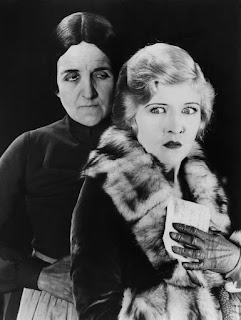
As the Gothic begins to appear on film, the menacing Grace Poole version dominates as the more potent form of the character. We get an early taste of housekeepers to come in the old dark house picture, The Cat and the Canary. Directed by Paul Leni, this 1927 silent film is memorable largely because of its creepy housekeeper, a dead-eyed horror humorously christened Mammy Pleasant. Like later and more familiar Gothic housekeepers, Mammy Pleasant acts as a menacing presence, constantly watching the heroine but refusing to divulge the secrets of the house to her. In addition, Mammy reveals the housekeeper’s evolving taste for a rather morbid, deadpan brand of humor. In one conversation, another character says, “You must have been lonely here these twenty years, Mammy Pleasant,” to which she replies, “I don’t need the living ones.” Mammy also operates as a predictor of doom, alarming the houseguests with her assertion that “something terrible will happen here tonight!” Mammy’s dark hair, dour expression, and thin, tight lips become the standard equipment of Gothic housekeepers forever more, making her an important figure in the character’s cinematic development.

Of course, the lynchpin figure in the evolution of the Gothic housekeeper is Mrs. Danvers, the terrifying antagonist who protects the territory of her dead mistress in Daphne du Maurier’s 1938 novel, Rebecca. The nameless heroine recalls her first encounter with Mrs. Danvers thus:
Someone advanced from the sea of faces, someone tall and gaunt, dressed in deep black, whose prominent cheek-bones and great, hollow eyes gave her a skull’s face, parchment-white, set on a skeleton’s frame.
She came towards me, and I held out my hand, envying her for her dignity and her composure, but when she took my hand hers was limp and heavy, deathly cold, and it lay in mine like a lifeless thing. (67-68)
The heroine’s language loads Mrs. Danvers with images of death and horror, and it also sets the stage for the housekeeper’s function as the guardian of the dead Rebecca. Mrs. Danvers is the housekeeper not of a living home but of a tomb that enshrines the memory of her lost idol; she rejects the new mistress of Manderley as an interloper and seeks to drive her away. Obsessive, manipulative, and in total control of the house, Mrs. Danvers imprisons the new Mrs. de Winter in Manderley while simultaneously trying to eject her from it. When she feels that Rebecca’s ownership of Manderley can no longer be protected, Mrs. Danvers sets fire to the house rather than see the second Mrs. de Winter successfully inhabit it.

            Alfred Hitchcock’s 1940 adaptation of Rebecca is a watershed moment in the history of the female Gothic film, not least because it perfectly captures the menacing allure of Mrs. Danvers’ character. Among its eleven Oscar nominations was a Best Supporting Actress nod for Judith Anderson, who delivers a truly iconic performance as Mrs. Danvers. Her appearance in the movie owes something to Mammy Pleasant while capturing the spirit of du Maurier’s description, if not the letter, for Anderson’s version is menacingly alive, with piercing eyes and a coiled braid of black hair perfectly arranged above the severe white line of her part. On screen, Mrs. Danvers controls the heroine with her gaze and her gestures; we can see her watching Joan Fontaine’s mousy victim with a predator’s glittering interest. In the famous bedroom scene in which Mrs. Danvers tries to drive the heroine to commit suicide, Hitchcock faithfully recreates du Maurier’s written description, but the visual representation lends the moment an additional sense of suspense and horror. Mrs. Danvers leans over the heroine, her burning eyes intensely fixed on her victim, her power over the younger woman tellingly displayed in their physical positions. In this scene and in others throughout the film, Anderson creates a definitive image of the Gothic housekeeper, endowing her with characteristics and mannerisms that will be hallmarks of the character in the popular imagination from 1940 onward.

Edith Barrett as Mrs. Fairfax
The box office success and Best Picture Oscar of Rebecca inspired a wave of female Gothic films in the early 1940s, including, somewhat ironically, a 1943 film adaptation of Jane Eyre, also starring Joan Fontaine as the heroine. For the housekeeper character, however, this is a throwback to the pre-Danvers era, back to the dual figures of good and bad household guardians. Edith Barrett plays a nervous, rather frail Mrs. Fairfax, with English stage actress Ethel Griffies in an uncredited appearance as Grace Poole (Hitchcock fans might remember Griffies as the skeptical ornithologist in The Birds). Barrett again plays the family secret keeper in the same year’s Eyre-inspired Val Lewton horror film, I Walked with a Zombie. Lewton’s picture has no menacing housekeeper; the most important domestic servant is Alma, a cheerful young black woman played by Theresa Harris. Barrett, however, fills in for the housekeeper as Mrs. Rand, the mother of the two male leads; she alone knows what really happened to her son’s first wife, the zombified Jessica. Like the motherly housekeepers of older Gothic stories, Mrs. Rand tries to help Frances Dee’s heroine even as she withholds the most important family secrets from her, but she lacks a menacing female counterpart.

More interesting, perhaps, is the 1946 adaptation of Anya Seton’s 1944 novel, Dragonwyck, written after both the original novel and the film version of Rebecca and thus ostensibly able to capitalize on the evolving conventions of the female Gothic genre. The film trailer, in fact, proudly announces the new picture’s appeal to fans of the earlier work. Like Rebecca, Dragonwyck draws from Jane Eyre as its source material, but it translates the Gothic action to nineteenth-century New York and the upper class Dutch society of the Patroons. Differences between the novel and the film affect the representations of the housekeeper characters, but both offer some insight into the type’s importance to the genre by showing the pitfalls of tinkering with effective conventions.

The novel itself takes a problematic dual approach to the housekeeper figure. As in Jane Eyre, we have two domestic characters who highlight the heroine’s outsider status and possess power and information that might be able to help or harm her. The official housekeeper, Magda, resents the heroine’s arrival and persistently gives her the cold shoulder, reserving her loyalty for the mistress of the house. Seton does very little with Magda, failing to provide even a single detailed description of her appearance. She gives greater attention to the other, more ominous domestic secret keeper, the ancient mixed-race servant, ZĂ©lie. ZĂ©lie gets all of the creepiest, most Gothic scenes, revealing to the newcomer the haunted history of Dragonwyck and foretelling the doom of the Van Ryn family members. Seton gives this character a suitably striking introduction:
The door opened and a strange woman walked in, shutting the door behind her. A thin old figure in a shapeless black dress who came over to the bed and gazed down at the frightened girl. The woman was nearly six feet tall and erect, her coarse black hair, which showed no gray, drawn back into a scraggy knot, her face a ruddy brown crisscrossed with wrinkles from which peered two shrewd little eyes as black as dewberries
“What do you want?” whispered Miranda.
“Me old ZĂ©lie,” said the woman in a harsh accented voice, touching her slab-like chest. “I want to see what you look laike.” (49)
Unfortunately, Seton abruptly writes both Magda and ZĂ©lie out of the book about a third of the way through, and no similar character fills the resulting gap. The problems with Seton’s treatment may help to explain why her novel is little read today, since she mishandles two different variations on one of the genre’s most important character types.

Director Joseph L. Mankiewicz’s film adaptation makes some marked changes to Seton’s novel, especially in the housekeeper department. Sadly, the movie completely drops ZĂ©lie, who would be quite provocative, to say the least, to see on screen. It transfers her ominous warnings and insider knowledge to Magda, revising Seton’s flat, barely described character into something audiences might more properly expect in a female Gothic tale. Played by the very capable character actress, Spring Byington, the movie Magda embodies both the menacing and the maternal, and the result is a woman who strikes both the audience and Gene Tierney’s heroine as slightly insane. In one early scene, for example, Magda suddenly veers off from seemingly friendly talk to warn, “One day, you’ll wish with all your heart you’d never come to Dragonwyck.” Byington’s character occupies a middle distance between Mrs. Fairfax and Mrs. Danvers, which makes her interesting in terms of the housekeeper’s changing role in the genre, but the movie, like the novel, drops Magda midway through, and thus the potential for a really serious engagement of the housekeeper figure remains unrealized.

Unlike Anya Seton, Shirley Jackson takes full advantage of the creepy housekeeper in her 1959 novel, The Haunting of Hill House, which was adapted into the film, The Haunting, in 1963. The film makes a number of changes to the original text, but it faithfully preserves the unnerving housekeeper, Mrs. Dudley, while also highlighting her relationship to Mrs. Danvers through casting and costume decisions. Like earlier housekeepers, Mrs. Dudley possesses insider knowledge of the house she oversees, and she resents the presence of the newcomers who disrupt her routine. Hill House has no master or mistress to command her loyalties, and Mrs. Dudley’s feelings about the house are never quite clear, just as everything else about Hill House remains shrouded in questions and doubt. Jackson does, however, hint at the connection between Mrs. Dudley and Hill House near the end of the novel, when she describes Mrs. Dudley as “shudder[ing] in her sleep” from six miles away when the heroine touches a kitchen door (171). In contrast to the visitors, Mrs. Dudley seems to understand and respect the house, never trespassing against its unspoken rules, and in return the house never affects her as it does the others.

Jackson offers little description of the character when she first appears in the novel, but she does provide a truly memorable exchange with the protagonist, Eleanor, a few paragraphs later.
“I don’t stay after I set out dinner,” Mrs. Dudley went on. “Not after it begins to get dark. I leave before the dark comes.”
“I know,” Eleanor said.
“We live over in the town, six miles away.”
“Yes,” Eleanor said, remembering Hillsdale.
“So there won’t be anyone around if you need help.”
“I understand.”
“We couldn’t even hear you, in the night.”
“I don’t suppose-“
“No one could. No one lives any nearer than the town. No one else will come any nearer than that.”
“I know,” Eleanor said tiredly.
“In the night,” Mrs. Dudley said, and smiled outright. “In the dark,” she said, and closed the door behind her.
(27-28)
The ominous warning from the housekeeper becomes a kind of nervous joke between Eleanor and Theodora, but it sets the stage for the horrors to come and provides both characters and readers with important information about Hill House. The locals are afraid of the place, none of them will have anything to do with it, and the residents can expect no assistance when their presumptuous occupation rouses the house into action. The inmates of the house laugh at Mrs. Dudley just as they laugh at the strange things that happen in Hill House; both frighten them, although they cannot necessarily explain why. 

            The film adaptation, directed by Robert Wise, reflects these elements of the novel and builds on them by making the most of the character conventions established by earlier films like Rebecca. Rosalie Crutchley, whose earlier roles had included the terrifying Madame Defarge in a 1958 adaptation of A Tale of Two Cities, is just the sort of actress for the Gothic housekeeper role, with a thin face, dark hair, and a most unnatural smile. Her somber attire and pinned-up hair, both black of course, signal her sorority with Mrs. Danvers and Mammy Pleasant, and Crutchley delivers Mrs. Dudley’s lines to great effect, especially in the scene mentioned earlier. Building on the character as originally created in Jackson’s novel, the film reveals the conventional traits that have come to be associated with the Gothic housekeeper. Mrs. Dudley, as much an insider as Hill House allows, lays out the house rules to Eleanor and the other guests in a way that emphasizes her own power and position of authority. “I don’t wait on people,” she tells the newcomers firmly. “What I agreed to, it doesn’t mean I wait on people” (27). She clearly knows more about the house than she is willing to tell, and her veiled warnings serve only to alarm the visitors and the audience without helping them prepare for the terrors that they will face. Like Mrs. Danvers, Mrs. Dudley projects menace rather than maternal comfort, and the film emphasizes this aspect by eliminating a kitchen scene in which Jackson has Mrs. Dudley gossiping about the young people in a very motherly, ordinary fashion. Unfortunately, by the time the next film adaptation of The Haunting of Hill House arrived in 1999, the Gothic housekeeper character had become so familiar that Mrs. Dudley is merely a clichĂ©, another stale note in an over-played symphony of horrors.

Mrs. Slydes frightens a guest in House on Haunted Hill.
Anything repeated often enough to be a clichĂ© is already ripe for parody, and in the years after the original film adaptation of The Haunting the Gothic housekeeper became an obvious target. William Castle had helped to entrench the conventions of the character with films like House on Haunted Hill in 1959 and especially 13 Ghosts in 1960, which featured The Wicked Witch of the West herself, Margaret Hamilton, as a creepy housekeeper complete with black dress, tight bun, and dour expressions, who also turned out to be a medium able to communicate with the ghosts who haunted her employers’ house. Today, the website, tvtropes.com, even has an entry for “Creepy Housekeeper” that identifies her major traits and aligns her with another stock character, the “Crusty Caretaker.” Most importantly, the incarnation of the creepy housekeeper chosen for the entry’s quote and image is not Mammy Pleasant, Mrs. Danvers, Magda, or Mrs. Dudley, it is Cloris Leachman as Frau BlĂĽcher in Mel Brooks’ 1974 Gothic horror parody, Young Frankenstein. The character, as written by Mel Brooks and Gene Wilder and performed by Leachman, incorporates all of the Gothic housekeeper clichĂ©s and then revels in them, permanently altering the way in which movie audiences perceive her role. 

Young Frankenstein, as its name suggests, draws its inspiration from James Whale’s 1931 Frankenstein and 1935 Bride of Frankenstein, and the origins of Frau BlĂĽcher can also be found there. In the second Whale film, Irish character actress Una O’Connor plays a frequently hysterical housekeeper named Minnie, although Whale uses her for comic effect rather than horror. Despite her shrieking, Minnie herself is all motherly concern, much like Mrs. Fairfax in Jane Eyre. In Young Frankenstein, Frau BlĂĽcher’s costume and position in the household are references to O’Connor’s character, but her creepy and often menacing behavior develops from housekeepers like Mrs. Danvers and Mrs. Dudley. Leachman also sports the thin lips, severe bun, and sinister facial expressions of the more menacing housekeeper type. In fact, Frau BlĂĽcher is so absurdly terrifying that horses whinny in fear every time her name is mentioned. Early on, the movie exploits one particularly popular housekeeper trope, in which the taciturn household guardian conducts newcomers through the mysterious domain over which she reigns, often with a large candle in hand. Frau BlĂĽcher carries a holder with three candles, all of them markedly unlit, as she warns Frederick to “stay close to the candles. The stairway can be… treacherous.” Like other Gothic housekeepers, but unlike Minnie, Frau BlĂĽcher has special insider knowledge about her house and its family. She manipulates Frederick Frankenstein into resuming his grandfather’s research, apparently out of loyalty to the deceased Victor, with whom she was in love. Brooks and Wilder, of course, play all of these plot elements for laughs, but they depend upon the already established conventions of the housekeeper role and show the extent to which the writers expect the audience to be familiar with them. The parody succeeds so well that Frau BlĂĽcher usurps the place of earlier, more serious treatments of the character to become the quintessential example of the type. 

The entwined literary and cinematic evolution of the Gothic housekeeper demonstrates the ways in which genre conventions gather force and then sometimes sink under their own weight. In this case, the housekeeper character, along with the rest of her genre’s conventions, developed first in literary works of the eighteenth and nineteenth centuries and then gathered new steam with the rise of film. She reached her peak when Rebecca took the world by storm, thanks in part to the ways in which the film version capitalized on her potential. After that, other literary works and films could only repeat what had already been accomplished or twist that representation for parodic effect, since efforts to tinker with the formula were problematic at best. Audiences today will come to any housekeeper character with a very distinct mental image, that developed by the earlier Gothic novels and films, but they will also almost certainly have a sense of the character as inherently clichĂ©d and even ridiculous, given the immense cultural impact of the later parody. We haven’t seen much of the Gothic housekeeper in recent years, perhaps because Mrs. Danvers and Frau BlĂĽcher have so completely occupied the spaces in which such a character can stand. Perhaps the recent return of Hammer films will bring the creepy housekeeper back to us in a new but still eerily familiar form. For now, however, it is the housekeeper herself who has become haunted, not by the ghosts of her employers’ house, but by the enduring influence of her own most iconic incarnations.

This essay was written for presentation at the 2012 meeting of the Popular Culture Association in the South (PCAS). The Works Cited page is intentionally excluded in order to discourage plagiarism of the material. This content is the intellectual property of the author and must be properly cited if referenced elsewhere. The author reserves the right to send Mrs. Danvers to have a little personal chat with any plagiarists!

Thursday, August 30, 2012

Classic Films in Focus: THE WIZARD OF OZ (1939)


Certainly one of the top ten classic movies on almost any list, The Wizard of Oz (1939) has never ceased to attract new fans, and it remains the definitive adaptation of L. Frank Baum's classic novel, despite many contenders to that title both before and after. Its winning combination of story, spectacle, and sound draws viewers into its magical world, and, unlike Dorothy, they rarely yearn to go home. Directed by Victor Fleming (with help from George Cukor, Mervyn Le Roy, and King Vidor) and starring the divinely adorable Judy Garland, The Wizard of Oz may well be the perfect first film for the classic movie newcomer.

Garland stars as Dorothy Gale, a young Kansas girl who finds herself transported to the fabulous land of Oz after a cyclone carries her away from home. Unfortunately for Dorothy, her house crushes a wicked witch, which raises the ire of the witch's even more wicked sister (Margaret Hamilton). Dorothy sets off for the Emerald City in the hope that the powerful wizard there can return her to Kansas, and along the way she acquires three companions: a sympathetic Scarecrow (Ray Bolger), a sentimental Tin Man (Jack Haley), and a reluctant Lion (Bert Lahr). At the wizard's command, the friends attempt to earn their desired rewards by defeating the witch and her strange minions, but the seemingly Great and Terrible Oz turns out to be a rather different character from what they expected.

Beautifully nuanced performances from each and every actor make the characters live in our hearts. Garland is impossibly girlish and sweet, her big brown eyes round with a sense of wonder that we can't help but share. Bolger, Haley, and Lahr all endow their inhuman characters with tremendous humanity; they are funny because they are so likably real, and there's a sweetly platonic sense of romance in the Scarecrow's relationship with Dorothy. It's no wonder that she'll miss him "most of all." Margaret Hamilton sets the bar for wicked witches everywhere, and Frank Morgan pops up all over the place as an assortment of different characters, suggesting the dreamlike nature of Dorothy's adventure.

Even kids who have never known a world without 3D and CGI can appreciate the visual artistry of The Wizard of Oz. Its special effects have stood the test of time amazingly well, from the cyclone bearing down on Dorothy's farm to the army of winged monkeys filling the sky. The costumes and makeup still look fantastic, especially now that carefully restored versions of the film are available on DVD and Blu-ray. If anything, the effects and costumes might be too good for younger viewers; it's best to think about a child's tolerance for winged monkey attacks, scarecrow dismemberment, and witch melting before leaving your youngster to watch the picture alone. On the plus side, that first glimpse of Technicolor Oz is a moment of pure movie magic, an epiphany about film's unique ability to transport us to other worlds and change the way we see our own.

The Wizard of Oz earned six Oscar nominations; it won two, and Garland won a special Juvenile Award for her performance. It might have done better at the Academy Awards had it not come out in the single greatest year in Hollywood history, but that year would not have been as great without it. For more of Judy Garland and Ray Bolger, see The Harvey Girls (1946). The character actors who make up the cast of The Wizard of Oz turn up in hundreds of classic movies; they were some of Hollywood's hardest working performers, even though they never won or were even nominated for Academy Awards. Garland, of course, has become one of the most beloved stars of all time. See her in Meet Me in St. Louis (1944), Easter Parade (1948), and A Star is Born (1954) for more of her best performances.

This review was originally posted on Examiner.com. The author retains all rights to this content. 

For more about Judy Garland, read "10 classic movies starring Judy Garland" on Examiner.com.