Wednesday, February 16, 2022

Trek Noir: Out of the Past in Deep Space Nine's "Necessary Evil"

Note: This post contains plot spoilers for the Deep Space Nine episode, "Necessary Evil"


I'm currently making my way through the entirety of the Star Trek TV series, Deep Space Nine, which I never got to watch regularly during its first run, and so far it has been a richly rewarding experience. While all of the episodes have their merits, I was especially struck by Season Two's eighth episode, titled "Necessary Evil." This one stands out from the others and from most of the older Star Trek shows for its serious - and successful - evocation of classic film noir to tell a dark, duplicitous story about events that unfold before the Cardassians leave Bajor and the Federation takes charge of the space station. While the Star Trek universe is traditionally a positive space with an optimistic vision of the future, this episode uses the tropes of classic noir to investigate the dark past that haunts Deep Space Nine, and it calls into question the motives and relationships of some of its most complex characters.

The Next Generation crew in "The Big Goodbye"

Star Trek shows have been playing with genre since the original series, but the sensibility of true noir is at odds with the core values of the Trek universe. When The Next Generation ventures into noir territory in the first season episode, "The Big Goodbye," it does so as a holodeck adventure with Captain Picard adopting the role of fictional private eye Dixon Hill, a figure very much inspired by Humphrey Bogart as Dashiell Hammett's iconic Sam Spade in both the book and film versions of The Maltese Falcon. The holodeck story is intended to be a nostalgic amusement for Picard and his friends, but an external event causes the safety protocols of the holodeck to disengage, thus thrusting the crew members into a more dangerous adventure than they had expected. While the episode includes real peril for the crew, the noir element of the experience is artificial and contained, and it is also pointedly self-conscious, an homage to noir rather than an embodiment of it.

Such is not the case on the Deep Space Nine episode, where a dark past of Cardassian control and Bajoran resistance creates opportunities for a noir plot that exists as part of the characters' reality. It's not surprising that a series with persistent connections to Casablanca (1942) might see the shadowy world of noir as fruitful territory to mine for narrative; the show even gets around to a blatant revision of Casablanca later in Season Two with the episode, "Profit and Loss" (with Quark, of course, as the stand-in for Bogart's bar owner Rick). In "Necessary Evil," the series takes us back and forth between its past and present to explore what life on the space station was like before the Bajoran liberation, which also evokes shades of Casablanca and the Nazi Occupation. That past is a dark place, where everyone's motives are suspect and our core characters meet for the first time under grim circumstances. It's a perfect setting for a very unusual example of tech noir, the (literal and figurative) space where noir and science fiction meet.
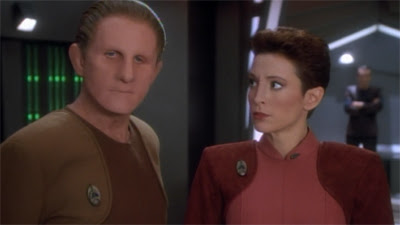
"Necessary Evil" focuses on the past between Odo and Kira.
 

The story opens in the present, when Quark is hired to retrieve a hidden, valuable item for an attractive Bajoran widow. Quark then becomes the victim of an attempted murder, and security chief Odo sets about uncovering Quark's assailant. His investigation takes him back to his first case on the station, when the Cardassian Gul Dukat assigned him to solve the murder of the widow's husband, a Bajoran merchant. The lead suspect in that case turned out to be the Bajoran Kira, then newly arrived on the station but now Odo's friend and colleague in the present. As Odo tries to uncover the present crime he begins to understand more about the murder from the past, but his realizations threaten his relationship with Kira.

Unlike Captain Picard in "The Big Goodbye," Odo is an unwitting noir protagonist and utterly unsentimental about the past, whether fictional or real. As an alien shape-shifter with no knowledge of his own home planet or people, Odo is a perfect noir lead - alone, aloof, cynical, and observant by necessity. He provides a classic noir narration of events only because Commander Sisko has asked him to create a record of the investigation. His failure to solve his first case haunts Odo, making him determined to solve not only the present crime but also the original murder. Gul Dukat claims that Odo is an ideal agent of justice in this case because his outsider status makes him neutral to both the occupying Cardassians and the subjugated Bajorans, but that neutrality is as questionable as Gul Dukat's explanation for Odo's assignment. Odo does, however, have a strong and clearly stated interest in justice, which makes him dogged in pursuit of the guilty parties in both the past and the present.

A Ferengi and a femme fatale meet in "Necessary Evil."

The character who most complicates Odo's sense of justice is Kira, the Bajoran woman who arrives at the station just before the original murder and is set up with the hallmarks of noir's good-bad girl and mystery's red herring (see Andrew Spicer's book Film Noir for a discussion of the genre's good-bad girl type). The widow claims that Kira was having an affair with her husband and is thus the obvious suspect, but the present tense crime has already depicted the widow as a classic femme fatale, so we, the audience, don't trust her. Kira denies the affair but eventually confesses to Odo that she is a saboteur for the Bajoran resistance and could not have committed the murder because she was busy causing damage elsewhere at that time. Odo protects Kira from Gul Dukat and leaves the murder unsolved, a situation that drives him all the more when the attack on Quark recalls the earlier crime. Finally, in the present, Kira reveals to Odo that she did, in fact, kill the Bajoran merchant when he discovered her trying to steal the same list of Bajoran collaborators that the widow hires Quark to find. The twist ending reveals Kira to be a better liar, and a less reliable associate, than Odo imagined, and it's not clear if he's more shocked by her duplicity or his own credulity. The episode concludes with the relationship between the two unresolved and the future of their friendship uncertain. It's a very noir ending for the episode even if both of the major characters remain alive and still working on the station afterward.

Everything else about this episode contributes to its noir sensibility. The scenes in the past use dark, blue lighting to cast shadows and uncertainty over the characters, while the other characters around Odo and Kira also fall into classic noir types, including Quark as the petty criminal in over his head and the widow as a beautiful femme fatale, complete with white evening gown and seductive manner. Odo's voice over narration, a staple of the genre, helps us navigate the shifts between past and present, but the two markedly different visual styles make the time periods quite distinct already. Gul Dukat, technically Odo's client in this investigation, has ulterior motives that he does not disclose, and the viewer comes away with the sense that "justice" is really a slippery idea. The smaller problems - who killed the merchant and who attacked Quark - might be solved, but larger and more unsettling questions persist. The episode presents, in abbreviated form, all the characteristics of classic noir, and it never winks or tips its hand about doing it. There's nothing cute about "Necessary Evil," which is part of the reason it's so good.

If you're interested in the particular pleasures of tech noir, check out film-length examples like Blade Runner (1982), Dark City (1998), and Minority Report (2002). If you're a Star Trek fan new to classic noir, start with iconic favorites like The Maltese Falcon (1941), Double Indemnity (1944), and, as my post title suggests, Out of the Past (1947).

Sunday, January 23, 2022

Making the News with The Muppets

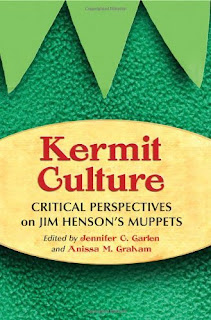
 Some years ago my dear friend and fellow popular culture scholar Anissa Graham and I co-edited two books about the works of Jim Henson. They're essay anthologies featuring scholarly discussions by a wide variety of authors, including us, and they were a lot of fun to create. Both of the books were published by McFarland and are still in print today. The first is Kermit Culture and the second is The Wider Worlds of Jim Henson. You'll find them on Amazon in paperback and Kindle editions, and they can be purchased from other book retailers, as well.

As a result of our work on those books, we sometimes get to do cool Muppet related stuff, and this week brought an unexpected opportunity to talk about the Muppets with a journalist from CNN. I thought some of my blog readers might enjoy the article, so here's the link:

"The Muppets are having a moment - just when we need them most" (CNN, Jan 23, 2022)

I really enjoyed talking to CNN's Scottie Andrew about the Muppets, and I think the article is a great discussion of their current cultural importance. Luckily for Scottie, it's a print article, so she didn't have to worry about suffering the fate of the Muppet News Flash anchor on The Muppet Show!

If you're interested in more of my Muppet related shenanigans, you can listen to my 2013 interview with the BBC radio program, "Last Word," marking the death of Jane Henson. I also appear as a guest on a couple of episodes of "Movin' Right Along: A Muppet Movie Podcast," hosted by ToughPigs Muppet super fans Ryan Roe and Anthony Strand.

For more Muppet posts here on the blog, try these:

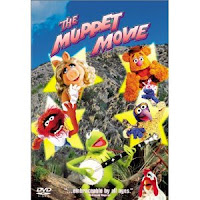
Classic Films in Focus: THE MUPPET MOVIE (1979)

The Lovers, the Dreamers, and Me: Reflections on The Muppets

Classic Movie Tourist: A Day in Hollywood 

Christmas Movie Blogathon: The Muppet Christmas Carol (1992)

Classic Movie Stars on The Muppet Show 

Thursday, January 20, 2022

Fantastic at 50: Classic Movie Actresses

Earlier this month I celebrated my 50th birthday, one of those milestone events that feels important even if the pandemic kept me from doing much to mark the occasion. Several years ago, when I was 42, I wrote a post about 42 year old classic movie actresses and the films they made at that age, so this seems like a good time to revisit the idea and think about stars who enjoyed significant moments in their careers when they were 50. Of course, being 50 in 2022 is quite a bit different from being 50 in 1952, and Hollywood actresses in the studio era faced tremendous age discrimination. The women who managed long careers did so through versatility, perseverance, talent, and sheer determination. Here are a few of my favorite classic movie actresses and the films they made in their 50th year.

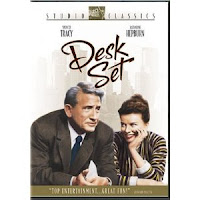
Katharine Hepburn, born in 1907, made the great romantic comedy Desk Set in 1957, one of her many pictures with costar Spencer Tracy. It's a funny, sweet story that highlights middle aged romance and women with careers, and it's actually one of my favorite movies that the pair made together. Of course, Hepburn would go on to even more great roles and Oscar nominations after 50, including three Best Actress wins.

Hepburn's Desk Set costar, Joan Blondell, was a year older, but she also enjoyed a long career. In 1956 the 50 year old star appeared as part of the ensemble cast in The Opposite Sex, a remake of the 1939 hit, The Women. Although she's best remembered today for her dozens of Pre-Code and other 1930s films, Blondell went right on acting until her death in 1979.

Bette Davis, born in 1908, was mostly doing television work in 1958, with a couple of guest spots on different series over the course of her 50th year. Even top stars like Davis and Crawford found big film roles harder to come by as they aged, especially if they wanted to avoid playing supporting characters like mothers to younger leading ladies. Davis, however, would eventually lean into horror roles and make the most of her lifelong ability to transform herself into extreme characters. Like Blondell, she would continue acting right up until her death in 1989.

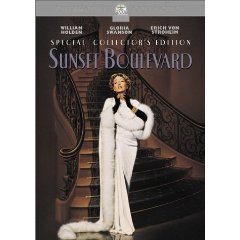
Gloria Swanson was 51 by the time Sunset Blvd. appeared in theaters in 1950, but the actress really was 50 years old when she played the 50 year old Norma Desmond. It's a role that digs into the crisis of aging for a Hollywood actress, and it's not exactly flattering. Still, Swanson is brilliant in the film, and it's a shame the movie didn't inspire a revival for the star. Her leading man, William Holden, was still enjoying big movie roles well into his 50s, but Swanson, who earned a Best Actress Oscar nomination for Sunset Blvd., moved on to television appearances and semi-retirement.

Of course, some actresses fared better after 50 than others, with comic character actresses being some of the best at maintaining their careers. Long-legged Charlotte Greenwood made Down Argentine Way (1940), Mary Wickes appeared in Cimmaron (1960), Marjorie Main made seven films in 1940, and her friend Spring Byington took on ten roles in her 50th year in 1936. They had never been famous for their glamorous youth and beauty, and they trooped along through the decades in supporting roles that allowed them to keep working long after the starlet types had been forced into retirement.

When I look at modern actresses who are turning 50 this year, I see Cameron Diaz, Rebecca Romijn, Toni Collette, Jennifer Garner, and Gwyneth Paltrow, all of whom are still working and even thriving with their careers. I doubt they'll have to resort to hagsploitation roles like Davis and Crawford, and it's encouraging to think that we see 50 differently now than we did during the classic movie era. Personally, I'm feeling pretty good about being 50, and I plan to celebrate with several special blog posts in the weeks ahead.

If you're turning 50 this year, too, happy birthday, and remember, Jessica Tandy won an Oscar at 80, so you're definitely not too old to accomplish something big!

Monday, January 10, 2022

2021 Movie Log in Review

It's that time again, when I post my my movie log in review for the previous year and reflect on another year's worth of movie watching. 2021 continued to be dominated by the pandemic, which affected my movie viewing in several ways. I saw exactly one new release in an actual theater in 2021, and that was the disappointing Marvel offering, The Eternals. Alabama has done almost nothing to curb Covid cases, and theaters just haven't felt safe or worth the risk. Vaccinations did allow me to return to my lifetime learners and retirement community residents for film programs in the summer and fall, and I really enjoyed being with them again. With my family still at home for much of the year, newer movies remained a more popular group choice in the evenings, and I had less time to squeeze in classics that I hadn't seen before. We also watched a lot of British murder mysteries and Disney+ TV series.

Here's the list for 2021 - let's hope that we'll eventually see some normalcy again in 2022!


January (15)

The Return of the King (2003)

The Enchanted Cottage (1945)

Valley Girl (2020)

Dragonslayer (1981)

The Blind Swordsman: Zatoichi (2003)

The New Mutants (2020)

Fisherman's Friends (2019)

Judy (2019)

Never Too Late (2020)

Peggy Sue Got Married (1986)

Max Reload and the Nether Blasters (2020)

Evil Under the Sun (1981)

The Mirror Crack'd (1980)

House (1977)

The History of Future Folk (2012)

 
February
(9)

Yojimbo (1961)

The Mark of Zorro (1940)

The Flesh and the Fiends (1960)

Space Sweepers (2020)

Rogers and Hammerstein's Cinderella (1997)

The Scarlet Pimpernel (1934)

Cast a Deadly Spell (1991)

Gotham by Gaslight (2018)

Justice League Dark: Apokalips War (2020)


March (2)

Legally Blonde (2001)

Stagecoach (1939)


April (6)

Godzilla vs. Kong (2021)

The Gay Divorcee (1934)

So I Married an Axe Murderer (1993)

Mystery Men (1999)

Dark Shadows (2012)

The Reluctant Debutante (1958)


May (7)

Scooby Doo (2002)

In the Good Old Summertime (1949)

Summer Stock (1950)

The Harvey Girls (1946)

Separate Tables (1958)

Rachel and the Stranger (1948)

Bathing Beauty (1944)


June (11)

Streets of Fire (1984)

Raya and the Last Dragon (2021)

42nd Street (1933)

The Personal History of David Copperfield (2019)

Dangerous When Wet (1953)

Gold Diggers of 1933 (1933)

In the Heights (2021)

Luca (2021)

Suicide Squad (2018)

Roxanne (1987)

Hidalgo (2004)


July (16)

Demolition Man (1993)

The Mummy (1999)

Black Widow (2021)

The Avengers (2012)

Pygmalion (1938)

My Fair Lady (1964)

Earth Girls Are Easy (1988)

She's All That (1999)

Victor/Victoria (1982)

The Adventures of Robin Hood (1938)

The Opposite Sex (1956)

Miss Congeniality (2000)

Ocean's 8 (2018)

The Witches of Eastwick (1987)

Jungle Cruise (2021)

The Truman Show (1994)


August (7)

Ivanhoe (1954)

The Birdcage (1996)

The Map of Tiny Perfect Things (2020)

The Green Knight (2021)

Jurassic Park (1993)

Jurassic Park II: The Lost World (1997)

Cruella (2021)


September (4)

Cinderella (2021)

House on Haunted Hill (1959)

The 39 Steps (1935)

The Haunting (1963)


October (11)

They Drive by Night (1940)

Mystery of the Wax Museum (1933)

The Duff (2015)

The Haunted Hotel (2021)

Death on the Nile (2004)

Good News (1947)

House on Haunted Hill (1959) - Again!

Carnival of Souls (1963)

The Brain That Wouldn't Die (1962)

Monster House (2006)

Horror of Dracula (1958)


November (7)

The Sparks Brothers (2020)

To Have and Have Not (1944)

Free Guy (2021)

The Harder They Fall (2021)

The Eternals (2021)

Shang-Chi and the Legend of the Ten Rings (2021) - 2x this month


December (16)

Love Hard (2021)

The Big Sleep (1946)

Single All the Way (2021)

Mixtape (2021)

My Man Godfrey (1936)

A Castle for Christmas (2021)

Christmas in Connecticut (1945)

The Man Who Came to Dinner (1942)

Matrix Resurrections (2021)

Encanto (2021)

Scrooged (1988)

The Muppet Christmas Carol (1992)

Gremlins (1984)

Gremlins II (1990)

Love and Monsters (2020)

White Christmas (1954) 


Total film count for 2021: 111

Wednesday, December 15, 2021

LEGO Green Man

Here's another one of those moments where my literary, cinematic, and LEGO obsessions collide. In August I watched The Green Knight (2021), a modern revision of the iconic chivalric romance, Sir Gawain and the Green Knight, a story I've loved since I first read it as a student and then taught many times during my years as a college English instructor. I've had the story on my mind again ever since I watched the film, which inspired me to build this LEGO version of the Green Man for an upcoming show with my local LUG (LEGO User Group), TNVLC.

The Green Knight of the story is the most famous incarnation of the Green Man, a mythological figure who represents the natural world and is usually shown as a man's face surrounded by or even made out of vegetation. You'll find him everywhere in the UK, even in churches, but he appears in many different cultures going back as far as the 2nd Century. Here's an article about the Green Man on Historic UK if you want to read more. 


Thursday, December 9, 2021

Five Favorite Films: Christmas Movies

Every Christmas brings new holiday movies, especially with streaming services like Netflix cooking up batches of them like trays of cinematic sugar cookies, but the classics are those we return to year after year. They become beloved traditions in many families, and ours is no different. I know there's plenty of debate about what makes a "classic" or even what counts as a Christmas movie, but here are five favorites that my family revisits every year, along with lots of suggestions for other seasonal stories you might try.

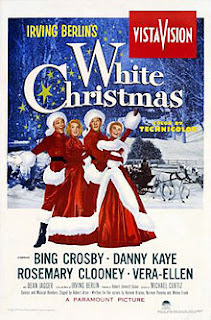
White Christmas (1954)

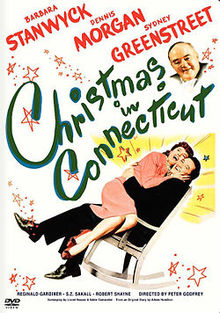
This musical delight starring Bing Crosby, Danny Kaye, Vera-Ellen, and Rosemary Clooney is THE family Christmas movie at our house. We usually watch it for the first time right after Thanksgiving, and we often make three or four viewings by the New Year. Everything about White Christmas is perfect Yuletide cheer, but at our house it's all about Danny Kaye, one of our favorite classic movie stars. "The Best Things Happen When You're Dancing" has nothing to do with Christmas but is so catchy and fun that I hum it for days after every viewing. Dean Jagger and Mary Wickes also help to make this movie the top pick on our nice list. If you're looking for more classic Christmas comedy, follow this one up with Christmas in Connecticut (1945) and Bachelor Mother (1939).

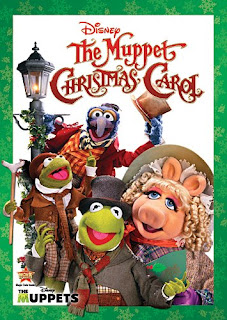
The Muppet Christmas Carol (1992)

Here's another favorite that the whole family has to watch at least once, often on Christmas Eve. I'm a huge fan of A Christmas Carol in general - both the original story and its many adaptations - but this is my favorite of the lot. Gonzo makes a fabulous Charles Dickens, with Rizzo as his audience and sidekick, and Michael Caine is clearly having a ball as the miserly Scrooge. In spite of the Muppets in most of the roles, this film is surprisingly faithful to its source material and has some of the best Ghosts of Christmas in any production, especially the luminous and childlike Ghost of Christmas Past. I remember seeing this movie in the theater back in 1992, and I have loved it ever since. Make sure you watch the extended version with the restored scene featuring the song, "When Love is Gone," which was cut from the original theatrical release. The Muppets made several other Christmas specials, but for sheer delight follow this one up with Emmet Otter's Jug-Band Christmas (1977).

Scrooged (1988)

Bill Murray offered his own take on Scrooge a few years before the Muppet version, and this 80s tale of Christmas redemption holds up really well. The Ghosts played by David Johansen and Carol Kane always crack us up, and "Niagara Falls!" has become part of our family's extensive movie quote language. Richard Donner directs a fantastic cast that also includes Karen Allen, Bobcat Goldthwait, Robert Mitchum, John Forsythe, Buddy Hackett, and Alfre Woodard. It's by no means the first Christmas Carol adaptation you should watch, and it's not really for kids, but we come back to it every year and enjoy it all over again. For a behind-the-scenes story about Dickens' enduring tale, try The Man Who Invented Christmas (2017), which shows Dickens being haunted by his characters as he tries to write the book.

A Christmas Story (1983)

Speaking of highly quotable 80s Christmas movies, who can forget "You'll shoot your eye out" and "It's a major award!" This one rose on our family list over the years as our kid got older and fell in love with its wacky, nostalgic look at childhood yearning and misery. Now we watch it every holiday season and wait for our favorite scenes, most of which feature Ralphie's elaborate fantasies. "It was... soap poisoning!" Darren McGavin is a cranky delight as Ralphie's dad, and Melinda Dillon is wonderful as the long-suffering mother, but Peter Billingsley carries the picture as few child actors could. Be wary of showing it to little ones if you don't want to explain the "fudge" scenes, but for just about anyone else this is a surefire hit. They made a sequel to this picture in 2012, but I've never seen it, and on IMDB it only has a 3.3 rating.

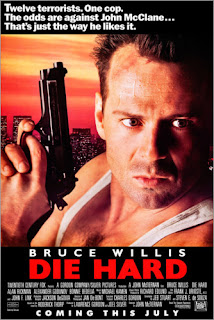
Die Hard (1988)

Yes, I know, some people insist that Die Hard isn't a Christmas movie, but it's a great choice for those who need an antidote to the sugary sweetness of most holiday fare. As the rest of this list proves, we're fans of somewhat perverse or at least comedic takes on Christmas, and this Bruce Willis action comedy delivers the quotable lines, humor, and Gen X sensibility that appeal to us at the holidays. It's lighter than The Long Kiss Goodnight (1996) and slightly more realistic than Gremlins (1984), both of which also tend to make our annual viewing schedule. Alan Rickman makes a brilliant film debut as Hans Gruber, and Bonnie Bedelia is excellent as the hero's almost ex-wife. If you want to explore the debate and pop culture surrounding Die Hard as a Christmas movie, check out the new Netflix film, Love Hard (2021), a rom com that takes its name from this picture and that much more romantic holiday hit, Love, Actually (2003).

This list only scratches the surface of the holiday movie genre, and there are dozens of films out there to suit different tastes and moods. What are your five favorite holiday films? Let me know in the comments!


Thursday, November 18, 2021

Five Favorite Films: Marvel Movies

Recently I've seen both of the newest MCU movies, Shang-Chi and The Legend of the Ten Rings (2021) and The Eternals (2021), and that inspired me to reflect on the MCU pictures as a group and my favorites among them. There are already more than 25 movies to choose from, not including the Disney Plus television series or the many upcoming releases slated for the next year, so there's a lot to consider when trying to pick just five favorites. My list isn't based on box office returns, critical reviews, or other fans' priorities; it's my top picks for the Marvel movies I enjoy watching the most and revisit the most frequently. Here are my five favorite films (so far!) from the MCU.

Captain America: The First Avenger (2011)

As a classic movie fan I'm a sucker for the 1940s setting of this first Captain America adventure, but it's the heart of this picture that brings me back again and again. Chris Evans is perfectly cast as an old-fashioned good guy with a steady moral compass, and I simply adore Hayley Atwell as Peggy Carter (I'm still bitter about the cancellation of Agent Carter). Sebastian Stan begins a long but engrossing character arc as Steve's friend, Bucky, and it's refreshing to go back to this first outing and see him before his dark period in the Winter Soldier role.

Ant-Man (2015)

Even though Edgar Wright left the project and was replaced by Peyton Reed as the director, Wright's distinctive sense of humor is still readily apparent in this smaller scale Marvel hero origin story. The zippy comedy, heist movie tropes, and casting all make this one a hit for me, and I also love its soft center theme of fathers who love their daughters. Paul Rudd, recently crowned the 2021 Sexiest Man Alive by People Magazine, deserves a lot of credit for merging the comedic and dramatic demands of his role as Scott Lang. The supporting cast of loser ex-con buddies is so much fun that it's great to see them reunited in Ant-Man and the Wasp (2018), and I hope we'll see them again in the upcoming Quantumania sequel.

Doctor Strange (2016)

Here's another pick that has a lot to do with my personal preferences as a fan; I love the supernatural side of both DC and Marvel comics, and I really enjoy Benedict Cumberbatch's work in general, so Cumberbatch joining the MCU as the Sorcerer Supreme is a real treat. The What If...? Disney Plus series has shown us that Stephen Strange's journey could have taken a much darker route, but in the main timeline story we see him develop as a character and overcome his hubris, despair, and frustration. Benedict Wong is a scene stealer as Wong, and I really enjoyed seeing him return for Shang-Chi. I also appreciate the fact that Dr. Strange saves the day not by fighting and punching but basically by annoying his opponent until Dormammu finally gives up. In a universe full of muscle gods, a hero who thinks his way through a problem deserves special attention.


Thor: Ragnarok
(2017)

Speaking of muscle gods, here's Chris Hemsworth back in the fray as Thor in the third and by far the best of the Thor stories to date. A hilarious script and direction by the brilliant Taika Waititi make all the difference in this picture, although it also has a fantastic cast, great action scenes, moments of grand dramatic gravitas, and some truly inspired use of Led Zeppelin. Jeff Goldblum runs away with his scenes, giving regular scene stealer Tom Hiddleston a run for his money, and Tessa Thompson is brilliant as Valkyrie. Cate Blanchett radiates gleeful malevolence as Hela, an Asgardian so dangerous and twisted she makes Loki look like a saint. If I were ranking these five films by preference rather than release date, Thor: Ragnarok would be my top pick. It's just that much fun.

Black Panther (2018)

It's not just respect for the tragically short career of Chadwick Boseman that makes me include this movie in my five favorites; it's a gorgeous, riveting action picture with a fabulous cast and a fascinating glimpse of Afrofuturism that sets it apart from all of the earlier Marvel movies. Boseman is pitch perfect as T'Challa, but the movie provides such good roles for women, too, especially Danai Gurira as Okoye and Letitia Wright as Shuri. The MCU has come a long way from Black Widow as the only girl in the boys' club, but Black Panther does a particularly good job of showcasing different female characters, with different talents, attitudes, and relationships, and even though I will miss T'Challa I'm excited to see where Wakanda Forever will take the remaining characters.


Final note: 

I thoroughly enjoyed Shang-Chi and the Legend of the Ten Rings, and it might well displace one of these older movies in my top five over the next few months, but it's too early to say how many times I'll feel drawn to rewatch it. 2022 will bring us a lot of sequels featuring heroes we've already met, so we'll see if those stories can beat the appeal of the previous installments!