Blonde Crazy (1931) is a Pre-Code cracker that really puts the slap in its slapstick, with Joan Blondell regularly smacking costar James Cagney as the pair make their way through a series of scams and double crosses. Cagney's conman deserves Blondell's tough love; his Bert is too smart for his own good and always on the make, especially when attractive women turn up, but Cagney works the flawed charm of the character for all he's worth, and he and Blondell have excellent chemistry. Director Roy Del Ruth skillfully handles the mix of comedy and drama in this Depression Era tale of likable schemers, which also features Louis Calhern, Ray Milland, and Guy Kibbee.
Cagney plays enterprising hotel bellhop Bert, who uses his job primarily as an opportunity to run crooked schemes. He helps Anne (Joan Blondell) get a position at the hotel in order to chat her up, but when she forcefully rejects his smooth talk he ends up making her his partner instead. The pair work their way up and out of the hotel, but in the city they become entangled with big time conman Dapper Dan (Louis Calhern) and his partner, Helen (Noel Francis). Anne eventually tires of Bert's relentless schemes and falls for the seemingly straight arrow Joe (Ray Milland), but Joe turns out to have a few crooked angles of his own.
There's plenty of tantalizing Pre-Code action in Blonde Crazy, with illicit booze, gambling, adultery, honey traps, robbery, and Joan Blondell's brassiere stuffed full of cash. It's a world of moral relativity that Blondell's character enters somewhat by accident; she's not naturally crooked but is tough enough to handle herself in spite of constant sexual harassment. Anne isn't much bothered by Bert's scams because he usually swindles other swindlers, but she draws the line at outright robbery. When she decides to get out of the game and marry Joe, Bert realizes that he's missed out on his opportunity for a better life with Anne by his side, and he quits, too. Bert's inclination to go straight is then ironically thwarted by Anne's distress when Joe is revealed as the worst crook of them all.
Cagney and Blondell carry the picture with their performances, with Cagney clearly relishing the wolfish energy of his character and Blondell striking just the right balance between cynicism and vulnerability. Bert's favorite endearment, a drawled "Hoooney!" that he often directs at Anne, rolls out of Cagney's mouth with a cocksure smirk that perfectly sums up his personality. Supporting the pair most notably are Louis Calhern and Noel Francis as con artists who make a mark of Bert and cheat him out of his own ill-gotten cash. Their ruthless efficiency makes our protagonists look like angels, but Anne figures out a way to get even with them. Guy Kibbee makes a memorable appearance as one of Bert and Anne's early marks, while Ray Milland pops up fairly late in the picture as the rival for Anne's affections. We don't really see enough of Milland's Joe to form opinions about him until the very end, and it's kind of a shame that Milland doesn't get to work that shifty glint in Joe's eye a little more before his final act of selfish betrayal.
Roy Del Ruth, who started in the silent era, directed a wide variety of pictures, including Born to Dance (1936), It Happened on 5th Avenue (1947), and The Alligator People (1959). For more of Cagney and Blondell together, see The Public Enemy (1931), The Crowd Roars (1932), Footlight Parade (1933), and He Was Her Man (1934). Ray Milland is just a young up-and-comer in Blonde Crazy; catch him in his prime in the 1940s in The Major and the Minor (1942), The Uninvited (1944), and The Lost Weekend (1945).
Blonde Crazy is currently streaming on FilmStruck.
Showing posts with label Roy Del Ruth. Show all posts
Wednesday, August 15, 2018
Tuesday, October 13, 2015
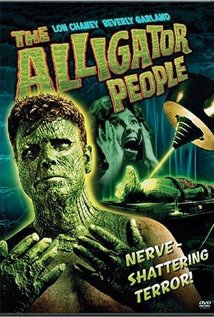
Classic Films in Focus: THE ALLIGATOR PEOPLE (1959)
Like The Fly (1958), The Alligator People (1959) merges science fiction and horror with a premise about dangerous experimentation gone horribly wrong, although in the second movie's case the combination of animal and human traits is intentional rather than tragically coincidental. Thus we get Richard Crane, as the increasingly reptilian victim of medical innovation, wandering the Louisiana swamps with one seriously bad case of gator face, while Beverly Garland chases after him as a dedicated wife who just won't take "no" for an answer. Most horror fans will come to The Alligator People for Lon Chaney, Jr., who plays a drunken villain, or for another example of the drive-in sci-fi chiller that flowered in the 1950s, but additional attractions can be found in the direction of Roy Del Ruth and performances from experienced players like Bruce Bennett, George Macready, and Frieda Inescort, each of whom helps to nudge the picture beyond mere B-movie spectacle.
Garland is the story's protagonist, a newly married nurse named Joyce Webster whose husband, Paul (Richard Crane), vanishes from a train on their honeymoon. Joyce tracks Paul to his family's plantation in the swamps, where she meets his mother, Mrs. Hawthorne (Frieda Inescort), who gives Joyce an icy welcome and tries to force her to leave. Determined to uncover the truth, Joyce stays until her mother-in-law and a local medical researcher, Dr. Sinclair (George Macready), reveal that Paul is suffering the side effects of a radical treatment for injuries he sustained in a plane crash during the war. Joyce joins their efforts to reverse Paul's transformation, but chaos erupts when a loutish plantation worker, Manon (Lon Chaney, Jr.), transfers his violent hatred for alligators to the alligator man.
The Alligator People is by no means a great film, and it often makes choices that are typical of its genre, but it also offers pleasant surprises. The pseudo-science of the central plot is wrapped in a strange psychological setup that presents Joyce, now known as Jane, as a victim of trauma induced amnesia as a result of her experience. Bruce Bennett appears in the frame scenes as one of two sexist doctors who can't stop mentioning how attractive the nurse is even as they use hypnosis to dredge up her horrible past. On the plus side, the frame tale serves a practical purpose in that it lets the audience know right away that this story won't end well for the alligator man or his bride, much as the opening of The Fly sets that story on its unbending course toward tragedy. The sexism also gets a much appreciated rebuke in the stalwart devotion of Joyce, who refuses to give up her search or abandon her husband once she sees his monstrous transformation. She even goes after him at the end, screaming not so much at his freakish appearance as his awful demise. Sure, his alligator head looks utterly fake, and we can even see the seams in his bodysuit, but Beverly Garland's performance as Joyce helps us focus on the drama of the situation rather than its special effects budget.
The success of the movie depends mostly on Garland, who plays Joyce as an active, intelligent woman caught up in overwhelming horror, but several supporting performances are worth noting. Lon Chaney. Jr. makes his presence felt as the belligerent Manon, a far nastier role than the actor's best known characters in other horror films. With his hook hand and his lecherous eye, Manon is a true monster; he provides a telling contrast to Paul, who loses the appearance of humanity but retains its inner qualities, even to the bitter end. Frieda Inescort also turns in a good performance as Paul's distraught mother; her accent wanders a bit, but she navigates the emotional territory of her character with greater assurance, letting her stern rejection of Joyce melt into shared misery over a loved one's terrible fate. Richard Crane gets less screen time as Paul, since he mostly skulks around the bayou in hiding, but his opening scenes set the stage for his later anguish. Hold on to the subtle cues on his handsome face as he talks about his accident with Joyce; that subtlety is lost later, but its emotional impact endures. Bruce Bennett and George Macready are both somewhat underused in their roles, but they give their doctors far more animation than such characters usually have in these pictures.
Some sci-fi B movies of this era are beloved precisely because they are campy and badly done, but The Alligator People takes a more serious tone, and despite its faults it's really a much better picture than it probably has any right to be. Give some of the credit for that to Roy Del Ruth, who also directed Born to Dance (1936), It Happened on Fifth Avenue (1947), and On Moonlight Bay (1951). See more of Beverly Garland in D.O.A. (1950), Not of This Earth (1957), and Twice-Told Tales (1963); she also enjoyed a long and varied television career and was even nominated for an Emmy. Lon Chaney, Jr. is best remembered for The Wolf Man (1941), but he plays supporting roles in many films, including The Black Castle (1952), The Black Sleep (1956), and The Haunted Palace (1963). Catch Frieda Inescort in Pride and Prejudice (1940), You'll Never Get Rich (1941), and The Return of the Vampire (1943). For similar 50s creature features, try I Was a Teenage Werewolf (1957), Attack of the 50 Foot Woman (1958), and Return of the Fly (1959).
Garland is the story's protagonist, a newly married nurse named Joyce Webster whose husband, Paul (Richard Crane), vanishes from a train on their honeymoon. Joyce tracks Paul to his family's plantation in the swamps, where she meets his mother, Mrs. Hawthorne (Frieda Inescort), who gives Joyce an icy welcome and tries to force her to leave. Determined to uncover the truth, Joyce stays until her mother-in-law and a local medical researcher, Dr. Sinclair (George Macready), reveal that Paul is suffering the side effects of a radical treatment for injuries he sustained in a plane crash during the war. Joyce joins their efforts to reverse Paul's transformation, but chaos erupts when a loutish plantation worker, Manon (Lon Chaney, Jr.), transfers his violent hatred for alligators to the alligator man.
The Alligator People is by no means a great film, and it often makes choices that are typical of its genre, but it also offers pleasant surprises. The pseudo-science of the central plot is wrapped in a strange psychological setup that presents Joyce, now known as Jane, as a victim of trauma induced amnesia as a result of her experience. Bruce Bennett appears in the frame scenes as one of two sexist doctors who can't stop mentioning how attractive the nurse is even as they use hypnosis to dredge up her horrible past. On the plus side, the frame tale serves a practical purpose in that it lets the audience know right away that this story won't end well for the alligator man or his bride, much as the opening of The Fly sets that story on its unbending course toward tragedy. The sexism also gets a much appreciated rebuke in the stalwart devotion of Joyce, who refuses to give up her search or abandon her husband once she sees his monstrous transformation. She even goes after him at the end, screaming not so much at his freakish appearance as his awful demise. Sure, his alligator head looks utterly fake, and we can even see the seams in his bodysuit, but Beverly Garland's performance as Joyce helps us focus on the drama of the situation rather than its special effects budget.
The success of the movie depends mostly on Garland, who plays Joyce as an active, intelligent woman caught up in overwhelming horror, but several supporting performances are worth noting. Lon Chaney. Jr. makes his presence felt as the belligerent Manon, a far nastier role than the actor's best known characters in other horror films. With his hook hand and his lecherous eye, Manon is a true monster; he provides a telling contrast to Paul, who loses the appearance of humanity but retains its inner qualities, even to the bitter end. Frieda Inescort also turns in a good performance as Paul's distraught mother; her accent wanders a bit, but she navigates the emotional territory of her character with greater assurance, letting her stern rejection of Joyce melt into shared misery over a loved one's terrible fate. Richard Crane gets less screen time as Paul, since he mostly skulks around the bayou in hiding, but his opening scenes set the stage for his later anguish. Hold on to the subtle cues on his handsome face as he talks about his accident with Joyce; that subtlety is lost later, but its emotional impact endures. Bruce Bennett and George Macready are both somewhat underused in their roles, but they give their doctors far more animation than such characters usually have in these pictures.
Some sci-fi B movies of this era are beloved precisely because they are campy and badly done, but The Alligator People takes a more serious tone, and despite its faults it's really a much better picture than it probably has any right to be. Give some of the credit for that to Roy Del Ruth, who also directed Born to Dance (1936), It Happened on Fifth Avenue (1947), and On Moonlight Bay (1951). See more of Beverly Garland in D.O.A. (1950), Not of This Earth (1957), and Twice-Told Tales (1963); she also enjoyed a long and varied television career and was even nominated for an Emmy. Lon Chaney, Jr. is best remembered for The Wolf Man (1941), but he plays supporting roles in many films, including The Black Castle (1952), The Black Sleep (1956), and The Haunted Palace (1963). Catch Frieda Inescort in Pride and Prejudice (1940), You'll Never Get Rich (1941), and The Return of the Vampire (1943). For similar 50s creature features, try I Was a Teenage Werewolf (1957), Attack of the 50 Foot Woman (1958), and Return of the Fly (1959).
Monday, April 28, 2014
Classic Films in Focus: BROADWAY MELODY OF 1936 (1935)
The second in a series of movies that began with The Broadway Melody (1929), The Broadway Melody of 1936 (1935) depends on a familiar combination of thin show business plot and upbeat musical numbers, both elements that reliably appealed to Depression Era audiences. For many modern viewers, these lightweight entertainments might seem unbearably corny and naive, but their cheerful reliance on pluck and stardust makes them great antidotes to the rainy day blues. The Broadway Melody of 1936 has particular appeal for fans of the very talented Eleanor Powell, a favorite among musical devotees, but it also offers fun performances from beloved stars like Robert Taylor, Jack Benny, and Una Merkel, as well as the screen debut of a strikingly young - and limber - Buddy Ebsen.
Jack Benny plays gossip columnist Bert Keeler, whose boss orders him to give up blessed event stories for juicier celebrity tattle. Keeler goes after Broadway producer Bob Gordon (Robert Taylor) and his wealthy socialite investor, Lillian Brent (June Knight), which starts a feud between the two men. Meanwhile, Bob’s hometown high school sweetheart, Irene (Eleanor Powell), arrives in New York hoping to break into show business. Bob refuses to support Irene’s aspirations, but Keeler’s wild scheme to make a mockery of Bob gives Irene an unexpected chance to change his mind.
The story begins with two seemingly distinct elements, connected by their relationship to Taylor’s character, with Jack Benny running a slapstick comedy and Eleanor Powell doing a Ruby Keeler new kid in town routine with heavy romantic undertones. The surprise comes when Powell jumps enthusiastically into Benny’s territory and turns the last third of the narrative into a screwball comedy; her scenes as the fictitious Mademoiselle Arlette, complete with outrageous French accent, are really very funny, and she certainly looks better in the blonde wig than Benny’s long-suffering sidekick, Sid Silvers. Adding to the picture’s comedic bent are Una Merkel as Gordon’s sharp-witted secretary and Buddy Ebsen as a young hoofer who becomes one of Irene’s new friends. Ebsen’s real life sister, Vilma, makes her one and only screen appearance as the sister of his character.
The musical numbers, written by Nacio Herb Brown and Arthur Freed, are the movie’s highlights, especially when Eleanor Powell’s fantastic tap dancing accompanies them. Fans of Singin’ in the Rain (1952) will recognize “You Are My Lucky Star” and “Broadway Rhythm,” both of which are prominently featured in this earlier film. Buddy and Vilma Ebsen perform the charming “Sing Before Breakfast” number as well as a later song that is part of Bob Gordon’s show, and in both segments Ebsen gets to demonstrate the distinctively comic style of his dancing technique. Ebsen was 27 when he made the movie, but he looks like such a kid in his Mickey Mouse sweater that it’s hard to recognize him as the future Jed Clampett and Barnaby Jones. Popular singer and actress Frances Langford appears in the movie as herself and performs “I’ve Got a Feelin’ You’re Foolin’” as well as several other songs.
Broadway Melody of 1936 won an Oscar for Best Dance Direction and scored additional nominations for Best Picture and Best Original Story. Its director, Roy Del Ruth, also worked with Eleanor Powell and Buddy Ebsen on Born to Dance (1936) and Broadway Melody of 1938 (1937). For more of the glorious Eleanor Powell, see Honolulu (1939), Broadway Melody of 1940 (1940), and Lady Be Good (1941). You’ll find Robert Taylor in A Yank at Oxford (1938), Waterloo Bridge (1940), and Ivanhoe (1952). Jack Benny provides more laughs in Charley’s Aunt (1941) and To Be or Not to Be (1942), while Una Merkel, a veteran of the Pre-Code Era and a terrific comedienne, gives an especially hilarious performance in Destry Rides Again (1939). For more of Buddy Ebsen’s varied career, check out his movies with cowboy star Rex Allen, including Silver City Bonanza (1951) and Utah Wagon Train (1951).
Broadway Melody of 1936 is currently available for streaming on Warner Archive Instant, along with several other Eleanor Powell pictures.
Jack Benny plays gossip columnist Bert Keeler, whose boss orders him to give up blessed event stories for juicier celebrity tattle. Keeler goes after Broadway producer Bob Gordon (Robert Taylor) and his wealthy socialite investor, Lillian Brent (June Knight), which starts a feud between the two men. Meanwhile, Bob’s hometown high school sweetheart, Irene (Eleanor Powell), arrives in New York hoping to break into show business. Bob refuses to support Irene’s aspirations, but Keeler’s wild scheme to make a mockery of Bob gives Irene an unexpected chance to change his mind.
The story begins with two seemingly distinct elements, connected by their relationship to Taylor’s character, with Jack Benny running a slapstick comedy and Eleanor Powell doing a Ruby Keeler new kid in town routine with heavy romantic undertones. The surprise comes when Powell jumps enthusiastically into Benny’s territory and turns the last third of the narrative into a screwball comedy; her scenes as the fictitious Mademoiselle Arlette, complete with outrageous French accent, are really very funny, and she certainly looks better in the blonde wig than Benny’s long-suffering sidekick, Sid Silvers. Adding to the picture’s comedic bent are Una Merkel as Gordon’s sharp-witted secretary and Buddy Ebsen as a young hoofer who becomes one of Irene’s new friends. Ebsen’s real life sister, Vilma, makes her one and only screen appearance as the sister of his character.
The musical numbers, written by Nacio Herb Brown and Arthur Freed, are the movie’s highlights, especially when Eleanor Powell’s fantastic tap dancing accompanies them. Fans of Singin’ in the Rain (1952) will recognize “You Are My Lucky Star” and “Broadway Rhythm,” both of which are prominently featured in this earlier film. Buddy and Vilma Ebsen perform the charming “Sing Before Breakfast” number as well as a later song that is part of Bob Gordon’s show, and in both segments Ebsen gets to demonstrate the distinctively comic style of his dancing technique. Ebsen was 27 when he made the movie, but he looks like such a kid in his Mickey Mouse sweater that it’s hard to recognize him as the future Jed Clampett and Barnaby Jones. Popular singer and actress Frances Langford appears in the movie as herself and performs “I’ve Got a Feelin’ You’re Foolin’” as well as several other songs.
Broadway Melody of 1936 won an Oscar for Best Dance Direction and scored additional nominations for Best Picture and Best Original Story. Its director, Roy Del Ruth, also worked with Eleanor Powell and Buddy Ebsen on Born to Dance (1936) and Broadway Melody of 1938 (1937). For more of the glorious Eleanor Powell, see Honolulu (1939), Broadway Melody of 1940 (1940), and Lady Be Good (1941). You’ll find Robert Taylor in A Yank at Oxford (1938), Waterloo Bridge (1940), and Ivanhoe (1952). Jack Benny provides more laughs in Charley’s Aunt (1941) and To Be or Not to Be (1942), while Una Merkel, a veteran of the Pre-Code Era and a terrific comedienne, gives an especially hilarious performance in Destry Rides Again (1939). For more of Buddy Ebsen’s varied career, check out his movies with cowboy star Rex Allen, including Silver City Bonanza (1951) and Utah Wagon Train (1951).
Broadway Melody of 1936 is currently available for streaming on Warner Archive Instant, along with several other Eleanor Powell pictures.
Tuesday, January 21, 2014
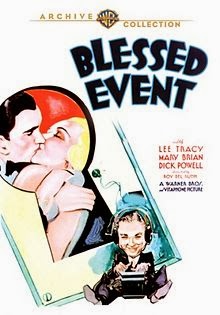
Classic Films in Focus: BLESSED EVENT (1932)
Although it's billed as a comedy, Roy Del Ruth's Pre-Code picture, Blessed Event (1932), actually gets into some pretty dark territory, thanks to an amoral protagonist who earns fame and fortune by airing other people's secrets in a sleazy tabloid column. Like Red-Headed Woman (1932) and Baby Face (1933), it's the kind of story that can only come from the Pre-Code era, replete with Prohibition drinking, sex scandals, and mobster violence. In this instance, the familiar theme of the social climber's willingness to use other people in order to get to the top is exemplified by Lee Tracy, who presents a masculine take on the street smart persona we often associate with Harlow and Stanwyck. Fans of the wisecracking star will appreciate his performance in Blessed Event, while those who favor the Busby Berkeley musicals of the period will enjoy seeing the big screen debut of Dick Powell as Tracy's chief target and social rival.
Tracy plays the ambitious Alvin Roberts, who gets his big break in the newspaper business by running short gossip pieces about the city's expectant mothers. He pens particularly juicy quips about the wealthy and the unwed, which earns the paper thousands of new readers and attracts death threats and lawsuits for Roberts. Alvin's girlfriend, Gladys (Mary Brian), has misgivings about the unethical nature of his work, but Alvin persists until a desperate pregnant woman (Isabel Jewell) embroils him in a dangerous situation with a mob boss (Edwin Maxwell) wants to murder Alvin to keep his name out of the affair.
The movie never pretends that Alvin's column isn't salacious, vicious, and under-handed, but it does offer us glimpses of Alvin's better nature. He supports and lives with his doting mother (Emma Dunn), whom he loves so much that he lets her listen to his nemesis, Bunny Harmon (Dick Powell), on the radio. He's smart, funny, and gifted with a cheerful disposition, even when confronted with gangsters who want to shut him up. One of Tracy's best scenes comes when tough guy Frankie Wells (Allen Jenkins) arrives to lean on Alvin but ends up being horrified into submission by Alvin's vivid recreation of a death row execution. The gossip columnist is presented to us as a 1930s version of the immortal trickster figure, a yellow press descendant of Coyote, Ananzi, and Brer Rabbit. He's not necessarily a good guy, but he's a lot of fun to watch.
Alvin steps over a line, though, when he prints the "blessed event" piece about Dorothy Lane, the pitiful little singer who begs him not to report her condition in the paper. Isabel Jewell gives a heartbreaking - although uncredited - performance as the pregnant girl. She's so pale and despairing that we expect any minute to hear that she has thrown herself out of a window after Alvin runs the tidbit in spite of her pleas. The story teeters on the edge of tragedy once she is introduced, and the ending can only ameliorate the damage that Alvin causes her. Once printed, his words can never be taken back, a fact that he doesn't appreciate until the very end of the film. Although most of the story makes light of scandalous pregnancies and quick marriages, this plot suggests the more serious plight of young women suffering Dorothy's fate; she loses her job, her home, her reputation, and even the support of her married lover in the wake of Alvin's disclosure.
Be sure to appreciate Ruth Donnelly as Alvin's assistant, Ned Sparks as a sour-faced colleague, and, of course, Dick Powell as the handsome radio crooner, Bunny Harmon. See more of Lee Tracy in Doctor X (1932), Dinner at Eight (1933), and Bombshell (1933). Roy Del Ruth also directed Blonde Crazy (1931), Born to Dance (1936), and Topper Returns (1941). Look for Mary Brian in The Front Page (1931), and don't miss Isabel Jewell in her best-known role as Emmy Slattery in Gone with the Wind (1939).
Blessed Event is currently available for streaming on Warner Archive Instant.
Tracy plays the ambitious Alvin Roberts, who gets his big break in the newspaper business by running short gossip pieces about the city's expectant mothers. He pens particularly juicy quips about the wealthy and the unwed, which earns the paper thousands of new readers and attracts death threats and lawsuits for Roberts. Alvin's girlfriend, Gladys (Mary Brian), has misgivings about the unethical nature of his work, but Alvin persists until a desperate pregnant woman (Isabel Jewell) embroils him in a dangerous situation with a mob boss (Edwin Maxwell) wants to murder Alvin to keep his name out of the affair.
The movie never pretends that Alvin's column isn't salacious, vicious, and under-handed, but it does offer us glimpses of Alvin's better nature. He supports and lives with his doting mother (Emma Dunn), whom he loves so much that he lets her listen to his nemesis, Bunny Harmon (Dick Powell), on the radio. He's smart, funny, and gifted with a cheerful disposition, even when confronted with gangsters who want to shut him up. One of Tracy's best scenes comes when tough guy Frankie Wells (Allen Jenkins) arrives to lean on Alvin but ends up being horrified into submission by Alvin's vivid recreation of a death row execution. The gossip columnist is presented to us as a 1930s version of the immortal trickster figure, a yellow press descendant of Coyote, Ananzi, and Brer Rabbit. He's not necessarily a good guy, but he's a lot of fun to watch.
Alvin steps over a line, though, when he prints the "blessed event" piece about Dorothy Lane, the pitiful little singer who begs him not to report her condition in the paper. Isabel Jewell gives a heartbreaking - although uncredited - performance as the pregnant girl. She's so pale and despairing that we expect any minute to hear that she has thrown herself out of a window after Alvin runs the tidbit in spite of her pleas. The story teeters on the edge of tragedy once she is introduced, and the ending can only ameliorate the damage that Alvin causes her. Once printed, his words can never be taken back, a fact that he doesn't appreciate until the very end of the film. Although most of the story makes light of scandalous pregnancies and quick marriages, this plot suggests the more serious plight of young women suffering Dorothy's fate; she loses her job, her home, her reputation, and even the support of her married lover in the wake of Alvin's disclosure.
Be sure to appreciate Ruth Donnelly as Alvin's assistant, Ned Sparks as a sour-faced colleague, and, of course, Dick Powell as the handsome radio crooner, Bunny Harmon. See more of Lee Tracy in Doctor X (1932), Dinner at Eight (1933), and Bombshell (1933). Roy Del Ruth also directed Blonde Crazy (1931), Born to Dance (1936), and Topper Returns (1941). Look for Mary Brian in The Front Page (1931), and don't miss Isabel Jewell in her best-known role as Emmy Slattery in Gone with the Wind (1939).
Blessed Event is currently available for streaming on Warner Archive Instant.
Friday, December 27, 2013
Classic Films in Focus: IT HAPPENED ON 5TH AVENUE (1947)
Most holiday movie viewers are familiar with a handful of classic pictures that get a lot of airing this time of year, especially It's a Wonderful Life (1946), but there are actually quite a few seasonally appropriate movies that attract admiration from serious fans. It Happened on 5th Avenue (1947) is not as celebrated as other Christmas classics, but it's a favorite with the classic movie crowd nonetheless, largely because of its lighter take on the well-worn holiday themes of generosity, reformation, and hope. This domestic comedy about a hobo who changes the lives of everyone around him also offers viewers some great performances from lesser known stars, particularly Victor Moore and Charles Ruggles, as well as a chance to see a young Alan Hale, Jr. before his Gilligan's Island days.
Victor Moore stars as Aloysius T. McKeever, a homeless man who moves into a business tycoon's New York mansion when the owner vacates the premises for the winter. Generosity inspires him to invite the newly evicted Jim (Don DeFore) to join him in the house, but both men are surprised when the owner's daughter, Trudy (Gale Storm), turns up, although Trudy adopts a false identity in order to convince them to take her in. Soon the house gains several other occupants, much to McKeever's consternation, while Trudy's father, Mike (Charles Ruggles), and mother, Mary (Ann Harding), also move in under assumed identities at Trudy's insistence.
The action takes place in the last several weeks of the year, with Christmas playing a large part in the story, but really you could watch the movie at any time. The message, however, takes on a particular resonance during the holidays, when the parallels to A Christmas Carol and It's a Wonderful Life become clearer. McKeever, a strange angel indeed, is an agent of redemption and renewal who works his peculiar magic on Mike, Mary, Trudy, and Jim, helping each to gain a new perspective and attain the things that really matter in life. Jim, whom we meet early on, has a George Bailey quality about him; he's full of plans and frustrations, but he needs some intervention - divine or otherwise - to set him on the right path up from his low point. Mike is our Scrooge, a rich man who has lost sight of himself and his family in pursuit of more and more money. Divorced from his wife and somewhat estranged from his daughter, Mike has created a lot of unhappiness in the people around him, but he ends up eating a pretty big slice of humble pie during his incognito residence in his own home.
Most classic movie fans will recognize Victor Moore from his supporting role as Fred Astaire's sidekick in Swing Time (1936), and It Happened on 5th Avenue really puts him in the spotlight. He reflects all the facets of his character's complex personality, and like most great clowns he is both funny and deeply sad. Don DeFore and Charles Ruggles both play it more or less straight against Moore, but Ruggles also has a plum role that lets him explore different moods and emotions. Of the lot, Ruggles has the most dynamic character to play, and his best scenes are those with Ann Harding. The rekindled romance between the older O'Connors has more depth to it than the love affair blooming between the younger couple, and once Trudy's mother shows up much of our attention shifts to Mike and Mary. It's a treat, though, to see Alan Hale, Jr. in a supporting role as one of Jim's wartime pals, even if he doesn't have that much to do.
It Happened on 5th Avenue earned an Oscar nomination for Best Original Story, but without big name stars or constant television airings it has never become a really well-known holiday classic. That makes it a great choice for anyone looking to get beyond the usual menu of holiday fare before the season officially ends, and it would be an excellent New Year entertainment if your plans involve a comfy spot on the couch. See more of silent film veteran Victor Moore in Gold Diggers of 1937 (1937), Make Way for Tomorrow (1937), and Ziegfeld Follies (1945). Look for Charles Ruggles, often credited as Charlie, in Trouble in Paradise (1932), Ruggles of Red Gap (1935), and Bringing Up Baby (1938). Don DeFore stars in Romance on the High Seas (1948), while Ann Harding appears opposite Leslie Howard in The Animal Kingdom (1932). Director Roy Del Ruth made the 1931 version of The Maltese Falcon and other pre-Code pictures like Blonde Crazy (1931) and Lady Killer (1933) before moving on to comedies and musicals like Du Barry Was a Lady (1943).
Victor Moore stars as Aloysius T. McKeever, a homeless man who moves into a business tycoon's New York mansion when the owner vacates the premises for the winter. Generosity inspires him to invite the newly evicted Jim (Don DeFore) to join him in the house, but both men are surprised when the owner's daughter, Trudy (Gale Storm), turns up, although Trudy adopts a false identity in order to convince them to take her in. Soon the house gains several other occupants, much to McKeever's consternation, while Trudy's father, Mike (Charles Ruggles), and mother, Mary (Ann Harding), also move in under assumed identities at Trudy's insistence.
The action takes place in the last several weeks of the year, with Christmas playing a large part in the story, but really you could watch the movie at any time. The message, however, takes on a particular resonance during the holidays, when the parallels to A Christmas Carol and It's a Wonderful Life become clearer. McKeever, a strange angel indeed, is an agent of redemption and renewal who works his peculiar magic on Mike, Mary, Trudy, and Jim, helping each to gain a new perspective and attain the things that really matter in life. Jim, whom we meet early on, has a George Bailey quality about him; he's full of plans and frustrations, but he needs some intervention - divine or otherwise - to set him on the right path up from his low point. Mike is our Scrooge, a rich man who has lost sight of himself and his family in pursuit of more and more money. Divorced from his wife and somewhat estranged from his daughter, Mike has created a lot of unhappiness in the people around him, but he ends up eating a pretty big slice of humble pie during his incognito residence in his own home.
Most classic movie fans will recognize Victor Moore from his supporting role as Fred Astaire's sidekick in Swing Time (1936), and It Happened on 5th Avenue really puts him in the spotlight. He reflects all the facets of his character's complex personality, and like most great clowns he is both funny and deeply sad. Don DeFore and Charles Ruggles both play it more or less straight against Moore, but Ruggles also has a plum role that lets him explore different moods and emotions. Of the lot, Ruggles has the most dynamic character to play, and his best scenes are those with Ann Harding. The rekindled romance between the older O'Connors has more depth to it than the love affair blooming between the younger couple, and once Trudy's mother shows up much of our attention shifts to Mike and Mary. It's a treat, though, to see Alan Hale, Jr. in a supporting role as one of Jim's wartime pals, even if he doesn't have that much to do.
It Happened on 5th Avenue earned an Oscar nomination for Best Original Story, but without big name stars or constant television airings it has never become a really well-known holiday classic. That makes it a great choice for anyone looking to get beyond the usual menu of holiday fare before the season officially ends, and it would be an excellent New Year entertainment if your plans involve a comfy spot on the couch. See more of silent film veteran Victor Moore in Gold Diggers of 1937 (1937), Make Way for Tomorrow (1937), and Ziegfeld Follies (1945). Look for Charles Ruggles, often credited as Charlie, in Trouble in Paradise (1932), Ruggles of Red Gap (1935), and Bringing Up Baby (1938). Don DeFore stars in Romance on the High Seas (1948), while Ann Harding appears opposite Leslie Howard in The Animal Kingdom (1932). Director Roy Del Ruth made the 1931 version of The Maltese Falcon and other pre-Code pictures like Blonde Crazy (1931) and Lady Killer (1933) before moving on to comedies and musicals like Du Barry Was a Lady (1943).
Subscribe to:
Posts (Atom)