Lee Tracy was a popular star during the Pre-Code era; his fast talking banter made him a hit with audiences during the early days of sound, and he had a waggish quality that perfectly suited the looser moral attitude of the times. In The Half-Naked Truth (1932), Tracy plays the kind of role for which he was made, that of a scheming carnival barker whose ambitions are as boundless as his imagination. With Lupe Velez, Eugene Pallette, and Frank Morgan along for the ride, this corker of a comedy has plenty to offer fans of the Pre-Code period, and Gregory La Cava's direction keeps the action rolling from one ridiculous publicity stunt to the next. Slightly naughty, very silly, and bursting with Tracy's frenetic energy, The Half-Naked Truth aims only to entertain, but it succeeds admirably; it also makes a perfectly good introduction to Tracy and Velez for those who are new to the Pre-Code pantheon of stars.
Tracy plays Jimmy Bates, who starts out hawking the sideshow charms of hoochie coochie dancer Teresita (Lupe Velez) at a second-rate carnival. When one of Jimmy's schemes for publicity causes trouble, the pair head for the greener pastures of New York City with their pal, Achilles (Eugene Pallette), in tow. There they pass Teresita off as a Turkish princess until Jimmy manipulates a famous Broadway show director (Frank Morgan) into making Teresita one of his stars.
As the title suggests, the characters rely mostly on sex appeal and lies to get what they want. Lupe Velez shows quite a lot of skin in her skimpy harem costumes, and Tracy's protagonist couldn't tell the truth to save his own life. Neither one of them is a model of morality, but we like them in spite of that because they have a lot of spunk. Depression era Pre-Code characters need not be exemplars of righteousness to appeal to their audience; they just need to do whatever it takes to get by and have a little fun, and both Jimmy and Teresita embody that unsinkable can-do spirit. If one is a liar and the other a tart, well, who are we to judge?The movie encourages us to see Jimmy as a trickster in the same vein as Bugs Bunny; he's sometimes too smart for his own good, but he has his better nature, too, as the third act reveals. The cartoon sensibility of the picture might not be coincidental, since Gregory La Cava had started his career as a cartoonist.
The supporting players are probably more familiar to modern viewers than the stars, since Eugene Pallette and Frank Morgan both had memorable roles in later films. Pallette, who played the father of just about every leading lady in Hollywood at some point or other, is just as grumpy and rotund as we expect him to be; his character, Achilles, gets saddled with the stigma of being the Princess Exotica's castrated guard. Jimmy tells the staff at the Savoy, "You know, they have them in all Turkish harems. He's very sensitive about it." Poor Achilles doesn't even realize what Jimmy has done until the rumor undermines his romantic overtures toward a hotel maid. Jimmy also bamboozles and frustrates Frank Morgan's overwrought Merle Farrell, giving Morgan plenty of opportunities to bluster and react with his usual comic flair. Farrell is such a self-important big shot that we enjoy watching Jimmy outfox him, and the picture scene near the end really stands out.
For Gregory La Cava's best remembered work, see My Man Godfrey (1936), which features Eugene Pallette as Carole Lombard's father. Lee Tracy also stars in Blessed Event (1932), Dinner at Eight (1933), and Bombshell (1933). Lupe Velez starred in a series of Mexican Spitfire films beginning in 1940, but for more of her early roles see The Gaucho (1927), Where East is East (1929), and Kongo (1932). Frank Morgan is best known today as the bombastic Wizard (and several other characters) in The Wizard of Oz (1939), but he earned Oscar nominations for The Affairs of Cellini (1934) and Tortilla Flat (1942). Eugene Pallette, with more than 250 screen appearances, is everywhere in classic film. Look for him in The Adventures of Robin Hood (1938), The Mark of Zorro (1940), and Heaven Can Wait (1943) for starters.
The Half-Naked Truth is currently available for streaming on Warner Archive Instant.
Showing posts with label Lee Tracy. Show all posts
Wednesday, December 17, 2014
Tuesday, January 21, 2014
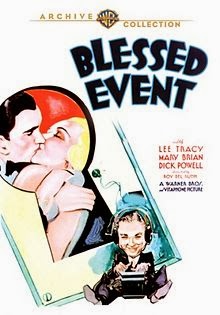
Classic Films in Focus: BLESSED EVENT (1932)
Although it's billed as a comedy, Roy Del Ruth's Pre-Code picture, Blessed Event (1932), actually gets into some pretty dark territory, thanks to an amoral protagonist who earns fame and fortune by airing other people's secrets in a sleazy tabloid column. Like Red-Headed Woman (1932) and Baby Face (1933), it's the kind of story that can only come from the Pre-Code era, replete with Prohibition drinking, sex scandals, and mobster violence. In this instance, the familiar theme of the social climber's willingness to use other people in order to get to the top is exemplified by Lee Tracy, who presents a masculine take on the street smart persona we often associate with Harlow and Stanwyck. Fans of the wisecracking star will appreciate his performance in Blessed Event, while those who favor the Busby Berkeley musicals of the period will enjoy seeing the big screen debut of Dick Powell as Tracy's chief target and social rival.
Tracy plays the ambitious Alvin Roberts, who gets his big break in the newspaper business by running short gossip pieces about the city's expectant mothers. He pens particularly juicy quips about the wealthy and the unwed, which earns the paper thousands of new readers and attracts death threats and lawsuits for Roberts. Alvin's girlfriend, Gladys (Mary Brian), has misgivings about the unethical nature of his work, but Alvin persists until a desperate pregnant woman (Isabel Jewell) embroils him in a dangerous situation with a mob boss (Edwin Maxwell) wants to murder Alvin to keep his name out of the affair.
The movie never pretends that Alvin's column isn't salacious, vicious, and under-handed, but it does offer us glimpses of Alvin's better nature. He supports and lives with his doting mother (Emma Dunn), whom he loves so much that he lets her listen to his nemesis, Bunny Harmon (Dick Powell), on the radio. He's smart, funny, and gifted with a cheerful disposition, even when confronted with gangsters who want to shut him up. One of Tracy's best scenes comes when tough guy Frankie Wells (Allen Jenkins) arrives to lean on Alvin but ends up being horrified into submission by Alvin's vivid recreation of a death row execution. The gossip columnist is presented to us as a 1930s version of the immortal trickster figure, a yellow press descendant of Coyote, Ananzi, and Brer Rabbit. He's not necessarily a good guy, but he's a lot of fun to watch.
Alvin steps over a line, though, when he prints the "blessed event" piece about Dorothy Lane, the pitiful little singer who begs him not to report her condition in the paper. Isabel Jewell gives a heartbreaking - although uncredited - performance as the pregnant girl. She's so pale and despairing that we expect any minute to hear that she has thrown herself out of a window after Alvin runs the tidbit in spite of her pleas. The story teeters on the edge of tragedy once she is introduced, and the ending can only ameliorate the damage that Alvin causes her. Once printed, his words can never be taken back, a fact that he doesn't appreciate until the very end of the film. Although most of the story makes light of scandalous pregnancies and quick marriages, this plot suggests the more serious plight of young women suffering Dorothy's fate; she loses her job, her home, her reputation, and even the support of her married lover in the wake of Alvin's disclosure.
Be sure to appreciate Ruth Donnelly as Alvin's assistant, Ned Sparks as a sour-faced colleague, and, of course, Dick Powell as the handsome radio crooner, Bunny Harmon. See more of Lee Tracy in Doctor X (1932), Dinner at Eight (1933), and Bombshell (1933). Roy Del Ruth also directed Blonde Crazy (1931), Born to Dance (1936), and Topper Returns (1941). Look for Mary Brian in The Front Page (1931), and don't miss Isabel Jewell in her best-known role as Emmy Slattery in Gone with the Wind (1939).
Blessed Event is currently available for streaming on Warner Archive Instant.
Tracy plays the ambitious Alvin Roberts, who gets his big break in the newspaper business by running short gossip pieces about the city's expectant mothers. He pens particularly juicy quips about the wealthy and the unwed, which earns the paper thousands of new readers and attracts death threats and lawsuits for Roberts. Alvin's girlfriend, Gladys (Mary Brian), has misgivings about the unethical nature of his work, but Alvin persists until a desperate pregnant woman (Isabel Jewell) embroils him in a dangerous situation with a mob boss (Edwin Maxwell) wants to murder Alvin to keep his name out of the affair.
The movie never pretends that Alvin's column isn't salacious, vicious, and under-handed, but it does offer us glimpses of Alvin's better nature. He supports and lives with his doting mother (Emma Dunn), whom he loves so much that he lets her listen to his nemesis, Bunny Harmon (Dick Powell), on the radio. He's smart, funny, and gifted with a cheerful disposition, even when confronted with gangsters who want to shut him up. One of Tracy's best scenes comes when tough guy Frankie Wells (Allen Jenkins) arrives to lean on Alvin but ends up being horrified into submission by Alvin's vivid recreation of a death row execution. The gossip columnist is presented to us as a 1930s version of the immortal trickster figure, a yellow press descendant of Coyote, Ananzi, and Brer Rabbit. He's not necessarily a good guy, but he's a lot of fun to watch.
Alvin steps over a line, though, when he prints the "blessed event" piece about Dorothy Lane, the pitiful little singer who begs him not to report her condition in the paper. Isabel Jewell gives a heartbreaking - although uncredited - performance as the pregnant girl. She's so pale and despairing that we expect any minute to hear that she has thrown herself out of a window after Alvin runs the tidbit in spite of her pleas. The story teeters on the edge of tragedy once she is introduced, and the ending can only ameliorate the damage that Alvin causes her. Once printed, his words can never be taken back, a fact that he doesn't appreciate until the very end of the film. Although most of the story makes light of scandalous pregnancies and quick marriages, this plot suggests the more serious plight of young women suffering Dorothy's fate; she loses her job, her home, her reputation, and even the support of her married lover in the wake of Alvin's disclosure.
Be sure to appreciate Ruth Donnelly as Alvin's assistant, Ned Sparks as a sour-faced colleague, and, of course, Dick Powell as the handsome radio crooner, Bunny Harmon. See more of Lee Tracy in Doctor X (1932), Dinner at Eight (1933), and Bombshell (1933). Roy Del Ruth also directed Blonde Crazy (1931), Born to Dance (1936), and Topper Returns (1941). Look for Mary Brian in The Front Page (1931), and don't miss Isabel Jewell in her best-known role as Emmy Slattery in Gone with the Wind (1939).
Blessed Event is currently available for streaming on Warner Archive Instant.
Thursday, June 6, 2013
Classic Films in Focus: BOMBSHELL (1933)
Two of Jean Harlow’s film titles became permanently associated with her image; one is Platinum Blonde (1931) and the other is Bombshell (1933), a very Hollywood look at the life and trials of a fictional leading lady. Under the uncredited direction of Victor Fleming, Bombshell presents a comedic take on the hazards of stardom, with Harlow playing a role for which she already had plenty of personal experience. Although it’s a funny picture with a cast of memorable performers, Bombshell also suggests the darker side of Tinseltown fame, since Harlow’s harried movie queen finds that there’s really no exit from the gilded cage in which she resides.
Harlow plays Hollywood star Lola Burns, who is adored by her fans but beset by leeches and opportunists on every side. Lola’s fame and the studio’s overeager publicity head, Space Hanlon (Lee Tracy), conspire to make her love life impossible, while her nutty relatives thwart her desire for peace at home. Sick of her crazy life, Lola runs away, but neither the studio nor Lola’s family will let go of their meal ticket that easily.
Although she is remembered today primarily as a sex symbol, Harlow shows a natural gift for comedy, and she easily keeps up with her hammy costars. She throws several impressive fits throughout the picture, tossing her platinum curls and stamping her little foot to great effect. Lee Tracy and Frank Morgan give her plenty to fume about with their troublesome characters; Harlow’s screen presence is evident in her ability to keep such inveterate scene-stealers from walking off with her film. Una Merkel, however, has little to do as Lola’s secretary, which is a shame since she knows how to work a comic character just as well as any of her costars. Franchot Tone adds class as the latest man to enter Lola’s life, the well-heeled Gifford Middleton, with C. Aubrey Smith and Mary Forbes as his parents.
Bombshell is ostensibly a comedy, and it does offer some very funny scenes and performances, but there’s also something terribly sad about Lola’s situation. She ends the movie no better than she started, even though we long to see her throw off the mooching father, the opportunistic secretary, and the two-faced publicity man once and for all. She never has a meaningful relationship with another person, even though her desire to adopt a baby shows how much she longs for it. Her career is ultimately nothing more than a glamorous trap from which she cannot escape, even though we know that an actress’ fame lasts only as long as her looks and her youth. Harlow herself would die at the tragically young age of 26, right at the height of her popularity, but her three marriages and two divorces indicate that she must have known something of Lola’s struggle to find real love.
Look for Ted Healy, Pat O’Brien, and Louise Beavers in supporting roles. For more of Jean Harlow, see Platinum Blonde (1931), Wife vs. Secretary (1936), and Saratoga (1937). You’ll find Lee Tracy in Doctor X (1932) and Dinner at Eight (1933). Frank Morgan, best remembered as the Wizard in The Wizard of Oz (1939), also turns up in The Great Ziegfeld (1936), Dimples (1936), and The Shop Around the Corner (1940). Franchot Tone gets better leading man roles in Dancing Lady (1933) and opposite Harlow in The Girl from Missouri (1934). Victor Fleming, the uncredited director of some half dozen films in the 1930s, is best known for his work on Gone with the Wind (1939) and The Wizard of Oz (1939), but he also directed Captains Courageous (1937) and Dr. Jekyll and Mr. Hyde (1941).
Harlow plays Hollywood star Lola Burns, who is adored by her fans but beset by leeches and opportunists on every side. Lola’s fame and the studio’s overeager publicity head, Space Hanlon (Lee Tracy), conspire to make her love life impossible, while her nutty relatives thwart her desire for peace at home. Sick of her crazy life, Lola runs away, but neither the studio nor Lola’s family will let go of their meal ticket that easily.
Although she is remembered today primarily as a sex symbol, Harlow shows a natural gift for comedy, and she easily keeps up with her hammy costars. She throws several impressive fits throughout the picture, tossing her platinum curls and stamping her little foot to great effect. Lee Tracy and Frank Morgan give her plenty to fume about with their troublesome characters; Harlow’s screen presence is evident in her ability to keep such inveterate scene-stealers from walking off with her film. Una Merkel, however, has little to do as Lola’s secretary, which is a shame since she knows how to work a comic character just as well as any of her costars. Franchot Tone adds class as the latest man to enter Lola’s life, the well-heeled Gifford Middleton, with C. Aubrey Smith and Mary Forbes as his parents.
Bombshell is ostensibly a comedy, and it does offer some very funny scenes and performances, but there’s also something terribly sad about Lola’s situation. She ends the movie no better than she started, even though we long to see her throw off the mooching father, the opportunistic secretary, and the two-faced publicity man once and for all. She never has a meaningful relationship with another person, even though her desire to adopt a baby shows how much she longs for it. Her career is ultimately nothing more than a glamorous trap from which she cannot escape, even though we know that an actress’ fame lasts only as long as her looks and her youth. Harlow herself would die at the tragically young age of 26, right at the height of her popularity, but her three marriages and two divorces indicate that she must have known something of Lola’s struggle to find real love.
Look for Ted Healy, Pat O’Brien, and Louise Beavers in supporting roles. For more of Jean Harlow, see Platinum Blonde (1931), Wife vs. Secretary (1936), and Saratoga (1937). You’ll find Lee Tracy in Doctor X (1932) and Dinner at Eight (1933). Frank Morgan, best remembered as the Wizard in The Wizard of Oz (1939), also turns up in The Great Ziegfeld (1936), Dimples (1936), and The Shop Around the Corner (1940). Franchot Tone gets better leading man roles in Dancing Lady (1933) and opposite Harlow in The Girl from Missouri (1934). Victor Fleming, the uncredited director of some half dozen films in the 1930s, is best known for his work on Gone with the Wind (1939) and The Wizard of Oz (1939), but he also directed Captains Courageous (1937) and Dr. Jekyll and Mr. Hyde (1941).
Friday, May 31, 2013
Classic Films in Focus: DOCTOR X (1932)
As wild as its plot and characters are, Doctor X (1932) is quite a thrill for fans of classic horror and the old dark house genre, especially those who can’t resist a mad scientist type. Directed by Michael Curtiz in the earlier years of his Hollywood career, the film makes use of both laughs and chills as it sends its cast careening through spooky rooms and strange laboratories, all rendered even more surreal by the use of an early form of Technicolor. The marvelous Lionel Atwill, a stalwart of classic horror, heads up a cast of creepy, colorful characters, each one stranger and more sinister than the last, while Fay Wray provides the sex appeal and Lee Tracy supplies the wise-cracking comic relief.
The story begins when a full moon inspires a series of gruesome murders, and the evidence points to one of the scientists in the employ of Dr. Xavier (Lionel Atwill). The doctor conducts his own investigation by experimenting on the scientists at a remote and ominous mansion, but his plans are intruded upon by persistent reporter Lee Taylor (Lee Tracy). Soon more corpses are piling up, and the the killer might not be discovered in time to save Dr. Xavier’s beautiful daughter, Joanne (Fay Wray), from a similar fate.
The plot revels in macabre elements, including the killer’s cannibalistic urges and strong hints about one scientist’s sadistic tendencies, and there are moments of pure horror scattered throughout the film. Lee Tracy’s snarky reporter, however, dispels most of the dread with his doggedly pragmatic pursuit of his story. In one scene he even disguises himself as a corpse in the morgue, and later he manages to get trapped in a closet full of skeletons, but his reactions to these situations are meant to provoke laughter instead of fear. More comic relief is provided by Mamie (Leila Bennett), a stereotypical maid character who shakes and screams at every shadow. The mixture of comedy and horror is typical of the old dark house genre, and here it works well to create the feeling of riding through a haunted house in a spinning car, laughing and screaming in equal measure as spooks jump out from every corner.
The most bizarre aspect of Doctor X is its wealth of crazed scientists, any one of whom might be the ghoulish Moon Killer. Early in the film, Doctor Xavier introduces the police to each of his employees in turn, and the audience shares the cops’ awe at the staggering assortment of suspects. Preston Foster, John Wray, Harry Beresford, and Arthur Edmund Carewe play the wild-eyed crew of researchers with great enthusiasm, and half the fun of the movie is picking one as the most likely suspect. Atwill’s Doctor Xavier also has a sinister edge, and the servant, Otto (George Rosener), is certainly creepy enough to warrant a spot on the list of potential cannibalistic killers.
See more of Lionel Atwill and Fay Wray in The Mystery of the Wax Museum (1933), which Michael Curtiz also directed. Best known today for high-profile classics like Casablanca (1942), Curtiz headed a handful of horror productions in the 1930s, including The Mad Genius (1931) and The Walking Dead (1936). Look for Lionel Atwill in Mark of the Vampire (1935), Son of Frankenstein (1939), and Frankenstein Meets the Wolf Man (1943). Fay Wray screamed her way to lasting fame in King Kong (1933), but you’ll also find her in The Most Dangerous Game (1932). Catch fast-talking Pre-Code star Lee Tracy in Dinner at Eight (1933) and Bombshell (1933).
The story begins when a full moon inspires a series of gruesome murders, and the evidence points to one of the scientists in the employ of Dr. Xavier (Lionel Atwill). The doctor conducts his own investigation by experimenting on the scientists at a remote and ominous mansion, but his plans are intruded upon by persistent reporter Lee Taylor (Lee Tracy). Soon more corpses are piling up, and the the killer might not be discovered in time to save Dr. Xavier’s beautiful daughter, Joanne (Fay Wray), from a similar fate.
The plot revels in macabre elements, including the killer’s cannibalistic urges and strong hints about one scientist’s sadistic tendencies, and there are moments of pure horror scattered throughout the film. Lee Tracy’s snarky reporter, however, dispels most of the dread with his doggedly pragmatic pursuit of his story. In one scene he even disguises himself as a corpse in the morgue, and later he manages to get trapped in a closet full of skeletons, but his reactions to these situations are meant to provoke laughter instead of fear. More comic relief is provided by Mamie (Leila Bennett), a stereotypical maid character who shakes and screams at every shadow. The mixture of comedy and horror is typical of the old dark house genre, and here it works well to create the feeling of riding through a haunted house in a spinning car, laughing and screaming in equal measure as spooks jump out from every corner.
The most bizarre aspect of Doctor X is its wealth of crazed scientists, any one of whom might be the ghoulish Moon Killer. Early in the film, Doctor Xavier introduces the police to each of his employees in turn, and the audience shares the cops’ awe at the staggering assortment of suspects. Preston Foster, John Wray, Harry Beresford, and Arthur Edmund Carewe play the wild-eyed crew of researchers with great enthusiasm, and half the fun of the movie is picking one as the most likely suspect. Atwill’s Doctor Xavier also has a sinister edge, and the servant, Otto (George Rosener), is certainly creepy enough to warrant a spot on the list of potential cannibalistic killers.
See more of Lionel Atwill and Fay Wray in The Mystery of the Wax Museum (1933), which Michael Curtiz also directed. Best known today for high-profile classics like Casablanca (1942), Curtiz headed a handful of horror productions in the 1930s, including The Mad Genius (1931) and The Walking Dead (1936). Look for Lionel Atwill in Mark of the Vampire (1935), Son of Frankenstein (1939), and Frankenstein Meets the Wolf Man (1943). Fay Wray screamed her way to lasting fame in King Kong (1933), but you’ll also find her in The Most Dangerous Game (1932). Catch fast-talking Pre-Code star Lee Tracy in Dinner at Eight (1933) and Bombshell (1933).
Subscribe to:
Posts (Atom)


