Thursday, March 17, 2016

War Stories: The National World War II Museum

For many classic movie fans, the films of the World War II era hold special significance. These were the movies made during and immediately after the war, and the conflict impacted every aspect of American life, including film. Favorite stars like James Stewart and Clark Gable left the safety of Hollywood to join in the fight, as did directors like John Huston and John Ford, while Hollywood back home churned out pictures to boost morale and reflect the hopes and fears of the American people. For a lot of today's classic movie buffs, an early love for old movies was fostered by family members, especially grandparents, who lived through this era. Watching the films of the forties is a deeply personal way to connect with the experiences of the Greatest Generation; we reflect on the courage and sacrifices of our elders when we sit down with The Best Years of Our Lives, Since You Went Away, Casablanca, and even It's a Wonderful Life.

 
Another way to engage that era and its heroes - both honored and unknown - is to visit The National World War II Museum in New Orleans. This enormous museum complex takes visitors through the history of the war, on both the European and Pacific fronts, with richly detailed displays and presentations enhanced by a wealth of personal stories and artifacts. I recently had the good fortune to spend a full day at the museum, and I was tremendously impressed and deeply moved by what I found. This is an essential item for your bucket list if you have any interest in the World War II era, whether you're a classic movie fan or not.

 
The museum offers an outstanding centerpiece experience with the Beyond All Boundaries 4D film, which costs a little extra to do but makes for an immersive start to a day of touring. Narrated by Tom Hanks, the film includes motorized seats and props that take viewers right into the action from Pearl Harbor to Tokyo. Imagine Disney's The American Experience but wholly devoted to World War II and you'll get a general idea of the technical and narrative power of this attraction. It's actually worth the cost of admission all by itself. The interactive Final Mission also takes guests into wartime experience with a brief recreation of a submarine battle on board the USS Tang. In the Road to Berlin and Road to Tokyo exhibits, guests travel through time from the war's beginning to its end, pausing along the way to encounter artifacts, videos, and themed areas that recreate the many places in which battles were fought. At the start of your visit, you're issued a special dog tag that allows you to trace the story of one person connected to the war; you can check in with your person throughout your day at various displays, which helps to create the sense of a story unfolding in real time, not the distant past. From the moment you enter the train station themed start of the museum to the moment you leave, every exhibit offers a thoughtful, engrossing, and emotional experience.

 
Naturally, as a classic movie buff and fan of 40s films, I spent my day on the lookout for exhibits that connected with my cinematic passion. I was not disappointed. I found a display about Clark Gable's service with the US Air Force, although it didn't discuss the tragic death of his wife, Carole Lombard, who was killed in a plane crash while supporting the war effort by selling war bonds. Her death inspired a devastated Gable to enlist. I also located a display about the war work of director John Huston, who made films for the Army Signal Corps (which you can learn more about in Mark Harris' book, Five Came Back: A Story of Hollywood and the Second World War). In an area themed to look like the inside of a Quonset Hut, I found a truly gorgeous display of pinup girls, including Rita Hayworth, Betty Grable, Lynn Bari, Evelyn Ankers, and Carole Gallagher.

While the exhibits were rarely specifically about the movies, they did show the importance of movie culture to the era, and a few displays really spoke to me because of the cinematic moments that they mirrored. An exhibit about the Merchant Marine brought Alfred Hitchcock's Lifeboat (1944) to mind; I learned a lot that enhanced my understanding of that film and its particular wartime moment. The bombers in the aircraft exhibit immediately made me think of that powerful scene in The Best Years of Our Lives when Dana Andrews' character, Fred, relives his memories of the war while crouching in the nose of a discarded plane. Every display helped me to understand the history that forged the era and its films, and I came away eager to rewatch wartime pictures with a better understanding of the themes and references that I might have missed before.

I also had a much more personal mission at The National World War II Museum. I was looking for references to the USS Franklin, the ship on which my grandfather, Stokes Albritton, served during the war. In the last years of his life he spoke frequently about his memories of the ship and his life in the US Navy, and I was glad to be the listener to those poignant, funny, and terrible tales. His son, John, was born in New York during the war; my grandmother lived there so that they could be together during his brief trips back to port. It was a long, long way from Jesup, Georgia, and she was alone with a baby most of the time. My grandfather was a gentle man, big but quiet, with a wry sense of humor and a razor sharp memory when it came to anecdotes and local history. On March 19, 1945, he was on the Franklin when she took devastating damage from a Japanese attack less than 50 miles from the Japanese mainland. As sailors died and flames roared around him, he replaced gunners who had been killed and fired until he was blown overboard by an explosion. He spent many hours in the water, surrounded by debris and dead men who had been his friends, before he was picked up by another ship and reunited with the Franklin. He was awarded the Purple Heart for his service.


Almost at the end of the day, as we drew toward the last few exhibits in the Road to Tokyo, I found the Franklin. A video showed film footage of the smoking ship; I wondered where in that carnage my grandfather was when the film was shot. A display spoke of the attack and the legend of "the ship that wouldn't die." Another display honored Father Joseph T. O'Callahan, of whom my grandfather had often spoken. For a moment I could hear my grandfather's voice, speaking of that day, in my memory. I felt as if he was with me again. That moment, so brief in a life that spanned 89 years, defined who he was a person. He might not have been famous, but he was my family's greatest hero, and it meant so much to see the story of his ship in the museum, there were millions of people could consider what it meant. It brings tears to my eyes even now to think about it. For this, and for everything else it does to keep these memories alive, The National World War II Museum will always have my gratitude.

Stokes Albritton

Follow the link to learn more about The National World War II Museum for yourself.
Here's newsreel footage of the Franklin under attack. 
You can also watch the 2011 documentary, USS Franklin: Honor Restored, to learn about the attack and its controversial aftermath.


Friday, March 11, 2016

Classic Films in Focus: THE MORE THE MERRIER (1943)

Directed by George Stevens, The More the Merrier tackles serious wartime issues with a lively sense of humor, something contemporary audiences must have appreciated a great deal as they struggled with housing shortages, romantic complications, and the many other mundane problems of folks supporting the war effort from home. The Academy obviously approved of the picture, too; it picked up six Oscar nominations, including nods for Best Picture and Best Director, although it was supporting actor Charles Coburn who actually took home a gold statue for his work on the film. Modern audiences will find that the screwy humor of The More the Merrier appeals just as much today, thanks to the combined talents of Stevens, Coburn, Jean Arthur, and Joel McCrea, with the last two demonstrating marvelous comedic chemistry as reluctant roommates who strive to suppress the spark of desire.

Arthur plays Washington, D.C., resident Connie Milligan, who decides to help with the housing shortage by renting out part of her apartment. Despite her stated preference for a female tenant, she ends up with the elderly and devious Benjamin Dingle (Charles Coburn), who promptly decides to play matchmaker by renting half of his half to the first good-looking young fellow who turns up. When Connie finds out that Joe Carter (Joel McCrea) is also living in her apartment, she tries to evict both men, but Dingle never stops working to bring the couple together, even though Connie is engaged to an older bureaucrat named Charles Pendergast (Richard Gaines).

The story plays out as a screwball comedy, with lots of sight gags and physical humor that depend on the congested spaces of wartime Washington. In Connie's apartment, three adult strangers inhabit uncomfortably close quarters, especially when the bathroom is involved, but everywhere we see the humorous misery of people having to live, work, and play like sardines in a can. There's also a fair bit of gender reversal humor, since able-bodied young men are a rarity in the middle of the war, and the crowds of working women seem to enjoy being the predators instead of the prey. When Connie and Joe find themselves together at a club, Connie gets plenty of competition for Joe's attention; in fact, the other women are so wolfish that they make big, strong Joel McCrea look like a terrified lamb. There's a cartoonish quality to a lot of the jokes, especially the gag at the end, which only works because of our view of the apartment through its windows, but they're still quite funny. The comedy also flirts with the constraints of the Hays Code; it's not as daring as The Miracle of Morgan's Creek (1944), but it gleefully invites us to consider the scandalous possibilities inherent in its setup.

The performances of the three principal actors strike a wonderful balance between silliness and sympathy, making us root for their characters even as we laugh at them. Jean Arthur is very much in her element in this kind of role; she's feisty and feminine at the same time, capable of being ravishingly beautiful but also willing to appear onscreen in a housecoat and gobs of gooey face cream. Her character relishes schedules and order but isn't particularly eager to marry her boring boyfriend, played by Richard Gaines in a truly awful toupee. The two men who upend her life bring much-needed chaos and change, even if takes Connie a long to time to admit her attraction to Joe. McCrea plays Joe as both cynical and boyish; he talks a fast game but barks like a seal in the shower and plays train with Dingle as they chug around the apartment. Fans of the handsome actor will also appreciate how much of the movie he spends shirtless, which offers a nice balance to the frequent display of Arthur's shapely form. Bringing the romantic leads together is Charles Coburn's mischievous Dingle, whose motto for everything is "Damn the torpedoes, full speed ahead!" Although there's definitely something a little unnerving about the way he forces himself into Connie's company, Dingle means well, and his elaborate schemes toward the end of the picture demonstrate how far he's willing to go to bring Connie and Joe together. Coburn, always a reliable character actor and a brilliant comedian, is at his best in this role, which displays his charm, humor, and ability to enhance the effect of a funny leading lady.

Although The More the Merrier brought Jean Arthur her only Oscar nomination, she made many memorable films, including Capra classics like Mr. Deeds Goes to Town (1936), You Can't Take It with You (1938), and Mr. Smith Goes to Washington (1939). For more comedy with Joel McCrea, see Preston Sturges' Sullivan's Travels (1941) and The Palm Beach Story (1942). Sturges also directed Charles Coburn in The Lady Eve (1941), which provided the actor with one of his most notable roles. George Stevens won Best Director Oscars for more serious fare in A Place in the Sun (1951) and Giant (1956), but for more of his romantic comedies try Swing Time (1936), Woman of the Year (1942), and The Talk of the Town (1942), which also stars Jean Arthur.

Tuesday, February 16, 2016

Classic Films in Focus: SHADOW OF A DOUBT (1943)

Alfred Hitchcock called Shadow of a Doubt (1943) his favorite of his own pictures, and there's certainly a lot to appreciate in this smart, dark thriller about a young woman who suspects that her beloved uncle might not be what he seems. Teresa Wright and Joseph Cotten give riveting performances as the two central characters, both called Charlie, who rightly claim that their relationship goes far beyond the typically avuncular. While much of the really daring subject matter remains in the subtext, Shadow of a Doubt stirs up quite a psychological hornet's nest with its conflicted young heroine and her charming but deadly relative, and for fans of character actors the film also delivers plum performances from Henry Travers and Hume Cronyn.

Wright plays the younger Charlie, who pines for something to shake up her family's boring routine in Santa Rosa, California. Her prayers seem to be answered when her Uncle Charlie (Joseph Cotten) arrives for a rare visit, bearing gifts and smiles for everyone, but especially for Charlie and her mother, Emma (Patricia Collinge). Soon, however, young Charlie learns that her uncle is being pursued by two men who suspect him of committing terrible crimes, and Charlie herself begins to think that Uncle Charlie might actually be the Merry Widow Murderer for whom the police have been searching.

Young Charlie makes for an unusual Hitchcock protagonist if we think of the kinds of characters who take center stage in his most popular thrillers, where James Stewart and Cary Grant play very grown-up men embroiled in mystery and violence. Teresa Wright's heroine is, by contrast, not only female and innocent but also childlike in her initial view of the world and its inhabitants; in a modern remake Charlie might well be played by a fifteen year old, and the chaste romance with Detective Jack Graham (Macdonald Carey) could be dispensed with altogether. Despite her youth and girlish attitudes, Charlie proves to be a resourceful, strong-willed heroine, who has to confront her uncle on her own and then survive the consequences of knowing too much. Only Charlie manages to uncover the truth that eludes the police, and only Charlie can defend herself against her uncle's lethal intentions.When the climactic moment comes, nobody can save young Charlie but herself, and, in the end, she has to carry a burden of knowledge and sorrow that she rightly judges to be too much for her loving family.

In addition to its intriguing young heroine, the movie offers a mesmerizing study in duality. Two suspects elude the police, one in the west and one in the east. Two detectives pursue Uncle Charlie from place to place. Two train trips frame the action; one brings Uncle Charlie to town, and another carries him away. Most importantly, two Charlies stand at the center of the story, linked by blood but separated by it, too. Uncle Charlie is himself another example of duality, with one charming persona for company and a hidden, deadly side that he keeps secret at all costs. The extensive doubling also turns up with young Charlie's father (Henry Travers) and his friend, Herbie (Hume Cronyn), a strange pair of would-be murderers who constantly imagine ways to kill each other. Their macabre fantasies contrast with the real murder attempts taking place in the family's own home, but they never suspect a thing. Only Emma, Charlie's devoted older sister, ponders the significance of the two strange "accidents" that befall young Charlie and almost take her life. A subtler pairing occurs between Uncle Charlie and Detective Graham; both of them want young Charlie's loyalty and love, and it's only after the romance between the two young people flowers that Uncle Charlie turns violent. Does he view Graham as a romantic rival as well as a threat to his freedom? There's an incestuous undercurrent in the relationship between the two Charlies, hinted at and suggested in the ring that he gives her and the fact that he's sleeping in her bed. Think about it hard enough and Shadow of a Doubt more than lives up to its ominous name.

Gordon McDonell's original story for Shadow of a Doubt earned the movie its only Oscar nomination, but Teresa Wright had already won the Academy Award for Best Supporting Actress the previous year, for her performance in Mrs. Miniver (1942). The young actress also picked up nominations for The Little Foxes (1941) and The Pride of the Yankees (1942). Joseph Cotten is probably best remembered today for his performance in Orson Welles' Citizen Kane (1941), but he also stars in Gaslight (1944), Portrait of Jennie (1948), and The Third Man (1949). Shadow of a Doubt marks the screen debut of Hume Cronyn; see more of him in Lifeboat (1944), The Postman Always Rings Twice (1946), and Brute Force (1947). For more Hitchcock heroines, try Sabotage (1936), The Lady Vanishes (1938), and Rebecca (1940).

Wednesday, February 10, 2016

Classic Films in Focus: THE CREATURE WALKS AMONG US (1956)

What you make of The Creature Walks Among Us (1956) probably depends on how you feel about 1950s B horror and science fiction as well as the iconic monster himself. The third and final Gill Man picture revises the formula established in Creature from the Black Lagoon (1954) with a couple of odd twists, most notably an injury and subsequent radical experiments that make this movie's creature quite different from the original version. Many of the other elements remain the same, including the presumptuous scientists and some attractive female bait to get the Gill Man's attention, but these are standard equipment for scores of similar films from this era. Director John Sherwood takes over from Jack Arnold, who spearheaded the first two pictures, while Jeff Morrow, Rex Reason, and Leigh Snowden star, but, once again, the Gill Man is the most interesting character on screen, a tragic figure of alienation whose third encounter with human beings only brings him more suffering and pain.

Jeff Morrow leads the cast as Dr. William Barton, an obsessed scientist who finances a trip to capture and experiment on the Gill Man. Along for the journey are Barton's young wife, Marcia (Leigh Snowden), the brash Jed Grant (Gregg Palmer), and Barton's reluctant colleague, Dr. Thomas Morgan (Rex Reason), as well as a handful of other scientists and crew. When their capture of the creature results in his gills and scales being badly burned, the scientists trigger changes that make the Gill Man a more humanoid air breather, but they argue about the inherent violence of the creature's nature. Meanwhile, Barton's jealousy about his wife creates further tension between him and everyone else, especially when Jed pursues Marcia with boorish determination.

Like most of these pseudo-science B pictures, The Creature Walks Among Us gets off to a slow start, with lots of inane explanation and technical talk about aquatic life, genetics, and sonar. Things pick up as the human characters reveal their quirks, but the real action begins when the Gill Man makes his first appearance. The sluggish first act is more of a problem in a film that only runs 78 minutes, and it does seem like the third movie in a series, coming out so soon after the first two, could dispense with the exposition and get on with the monster mayhem. Actually, the monster doesn't even get to wreak that much havoc, since he's quickly captured, wrapped in bandages, and then imprisoned with a flock of sheep for company. He spends most of his time lying on an operating table or staring forlornly at the ocean from his cage. The cruel irony of a sea creature separated from his natural element generates a lot of pathos, but it eliminates much of the underwater action that made the original movie so interesting.

The creature is, at any rate, one of the film's more dynamic characters, since he undergoes both physical and psychological changes as a result of his experiences. He's very much a figure out of Frankenstein or The Island of Dr. Moreau, the violent but innocent victim of man's hubris. This particular installment does less with the Gill Man's usual preoccupation with the ladies, but it does draw parallels between his situation and that of Marcia, whom Barton also treats as an inferior possession. Barton, it turns out, is the real monster of the story; Jeff Morrow plays him with a creepy intensity that makes him the scariest the thing in the picture, especially in his confrontations with Marcia and Jed. Morgan, who is meant to be a humane foil to Barton, looks good in a swimsuit but has a less interesting role to play, and he goes along with the experiments too much to escape culpability. Of the humans, only Marcia is really exempt from blame, and the mixed depiction of her characters makes it hard to like her, especially when she insists on accompanying a diving expedition for no good reason and then promptly requires rescuing. The rest of the characters remain rooted in the background, providing some ostensibly necessary dialogue but never really contributing to the development of the narrative themes.

The Creature Walks Among Us is something of a weak finish to the Gill Man series, but there's enough going on here to warrant attention from fans of the genre or the monster. Be sure to see the original Creature from the Black Lagoon (1954) and Revenge of the Creature (1955) first to get the whole story. John Sherwood worked much more often as an assistant or second unit director, but he's also in the director's chair for The Monolith Monsters (1957). See Jeff Morrow and Rex Reason in This Island Earth (1955); you can also catch Morrow in Kronos (1957) and The Giant Claw (1957). You'll find Leigh Snowden in Kiss Me Deadly (1955) and a handful of B pictures like Hot Rod Rumble (1957).

Thursday, February 4, 2016

Films of 1947

Every year of the golden age of Hollywood produced worthy films, but certain years turned out bumper crops of great classic movies. 1939 immediately comes to mind, of course, but other years also turned out scores of timeless pictures that still enthrall audiences today. Whenever I'm working on a compilation of classic film reviews for my Beyond Casablanca books, I always find that 1947 is one of those years, offering an embarrassment of cinematic riches where the worthy contenders always outnumber the space I can devote to them. It's an especially good year for film noir, but excellent dramas and comedies also abound; you can thank 1947 for as diverse a selection as Out of the Past, Miracle on 34th Street, The Ghost and Mrs. Muir, and The Egg and I. Since I can never get all the great 1947 films into a single book, here are the ones that I have, at least, posted reviews of here on Virtual Virago. Check out how many terrific pictures this one year produced!

BLACK NARCISSUS
BORN TO KILL
CROSSFIRE
DARK PASSAGE
THE GHOST AND MRS. MUIR
IT HAPPENED ON 5TH AVENUE
IT'S A JOKE, SON!
KISS OF DEATH
MIRACLE ON 34TH STREET 
NIGHTMARE ALLEY
THE UNSUSPECTED


Here are the 1947 films that I review in Beyond Casablanca: 100 Classic Movies Worth Watching (which you can get for just 99 cents on Amazon Kindle, if you're so inclined).

THE EGG AND I
THE LADY FROM SHANGHAI
OUT OF THE PAST

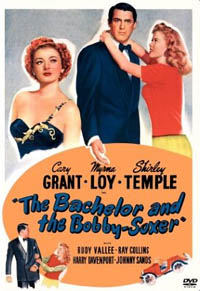
The Bachelor and the Bobby-Soxer is the sole representative of the year in Beyond Casablanca II: 101 Classic Movies Worth Watching (also 99 cents on Amazon Kindle). I had to make tough choices for that one to have room for films from the early 1960s, and the triple threat of Cary Grant, Shirley Temple, and Myrna Loy made it a choice that covered a lot of cinematic ground. It's also wonderfully funny and less familiar to many viewers than Grant's signature films.

But wait, there's more! Here are some other memorable films from 1947 that I haven't gotten around to writing about yet. This is just a partial list, but clearly there is work to be done.

ANGEL AND THE BADMAN
THE BISHOP'S WIFE
BRUTE FORCE
DAISY KENYON
DEAD RECKONING
A DOUBLE LIFE
FOREVER AMBER
GENTLEMAN'S AGREEMENT
POSSESSED

What's your favorite film from 1947? If you had to pick just three to include in a book, which ones would you choose? I'll be thinking about that question myself as I work on my next book-length compilation of reviews.


Classic Films in Focus: MIRACLE ON 34TH STREET (1947)

Although it has been remade several times, the original 1947 release of Miracle on 34th Street is still the best and most charming incarnation of this heart-warming tale of holiday faith. Its attractions include an Oscar-winning Santa Claus performance courtesy of Edmund Gwenn and a memorable early appearance from a very young Natalie Wood, as well as lovely Maureen O’Hara and the very likable John Payne as the romantic leads. With its three Oscar wins and its enduring appeal, Miracle on 34th Street thoroughly deserves its status as a holiday classic, one of those movies that it just wouldn’t be Christmas without.

The story opens at the Macy’s Thanksgiving Day Parade, where Macy’s employee Doris Walker (Maureen O’Hara) recruits a singular Santa (Edmund Gwenn) as a last-minute replacement. Soon the kindly Kris Kringle is working at the store, where he delights customers and their children but alarms Doris by insisting that he really is Santa Claus. When Kris’ sanity is called into question, Doris’ handsome neighbor (John Payne) comes to his defense in court.

The love story between O’Hara and Payne works perfectly well, but the movie is really more interested in Kris Kringle and little Susan (Natalie Wood), Doris’ skeptical daughter. Their scenes together burst with sentimental feeling and gentle good humor as they pretend to be monkeys, blow bubble gum, and gradually build a relationship despite Susan’s doubts. For many people, Gwenn’s Kris is the quintessential Santa Claus, generous and droll with just a hint of mischief in his twinkling eyes. The story leaves it up to the viewer to decide if Kris really is the jolly old elf, but, as the Magic 8 Ball would say, “Signs point to yes.”

Behind the holiday cheer lie some serious themes, including Doris’ loss of faith following the end of her marriage to Susan’s father. Susan clearly yearns for a paternal figure, as her friendship with the neighborly Fred makes clear, but she’s also incomplete because her mother has discouraged her from believing in anything or even using her imagination. Fred and Kris must work together to heal this broken little family, an accomplishment perfectly symbolized by the film’s closing scene. Like most of the very best Christmas movies, this one balances its sweetness with melancholy and the bitterness of experience, and the spirit of Christmas is as much about acknowledging those feelings as it is about merriment and goodwill.

Director George Seaton had his other big directorial success with The Country Girl (1954), but he wrote twice as many screenplays as he directed. Maureen O’Hara can be found in How Green Was My Valley (1941), The Black Swan (1942), and The Quiet Man (1952). Look for John Payne in The Razor’s Edge (1946) and Kansas City Confidential (1952). Edmund Gwenn also stars in Sylvia Scarlett (1935), Pride and Prejudice (1940), and Them! (1954). See a more grown-up Natalie Wood in Rebel Without a Cause (1955), The Searchers (1956), and West Side Story (1961). Don’t miss memorable character actress Thelma Ritter in a brief, uncredited role as a mother who speaks to Santa.

Monday, February 1, 2016

Classic Films in Focus: THE DAMNED DON'T CRY (1950)

Like Mildred Pierce (1945), The Damned Don't Cry (1950) stars Joan Crawford in a story that merges the themes of melodrama and film noir. Crawford is perfectly at home in both genres, and the combination of the two had revitalized her career with Mildred Pierce, for which she won her only Best Actress Oscar. Not surprisingly, then, The Damned Don't Cry offers Crawford a juicy role for which her talents are ideally suited. Despite the title, there's actually a fair bit of crying, especially on the part of Crawford's character, an unhappy housewife who trades ethics and poverty for a chance at getting more out of the rigged game of life. Solid direction from Vincent Sherman and a particularly good performance by Kent Smith help Crawford shine, while the story offers an opportunity to consider the femme fatale as a dynamic character who doesn't necessarily set out to ruin the men whose lives she inevitably destroys.

Crawford plays working-class housewife Ethel Whitehead, who walks out on her family after a devastating tragedy, determined to have something more for herself. She finds work but quickly realizes that she can get ahead by using her sexuality as an asset, especially in the shady world of gambling dens and nightclubs. She seduces a mild but intelligent accountant, Martin Blankford (Kent Smith), and talks him into a job with a criminal organization, but by the time Martin proposes Ethel has already hooked a bigger fish, the kingpin George Castleman (David Brian). Castleman remakes Ethel into widowed oil heiress Lorna Hansen Forbes and provides her with a life of luxury, but it comes at a galling cost. The crime boss orders Lorna to head for Palm Springs and seduce a rebellious underling, Nick (Steve Cochran), so that George can find out how far Nick's treachery goes.

The Damned Don't Cry alternates between its two genres but achieves a balance that keeps the story interesting and constantly moving. The opening presents us with Nick's murder and Lorna's disappearance; it then moves backward to tell us how these characters reached that tragic climax. The violence of the first scene assures us that this story will be a gritty gangster tale as well as a women's melodrama, in spite of the long stretch that then unfolds Ethel's sad history and her first steps into a life of crime. Once George Castleman arrives on the scene, the story kicks up the noir heat; Ethel succumbs to greed and selfishness even as her actions doom the essentially decent Martin to life without his self-esteem or the woman for whom he gave it up. Everywhere she goes, Ethel brings misery to the men around her, even when she doesn't intend to do so. She abandons her husband, delivers clients to a shady casino, destroys Martin's respectability, betrays Nick, and even ends up being the ruin of Castleman. Crawford never plays Ethel as consciously evil; she can be hard, she can be determined, and she can be terribly selfish, but she has enough humanity to draw back from being involved in the murder of a man who has fallen in love with her. Unfortunately for her and everyone else, she changes course too late, but that's noir in a nutshell.

Two supporting performances stand out among the rest of the cast and help Crawford develop the complexities of her own character. Kent Smith, an actor who never quite became a star, has the best of the male roles as Martin. In a more conventional noir film Martin might be the protagonist, the good guy who falls into the abyss thanks to an ambitious woman. When we first meet him he's a real straight arrow, but over the course of the story he becomes jaded and hard; eventually he's the one pushing Ethel instead of the other way around. Martin never stops loving Ethel, as the final scenes make clear, but the life they might have had together is gone for good. Selena Royle has the other significant supporting role as Ethel's mentor and confidante, Patricia Longworth. The relationship between Ethel and Patricia is unusual; rarely do women in noir films trust each other and work together, but Patricia helps Ethel assume the worldly polish and glamour that being Lorna requires without ever seeming jealous of her or more loyal to Castleman than she is to Ethel. Ethel and Patricia collaborate so well that they can communicate volumes to each other with mere glances; they work like a pair of dancers or predators as they maneuver Nick into Ethel's arms. Royle plays her part with a subtle, quiet genius; she never upstages Crawford, but she makes her presence integral to the success of the picture. David Brian and Steve Cochran are both solid as the gangsters, one refined and the other reckless, but their characters are fairly straightforward. Cochran does, however, help us get past our initial dismissal of Nick to see why Ethel balks at betraying him, and Brian turns up the brutality for a shocking confrontation near the picture's end.

After The Damned Don't Cry, Joan Crawford and Vincent Sherman also made Harriet Craig (1950) and Goodbye, My Fancy (1951). You can compare the leading lady's work on this film with other memorable performances in A Woman's Face (1941), Torch Song (1953) and Johnny Guitar (1954), all of which feature tough, complex heroines. Kent Smith is best remembered today as the clueless husband in Cat People (1942), but he also appears in The Curse of the Cat People (1944) and The Spiral Staircase (1945). Look for Selena Royle in supporting roles in The Harvey Girls (1946), A Date with Judy (1948), and The Heiress (1949). David Brian stars with Crawford in Flamingo Road (1949) and This Woman is Dangerous (1952), but his greatest critical success came with Intruder in the Dust (1949), which earned Brian a Golden Globe nomination. See Steve Cochran as a series of unsavory characters in The Best Years of Our Lives (1946), White Heat (1949), and Storm Warning (1951).